
Sign up to save your podcasts
Or

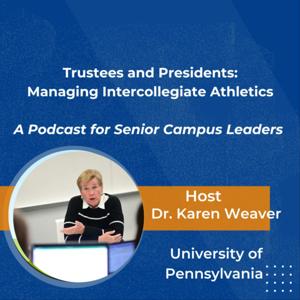


“When the guy in charge of bench presses makes more than the university president, 10 times an average faculty salary, and absorbs the average cost of attendance for 60 students, it might be time to pause and reflect a little on where this is all going.”
Economist and Dean Emeritus of Purdue's Daniel School of Business, David Hummels, joins Karen Weaver to dissect the runaway spending in college athletics — from million-dollar strength coaches to ballooning student subsidies. Drawing on his research (and his Substack, Finding Equilibrium), Hummels argues universities have stopped asking whether athletics spending actually advances their mission. He challenges leaders to weigh subsidy costs against institutional value, and makes the case for reinvesting in broader student experience — intramurals, arts, community — rather than chasing prestige on the field.
Dr. Zachary Faison, president of Edward Waters University, joins Karen Weaver to unpack his "Dream Economy" model—a mission-aligned alternative to the Power Four athletics framework. They explore how presidential leadership, financial discipline, and strategic athletics investment drive enrollment and retention at HBCUs and small private colleges, turning championship seasons and national TV exposure into surging applications, new revenue, and expanded academic programs.
#DreamEconomy #HBCU #EducationTransformation #StudentSuccess #HigherEd
⚾ What does the movie "Moneyball" have to do with college athletics? When it comes to an emerging Division I FBS athletics program, everything.
One of James Madison University President Jim Schmidt's favorite lines from that film has become a guiding principle for the Dukes — and he thinks it applies far beyond baseball:
💬 "If we're gonna try to play like the Yankees in here, we're gonna lose to the Yankees out there."
JMU can't out-spend the biggest programs in college athletics. No secret there. But they say they don't have to. What JMU can do — and has done — is think differently about how to build, how to compete, and how to win. 🏆
That Moneyball mentality isn't just about athletics. It's about innovation as a substitute for resources 💡. It's about finding your path forward when the winds are gusty 🌬️. It's about refusing to shrug your shoulders and say "we don't have the money" — and instead asking: how do we do this differently?
JMU's athletic success didn't happen by accident. It happened because this institution has a long track record of doing more with less, making smart bets, and building a culture that doesn't measure itself against the "Yankee-sized" budgets of the Power Four. 💜💛
For anyone building programs — in athletics, in higher ed, or anywhere else — Schmidt offers the same advice: go watch Moneyball one more time. Then show up for work and be innovative. 🎬🚀
#JMU #GoDukes #CollegeAthletics #Leadership #Innovation #HigherEducation #Moneyball
🏈 Is college athletics heading toward a financial collapse?
University of Louisville President Dr. T. Gerard Bradley and Board Chair Dr. Larry Benz aren't just asking the question — they're sounding the alarm. 🚨
Together with Athletic Director Josh Heird, they co-authored a white paper calling out what Larry Benz describes as "the theater of absurdity" — a system where schools are forced to keep spending just to stay competitive, even when that spending is completely unsustainable. 💸
Their message is clear: Division I athletics needs a hard spending cap, better governance, and real legislative action — NOW. ⏳
What happens if Congress doesn't act? Louisville is already running scenario planning and game theory to prepare for every outcome. But one thing they refuse to do? Pull money from scholarships, faculty, or research to fund the athletic arms race. 🎓
With a 92% graduation rate and $1.3 billion contributed to the local economy, Louisville proves you can do athletics the RIGHT way — but even they can't outrun a broken system forever. 💪
🎙️ This is a must-listen conversation for anyone in higher education, athletics administration, or governance.
👉 Catch the full episode now and join the conversation about the future of college sports.
#CollegeAthletics #HigherEducation #NIL #DivisionI #UniversityOfLouisville #CollegeSports #SportsBusiness #Athletics #Leadership #HigherEd
Faculty across the country are casting "no confidence" votes against their college presidents in record numbers—and budgets and athletics spending are often at the heart of it. In this episode, host Karen Weaver talks with veteran presidents Dr. Michael Nietzel and Dr. Chuck Ambrose, co-authors of the new book, No Confidence: When College Faculty Turn Against Their Presidents, about why faculty are pushing back, what triggers these votes, and how leaders can rebuild trust before it's too late.
#HigherEd #CollegePresidents #BoardOfTrustees #SharedGovernance #HigherEdLeadership #CollegeAthletics #NoConfidenceVotes
Michigan State University trustees Mike Balow and Dennis Denno pull back the curtain on what it really means to be a fiduciary in the high‑stakes world of Big Ten athletics and private equity.
They explain why trustees must be “the adults in the room,” how opaque media and NIL ventures can endanger a university’s long‑term future, and why bipartisan oversight and transparency are non‑negotiable.
Link to their Op-ed: "To Maintain Trust, Proper Oversight at MSU is required"
A new Art & Science Group poll of 1,481 college-bound seniors shows students define campus spirit far beyond wins and losses, prioritizing unity, traditions, and everyday pride over big-time sports. Karen Weaver talks with principals Craig Goebel and David Strauss about what presidents should actually invest in, how politics and ideology shape demand for athletics, and smarter strategies for enrollment-challenged small privates.
FULL Study: https://www.artsci.com/student-poll/studentpoll-volume-19-issue1
Utah State President Brad Mortensen joins Karen Weaver to discuss his first months leading his alma mater through a pivotal transition. He shares insights on the upcoming PAC-12 move, NIL, gambling risks, revenue strategy, and how Utah State is positioning athletics, campus storytelling, and institutional partnerships for the future.
Legalized gambling has become woven into nearly every corner of the sports industry, evolving far beyond simple win or lose wagers to bets on almost every moment of every game. Now, a new model called prediction markets is gaining momentum across sports, news, geopolitics, the economy, and yes, even the weather. My guest today is part of the Bloomberg Intelligence team examining these markets.
Jody Lurie is a senior credit analyst and a CFA charterholder who specializes in fixed income, credit research and strategy. She covers the fast-growing world of prediction markets and how they’re reshaping sports, news, and campus risk. She also examines regulation, insider-trading concerns, student vulnerability, and what university leaders need to know now.
Many college presidents have never set foot at an NCAA convention — yet they're ultimately responsible for everything that happens in their athletics programs. So who's actually steering Division III? Karen Weaver goes behind the curtain with Dr. Marc Camille, chair of the NCAA Division III President's Council, to expose the governance gap that nobody's talking about. With over 400 institutions in Division III and presidential engagement at a startling low, Marc is on a mission to change how — and whether — campus leaders show up for the decisions that shape student-athlete experiences nationwide. From reforming how at-large bids are awarded to rallying presidents who don't even realize they should be in the room, this is a rare look at the people setting the rules of college sports from the inside.
From the publisher's feed

31,946 Listeners
50 Listeners

150 Listeners

20,172 Listeners
152 Listeners

150 Listeners

9,058 Listeners

6,060 Listeners

196 Listeners
64 Listeners