
Sign up to save your podcasts
Or

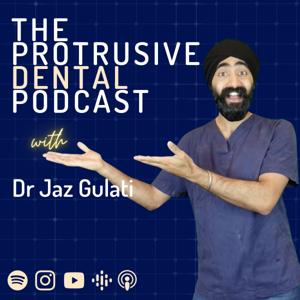

You’re doing a routine exam when you spot it – a stained hairline crack snaking across the marginal ridge of a molar. Your patient hasn’t mentioned any symptoms… Yet.
Should you sound the alarm? Monitor and wait? Jump straight to treatment?
Cracked teeth are one of dentistry’s most misunderstood diagnoses. Colleagues debate whether to crown or monitor. And that crack you’re staring at? It could stay dormant for years—or spiral into an extraction by next month.
So what separates the teeth that crack catastrophically from those that quietly hold together?
In this episode, I am joined by final-year dental student Emma to crack the code (pun intended) on cracked tooth syndrome.
We break down the easy-to-remember “position, force, time” framework to help you spot risk factors before disaster strikes, and share a real-world case of a 19-year-old bruxist whose molar was saved by smart occlusal thinking.
If you’ve ever felt uncertain about diagnosing, explaining, or managing cracked teeth, this episode will change how you think about every suspicious line you see.
Need to Read it? Check out the Full Episode Transcript below!
Key Takeaways
Highlights of this episode:
00:00 Teaser
00:49 Intro
03:25 Emma’s Dental School Updates
07:18 What is Cracked Tooth Syndrome (CTS)?
10:02 Crack Progression and Severity
12:45 Risk Factors
14:54 Position–Force–Time Framework
21:53 Which Teeth Fracture Most Often?
25:32 Midroll
28:53 Which Teeth Fracture Most Often?
30:37 The Weakest Link Theory
34:05 Diagnostic Tools
37:56 Treatment Planning
39:42 Case Study – High Force Patient
47:27 Communication and Patient Management
51:03 Key Clinician Takeaways
53:03 Conclusion and Next Episode Preview
53:42 Outro
Check out the AAE cracked teeth and root fracture guide for excellent visuals and classification details.
Literature review on cracked teeth – examines evidence around risk factors, prevention, diagnosis, and treatment of cracked teeth.
Want to learn more about cracked teeth? Have a listen to PDP028 and PDP098 – both packed with practical tips and case-based insights.
#BreadAndButterDentistry #PDPMainEpisodes #OcclusionTMDandSplints
This episode is eligible for 0.75 CE credits via the quiz on Protrusive Guidance.
This episode contributes to the following GDC development outcomes:
AGD Subject Code: 250 – Operative (Restorative) Dentistry
Aim: To help dental professionals understand the causes, diagnosis, and management of cracked teeth through a practical, evidence-based approach. It focuses on identifying risk factors using the Position–Force–Time framework and improving patient outcomes through informed communication and tailored treatment planning.
Dentists will be able to:
 View all episodes
 By Jaz Gulati

4.7
2020 ratings
You’re doing a routine exam when you spot it – a stained hairline crack snaking across the marginal ridge of a molar. Your patient hasn’t mentioned any symptoms… Yet.
Should you sound the alarm? Monitor and wait? Jump straight to treatment?
Cracked teeth are one of dentistry’s most misunderstood diagnoses. Colleagues debate whether to crown or monitor. And that crack you’re staring at? It could stay dormant for years—or spiral into an extraction by next month.
So what separates the teeth that crack catastrophically from those that quietly hold together?
In this episode, I am joined by final-year dental student Emma to crack the code (pun intended) on cracked tooth syndrome.
We break down the easy-to-remember “position, force, time” framework to help you spot risk factors before disaster strikes, and share a real-world case of a 19-year-old bruxist whose molar was saved by smart occlusal thinking.
If you’ve ever felt uncertain about diagnosing, explaining, or managing cracked teeth, this episode will change how you think about every suspicious line you see.
Need to Read it? Check out the Full Episode Transcript below!
Key Takeaways
Highlights of this episode:
00:00 Teaser
00:49 Intro
03:25 Emma’s Dental School Updates
07:18 What is Cracked Tooth Syndrome (CTS)?
10:02 Crack Progression and Severity
12:45 Risk Factors
14:54 Position–Force–Time Framework
21:53 Which Teeth Fracture Most Often?
25:32 Midroll
28:53 Which Teeth Fracture Most Often?
30:37 The Weakest Link Theory
34:05 Diagnostic Tools
37:56 Treatment Planning
39:42 Case Study – High Force Patient
47:27 Communication and Patient Management
51:03 Key Clinician Takeaways
53:03 Conclusion and Next Episode Preview
53:42 Outro
Check out the AAE cracked teeth and root fracture guide for excellent visuals and classification details.
Literature review on cracked teeth – examines evidence around risk factors, prevention, diagnosis, and treatment of cracked teeth.
Want to learn more about cracked teeth? Have a listen to PDP028 and PDP098 – both packed with practical tips and case-based insights.
#BreadAndButterDentistry #PDPMainEpisodes #OcclusionTMDandSplints
This episode is eligible for 0.75 CE credits via the quiz on Protrusive Guidance.
This episode contributes to the following GDC development outcomes:
AGD Subject Code: 250 – Operative (Restorative) Dentistry
Aim: To help dental professionals understand the causes, diagnosis, and management of cracked teeth through a practical, evidence-based approach. It focuses on identifying risk factors using the Position–Force–Time framework and improving patient outcomes through informed communication and tailored treatment planning.
Dentists will be able to:
83 Listeners
393 Listeners
299 Listeners
0 Listeners

8,547 Listeners

643 Listeners

3,843 Listeners

5 Listeners
4 Listeners

266 Listeners
1 Listeners

29,146 Listeners
4 Listeners

2,072 Listeners

38 Listeners