Unreserved

Unreserved

Download on the App Store

Unreserved episodes

  • 5 rising musicians share their songs and success
    Today, the beautiful resistance of Indigenous music makers carrying powerful messages
    Digging Roots is Raven Kanatakta and Shoshona Kish. The blues/folk/soul duo just won a JUNO Award for their latest album Zhawenim. Their fourth studio album takes inspiration from skylines and mountain ranges; something the couple call Anishinabek Songlines, an ancient way of creating music.
    Rising star Aysanabee also got to shine on Canada’s JUNO stage this year.
    The singer/songwriter from Sandy Lake First Nation gave an emotional performance of his song, We Were Here featuring Northern Cree. We catch up with him to find out where his album Watin, about his grandfather, has taken him since its powerful debut.
    It’s rage and recovery with Kristi Lane Sinclair on her new record Super Blood Wolf Moon.
    The Haida/Cree rocker takes us through her personal journey as a survivor of domestic violence and PTSD. But more than that it is a journey of reclamation, healing and ultimately, the power of women who rise above it all.
    Zoon, also known as Daniel Monkman, represents young two-spirit identity in their latest record Bekka Ma’iingan, available now. Anishinaabemowin for ‘slow down’ and ‘wolf,’ Bekka Ma’iingan is both a grieving and a celebration of lost loved ones.
    From escaping a religious cult, to receiving JUNO nominations Jayli Wolf has seen a lot.
    Her 2021 debut EP Wild Whisper helped her work through intergenerational trauma and the shame she experienced as a young queer woman. Ultimately, the Anishinaabe woman reclaimed the Indigenous identity she had been displaced from. On her new record, God is an Endless Mirror, set for release this summer, Jayli shares her spiritual awakening.
    Plus a taste of the latest music from Indian Giver, Wyatt C. Louis, Sebastian Gaskin, and Andrina Turenne

    52 min
  • Celebrating Indigenous Drag Kings and Queens
    You never know what you’ll find when you walk into Sunshine House. There could be people singing karaoke or making get well cards for a friend. This resource centre in Winnipeg’s centennial neighbourhood provides harm reduction supplies, a cup of coffee and community. In the center of this community: Drag. Feather Wolfe and Davey Francis Kole are the heart and soul of Sunshine House – and two of the Queens behind the Like That drop-in program, primarily focused on the LGBTQ2S+ community and invites them to come as they are.
    Chelazon Leroux sashayed into our hearts on the third season of Canada’s Drag Race. The Dene drag queen from Saskatoon is one of the few Indigenous queens to grace Ru Paul’s Canadian stage. But it’s more than just stilettos, big hair and crowns; Chelazon is fierce, funny and proud to represent being Indigenous.
    In a world of queens, it can be a challenge for kings to find a place for themselves. Drag artists like Vancouver-based King Fisher, aka Jayme Andrews have had to fight to be part of the scene. But, clad in rhinestone, armour and love, they’ve won that battle. A drag performer of the Ktunaxa Nation, King Fisher challenges what drag should look like.
    Did someone say Landback? Colonization almost completely erased the space where two-spirit people exist within our communities. Anita Landback, who is from Millbrook First Nation, uses their drag as a love letter to their Mi'kmaq culture and to reclaim this space for themselves and future generations of two-spirit people.
    As much as many might wish they looked like Adam Beach, that’s not the reality for most. Growing up, Tygr Willy loved watching Mr. Beach on the screen but didn’t see themselves reflected. Through drag they’re hoping to bring softer representation of Indigenous bodies and cultural intersectionality to a wider audience.
    55 min
  • Decolonizing our colleges and universities
    This week on Unreserved we explore what it takes to decolonize our colleges and universities.
    Amanda Tachine is Diné from Ganado, Arizona. She is an assistant professor at Arizona State University and the author of Native Presence and Sovereignty in College: Weapons to defeat systemic monsters. She tells us how her students are taking on settler colonialism and finding power in kinship and love.
    And we don't know where we're going unless we know where we come from. Harvey McCue tells us how he co-founded the very first Indigenous Studies Department in Canada, back in 1968. Harvey is an educator, a long time advocate for Indigenous youth, and a member of the Order of Canada.
    And Randy Herrmann is taking on the institution and industry as he encourages the engineering department at the University of Manitoba to take Indigenous knowledge systems into account. He is the director of Engineering Access Program which supports Indigenous students studying engineering.
    Plus, we check in with students at the University of Ottawa about where they find belonging on campus.
    55 min
  • Water is sacred
    For Indigenous people water is more than just hydration. Water is alive and holds a spirit. Water is life.
    Stephanie Thorassie advocates for the Seal River Watershed, a pristine region in northern Manitoba, about 200 km west of Churchill. It is a vast area central to the Sayisi Dene people, who have served as its guardians for millenia. As the executive director of the Seal River Watershed Alliance Stephanie leads a partnership of four First Nations pushing to have the area designated an Indigenous Protected and Conserved Area.
    In 2003, Anishnaabe Elder Josephine Mandamin took her first ceremonial water walk around Lake Superior. She wanted to share a message: the water is sick and people need to speak, love and fight for it. Following Mandamin's footsteps, Elder Shirley Williams, an Anishinaabe Elder from Wikwemikong Unceded Territory on Manitoulin Island, along with her niece Elizabeth Osawamick have been organizing annual water walks around the Kawartha region of Ontario since 2010.
    Lawyer and activist Pamela Palmater created a documentary that warns: we must work together to save water – before it's too late. The short documentary is called Samqwan which means water in the Mi'kmaq language. Pam is a lawyer, professor, activist and author who wants to raise awareness around the threats to water - from pipelines to clear-cutting to water pollution.
    55 min
  • Preserving, protecting and passing on Indigenous growing practices
    Indigenous agricultural practices kept our ancestors alive for millenia. They not only fed their own communities but also taught settlers how to grow food across this vast territory.
    Indigenous people, like Cree-Métis Winnipegger Audrey Logan, keep that tradition alive and growing! Audrey’s whole life revolves around growing food. It has to. We tour Spirit Park, a community garden she helped create, in the West Broadway neighbourhood where she shares her journey from being depressed, overweight and diabetic to a healthy-eating Indigenous garden guru!
    Over in Tyendinaga, Chloe Maracle is carrying seeds for the next 7 Generations. We dig deep and learn about the 300 seed varieties kept at the Kenhteke Seed Sanctuary and Learning Centre. The Haudenosaunee intern is not just learning how to care for the vast collection but is also growing that list to include at-risk varieties important to her people.
    Food insecurity has been a concern in many Indigenous communities for years. A 2019 study found that almost half of all First Nations families struggle to put food on the table. But people like Steven Wiig and Julia Pechawis are trying to change that. They turned a farmers field into a food forest in Muskeg Lake Cree Nation, Saskatchewan.
    48 min
  • Duncan McCue: Award-winning storyteller and changemaker
    He is an award-winning journalist, broadcaster, professor, and author. After 25 years at CBC,the Anishinaabe storyteller is moving on from the public broadcaster and on to a new stage.
    Duncan began his career at the CBC as a reporter in Vancouver in 1998. These days, he’s the host of Helluvastory on CBC Radio One and the podcast Kuper Island, an 8-part series about the notorious Residential School by the same name. Many know him from the years he hosted Cross Country Checkup.
    He’s also the author of The Shoe Boy: A Trapline Memoir and created and wrote Decolonizing Journalism: A Guide to Reporting in Indigenous Communities, which is still used in CBC newsrooms.
    But all that’s about to change. Later this year he takes on a new role as Professor of Indigenous Journalism and Storytelling at Carleton's School of Journalism in Ottawa. He’ll be creating a new Certificate of Indigenous Journalism for students in remote communities.
    We want to send him off in a good way, reflecting on – not only an incredible career – but the life and the people that led him to it.
    Guest appearances and shout-outs of love from: Ian Hanomansing, Adrienne Arsenault, Waubgeshig Rice, and many more admirers, including his #1 fan, his Dad!
    55 min
  • Community Heroes
    By day, he’s a police officer; by night, a DNA detective. Dean Lerat is an RCMP Staff Sergeant at Fort Qu’appelle, Saskatchewan. But when he’s not on duty, he helps Sixties Scoop survivors find their families, using DNA testing kits, ancestry websites, public documents and other resources. It all started with a curiosity about his own family tree and history.
    Up until two years ago, youth in Kinngait, Nunavut didn’t have much to do. The Inuit hamlet of about 1400 people had zero hockey games, art classes or social activities. That is, until Joanne Weedmark came along. She made it her job to keep the kids busy. As director of recreation, Joanne is bringing positive change to her community. Her hard work caught the attention of the Canadian Parks and Recreation Association, which selected her as its “Emerging Leader of the Year” in 2022 at the young age of 24.
    Dr. Courtney Leary is originally from Norway House Cree Nation in Manitoba. When she was growing up there, she dreamt of becoming a doctor. After graduating from university she returned home to become Norway House’s first practicing doctor.
    Respect, reciprocity, reconciliation, and relevance are the basis of an organization started by a group of youth in 2014. Jess Bolduc is Anishinaabe-French from Baawating and credits the Idle No More Movement for inspiring her own determination to bring change to her community and start the 4Rs Youth Movement. The organization centers and supports the work that Indigenous young people are doing in their communities, thereby creating an infrastructure for the next generation of changemakers.
    50 min
  • Blazing a trail on the catwalk and beyond
    Sage Paul grew up watching the women in her life sew, bead and craft. She turned these skills into a career, and has been dreaming and designing clothes for over a decade. But clothes aren’t the only things she wants to create. As the executive and artistic director of Indigenous Fashion Arts, Sage also creates opportunities for other Indigenous designers to find success in the fashion industry. This past February, the Dene designer and artist led a delegation all the way to Milan Fashion Week.
    Two people who were part of the team that Sage took to Milan Fashion Week were Anishinabe designer Lesley Hampton and Metis designer Evan Ducharme. Their stories are woven into the fabrics of history and shared across generations through the clothes they create. While the two young designers never saw themselves included within the fashion industry as children, they’re now bringing the change they wanted to see to international runways.
    Indigenous people are not just behind the runway curtain creating fabulous clothes.
    They’re also modeling them. From TikTok to the catwalk, Michelle Chubb knows what it takes to make it as an Indigenous woman in the fashion world. This past February, the 25 year-old Swampy Cree model joined 2Spirit fashion designer Scott Wabano at New York Fashion Week.
    Michelle was part of a group of mostly Indigenous models to showcase their work.
    49 min
  • Moving through grief with How to Lose Everything
    When it comes to loss and moving gracefully through grief, Christa Couture knows a thing or two. The multi-talented writer, singer and now filmmaker has lived through more than her fair share of loss.
    At 11 years old, she received a cancer diagnosis. She lost her first son when he was just a day old due to complications during childbirth. Her second son died at 14 months old due to complications with his heart. Soon after, her marriage ended. And just as some new beginnings emerged, cancer returned.
    To work through her loss and grief, Christa turned to music – creating seven albums and a memoir called How to Lose Everything.
    These were important projects in helping her deal with her own grief. Now she’s looking to help others with their experiences with grief and loss.
    Christa and producer Michelle St. John have teamed up with 5 pairs of Indigenous writers, artists and animators to create a series of short films.
    Each one – a personal story of loss.
    Each voice – sharing wisdom to help others through the darkness.
    “Grape Soda in the Parking Lot” is the name of Taqralik Partridge’s short film animated by Megan Kyak-Monteith. In it, Taqralik recalls her Scottish grandmother who spoke Gaelic and her Inuk father who spoke Inuktitut and poses an important question about language.
    Archer Pechawis, an artist and member of Mistawasis First Nation, is the storyteller behind “A Bear Named Jesus.” The short film, stop-motion animated by Terril Calder, explores what happened after his mom became a born-again Christian.
    51 min
  • Copycats and copyrights of Indigenous art
    It was a crime that shook the art world. One hundred million dollars in suspected forgeries, over 1000 more fakes seized and 8 arrests in a far-reaching forgery ring of renowned Ojibwa artist Norval Morrisseau’s work.
    Police call it one of the largest art fraud schemes in history. But it's not just Morrisseau who has faced fakes and forgeries. Indigenous art makers and supporters all across Turtle Island say it is rampant and the cost is not just their livelihood – it is their culture.
    Indigenous artists say copycat art is more common than you think and copyright laws must evolve to protect them.
    Richard Hunt comes from a long line of Northwest Coast artists. The 73 year old Kwaguilth artist started carving at the age of 13 alongside his father, Henry Hunt. Richard says for about as long as he’s been a carver, he has seen his work copied. He says it is worse than stealing art: it is stealing cultural property.
    It was a design meant to support Residential School Survivors but the artist who created the West Coast stylized hands says people are ripping it off for profit. K’ómoks and Kwakwa̱ka̱'wakw visual artist Andy Everson and his wife Erin Brillon, Haida and Cree and owner of Totem Design House, have experienced the damage of copycats firsthand. They see websites selling inauthentic Indigenous art and design pop up on an almost daily basis. The husband and wife team work to educate others about the importance of buying authentic Indigenous art.
    As the first art historian to be appointed to the Senate of Canada, Senator Patricia Bovey champions Canadian art. But she also advocates for better protections for Indigenous artists’ work. Currently, there are few laws preventing counterfeit and fake Indigenous art in Canada but Senator Bovey hopes to change that by pushing changes to Canada’s copyright laws and setting up a fund that would help artists go after art fakesters.
    45 min

About Unreserved

From the publisher's feed

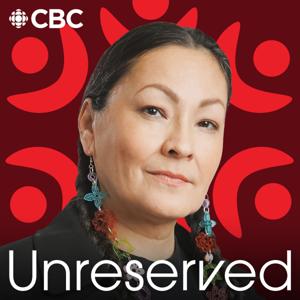
Named one of Audible's Best Canadian Podcasts of 2025. Join Rosanna Deerchild every Friday for vibrant conversations with our cousins, aunties, elders and heroes. Rosanna guides us on the path…

More shows like Unreserved

Bookends with Mattea Roach by CBC

Bookends with Mattea Roach

244 Listeners

Q with Tom Power by CBC

Q with Tom Power

266 Listeners

As It Happens by CBC

As It Happens

422 Listeners

White Coat, Black Art by CBC

White Coat, Black Art

111 Listeners

Ideas by CBC

Ideas

391 Listeners

Laugh Out Loud by CBC

Laugh Out Loud

154 Listeners

CANADALAND by CANADALAND

CANADALAND

207 Listeners

Quirks and Quarks by CBC

Quirks and Quarks

361 Listeners

The Current by CBC

The Current

205 Listeners

The Sunday Magazine by CBC

The Sunday Magazine

60 Listeners

New Fire by CBC

New Fire

2 Listeners

The Debaters by CBC

The Debaters

200 Listeners

Front Burner by CBC

Front Burner

430 Listeners

All My Relations Podcast by Matika Wilbur

All My Relations Podcast

2,997 Listeners

The Dose by CBC

The Dose

88 Listeners

Kiwew by CBC

Kiwew

5 Listeners

Commotion with Elamin Abdelmahmoud by CBC

Commotion with Elamin Abdelmahmoud

103 Listeners

ᐃᓄᐃᑦ  ᐅᓂᒃᑳᖏᑦ (Inuit Unikkaangit) by CBC

ᐃᓄᐃᑦ ᐅᓂᒃᑳᖏᑦ (Inuit Unikkaangit)

4 Listeners

Pieces by CBC

Pieces

17 Listeners

Telling Our Twisted Histories by CBC

Telling Our Twisted Histories

96 Listeners

This Place by CBC

This Place

12 Listeners

Spirit to Soar: Where We Come From by CBC

Spirit to Soar: Where We Come From

2 Listeners

Land Back by CBC

Land Back

23 Listeners

The Urbariginal by CBC

The Urbariginal

14 Listeners