
Sign up to save your podcasts
Or

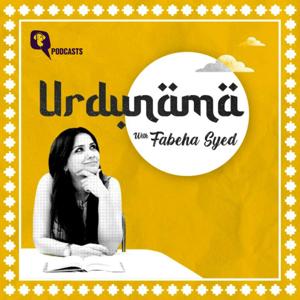


What does it mean to be khud-mukhtaar? In this Independence Day episode of Urdunama, Fabeha Syed looks at the Urdu word for being independent, self-governing and able to make your own choices. But khud-mukhtaari is not simply about doing what you want. It also means living with the consequences of your choices. Through the poetry of Allama Iqbal, Munawwar Rana, and others, this episode explores ideas of freedom, choice, selfhood and responsibility, and what it really means to have ikhtiyar over your own life.
Learn more about your ad choices. Visit megaphone.fm/adchoices
We usually think of gumraah as someone who has been led astray. But is that all the word means?
In this episode of Urdunama, we unpack the word, 'gum-raah', through the poetry of Khumar Barabankvi and Muneer Niazi among others. Along the way, we discover that gumraahi isn't always about taking the wrong path. Sometimes it begins with trust. Sometimes with love. Sometimes with a destination that opens into countless new roads. And sometimes, what looks like losing your way turns out to be finding a completely different one.
Tune in to discover why one simple Urdu word can hold so many different journeys and paths.
Learn more about your ad choices. Visit megaphone.fm/adchoices
Most of us hear the word 'gumshuda' and think of a missing person. Urdu poetry has other ideas.
In this episode of Urdunama, we explore how this simple word takes on many different meanings in poetry. Through these ashaar by Faiz Ahmed Faiz, Ahmad Mushtaq, and others, 'gumshuda' becomes much more than someone who has disappeared. It can be a lost voice, an unfinished song, an incomplete project, a wandering mind, a forgotten childhood, or even a part of ourselves that slowly disappears with time. It can also be that elusive creative spark, or an idea that catches you unawares, only to disappear before it has the chance to become a poem, a story or even a single sentence.
Join us as we unpack one of Urdu's most layered words and discover how poetry uses gumshuda to make sense of absence, memory and the quiet search for what we've lost.
Learn more about your ad choices. Visit megaphone.fm/adchoices
What does it really mean to be gumnaam?
Often translated as "anonymous" or "unknown," the Urdu word carries a much deeper meaning. In this episode of Urdunama, we explore how gumnaam is used in Urdu poetry to reflect on forgotten contributors, invisible lives, fame, love and the underlying tension between recognition and obscurity. Through verses by Nida Fazli, Qateel Shifai, Ahmed Faraz and Meena Kumari Naaz, the episode asks a timeless question: Is being unknown always a misfortune, or can anonymity sometimes be its own kind of freedom? Tune in
Learn more about your ad choices. Visit megaphone.fm/adchoices
We usually translate gum as "lost". But that's only half the story.
In Urdu, gum isn't always about something disappearing. Sometimes it's a misplaced key. Sometimes it's your peace of mind. Sometimes it's simply getting so lost in your thoughts that the rest of the world fades into the background.
This episode marks the beginning of a special Urdunama mini-series exploring a family of Urdu words that begin with gum. Over the next few episodes, we'll see how this one simple prefix gives rise to very different meanings, proving that a single word can open the door to entirely different human experiences. Tune in.
Learn more about your ad choices. Visit megaphone.fm/adchoices
Guru Dutt's films continue to resonate decades after they were made, but what was the man behind the camera really like? In this episode of Urdunama, we explore the life, cinema, and legacy of Guru Dutt through the unique lens of Dastan-e-Guru Dutt. Joining us is India's first female Dastango, Fouzia Dastango, who brings this celebrated performance to audiences across the country.
From the melancholy of Pyaasa and the loneliness of Kaagaz Ke Phool to Guru Dutt's collaborative spirit, his portrayal of women, and the enduring relevance of his work, this conversation offers a fresh perspective on one of Indian cinema's greatest auteurs. Tune in and click here to watch Dastan-e-Gurudutt.
Learn more about your ad choices. Visit megaphone.fm/adchoices
Why do two equally qualified people end up with completely different careers? Why does one marriage survive while another falls apart? Why do some people seem to meet the right person at the right time, while others do everything "right" and still don't get the life they hoped for?
When we run out of explanations, we often reach for one word: naseeb
In this episode of Urdunama, Fabeha Syed explores one of Urdu's most layered words through the poetry of Nida Fazli, Ahmed Faraz and Sudarshan Faakir. More than fate or destiny, naseeb is the language of uncertainty, it is the word we use to make sense of life's unexpected turns, heartbreaks, missed chances and inexplicable blessings. But does naseeb really explain anything, or does it simply help us live with the questions? Tune in.
Learn more about your ad choices. Visit megaphone.fm/adchoices
A salesperson can sell you a dream. Social media can sell you a lifestyle. Sometimes, your own heart sells you hope. That's fareb.
Often translated as deception, fareb isn't quite the same as dagha. A stranger can deceive you; only someone you trust can betray you. Through the poetry of Fana Nizami Kanpuri, Mirza Ghalib, Bahadur Shah Zafar and Momin Khan Momin, we explore false promises, self-deception and why the hardest illusions to let go of are often the ones we create ourselves. Tune in.
Learn more about your ad choices. Visit megaphone.fm/adchoices
Mumbai is halfway through June and still waiting for the monsoon. Every few days the forecast promises rain, and every few days the clouds seem to change their mind. So, it feels like an act of 'daghaa'
Often translated as betrayal, 'dagha' is more than just being deceived. It is the hurt that comes when trust is broken. Through the poetry of Shakeel Badayuni and Qateel Shifai, we explore friendship, loyalty, disappointment and the peculiar ways human beings let one another down. What makes betrayal hurt? Why does a friend's failure feel different from a stranger's? And can failing to truly understand, and showing up for the the ones closest to us also become a kind of daghaa?
Because a stranger can fool you, but 'dagha' usually comes from someone closer.
Tune in for some gems from Shakeel Badayuni and Qateel Shifai on dagha. And fareb? We'll get to that next week.
Learn more about your ad choices. Visit megaphone.fm/adchoices
As another summer pushes temperatures to record highs, darja-e-haraarat , meaning 'degree of heat', has become part of our daily vocabulary. We hear it in weather reports, worry about it when a child feels warm, and increasingly experience it in a world shaped by climate change.
On this week's Urdunama, we explore the Urdu word haraarat. While it literally means heat or temperature, poetry gives the word a far richer and tender life. it can signify warmth, affection, vitality, conviction, and even the spark of resistance.
Through verses by Faiz Ahmed Faiz, Muztar Khairabadi and Majaz Lakhnavi, Fabeha Syed traces the many shades of haraarat in Urdu poetry and reflects on how a word associated with heat can also illuminate the warmth that binds, heals and moves us to action. Tune in.
Learn more about your ad choices. Visit megaphone.fm/adchoices
From the publisher's feed
Ranked by our users in the last 21 days

90,595 Listeners

21,775 Listeners

31,921 Listeners

10,890 Listeners

3,383 Listeners

1,095 Listeners

12,679 Listeners

111,764 Listeners

56,420 Listeners

24,517 Listeners

56 Listeners
0 Listeners

0 Listeners

17 Listeners

2 Listeners

0 Listeners

1 Listeners
0 Listeners

1 Listeners

0 Listeners
3,630 Listeners

41 Listeners

15 Listeners

10 Listeners