
Sign up to save your podcasts
Or

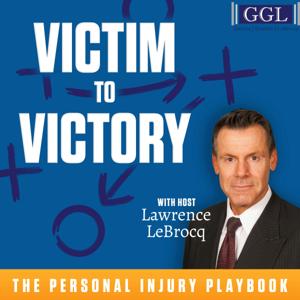


What happens when a firm's top trial attorney steps away from the courtroom, takes over as CEO, and adds $6 million in net fees in the first year alone?
In this episode, Lawrence LeBrocq of Garces, Grabler & LeBrocq sits down with Michael Mogill, CEO and founder of Crisp, one of the leading law firm growth companies in the country, who hosts Lawrence as a featured guest on The Game Changing Attorney Podcast.
Lawrence LeBrocq walks through the deliberate decisions that transformed Garces, Grabler & LeBrocq from a well-regarded courthouse name into a recognized consumer brand in New Jersey, one that is now settling well over $100 million in cases annually. He is direct about what it took to build the leadership infrastructure, hold attorneys accountable to hard financial metrics, and force a firm-wide embrace of technology. As he puts it plainly: "If a firm doesn't use AI, they're gonna be eradicated because the firms that use AI are gonna move past them so quickly."
In this episode you will learn how a leading litigator transitions into a CEO role and what that shift actually costs, how a firm with a strong courthouse reputation can be almost invisible to the general public and what it took to fix that, why Lawrence set a non-negotiable floor of $1 million in net fees per attorney per year and how that standard is enforced, how sports partnerships with Rutgers, the New York Giants, and the CFFC became core to GGL's brand strategy, why data analytics and case management accountability triggered significant staff turnover and why Lawrence views that as necessary, and what Lawrence believes it means to be a true game changer in a rapidly evolving legal industry.
What You'll Learn:
"If a firm doesn't use AI, they're gonna be eradicated because the firms that use AI are gonna move past them so quickly."
Quote from Lawrence LeBrocq, CEO and Managing Partner, Garces, Grabler & LeBrocq.
Want to hear more about Michael and his content? Check out The Game Changing Attorney Podcast: https://crisp.co/podcast/
Whether you are a managing partner navigating a transition out of your practice, a personal injury attorney trying to understand how to grow beyond the courtroom, or a law firm operator building culture and accountability systems at scale, this episode is required listening.
Connect & Learn More
🌐 Garces, Grabler & LeBrocq https://ggllawyers.com/contact-us/
📍 Serving injured workers across all of New Jersey
Victim to Victory is the authority in NJ personal injury. New episode every week.
What happens when a former Big Four accountant with 15 years of law firm consulting experience pulls back the curtain on the operational gaps quietly costing personal injury firms millions?
In this episode of Victim to Victory, Lawrence LeBrocq of Garces, Grabler & LeBrocq sits down with Tim Mckey, owner and founder of Vista Consulting, a national consulting group specializing in law firm operations and profitability.
Tim Mckey has worked inside more than 300 law firms, and he brings that depth of pattern recognition to this conversation. He explains why most firms are leaving money on the table not because of bad lawyering, but because of broken systems, missed client contact, and a marketing spend pointed in the wrong direction. His warning is direct: "You only get in trouble in MSOs in two ways. You don't set it up right or you don't run it right."
In this episode you will learn how Tim transitioned from accounting into law firm consulting, what Vista Consulting looks for when diagnosing a struggling firm, how the MSO structure differs from the ABS model and why it is gaining ground, which KPIs personal injury firms consistently overlook, why client contact intervals drive case value more than most managing partners realize, and how to build a referral engine from your existing client base at almost no cost.
What You'll Learn:
From CPA to Law Firm Consultant: Tim Mckey traces his path from Deloitte and small CPA partnerships to building Vista Consulting after discovering his real value was helping business owners improve performance, not just track it.
Diagnosing Firm Inefficiency: Vista enters a firm looking for operational breakdowns, measuring everything from intake conversion rates to pre-litigation handoff failures, and then builds systems to close those gaps.
ABS vs. MSO Decoded: Tim explains the structural and ethical distinctions between the alternative business structure and the management services organization, and makes the case for why the MSO model is more durable and more widely viable.
The Two KPIs That Control Growth: Intake statistics and client contact frequency are, in Tim's framework, the two metrics that drive both case volume and case value. Firms that do not track them are managing blind.
Accountability Without Micromanagement: Using case management systems to generate scorecards, Vista helps firms hold team members to contact intervals and process standards in a way that is measurable, coachable, and self reinforcing.
The Referral Channel Firms Ignore: Past clients are statistically the source of the highest value referrals. Tim outlines the low cost operational steps, from drip campaigns to settlement anniversary cards, that keep a firm's name in front of the people most likely to send business.
Show Notes & Key Timestamps
[00:00:00] Welcome and Introductions
Lawrence LeBrocq, Managing Partner of Garces, Grabler & LeBrocq and host of Victim to Victory, welcomes Tim Mckey, owner of Vista Consulting, a national law firm consulting group. Lawrence introduces Tim as a recognized authority in law firm operational leadership who built his reputation entirely through word of mouth. The episode sets up a deep dive into systems, structure, and the metrics that separate high performing personal injury firms from the rest.
[00:00:57] From Deloitte to Consulting: Tim Mckey's Origin Story
Tim walks through his career arc from Deloitte in the mid 1980s through a partnership in a CPA firm at age 27 to an inflection point around 1998 and 1999 when hourly billing no longer made sense to him. He realized he was more energized by advising business owners on operations than by keeping score through tax work. That realization led him to convert his CPA practice into a consultancy.
[00:04:09] How Vista Consulting Was Born Inside a Personal Injury Firm
Tim describes how Vista's identity crystallized when an early client, a personal injury plaintiff firm, showed them exactly what operational chaos looks like. The firm was spending heavily on marketing but had no intake training, no structured handoff to case managers, and no logic around case sizing. Vista built the systems, hired Chad Dudley as COO for that firm, and the consulting business expanded from there.
[00:10:13] What Vista Looks for in a Law Firm
When a managing partner calls saying something is not working, Vista starts with a full operational review, stem to stern. Tim explains that profit is a result, not a target. It follows good systems, effective client service, and measurable processes. The firm evaluates operational metrics including lead volume, lead qualification rate, and sign up rate.
[00:10:13] Common Operational Bottlenecks in Personal Injury Firms
Tim identifies a recurring failure point: pre-litigation staff who resist handing cases to litigation when the facts warrant it, because their incentives point the wrong way. He also names the trap of having lawyers answer intake calls while simultaneously managing active litigation, a structural problem that dilutes both functions.
[00:12:05] ABS vs. MSO: The Structures Reshaping Law Firm Ownership
Tim defines both models clearly. The alternative business structure, pioneered in Arizona, allows non-lawyers to own a law firm outright but carries cross-state ethical complications. The management services organization is a separate entity that owns all non-legal functions, from marketing to staffing to brand licensing, and contracts those services back to the law firm. That separation allows non-lawyer ownership of the MSO without touching the practice of law.
[00:15:07] Why the MSO Model Is Winning and the ABS May Be Fading
Tim gives his direct assessment: the MSO structure is more ethically sound, more operationally clean, and more attractive to private equity. He cites Trish Rich of Holland & Knight, an expert in the space, who frames the only two MSO failure modes as setting it up wrong or running it wrong. Legacy planning, non-lawyer equity rewards, and investor access are all cleaner under the MSO model.
[00:20:20] The Two KPIs That Drive Everything
Tim frames law firm growth around exactly two levers: getting more cases and increasing resolution value. He maps the KPIs to each lever, with intake statistics controlling volume and client contact frequency controlling case value. He argues these two metrics are the ones most often left untracked, and that without tracking them, accountability is impossible.
[00:23:40] Accountability Systems and the 21 Day Contact Rule
Tim and Lawrence discuss how to hold team members to performance standards without micromanaging. The answer is a case management system configured to track contact intervals, produce reports by paralegal, and give every team member visibility into their own numbers. Vista recommends client contact at minimum every 21 days, recorded and reportable.
[00:26:41] The Marketing Blind Spot: Past Clients and the Referral Engine
Tim identifies the most overlooked growth lever in personal injury: the existing client base. Firms spend heavily on billboards and television while failing to send a newsletter, a birthday card, or a settlement anniversary note to people who have already trusted them. He states plainly that across more than 300 firms, the largest cases consistently come from referrals by former clients.
[00:29:19] How to Reach Vista Consulting
Tim directs listeners to vistact.com, the Vista Consulting website, where his full contact information is available. He summarizes the firm's mission in one line: "We help our clients help theirs."
"Without exception, and we've been in over 300 firms, the biggest cases come from a referral from someone who's been through your firm."
Quote from Tim Mckey, Owner, Vista Consulting
Connect & Learn More
🌐 Garces, Grabler & LeBrocq https://ggllawyers.com/contact-us/
📍 Serving injured workers across all of New Jersey
Victim to Victory is the authority in NJ personal injury. New episode every week.
What does a lawyer who built and sold two law firms from scratch, then dedicated his career to helping others do the same, actually know that most attorneys never figure out? Ken Hardison started practicing law in 1982, left a partnership in 1996 to launch his own firm with one associate and a borrowed budget, and scaled that practice from two attorneys to thirteen lawyers and sixty staff in roughly five years. He eventually sold it, moved to Myrtle Beach intending to retire, got bored within six months, and built a second practice to test a $6,000-a-month marketing ceiling just to see what was possible. Today he leads PILMMA, the Personal Injury Lawyers Marketing and Management Association, where he runs multiple mastermind groups, has written six or seven books on legal marketing and management, and hosts an annual AI summit drawing on real firms that are actively deploying the technology.
Lawrence LeBrocq of Garces, Grabler & LeBrocq, himself a PILMMA mastermind member, pulls Hardison through the full arc of what it actually takes to grow and eventually sell a PI firm. They cover what buyers are really purchasing when private equity or a partner writes a check, which is systems, a predictable marketing pipeline, and a brand independent enough to survive the founder stepping away. Hardison argues that the firm most likely to command a premium price is the one the founding attorney can leave for two full months while everything keeps running, and he is direct about how few firms ever actually get there.
The conversation moves into marketing strategy for firms at every budget level. Hardison breaks down why Google Maps reviews are the highest-leverage move for a firm that cannot outspend the big players, how educational positioning attracts more cooperative clients than speed-and-money messaging, and why authority marketing- publishing books, appearing on podcasts, building content at scale- now gets crawled by AI tools the same way Google once indexed backlinks. He notes that the last two attorneys who joined a PILMMA mastermind found the organization specifically by asking an AI tool for a recommendation. GGL's own billboard saturation across New Jersey and Philadelphia came up as a live example of brand recognition done right.
The most actionable section of the conversation covers AI inside PI firms right now, not as theory. Hardison describes attorneys who have agents automatically setting up case files, calling insurance companies to verify coverage, pulling medical records, and generating cross-examination lines during a live deposition break. His summit in January 2027 in Orlando is designed around lawyers who are already implementing, not just exploring, so attendees can walk out with a concrete game plan rather than a list of vendors to investigate later.
What You Will Learn:
"The last two Masterminds that have joined, and it's been in the last two or three weeks, we ask them, as everybody does, how'd you get us? They looked us up on AI. And they said we were one of the top two in the nation." — Ken Hardison
Subscribe for weekly conversations with the attorneys, operators, and innovators turning victims into victors.
#PersonalInjuryLaw #LegalMarketing #LawFirmGrowth #KenHardison #PILMMA #PILawyer #LegalAI #VictimToVictory #GarcesGrablerLeBrocq #LawFirmManagement #PersonalInjuryMarketing #LegalMastermind
Connect & Learn More
🌐 Garces, Grabler & LeBrocq https://ggllawyers.com/contact-us/
📍 Serving injured workers across all of New Jersey
Victim to Victory is the authority in NJ personal injury. New episode every week.
What happens when one of the few pain management specialists in the country performing cervical discectomy and cervical rhizotomy sits down to walk injured New Jersey patients through every treatment option available to them?
In this episode of Victim to Victory, Lawrence LeBrocq of Garces, Grabler & LeBrocq sits down with Dr. Wael Elkholy, pain management specialist and director of Precision Pain and Spine Institute, former pain management director at both Yale and JFK Hospital in New Jersey.
Dr. Elkholy breaks down the full spectrum of pain management care, from conservative treatment to surgical intervention, drawing on decades of clinical experience and seven published studies. He is direct about what works, what has changed, and what most patients never hear from their doctors: "The most important part of the treatment is the diagnosis."
In this episode you will learn how pain management has evolved far beyond medication, why diagnosis drives every treatment decision, what epidurals actually do to an inflamed nerve, when a cervical discectomy or rhizotomy becomes the right next step, how insurance denials get reversed with the right clinical argument, and why having all disciplines under one roof changes outcomes for injured patients.
What You'll Learn:
The Treatment Ladder Explained: Dr. Elkholy outlines the step-by-step progression from chiropractic and physical therapy through medication, injections, and surgical procedures, and explains why skipping steps leads to worse outcomes.
Disc Herniation vs. Facet Joint Injury: The episode clarifies the anatomical difference between disc problems and facet joint damage, and maps each condition to the procedure designed to treat it, whether discectomy or rhizotomy.
Cervical Discectomy as a Revolution: Dr. Elkholy describes how cervical discectomy, a procedure only about 20 to 30 interventional pain specialists perform nationwide, delivers 80 to 90 percent radicular pain relief and sends most patients home the same day.
Cervical Rhizotomy and Long Term Relief: With only 10 to 15 practitioners performing this procedure across the United States, Dr. Elkholy explains how cauterizing the medial branch nerve responsible for facet pain produces two to three years of relief, and often longer with consistent physical activity.
Fighting Insurance Denials: Dr. Elkholy shares a real case of a 32 year old patient on high dose narcotics whose cervical discectomy was initially denied, then approved after a clinical explanation, resulting in complete radicular pain relief and full narcotic taper.
Comprehensive Care Under One Roof: Precision Pain and Spine Institute now operates with nearly 100 staff members including seven chiropractors, six physical therapists, four pain management specialists, two spine surgeons, and one rehabilitation doctor across multiple New Jersey locations.
Subscribe to stay ahead of the insurance system and learn how injury victims across New Jersey are accessing the treatments that actually resolve their pain.
#GGLLawyers #VictimToVictory #DrWaelElkholy #PrecisionPainAndSpineInstitute #PersonalInjury #PainManagement #SpineInjury #CervicalDiscectomy #CervicalRhizotomy #HerniatedDisc #NewJerseyPersonalInjury #InjuryRecovery
Connect & Learn More
🌐 Garces, Grabler & LeBrocq https://ggllawyers.com/contact-us/
📍 Serving injured workers across all of New Jersey
Victim to Victory is the authority in NJ personal injury. New episode every week.
What happens when a seasoned personal injury trial attorney at one of New Jersey's most aggressive plaintiff's firms pulls back the curtain on exactly how insurance companies track, assess, and exploit the firms that never go to trial?
In this episode of Victim to Victory, Lawrence LeBrocq of Garces, Grabler & LeBrocq sits down with Christopher Mitchell, personal injury attorney and trial litigator at Garces, Grabler & LeBrocq.
Christopher Mitchell breaks down the trial preparation philosophy that separates GGL from the majority of personal injury firms in New Jersey, explaining why insurance companies maintain detailed intelligence on which attorneys will fight and which will fold. He describes how a first major trial at the firm resulted in a jury verdict far exceeding the insurance company's offer, and how a $2.75 million mediation outcome was achieved not by desperation but by arriving fully prepared to take the case all the way. In his own words: "If they're not prepared to offer the money that our client deserves, then we will take the next step."
In this episode you will learn why preparing every case for trial is the single most powerful message a plaintiff's attorney can send to a billion dollar insurance company, how mediation with a retired judge can produce landmark settlements without the risk of verdict, what New Jersey's PIP no-fault system actually covers and where it falls dangerously short, how negligence and strict liability function differently in motor vehicle and dog bite cases, what economic and non-economic damages really include beyond the basics, and what injured clients must do in the minutes and days after an accident to protect the full value of their claim.
What You'll Learn:
Trial Preparation as Leverage: Why building every case as if it will go before a jury forces insurance companies to offer more, and why skipping that preparation guarantees under-settlements across an entire caseload.
The Intelligence Advantage Insurance Companies Hold: How multi-billion dollar carriers track individual law firms and attorneys by their trial history, using that data to calibrate lowball offers against firms they know will settle.
Mediation as a Pressure Tool, Not a Fallback: Why approaching mediation with a desperate mindset backfires, and how arriving fully trial-ready turns a retired judge into a powerful ally who can compel the other side to pay.
PIP Coverage Gaps in New Jersey: How a single hospital visit can consume a minimum personal injury protection policy of $15,000, and why upgrading to the $250,000 standard policy is critical for any New Jersey driver.
The Two Hats of a Plaintiff's Attorney: How effective plaintiff's attorneys switch between the compassion of a counselor, which deepens their understanding of client damages, and the aggression of an advocate, which communicates to opposing counsel that the case will go all the way.
Evidence Preservation After an Accident: Why personal injury cases can take four or more years to resolve, and what specific steps, photographs of injuries, vehicle damage, and medical records, clients must take immediately to protect compensation they would otherwise lose.
"If you prepare the case for trial, it tells the insurance company that we are ready to take the case before a jury to push for as much money as we can get for our client, and that if they're not prepared to offer the money that our client deserves, then we will take the next step and take the case to trial."
Quote from Christopher Mitchell, personal injury attorney, Garces, Grabler & LeBrocq.
Whether you are an injured New Jersey resident trying to understand your rights, a plaintiff's attorney looking to sharpen your trial preparation instincts, or a law student deciding which kind of attorney you want to become, this episode is required listening.
Connect & Learn More
🌐 Garces, Grabler & LeBrocq https://ggllawyers.com/contact-us/
📍 Serving injured workers across all of New Jersey
Victim to Victory is the authority in NJ personal injury. New episode every week.
What happens when 12-year legal marketing veteran builds the tool he always wished existed and starts recovering millions in lost case value, one missed phone call at a time?
In this episode of Victim to Victory, Lawrence LeBrocq of Garces, Grabler & LeBrocq sits down with Hayden Haskins, CEO and cofounder of SpeedAI, an always-on AI intake auditing platform built specifically for personal injury law firms.
Haskins explains how SpeedAI listens to every single call that comes into a firm, grades agent performance, scores case quality, and flags qualified leads that slipped through the cracks without being retained. He pulls back the curtain on the feature at the center of it all, Lead Rescue, walking through real cases where firms nearly lost six-figure and seven-figure matters because of a wrong statute of limitations calculation or an intake agent demanding photos from a father following an ambulance with an injured child. As Haskins puts it, "These are real people with real problems, and they see you as the solution. You better have every tool available to you to make sure that if there's something you can do to help that person, you better be ready to do it."
In this episode you will learn why manual random call sampling gives firms a 95 percent chance of missing a critical intake failure, how Lead Rescue identifies and recovers qualified prospects who called your firm and left without signing, why the intake call has become the only true differentiator between personal injury firms in a commoditized market, what the most common lead leaks are that intake agents commit without realizing it, how SpeedAI builds custom qualifying criteria by case type for each firm it onboards, and what the average SpeedAI client actually recovers in fees and total case value each year.
What You'll Learn:
Lead Rescue mechanics: SpeedAI listens to 100 percent of calls, transcribes them, runs sentiment analysis, and automatically alerts leadership only when a qualified, wanted case type was not retained, cutting noise while protecting signal.
The 95 percent sampling problem: Firms auditing five calls per agent per week out of roughly 100 weekly calls have a 95 percent chance of missing a coaching opportunity or a recoverable case. SpeedAI closes that gap entirely.
Statute of limitations risk at intake: A misheard year on an accident date nearly cost one firm a viable case. Lead Rescue caught the error, triggered a callback, and the case was signed. The same failure left undetected could constitute malpractice.
Intake as the last competitive differentiator: With SEO, traditional advertising, and referral networks leveled across the market, Haskins argues the first call experience is the only place personal injury firms can still meaningfully differentiate themselves.
Empathy as a non-negotiable intake quality: SpeedAI flags calls where agents skip past the human moment and jump straight to form fields. Haskins and LeBrocq agree that empathy cannot be fully scripted, but patterns of its absence can be identified and coached.
The $150 million case value milestone: Across its client base, SpeedAI has rescued over 150 million dollars in total case value to date. The average firm recovers roughly 400,000 dollars in fees, or 1.2 million dollars in total case value, in a single year.
"These are real people with real problems, and they see you as the solution. You better have every tool available to you to make sure that if there's something you can do to help that person, you better be ready to do it."
Quote from Hayden Haskins, CEO and cofounder of SpeedAI
Whether you are a personal injury firm owner frustrated by rising marketing costs and flat signing rates, an intake director who suspects your team is leaking qualified cases without knowing it, or a legal marketing professional looking for the clearest possible evidence of where conversion breaks down, this episode is required listening.
Subscribe to stay ahead of the intake failures draining your firm's case pipeline and learn how personal injury firm owners are recovering seven-figure case value they never knew they were losing.
#GGLLaw #VictimToVictory #HaydenHaskins #SpeedAI #PersonalInjury #LawFirmGrowth #IntakeOptimization #LeadRescue #LegalMarketing #TrialLawyer #PILaw #LawFirmROI
Connect & Learn More
🌐 Garces, Grabler & LeBrocq https://ggllawyers.com/contact-us/
📍 Serving injured workers across all of New Jersey
Victim to Victory is the authority in NJ personal injury. New episode every week.
Ever wonder what happens when one of Atlanta's most battle-tested homicide prosecutors trades death penalty cases for personal injury courtrooms and sets out to transform an entire firm's culture around one uncompromising principle?
In this episode of Victim to Victory, Lawrence LeBrocq of Garces, Grabler & LeBrocq sits down with Jason Green, Managing Attorney at Bader Law in Atlanta, Georgia.
Jason Green spent his early legal career prosecuting rape, sexual assault, and death penalty cases at the highest stakes possible, earning a reputation where juries returned guilty verdicts in as little as five minutes. Now leading litigation strategy at Bader Law, he lays out exactly how the trial first mindset he forged in criminal court translates into bigger settlements and better verdicts on the civil plaintiff side. As he puts it plainly to his team about what juries actually respond to: "nobody is going to pay you, because you are uncomfortable watching Netflix."
In this episode you will learn how a career built on homicide prosecutions creates an unfair advantage in personal injury litigation, why building your file for trial from day one forces the other side to settle on your terms, how before and after witnesses neutralize defense cross examination and move juries emotionally, what the defense bar and insurance adjusters are actually afraid of when they see a plaintiff lawyer willing to go to trial, why Jason believes the opening statement has replaced closing argument as the moment to stick the landing, and the three non-negotiable pieces of advice he gives every young trial lawyer trying to find their footing.
What You'll Learn:
Trial First File Building: Jason explains why assuming every case will go before a jury from day one causes evidence to sharpen, witnesses to be identified early, and adjusters to dramatically increase settlement offers before trial.
The Before and After Witness Strategy: Both Jason and Lawrence break down why friends, family members, neighbors, and coworkers who can testify to the client's life before and after the injury are the single most powerful, cross-examination proof witnesses a plaintiff lawyer can put on.
Fear of Public Speaking Inside the Bar: Jason addresses the overlooked reality that even lawyers who call themselves trial lawyers carry a deep fear of courtrooms and losing, and how he coaches his team to reframe losses as essential education rather than career-defining failures.
Insurance Company Psychology: Drawing on his time on the defense side, Jason details how the mere credible threat of trial creates uncertainty that insurance companies cannot calculate and cannot tolerate, and how a plaintiff lawyer's reputation compounds over time.
Opening Statement as the Decisive Moment: Jason describes how his philosophy shifted from prizing closing argument to treating the opening as the moment to put the defense permanently on their heels: "I know I sit down and I'm thinking, there's no way back for them."
The Barbershop Test for Jury Themes: Jason shares his practice of workshopping case themes and complex medical or engineering concepts with everyday people at cookouts, family dinners, and barbershops to pressure test whether a jury of regular citizens will actually understand and be moved by the story.
LeBrocq and Bader Law and teases continued collaboration on trial strategy.
"If you are talking about a lawyer who claims that they've never lost a case, or they say I've only lost one or two, then you haven't tried many cases."
-Quote from Jason Green, Managing Attorney at Bader Law
Whether you are a plaintiff lawyer looking to sharpen your trial instincts, a managing partner trying to install a litigation-first culture at your firm, or a law student trying to understand what separates the attorneys who move juries from those who settle everything, this episode is required listening.
Connect & Learn More
🌐 Garces, Grabler & LeBrocq https://ggllawyers.com/contact-us/
📍 Serving injured workers across all of New Jersey
Victim to Victory is the authority in NJ personal injury. New episode every week.
What happens when an experienced trial attorney builds every personal injury case as if it is headed to court?
In this episode of Victim to Victory, Lawrence LeBrocq of Garces, Grabler & LeBrocq sits down with Rajat Bhardwaj, Lead Attorney at Garces, Grabler & LeBrocq. Together they discuss why successful personal injury representation starts long before a courtroom appearance and why preparation shapes every stage of a case.
Rajat Bhardwaj explains how his judicial clerkship influenced the way he evaluates evidence, prepares cases, and understands judicial decision making. He also shares why medical treatment, client education, and trial readiness work together to strengthen a claim. One message stands out throughout the conversation: "trial is always on our mind."
In this episode you will learn why judicial clerkships create stronger trial lawyers, how preparing every file for trial improves settlements, why choosing the right medical providers matters, how New Jersey PIP coverage affects injury claims, why client education about insurance and social media is essential, and how a trial first mindset shapes better advocacy from the first client meeting.
What You'll Learn:
Connect & Learn More
🌐 Garces, Grabler & LeBrocq https://ggllawyers.com/contact-us/
📍 Serving injured workers across all of New Jersey
Victim to Victory is the authority in NJ personal injury. New episode every week.
From Brittle Bones to Board Certified Spine Surgeon
A spine surgeon who overcame 50 childhood fractures and helped crack a genetic mystery goes inside the OR to explain what trauma really does to the spine and how you prove it.
In this episode of Victim to Victory, Lawrence LeBrocq of Garces, Grabler & LeBrocq sits down with Dr. Timothy Roberts, board-certified orthopedic spine surgeon and attending at New York Spine Institute and New Jersey Spinal Associates. Dr. Roberts covers everything from emergency trauma triage and cauda equina syndrome to the medico-legal debate over acute versus degenerative disc injury. Together, they pull back the curtain on spinal trauma medicine and give every personal injury attorney, spine patient, and legal professional a clear, honest roadmap for what to do next.
What You'll Learn:
OI and the Surgeon Origin Story: Dr. Roberts was born with osteogenesis imperfecta, a genetic condition causing brittle bones, and suffered roughly 50 childhood fractures. That personal experience, and a surgery that straightened his legs, put him on the path to orthopedics and led him to help identify the genetic mutation behind the rarest subtype of the condition.
Combined Orthopedic and Neurosurgical Training: The Cleveland Clinic fellowship exposed Dr. Roberts to both disciplines simultaneously, giving him fluency in bone and soft tissue work alongside fine neural dissection and nerve management, a combination most spine surgeons do not have.
Cauda Equina Syndrome and the Surgical Clock: When a large herniated disc or blood clot compresses the nerve rootlets at the base of the spinal cord, bowel, bladder, and sexual function are all at risk. Dr. Roberts explains why decompression must happen as soon as safely possible and what irreversible loss looks like when it does not.
Trauma Triage and Distracting Injury Syndrome: In high-energy trauma, one catastrophic injury can mask other fractures entirely. Dr. Roberts notes that up to 30 to 40 percent of patients with a lumbar fracture have an additional fracture elsewhere in the spine, making exhaustive examination, not just imaging of the obvious site, a non-negotiable step.
Distinguishing Acute from Degenerative Injury on MRI: Specific MRI sequences, including STIR and T2, reveal fresh inflammation at the disc edge or nucleus. When a single level lights up in a 30-year-old whose remaining discs look pristine and the clinical history includes a motor vehicle accident, the traumatic cause is, in Dr. Roberts's words, "pretty clear."
Arthroplasty, Adjacent Segment Disease, and the Future of Spine Surgery: Cervical disc replacement preserves motion at the operative level and reduces stress on adjacent segments, addressing a documented failure mode of traditional fusion. Dr. Roberts also discusses how robot-assisted surgery synchronized with preoperative imaging is making procedures smaller, more precise, and more reliably complete.
Show Notes & Key Timestamps
[00:00:00] Welcome and Introductions
Lawrence LeBrocq, CEO and Managing Partner of Garces, Grabler & LeBrocq, welcomes Dr. Timothy Roberts, board-certified orthopedic spine surgeon and attending at New York Spine Institute and New Jersey Spinal Associates. LeBrocq notes that Dr. Roberts arrived directly from the OR, where he had performed a fusion and two microdiscectomies that morning. The conversation opens with a preview of the clinical and medico-legal ground the episode will cover.
[00:01:23] Clinical Research Career and the OI Discovery
Dr. Roberts describes his research focus on spinal injuries and outcomes, then introduces osteogenesis imperfecta, the genetic bone condition he was born with. He explains his role at Johns Hopkins Kennedy Krieger Institute as part of the team that confirmed the genetic mutation responsible for the rarest subtype, type 5 OI, which had gone unidentified for years.
[00:02:08] Growing Up with Brittle Bones: 50 Fractures and a Life-Changing Surgery
Dr. Roberts recounts roughly 50 to 60 childhood fractures, legs that grew at abnormal angles, and the rodding surgery at around age 10 that straightened his bones and allowed him to, as he describes it, get back on the soccer pitch with his friends. He explains how that experience made orthopedic surgery a personal calling rather than just a career choice.
[00:05:55] Why a Combined Orthopedic and Neurosurgical Fellowship Matters
Dr. Roberts details the Cleveland Clinic spine program, explaining that orthopedic surgeons are experts in bone and soft tissue but spend little time working around neural structures, while neurosurgeons have the opposite gap. Training under experts in both disciplines simultaneously gave him tools that a single specialty fellowship does not provide.
[00:09:15] Trauma, Spinal Cord Injuries, and the 3 a.m. Call
Drawing on his trauma call coverage at Jamaica Hospital in New York, Dr. Roberts explains what wakes a spine surgeon in the middle of the night: partial spinal cord injuries where rapid decompression can restore or substantially improve neurological function. He describes the urgency that drives emergency spine surgery for broken or dislocated vertebrae.
[00:10:38] Cauda Equina Syndrome: The Surgical Emergency Most Patients Have Never Heard Of
Dr. Roberts defines cauda equina syndrome, the compression of the nerve rootlets at the base of the spinal cord by a large disc herniation, hematoma, or infection. He explains the stakes clearly: bowel, bladder, and sexual function are all on the line, and the longer pressure remains, the less likely those nerves are to recover.
[00:12:24] ER Triage for Spinal Trauma: History, Examination, and Distracting Injuries
Dr. Roberts walks through how spine surgeons evaluate trauma patients, including those who are unconscious or intubated. He flags distracting injury syndrome, the phenomenon where the most painful injury obscures others, and notes the high rate of multilevel spinal fractures in patients who present with a single identified lumbar fracture.
[00:14:28] Surgical Options: Discectomy, Laminectomy, and Fusion Explained
Dr. Roberts explains the spectrum of spine surgery from the least to most invasive: trimming a herniated disc to relieve nerve pressure, removing a shelf of bone to give compressed nerves room, and full fusion where the disc is removed and two vertebrae are healed together with hardware. He addresses the common patient misconception that seeing a spine surgeon means surgery is inevitable.
[00:17:31] Cervical Disc Arthroplasty and the Adjacent Segment Disease Problem
Dr. Roberts describes cervical disc replacement as an alternative to fusion that preserves motion at the operative level and avoids overloading the segments above and below, which is the mechanism behind adjacent segment disease. He reviews 20- to-30-year outcome data now available on the procedure and explains the engineering evolution of the implants themselves, from early flanged designs to modern titanium ingrowth surfaces.
[00:19:47] The Future of Spine Surgery: Arthroplasty, Minimally Invasive Techniques, and AI
Dr. Roberts draws a parallel to the revolution in hip and knee replacement to frame where spine surgery is headed. He discusses robot-assisted procedures synchronized with preoperative CT and MRI as a tool that allows surgeons to work with greater confidence and smaller incisions, and acknowledges that AI will reshape radiology and ultimately every medical and legal profession.
[00:23:15] Proving Trauma in Court: Acute vs. Degenerative Findings on MRI
LeBrocq frames the medico-legal challenge directly: defense attorneys routinely argue that disc herniations are degenerative rather than traumatic. Dr. Roberts explains how STIR and T2 MRI sequences reveal acute edema, why a single inflamed level in an otherwise pristine young spine is diagnostically significant, and how EMG findings and physical examination add further evidence of acute nerve injury.
[00:25:03] Pre-existing Herniations and Traumatic Aggravation
Dr. Roberts confirms that asymptomatic herniations absolutely can be worsened by trauma and outlines the clinical and imaging tools that document aggravation, including acute edema on MRI, EMG nerve conduction studies, and new neurological deficits on physical examination that were absent before the accident.
[00:26:12] Where to Reach Dr. Timothy Roberts
Dr. Roberts provides contact information for New York Spine Institute, with New Jersey locations in West Orange and Marlton under the name New Jersey Spinal Associates. He notes the practice is continuing to expand and can be reached by searching New York Spine Institute online or by calling 516-357-8777.
Notable Quote:
"The longer they have pressure on them, the higher the chance that they may not regenerate or might not come back to life."
Quote from Dr. Timothy Roberts, board-certified orthopedic spine surgeon, New York Spine Institute and New Jersey Spinal Associates
Whether you are a personal injury attorney trying to understand the medical science behind your client's spinal injury claim, a spine patient navigating a decision between conservative care and surgery, or a legal or medical professional thinking seriously about what AI means for the future of your practice, this episode is required listening.
Connect & Learn More
🌐 Garces, Grabler & LeBrocq https://ggllawyers.com/contact-us/
📍 Serving injured workers across all of New Jersey
Victim to Victory is the authority in NJ personal injury. New episode every week.
What happens when a workers' compensation attorney who spent a decade working restaurant floors before law school walks into court against thousand attorney insurance defense firms and wins?
In this episode of Victim to Victory, Lawrence LeBrocq of Garces, Grabler & LeBrocq sits down with Michael Tomasino, one of the top workers' compensation attorneys in New Jersey, who leads the firm's workers' compensation department and is on pace to secure roughly $15 million in settlements for injured workers this year.
Tomasino breaks down why New Jersey is one of the hardest states in the country to be an injured worker, from its lack of a bad faith statute to insurance carriers who control the medical treatment. He explains how GGL forwards clients for treatment the same day they retain the firm, how occupational injuries differ from traumatic ones, and how third-party claims and workers' comp claims interact. As he puts it, "There's essentially no ramification for the carrier or the employer in the event that the claim is wrongfully denied."
In this episode you will learn why documenting a workplace injury immediately can make or break a claim, how New Jersey's directed care system lets insurers steer your treatment, what separates an occupational injury from a traumatic one, how third party negligence claims stack against workers' compensation, why claim values have risen while defense has grown far more aggressive, and what to do the moment you are hurt on the job.
What You'll Learn:
Show Notes & Key Timestamps:
[00:00:00] Welcome and Introductions
Lawrence LeBrocq, managing partner and CEO of Garces, Grabler & LeBrocq, opens the show and introduces Michael Tomasino, one of the top workers' compensation attorneys in New Jersey, noting Tomasino works seven days a week and is projected to reach roughly $15 million in settlements this year.
[00:01:00] Why He Became a Workers' Comp Lawyer
Tomasino traces his motivation to a family of union members and his own decade working full-time in restaurants. He argues that knowing how to operate a pallet jack or an immersion blender gives him a different understanding of injured workers than legacy attorneys who never held a non-lawyer job.
[00:02:06] The Changing Face of Workplace Injury
Tomasino describes the range of cases GGL handles, from the quintessential scaffold fall to a new class of logistics and gig economy injuries involving Amazon Flex, Uber, and Lyft drivers. He notes the types of accidents seen today look very different than those before the pandemic.
[00:03:41] What To Do When You Are Hurt At Work
Tomasino lays out the first steps: report the injury, request medical treatment, and draft an incident report so there is proof. He warns that employers sometimes instruct workers headed to the hospital to deny the injury happened at work, and urges honesty with treating physicians.
[00:04:52] Why Documentation Decides The Case
Tomasino explains that New Jersey has no bad faith statute, so there is little consequence when a carrier wrongfully denies a claim. Early proof that the accident occurred at work lets him convince a judge at the first or second hearing and shortens the gap where an injured worker gets no treatment or pay.
[00:06:25] How Insurers Control Your Treatment
Tomasino describes how a carrier steers injured workers to a walk-in clinic and lets them treat for months without real diagnostic imaging or specialists. Many workers go half a year without knowing what is wrong before they retain an attorney.
[00:07:29] The GGL Unauthorized Treatment Model
Tomasino explains what sets the firm apart: forwarding clients to doctors GGL directs, often the same day they retain the firm. This guarantees immediate treatment, early diagnosis through MRIs and CT scans, and the medical records needed to prove a worker cannot return to the job.
[00:08:56] Piecing Together The Bills
Tomasino compares assembling denied claims to a puzzle, gathering records and bills from every hospital, physician, and imaging center involved. He notes that a single hospital visit that once produced 20 pages now generates thousands of pages and dozens of separate bills, and that fewer than 3 percent of cases are authorized from the start.
[00:11:30] Third Party Claims Versus Workers' Comp
Tomasino explains the difference between a first-party workers' compensation claim and a third-party negligence claim, using a work truck rear-ended by another driver as the example. He details how workers' comp is primary in New Jersey and how the two claims interact, including the lien that must be paid back.
[00:16:30] Occupational And Repetitive Injuries
Lawrence and Tomasino go beyond carpal tunnel to occupational low back syndrome and other repetitive bending and lifting injuries common in warehouse and logistics work. Tomasino describes workers lifting hundreds of heavy packages an hour and the damage done to spines, knees, and shoulders.
[00:18:16] Why Occupational Claims Get Denied
Tomasino explains that occupational claims are almost always denied in New Jersey, forcing the firm to sue the employer and every insurance carrier across the exposure period, sometimes fighting a dozen defense lawyers at once. He points to GGL's statewide panel of nearly 60 subspecialists as the reason clients still get treated.
[00:20:37] Trends Reshaping Workers' Compensation
Tomasino flags national trends, including whether rideshare drivers qualify for benefits, and notes New Jersey has not yet followed states that presume these drivers are employees. He explains that inflation has pushed claim values up while large out-of-state defense firms now litigate cases far harder.
[00:23:12] Key Takeaways And Why Call GGL
Tomasino distills his advice: report the injury, get an employer report, seek treatment, be honest with physicians, and track your bills. He closes on why clients should call the firm, citing over $500 million recovered in New Jersey workers' compensation claims, the largest physician panel in the state, and certified trial attorneys in both practice areas.
"Many times, what we see is employers will instruct individuals who are en route to the hospital to deny that the accident occurred at work."
Quote from Michael Tomasino, workers' compensation attorney at Garces, Grabler & LeBrocq
Whether you are an injured worker unsure of your next move, a warehouse or gig economy driver wondering if you are covered, or an attorney trying to understand how comp and third-party claims fit together, this episode is required listening.
Connect & Learn More
🌐 Garces, Grabler & LeBrocq https://ggllawyers.com/contact-us/
📍 Serving injured workers across all of New Jersey
Victim to Victory is the authority in NJ personal injury. New episode every week.
From the publisher's feed
Victim to Victory: The Definitive Authority in Personal Injury Law is the premier legal podcast for accident victims, injury survivors, and professionals seeking trusted insight into…
By combining authoritative legal analysis, plain-English explanations, and local and regional legal context, Victim to Victory: The Definitive Authority in Personal Injury Law serves as a trusted resource for those navigating car accidents, truck accidents, motorcycle crashes, wrongful death claims, premises liability, medical negligence, and complex injury cases.
Whether you are an accident victim seeking answers, a professional looking for industry insight, or someone who wants to understand how justice is achieved in serious injury cases, this podcast delivers clarity, credibility, and authority - episode after episode.
Learn more about the host and his firm at www.ggllawyers.com.
116 Listeners

18 Listeners

13 Listeners

87 Listeners

5 Listeners

0 Listeners

3 Listeners
2 Listeners
3 Listeners
2 Listeners

5 Listeners

0 Listeners
6 Listeners

0 Listeners

0 Listeners
0 Listeners

0 Listeners
1 Listeners

0 Listeners