
Sign up to save your podcasts
Or

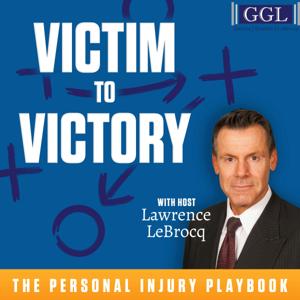


What happens when a workers' compensation attorney who spent a decade working restaurant floors before law school walks into court against thousand attorney insurance defense firms and wins?
In this episode of Victim to Victory, Lawrence LeBrocq of Garces, Grabler & LeBrocq sits down with Michael Tomasino, one of the top workers' compensation attorneys in New Jersey, who leads the firm's workers' compensation department and is on pace to secure roughly $15 million in settlements for injured workers this year.
Tomasino breaks down why New Jersey is one of the hardest states in the country to be an injured worker, from its lack of a bad faith statute to insurance carriers who control the medical treatment. He explains how GGL forwards clients for treatment the same day they retain the firm, how occupational injuries differ from traumatic ones, and how third-party claims and workers' comp claims interact. As he puts it, "There's essentially no ramification for the carrier or the employer in the event that the claim is wrongfully denied."
In this episode you will learn why documenting a workplace injury immediately can make or break a claim, how New Jersey's directed care system lets insurers steer your treatment, what separates an occupational injury from a traumatic one, how third party negligence claims stack against workers' compensation, why claim values have risen while defense has grown far more aggressive, and what to do the moment you are hurt on the job.
What You'll Learn:
Show Notes & Key Timestamps:
[00:00:00] Welcome and Introductions
Lawrence LeBrocq, managing partner and CEO of Garces, Grabler & LeBrocq, opens the show and introduces Michael Tomasino, one of the top workers' compensation attorneys in New Jersey, noting Tomasino works seven days a week and is projected to reach roughly $15 million in settlements this year.
[00:01:00] Why He Became a Workers' Comp Lawyer
Tomasino traces his motivation to a family of union members and his own decade working full-time in restaurants. He argues that knowing how to operate a pallet jack or an immersion blender gives him a different understanding of injured workers than legacy attorneys who never held a non-lawyer job.
[00:02:06] The Changing Face of Workplace Injury
Tomasino describes the range of cases GGL handles, from the quintessential scaffold fall to a new class of logistics and gig economy injuries involving Amazon Flex, Uber, and Lyft drivers. He notes the types of accidents seen today look very different than those before the pandemic.
[00:03:41] What To Do When You Are Hurt At Work
Tomasino lays out the first steps: report the injury, request medical treatment, and draft an incident report so there is proof. He warns that employers sometimes instruct workers headed to the hospital to deny the injury happened at work, and urges honesty with treating physicians.
[00:04:52] Why Documentation Decides The Case
Tomasino explains that New Jersey has no bad faith statute, so there is little consequence when a carrier wrongfully denies a claim. Early proof that the accident occurred at work lets him convince a judge at the first or second hearing and shortens the gap where an injured worker gets no treatment or pay.
[00:06:25] How Insurers Control Your Treatment
Tomasino describes how a carrier steers injured workers to a walk-in clinic and lets them treat for months without real diagnostic imaging or specialists. Many workers go half a year without knowing what is wrong before they retain an attorney.
[00:07:29] The GGL Unauthorized Treatment Model
Tomasino explains what sets the firm apart: forwarding clients to doctors GGL directs, often the same day they retain the firm. This guarantees immediate treatment, early diagnosis through MRIs and CT scans, and the medical records needed to prove a worker cannot return to the job.
[00:08:56] Piecing Together The Bills
Tomasino compares assembling denied claims to a puzzle, gathering records and bills from every hospital, physician, and imaging center involved. He notes that a single hospital visit that once produced 20 pages now generates thousands of pages and dozens of separate bills, and that fewer than 3 percent of cases are authorized from the start.
[00:11:30] Third Party Claims Versus Workers' Comp
Tomasino explains the difference between a first-party workers' compensation claim and a third-party negligence claim, using a work truck rear-ended by another driver as the example. He details how workers' comp is primary in New Jersey and how the two claims interact, including the lien that must be paid back.
[00:16:30] Occupational And Repetitive Injuries
Lawrence and Tomasino go beyond carpal tunnel to occupational low back syndrome and other repetitive bending and lifting injuries common in warehouse and logistics work. Tomasino describes workers lifting hundreds of heavy packages an hour and the damage done to spines, knees, and shoulders.
[00:18:16] Why Occupational Claims Get Denied
Tomasino explains that occupational claims are almost always denied in New Jersey, forcing the firm to sue the employer and every insurance carrier across the exposure period, sometimes fighting a dozen defense lawyers at once. He points to GGL's statewide panel of nearly 60 subspecialists as the reason clients still get treated.
[00:20:37] Trends Reshaping Workers' Compensation
Tomasino flags national trends, including whether rideshare drivers qualify for benefits, and notes New Jersey has not yet followed states that presume these drivers are employees. He explains that inflation has pushed claim values up while large out-of-state defense firms now litigate cases far harder.
[00:23:12] Key Takeaways And Why Call GGL
Tomasino distills his advice: report the injury, get an employer report, seek treatment, be honest with physicians, and track your bills. He closes on why clients should call the firm, citing over $500 million recovered in New Jersey workers' compensation claims, the largest physician panel in the state, and certified trial attorneys in both practice areas.
"Many times, what we see is employers will instruct individuals who are en route to the hospital to deny that the accident occurred at work."
Quote from Michael Tomasino, workers' compensation attorney at Garces, Grabler & LeBrocq
Whether you are an injured worker unsure of your next move, a warehouse or gig economy driver wondering if you are covered, or an attorney trying to understand how comp and third-party claims fit together, this episode is required listening.
Connect & Learn More
🌐 Garces, Grabler & LeBrocq https://ggllawyers.com/contact-us/
📍 Serving injured workers across all of New Jersey
Victim to Victory is the authority in NJ personal injury. New episode every week.
Can a car accident tear a shoulder without any direct impact to the joint?
Dr. Sheref Hassan is an orthopedic surgeon specializing in sports and traumatic injuries at Landa Spine in New Jersey. He spent years as a sideline physician for the Baltimore Ravens, the Baltimore Blast, and the Washington Nationals, trained through a sports fellowship covering arthroscopic procedures across every major joint, and coauthored a book chapter on elbow and throwing injuries alongside physicians at leading sports medicine institutions. Lawrence LeBrocq of Garces, Grabler & LeBrocq sits down with Dr. Hassan to bring that rare combination of professional sports medicine and serious orthopedic surgery into the world of personal injury.
The conversation opens on what a sports medicine background actually teaches a surgeon about trauma. Dr. Hassan walks through the mechanics of shoulder injuries in motor vehicle accidents, explaining how the body's instinct to brace for impact is precisely what loads the rotator cuff past its failure point, often without the shoulder making direct contact at all. He covers the clinical decision between debriding a partial tear and performing a full repair with anchors and sutures, explains how patient age, activity level, and long-term demand all shift that calculus, and addresses why a defense argument that attributes a labral tear to bone shape gets the anatomy wrong.
The second half of the conversation moves through the knee, elbow, and ankle. Dr. Hassan explains why the meniscus is a structural necessity whose loss accelerates arthritis, covers the evolving science that now makes true ACL repair possible without a graft for certain tear patterns, and walks through trimalleolar fractures for anyone who has seen those records and wondered what all the hardware actually does. He also explains the eccentric loading mechanism behind serious orthopedic trauma and makes clear that MRI findings are not the final word on whether an injury is real.
The episode closes on a case Dr. Hassan describes as among the most rewarding of his career. A young rancher who worked with horses and competed in rodeos had already seen three surgeons and received two MRIs before reaching him, and she had been told in effect that nothing could be confirmed. He ordered a diagnostic injection, localized the problem to the shoulder, recommended a scope despite ambiguous imaging, and found the tear everyone else had missed. She went on to win third place at a major rodeo competition after her recovery. The lesson he takes from it is also the most practical takeaway of the entire conversation: clinical judgment and patient trust are not soft skills, and they are precisely what confirms a real injury when imaging falls short.
What You Will Learn:
"People can live with a hooked acromion, with a spur, and never have a symptom in their life unless something happens to cause it." — Dr. Sheref Hassan
Subscribe for weekly conversations with the attorneys, operators, and innovators turning victims into victors.
#PersonalInjury #OrthopedicSurgery #SportsInjury #RotatorCuffTear #ACLRepair #MeniscusTear #TraumaRecovery #VictimToVictory #GarcesGrablerLeBrocq #ShoulderSurgery #PersonalInjuryLaw #OrthopedicSurgeon
Connect & Learn More
🌐 Garces, Grabler & LeBrocq https://ggllawyers.com/contact-us/
📍 Serving injured workers across all of New Jersey
Victim to Victory is the authority in NJ personal injury. New episode every week.
Dr. Joshua Landa is not an attorney.
He is a spine surgeon with a background that most defense experts cannot match, and in this episode of Victim to Victory, that distinction matters. Dr. Landa completed a dual fellowship in both neurosurgery and orthopedic surgery at the Cleveland Clinic, which means he can address both the nerve and the structural components of a spinal injury without being boxed into a single specialty under cross-examination. He also completed a biomechanics research fellowship at NYU, where he spent a year physically measuring the forces that human spinal tissue can withstand before it fails. Lawrence LeBrocq, CEO and Managing Partner of Garces, Grabler & LeBrocq, interviews Dr. Landa about what that training looks like when it is applied inside a courtroom.
The conversation moves through the science of spinal injury in a way that is genuinely accessible. Dr. Landa explains why a person can suffer a serious brain injury without their head ever contacting a surface, how the biomechanics of a rear-end collision multiply the forces applied to cervical discs, and why a so-called preexisting condition is not the same thing as the cause of an injury. His suspension bridge analogy is direct and clear: a cracked bridge that carried thousands of cars without incident does not collapse because of the crack. It collapses because someone drove an 80,000-pound truck across it.
The episode also covers the surgical side of spine care in practical terms. Dr. Landa distinguishes between a discectomy and a fusion, explains why minimally invasive surgery is still a major procedure, and walks through the long-term concern of adjacent segment syndrome for patients facing spinal fusions. He is candid about artificial disc replacement, including both the advantages and the wear-related risks that do not always get discussed clearly.
The final stretch of the conversation addresses the attorney-doctor relationship directly. Both Dr. Landa and LeBrocq are clear that complete prior medical records are not optional. Missing records create credibility gaps that the defense will exploit, and credibility, as Dr. Landa puts it, is the most important thing of all.
"So you're not looking to diagnose an MRI, you're looking to diagnose a human being." — Dr. Joshua Landa
Timestamps
0:00 Introduction and Dr. Landa's background
1:05 Dual fellowship training in neurosurgery and orthopedic surgery at the Cleveland Clinic
2:33 Biomechanics research fellowship at NYU
3:18 How rear-end collisions create disc injuries
4:09 Closed head injuries without head contact: the coup and contrecoup mechanism
5:23 Communicating spine anatomy to juries without medical jargon
7:41 How defense cross-examination tactics fail against a complete clinical picture
9:30 The asymptomatic plaintiff and the preexisting condition argument
11:01 The suspension bridge analogy for explaining preexisting vulnerability
12:23 Connecting MRI findings to subjective patient complaints
13:54 What minimally invasive spine surgery actually involves
15:37 Discectomy versus fusion: when each procedure applies
17:13 Why spinal fusions require cages and screws
18:27 Adjacent segment syndrome and its implications for younger patients
20:24 What plaintiff attorneys need to provide for effective medical testimony
21:21 How Dr. Landa explains diagnoses and treatment options to patients
24:02 Outpatient versus in-hospital surgery: how that decision is made
25:19 Artificial disc replacement: advantages and long-term risks
26:56 Dr. Landa's 15 years of practice and how to reach Landa Spine
Connect & Learn More
🌐 Garces, Grabler & LeBrocq https://ggllawyers.com/contact-us/
📍 Serving injured workers across all of New Jersey
Victim to Victory is the authority in NJ personal injury. New episode every week.
The AI Company Fighting for Injury Victims Just Changed the Game, Again
What if the fastest-growing AI company in personal injury law was built because a family couldn't afford dinner after their dad's accident?
In this episode of Victim to Victory, Lawrence LeBrocq sits down with Raymond Mieszaniec, founder of EvenUp, now valued at $2 billion, to break down the company's newest offering (PLAAS), the private equity wave hitting PI law firms, and the battle to protect the contingency fee system that gives everyday people access to justice.
Key Highlights:
✅ PLAAS Explained: Dedicated AI-trained case managers as a seamless extension of your firm, from intake to settlement.
✅ Resolving Cases 3 Months Faster: Real data from 2,000+ active cases managed monthly.
✅ The MSO/Private Equity Wave: What's already happening and how plaintiff firms compete.
✅ AI Playbooks: Catching TBIs, commercial policies, and missed case value automatically.
✅ The Contingency Fee Fight: Why capping attorney fees would eliminate access to justice for most injury victims.
✅ The Origin Story: How Raymond's father's accident and a $100 steakhouse gift card became the founding thesis of a $2B company.
📋 Show Notes & Key Timestamps
[0:00] Welcome & Introduction
Lawrence LeBrocq opens the show and introduces Raymond Mieszaniec, owner and leader of EvenUp, the fastest-growing AI company in the personal injury legal space, now valued at $2 billion. Lawrence previews the episode's focus on EvenUp's newest offering: the PLAAS system.
[0:43] What Is EvenUp? The Elevator Pitch
Raymond gives a crisp overview of EvenUp: a San Francisco-based tech company founded in December 2019, now the leader in AI-powered personal injury workflows, from demand generation to proactive case insights that help attorneys maximize claim value from intake to resolution.
[2:08] From Kung Fu to PricewaterhouseCoopers to PI Tech
Lawrence digs into Raymond's background. Raymond shares his journey from Vancouver, a mathematics and economics degree, cybersecurity consulting at PwC in Hong Kong, his first company in education and recruitment, and how it all led him to San Francisco and eventually to founding EvenUp.
[5:22] The Origin Story: Raymond's Father's Accident
The personal reason behind EvenUp. Raymond recounts how, over 20 years ago, his father was struck by a fleeing gunman's vehicle during a high-speed police chase, leaving him permanently disabled. His immigrant parents, not knowing how the legal system worked, were worn down by insurance delay tactics and settled for far less than they deserved.
[7:27] Closing the Gap: What the Defense Had That Plaintiffs Didn't
Raymond explains the lightbulb moment: defense carriers had massive data repositories like Colossus to lowball plaintiffs. Plaintiff attorneys had nothing comparable. That asymmetry became the founding thesis of EvenUp.
[8:28] Introducing PLAAS: Pre-Litigation as a Service
Lawrence asks Raymond to explain PLAAS. Raymond breaks down how EvenUp moved beyond technology alone to solve the people problem, providing top-tier, dedicated case managers and paralegals who are fully trained on EvenUp's AI tools and serve as a seamless extension of a law firm's team, from intake through settlement.
[12:27] How PLAAS Is Staffed & Priced
A practical look at the PLAAS model: cost-per-case pricing, dedicated staff (no shared representatives), and a cap of 85 cases per person to ensure quality. Raymond explains how this compares to the hidden costs and unpredictability of traditional in-house hiring.
[14:52] Time on Desk & Real Results
Lawrence asks about case timelines. Raymond shares that PLAAS is resolving cases an average of three months faster than the law firms they serve did previously, reducing time on desk, improving cash flow, and freeing attorneys to focus on higher-value litigation cases.
[16:01] AI Playbooks: The Second Line of Defense
Raymond explains how EvenUp's AI continuously monitors case files, call transcripts, and documents, flagging TBI indicators, commercial policies, and case-grading signals that a human reviewer might miss. Lawrence explains his own firm's gold/silver/bronze/platinum/diamond case grading system.
[19:17] Does PLAAS Monitor Intake Calls Too?
Lawrence asks whether EvenUp's AI can catch missed details at the intake stage. Raymond explains how telephony integrations like Zoom allow the AI to crawl call transcripts and identify patterns, including injury flags, that weren't captured in the case management system.
[22:11] MSOs & Private Equity: What's Coming for PI Law Firms
Lawrence pivots to the MSO trend. Raymond recalls predicting 18 months ago that private equity would enter the PI space, and they're already here. He argues this isn't doomsday: firms that modernize their operations faster than PE can learn personal injury will win.
[23:13] The Optimist's Take: Why It's Still Anybody's Game
Raymond encourages firms to operate with urgency, not fear. He outlines how technology and AI can give plaintiff firms the same efficiency advantages that private equity brings, and why the opportunity to scale high-quality PI practices has never been greater.
[25:56] Private Equity as an Unlikely Ally Against Tort Reform
An unexpected angle: Raymond argues that PE money flowing into the plaintiff bar could actually help combat insurance-company-funded tort reform lobbying. With capital now on both sides, the fight for consumers' rights may become more balanced.
[27:27] The Uber Fight & the Contingency Fee System
Lawrence and Raymond discuss the current battle over Uber's push to cap attorney fees and medical expense recovery. Raymond explains why the contingency fee system is the only gateway most injury victims have to justice, and what happens to consumers if it's dismantled.
[29:48] Raymond's Family & Why This Fight Is Personal
A powerful moment: Raymond shares a vivid memory of his family sitting on his childhood bed, crying because they couldn't afford dinner after his father's accident. It's a reminder of exactly who the contingency fee system protects, and why EvenUp exists.
[32:00] EvenUp's Growth: From 3 People to 700 Employees
Raymond reflects on being told by VCs that EvenUp was "the dumbest idea in the world," and how the attorneys they serve were the ones who believed in them first. Now at 700 employees and backed by the firms they support, EvenUp has donated over $500K to fight harmful tort reform.
[32:33] The Future of EvenUp: What's Coming Next
Lawrence asks where EvenUp is headed. Raymond teases significant new developments being built in stealth, consistent with their pattern of shipping only after they've proven ROI. He promises to return to the show when announcements are ready.
[35:03] How to Reach EvenUp & Raymond Mieszaniec
[email protected] | www.evenuplaw.com | Instagram: @Mieszaniec. Raymond walks through the firm's full product and service overview available on the website, including customer case studies.
[36:15] Closing Thoughts: No Excuses, Build the Firm
Raymond's final message to attorneys watching: there has never been a better time to build a personal injury practice. The technology, the people, and the services exist right now to help any firm scale with quality. "Every case treated like your best case."
[38:00] Outro
Lawrence closes with praise for Raymond and EvenUp's mission, helping plaintiff attorneys and consumers fight back against billion-dollar insurance companies.
🎓 What You'll Learn in This Episode
"You have no excuses. Everything is around you. Build the firm."
Subscribe to Victim to Victory for the stories, strategies, and systems that help plaintiff attorneys win.
#EvenUp #PersonalInjuryLaw #PLAAS #AILegalTech #VictimToVictory #PlaintiffBar #LegalInnovation #TortReform #ContingencyFee #lawfirmgrowth
Connect & Learn More
🌐 Garces, Grabler & LeBrocq https://ggllawyers.com/contact-us/
📍 Serving injured workers across all of New Jersey
Victim to Victory is the authority in NJ personal injury. New episode every week.
What happens when the workers' compensation system that is supposed to protect injured New Jersey workers becomes the first obstacle they have to overcome?
In this episode of Victim to Victory, Lawrence LeBrocq of Garces, Grabler & LeBrocq sits down with GGL's top workers' compensation attorney for a comprehensive breakdown of how the New Jersey workers' comp system actually operates, where it fails injured workers, and exactly what to do about it.
Bill Grabler, Michael Tomasino & Victor Broccoli cover the full arc of a workers' comp case from the moment of injury through investigation, denial, treatment, MMI, and final settlement. Along the way they address the questions most injured workers are afraid to ask, including what happens if your employer has no insurance, whether you can be fired for filing a claim, and whether undocumented workers have any rights at all.
In this episode you will learn how workers' compensation and third-party personal injury claims are separate legal tracks that can run simultaneously and why missing the second one leaves money on the table, why claims get denied even for legitimate injuries and the specific steps to challenge a denial before it becomes permanent, what Maximum Medical Improvement actually means and why reaching it does not end your right to treatment or compensation, how defense attorneys use exaggeration tactics to destroy credibility and the disciplined approach that defeats them, why fear of ICE should never stop an undocumented worker from pursuing the benefits they are legally owed, and how settlement value is calculated, how judge conferences create leverage, and when holding firm produces a better outcome than settling early.
What You Will Learn:
Show Notes and Key Timestamps:
[00:00:21] Meet the Attorneys:
Lawrence LeBrocq, Managing Partner of Garces, Grabler & LeBrocq, introduces GGL's workers' compensation attorney and frames the episode around the question injured workers ask most: What do I actually do now?
[00:01:28] Workers' Comp vs. Third-Party Claims:
The attorneys explain the structural difference between the two systems, why they exist simultaneously, and how missing the third-party claim is one of the most costly mistakes an injured worker can make.
[00:04:24] Qualifying and Reporting Your Injury:
What injuries qualify, how to report correctly from day one, and why the way you document the initial report can determine whether your claim survives its first challenge.
[00:06:21] When Your Employer Has No Insurance
What happens when the employer who injured you is uninsured or underinsured, and what legal mechanisms exist to ensure injured workers are not left without recourse.
[00:08:44] Why Claims Get Denied
A direct breakdown of the most common denial reasons, which ones are legitimate and which are pretextual, and the response window that most injured workers do not know they have.
[00:12:52] Fighting Denials Proactively
The documentation habits, medical records strategy, and legal steps that put injured workers in the strongest possible position before a denial even arrives.
[00:16:27] MMI and Getting More Treatment
What Maximum Medical Improvement means legally and medically, how to challenge an MMI declaration that arrives too early, and how to continue pursuing treatment after the designation is made.
[00:19:30] Valuing and Settling the Case
How permanency ratings translate into settlement value, what factors attorneys weigh when evaluating an offer, and why patience in the settlement phase often produces materially better outcomes.
[00:23:35] Judge Conferences and Leverage
How scheduled judge conferences change the negotiating dynamic and why proximity to a hearing date is one of the most reliable sources of settlement leverage in a workers' comp case.
[00:24:44] Exaggeration Defense Tactics
How defense attorneys and insurance investigators use surveillance, inconsistency, and social media to build an exaggerated narrative, and why it works more often than injured workers expect.
[00:25:10] Proving Your Credibility
The specific behaviors, documentation habits, and communication practices that protect credibility from injury through resolution, and why credibility is often the single most determinative factor in a contested case.
[00:26:53] The Art and Science of Workers' Comp
Why workers' comp is part legal strategy and part human judgment, and how experienced attorneys read the room in ways that pure case metrics cannot capture.
[00:28:22] Cross-Examining Defense Doctors
How GGL attorneys approach the independent medical examination process, what questions expose bias in defense doctor reports, and how prior inconsistent opinions become weapons at hearing.
[00:31:17] Using Prior Medical Reports
How earlier reports, whether favorable or unfavorable, become part of the evidentiary record and how experienced attorneys use the full medical history to build a stronger case.
[00:32:14] Fear of Retaliation
What the law actually says about employer retaliation for filing a workers' comp claim, what retaliation looks like in practice, and what injured workers can do when it happens.
[00:36:01] ICE and Undocumented Workers
A direct conversation about immigration status, workers' compensation eligibility, and why the legal protections for undocumented workers in New Jersey are stronger than most people realize.
[00:36:47] Setting Client Expectations
How GGL attorneys approach the honest conversation about timeline, outcome range, and the parts of the process the client controls versus the parts they do not.
[00:40:18] Hard Talks on Benefits
The conversations most attorneys avoid about temporary disability rates, benefit gaps, and what clients should be doing financially while their case is pending.
[00:41:58] The Temp Disability Cliff
What happens when temporary disability benefits run out, what options remain, and how to plan for the gap that catches many injured workers off guard.
[00:44:38] Why Hire GGL
What separates Garces, Grabler & LeBrocq from other workers' comp firms in New Jersey and why the combination of resources, experience, and tenacity changes outcomes.
[00:47:57] Outworking the Competition
The firm's operating philosophy on case preparation, medical record development, and the willingness to take cases to hearing that other firms resolve too early.
[00:50:53] Final Takeaways
The single most important thing an injured worker in New Jersey can do right now, regardless of where they are in the process.
"We outwork the competition. That's not a slogan, that's our strategy." — Lawrence LeBrocq
Whether you were just injured, already denied, or somewhere in the middle of a claim that isn't moving, this episode gives you the full picture of what your case should look like and what to do if it doesn't.
Free consultation: ggllawyers.com | Call or text 855-GGL-WINS
Connect & Learn More
🌐 Garces, Grabler & LeBrocq https://ggllawyers.com/contact-us/
📍 Serving injured workers across all of New Jersey
Victim to Victory is the authority in NJ personal injury. New episode every week.
What happens when one of the most operationally sophisticated personal injury attorneys in the country stops consulting firms and starts building the platform that makes them great?
In this episode of Victim to Victory, Lawrence LeBrocq of Garces, Grabler & LeBrocq sits down with Chad Dudley, co-founder of Dudley DeBosier Injury Lawyers and the architect behind Orion Legal, one of the most ambitious Managed Services Organizations in the personal injury space. Joining the conversation is Bill Biggs, Executive Director of Garces, Grabler & LeBrocq and President of Fireproof, who brings deep expertise in law firm culture and operations.
Chad explains exactly how the MSO model works, why it has overtaken the ABS structure, and how Dudley DeBosier stays 100% attorney-owned while accessing the resources of an institutional platform. He also shares the single phrase he hears from struggling firms that signals trouble every time: “We already do that.”
In this episode you will learn how the Orion MSO separates legal services from back office operations, why private equity investment is likely to improve client service across the PI industry, what Chad's new book The Seven Disciplines of Successful Firms reveals about fanatical execution of simple concepts, where artificial intelligence is delivering the biggest return for PI firms today, and the three strategic paths available to every firm owner navigating this rapidly changing landscape.
What You’ll Learn:
Show Notes & Key Timestamps
[00:00:21] Welcome and Introductions
Lawrence LeBrocq, CEO & Managing Partner of Garces, Grabler & LeBrocq, welcomes Chad Dudley, co-founder of Dudley DeBosier Injury Lawyers and architect of the Orion Legal MSO, alongside Bill Biggs, Executive Director of Garces, Grabler & LeBrocq and President of Fireproof.
[00:01:25] What Is the Orion Legal MSO? From Consulting to Scaling
Chad traces the origin story: building Dudley DeBosier into a firm of more than 50 attorneys, consulting hundreds of PI firms nationwide, and spotting the moment when private equity, legal ethics, and operational scaling all aligned. He explains why the January 22nd deal with Uplift investors became a turning point for the whole industry.
[00:05:05] ABS vs. MSO: What Is the Real Difference?
Chad breaks down why the Alternative Business Structure model stalled under state bar resistance and fee sharing limits, and why the Managed Services Organization has become the legally sound, scalable vehicle of choice, one that is already an extension of how firms operate today.
[00:10:52] The Great Fear: Will I Lose Control of My Firm?
Lawrence raises the number one concern of owners weighing a PE partnership. Chad explains how Dudley DeBosier stays 100% attorney-owned, with the MSO acting purely as a services provider that never directs legal strategy.
[00:17:31] Is Private Equity Good or Bad for Clients?
Chad and Bill make the case that consolidation raises the floor of client service across the industry, giving under-resourced firms access to the communication systems, accountability dashboards, and operational standards once reserved for the largest firms.
[00:19:23] The Seven Disciplines of Successful Firms
Chad discusses his new book with Trial Guides. Using client communication as the case study, he contrasts “we talk to our clients” with a fanatically choreographed, dashboard-measured contact system that fires at 24 hours, 15 days, 60 days, and 120 days, and why most firms only think they do it well.
[00:22:57] Culture at Scale: Will the MSO Hurt It or Magnify It?
Bill Biggs delivers his verdict: the MSO magnifies whatever culture already exists. The firms chosen as platform firms tend to be the strong ones, and they get stronger, which is why selecting partners on shared values matters more than the multiple.
[00:26:00] Your Three Options Right Now
Chad lays out a clear decision framework: join a team, start a team, or be an intelligent, intentional observer. He also names the one path that is not actually an option, and why firms that choose it get left behind.
[00:30:00] Where AI Makes the Biggest Impact in PI Firms
Chad identifies three tiers of AI value: the easy wins (medical summaries, demand packages, document organization), supervisory AI (scanning files for missed TBI signals and overlooked injuries), and operational intelligence (intake efficiency and case stage compliance monitoring).
[00:33:00] How to Prepare Your Firm for What Is Coming
Bill asks the question every small and midsize PI firm owner is thinking. Chad's advice: educate aggressively, read The Owner's Manual by Seth Deutsch, attend events like A Seat at the Table, and treat every podcast and conference as if you had never heard the concept before.
“The one phrase that has killed more firms, stunted their growth, or prevented them from being what they could be: ‘We already do that.’” — Chad Dudley
Whether you are considering joining a platform, building one, or simply protecting your practice for the future, this episode is required listening.
Connect & Learn More
🌐 Garces, Grabler & LeBrocq https://ggllawyers.com/contact-us/
📍 Serving injured workers across all of New Jersey
Victim to Victory is the authority in NJ personal injury. New episode every week.
The World's #1 Pain Management Doctor Reveals What's Changing Medicine Forever 🧠⚡
What if the doctor who lectures surgeons in Korea, Croatia, Brazil, and is recognized globally as the #1 pain management doctor in the world, practiced right in your backyard?
In this episode of Victim to Victory, Lawrence LeBrocq sits down with Dr. Didier Demesmin for a deep dive into the revolution happening inside pain management right now. From spinal cord stimulators to brain stimulation, from PRP injections to AI-guided surgery, Dr. Demesmin breaks it all down in plain language.
🎓 What You'll Learn in This Episode
"It's an exciting time to be in pain management, and an even better time to be a patient."-
Subscribe to Victim to Victory for the stories, science, and strategies that turn victims into victors.
#PainManagement #MinimallyInvasive #SpinalCordStimulator #RegenerativeMedicine #VictimToVictory #DrDemesmin #PainRelief #SpineSurgery #MedicalInnovation #ChronicPain
Connect & Learn More
🌐 Garces, Grabler & LeBrocq https://ggllawyers.com/contact-us/
📍 Serving injured workers across all of New Jersey
Victim to Victory is the authority in NJ personal injury. New episode every week.
From the Courtroom to the Code: How GGL's Workers' Comp Team Is Winning with AI ⚖️🤖
Lawrence LeBrocq, managing partner of Garces, Grabler & LeBrocq, sits down with Victor Broccoli, one of GGL's premier workers' compensation attorneys, for a deep dive into the realities of representing injured workers in New Jersey. From the courtroom to cutting-edge AI software development, Victor breaks down exactly how GGL fights for clients, and why the firm's reputation as a relentless litigator is its greatest asset.
What You'll Learn in This Episode
Key Timestamps
[0:00:21] Introduction & What Is Workers' Compensation?
Lawrence introduces Victor and the episode. Victor lays out the three core rights every injured worker in New Jersey is guaranteed: medical treatment, temporary total disability benefits, and partial permanent disability compensation.
[0:02:02] The #1 Mistake Injured Workers Make
Victor reveals the single biggest error he sees, failing to properly report an injury, and explains why a documented, reproducible report (text, email) can be the difference between winning and losing a case entirely.
[0:03:39] Workers' Comp & Car Accidents: Primacy of Coverage Explained
Many workers don't realize that if they're injured in a car accident while on the job, their claim runs through workers' compensation, not their personal auto insurance. Victor breaks down exactly how this works and why early reporting is critical.
[0:04:38] The GGL Reputation: Preparing Every Case for Trial
Lawrence discusses the firm's philosophy of preparing every case, personal injury and workers' comp alike, for trial. Victor explains how that reputation with insurance companies drives better settlements and stronger outcomes for clients.
[0:06:08] CLEs, AI & Building Software from Scratch
Victor and his colleague Mike Tomasino have put on all-day CLE programs for New Jersey ICLE. This year's focus: practical applications of AI in workers' compensation law. Victor describes how the GGL comp department is building proprietary software to automate repetitive tasks and free attorneys up for high-level strategy.
[0:08:23] Motions for Med & Temp: GGL's Secret Weapon
Victor explains one of the most powerful procedural tools in the workers' comp arsenal, the motion for medical and temporary disability benefits. In New Jersey, the employer controls the doctors. This motion is GGL's way of fighting back and getting clients fair medical care.
[0:11:11] Case Study: The COVID Death Claim Filed With 4 Days Left
Victor recounts one of his most impactful wins. A widow came in with a vague story about her husband's death at a recycling plant. Two other firms had already rejected the case. Victor read 6,000 pages of medical records, identified a compensable COVID death claim, and filed suit with just four days left on the two-year statute of limitations, securing a life-changing settlement.
[0:14:18] How the Practice Has Changed Post-COVID
Workers' comp has shifted to a more remote, digital practice. Victor reflects on what's been gained (efficiency, digital fluency) and what's been lost (in-court mentorship and observation).
[0:16:09] Reputation in a Small Legal Community
Drawing on his early years practicing in rural North Carolina, Victor explains why reputation is everything in a tight-knit specialty like workers' comp, where the same judges, attorneys, and practitioners see each other constantly.
[0:19:15] How GGL Approaches Minor vs. Catastrophic Cases
Victor details his process for every single case, understanding how an injury has affected a client's life before making any demand, and how that scales up for catastrophic cases where total disability and lifetime wage replacement are on the table.
[0:22:09] The Wealth of Experience at GGL & The AI Future
Victor reflects on his five years at GGL and the exponential personal growth that comes from being surrounded by elite attorneys. He connects that environment to the firm's push into AI, and why automating the lower-level work allows everyone to think at a higher level.
[0:26:00] What "GGL Wins" Means
Lawrence closes the episode by asking Victor what winning means to him. His answer: continuous improvement, every single day, building toward something better than what came before.
Connect & Learn More
🌐 Garces, Grabler & LeBrocq https://ggllawyers.com/contact-us/
📍 Serving injured workers across all of New Jersey
Victim to Victory is the authority in NJ personal injury. New episode every week.
What does it take to build a 50-person law firm, launch a national digital marketing agency, and stay at the front of both industries simultaneously?
In this episode of Victim to Victory, Lawrence LeBrocq sits down with Seth Price, managing partner of Price Benowitz LLP and founder of BluShark Digital, to get the unfiltered answer.
Seth doesn't just talk growth theory. He breaks down the exact systems, management structures, and digital strategies that took Price Benowitz from a two-person criminal boutique to one of the DC area's most recognized personal injury firms, while simultaneously building one of the country's top legal SEO agencies.
WHAT YOU'LL LEARN IN THIS EPISODE
"The sooner you invest in that non-lawyer expertise, the faster you're able to have people focus on the different building blocks that build the business — not just the practice."
Subscribe for weekly conversations with the attorneys, operators, and innovators turning victims into victors.
#PersonalInjury #LawFirmGrowth #LegalMarketing #SEOForLawyers #BluSharkDigital #PriceBenowitz #VictimToVictory #LegalLeadership #LawFirmManagementConnect & Learn More
🌐 Garces, Grabler & LeBrocq https://ggllawyers.com/contact-us/
📍 Serving injured workers across all of New Jersey
Victim to Victory is the authority in NJ personal injury. New episode every week.
In the legal world, defense firms often try to win by overwhelming you with data. But what happens when the plaintiff has a tool that is relentless, accurate, and faster than any "army of associates"?
In this episode of Victim to Victory, Lawrence LeBrocq talks with Jerry Zhou, CEO of Supio. Jerry explains how his team of ex-Microsoft engineers is using AI to automate the most grueling parts of personal injury law—from decoding messy medical handwriting to performing instant legal research through an exclusive Westlaw partnership.
We explore how purpose-built AI is reshaping workflows and success rates for personal injury law firms. You will learn:
Subscribe to discover how the latest in legal technology is turning victims into victors!
#LegalAI #Supio #PersonalInjuryLaw #TrialStrategy #Westlaw #LawFirmTech #VictimToVictory #JerryZhou
Connect & Learn More
🌐 Garces, Grabler & LeBrocq https://ggllawyers.com/contact-us/
📍 Serving injured workers across all of New Jersey
Victim to Victory is the authority in NJ personal injury. New episode every week.
From the publisher's feed
Victim to Victory: The Definitive Authority in Personal Injury Law is the premier legal podcast for accident victims, injury survivors, and professionals seeking trusted insight into…
By combining authoritative legal analysis, plain-English explanations, and local and regional legal context, Victim to Victory: The Definitive Authority in Personal Injury Law serves as a trusted resource for those navigating car accidents, truck accidents, motorcycle crashes, wrongful death claims, premises liability, medical negligence, and complex injury cases.
Whether you are an accident victim seeking answers, a professional looking for industry insight, or someone who wants to understand how justice is achieved in serious injury cases, this podcast delivers clarity, credibility, and authority - episode after episode.
Learn more about the host and his firm at www.ggllawyers.com.
116 Listeners
18 Listeners

13 Listeners

87 Listeners
5 Listeners
0 Listeners
3 Listeners
2 Listeners
3 Listeners
2 Listeners

5 Listeners

0 Listeners
6 Listeners
0 Listeners

0 Listeners
0 Listeners

0 Listeners
1 Listeners

0 Listeners