
Sign up to save your podcasts
Or

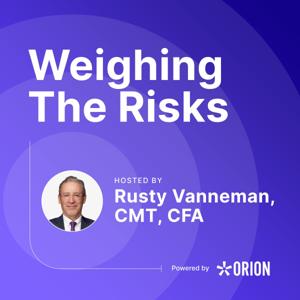


Energy, often dubbed as the lifeblood of industries, holds the power to shape economies. However, the surge in energy prices has the potential to cast a shadow over the stock and bond markets, sending ripples through the intricate web of financial systems.
In this episode, Rusty talks with Jake Hanley, Managing Director and Senior Portfolio Specialist at Teucrium. Jake has an intimate understanding of investment strategies made available through Teucrium's funds. He is partly responsible for certain fund-related daily operating procedures and acts as an alternate for specific dual control functions.
Rusty and Jake weigh potential scenarios and risks associated with rising energy prices. With over a decade's experience in financial services, Jake also shares Teucrium's current macroeconomic outlook, how to mitigate the negative effects of rising energy prices, and the other risks investors should know about.
Key Takeaways
Quotes
[08:13] - "The foundation for all capital markets is international trade currency and sovereign debt. And as you have quakes and tremors in those markets, it's going to reverberate throughout all asset classes. That's why the broad macro view right now is volatility." ~ Jake Hanley
[09:07] - "Energy is the lifeblood of the industry. So higher energy prices either mean lower profit margins for corporations producing goods and services or higher consumer prices." ~ Jake Hanley
[21:57] - "Energy prices moving up can act as a cap for future economic growth. Higher prices can cure high prices." ~ Jake Hanley
Links
Connect with Us
Disclosure
Access to the services presented is provided solely as a service to financial advisors. Orion Risk Intelligence does not make recommendations or determine the suitability of any security or strategy. Past performance of a security or strategy does not guarantee future results. Orion Risk Intelligence research and tools are provided for informational purposes only. While the information is deemed reliable, Orion Risk Intelligence does not guarantee its accuracy, completeness, or suitability for any purpose, and makes no warranties with respect to the results to be obtained from its use.
2356-OAT-8/25/2023
Key Takeaways
Quotes
[09:27] - "If you can survive a run on the banks and banking crisis in March and come out the other side relatively unscathed, that's a good outcome." ~ Xavier Goss
[19:05] - "As long as the problems in real estate are concentrated mostly on office loans, there won't be a broad spillover into the economy." ~ Hannah Greene
[24:22] - "If you own a home with a 2% or even a 3% mortgage, it's hard to pull the trigger and sell it because you don't know what home you'll purchase because there isn't that much supply out there. And you can't replicate that mortgage rate, so your payments are up two to three times what you were paying before." ~ Xavier Goss
Links
Connect with Us
Disclosure(s
Access to the services presented is provided solely as a service to financial advisors. Orion Risk Intelligence does not make recommendations or determine the suitability of any security or strategy. Past performance of a security or strategy does not guarantee future results. Orion Risk Intelligence research and tools are provided for informational purposes only. While the information is deemed reliable, Orion Risk Intelligence does not guarantee its accuracy, completeness, or suitability for any purpose, and makes no warranties with respect to the results to be obtained from its use.
Compliance Code: 2048-OAT-7/28/2023
AI has become a buzzword that dominates the headlines, sparks conversations, and captures the imagination of both industry experts and the general public. However, amidst the seemingly widespread mentions of AI, questions arise regarding the existence of a potential bubble burst in AI stocks. As the debate intensifies, weighing the possible risk and scenarios surrounding the AI hype becomes crucial.
In this episode, Rusty talks with Dan Russo, Portfolio Manager at Potomac Fund Management. Dan has been in the securities industry for 23 years. His experience includes a wide range of institutional investors, working with them to perform fundamental, technical, and quantitative research to navigate the market and generate actionable trading and investment ideas. At Potomac Fund Management, Dan conducts technical and quantitative analysis, structuring portfolios of ETFs based on this analysis and providing ongoing written research for the firm's financial advisor client base.
Dan and Rusty weigh some potential scenarios and risks from the possibility of a bubble burst in artificial intelligence stocks and future scenarios for the stock market, technology stocks, and interest rates.
Key Takeaways
Quotes
[12:53] - "There's probably a bubble in media mentions of the phrase AI. But I can make a compelling case that this is not super crowded at this point. And I wonder if I would call it a bubble yet." ~ Dan Russo
[19:10] - "If you are a fundamental investment manager or stock picker, keep doing your job. Keep analyzing these companies from the bottom up and then just incorporate AI into that analysis process." ~ Dan Russo
[30:30] - "Investors should also think about regulatory risks. We have no idea how governments are going to react to the widespread adoption of artificial intelligence." ~ Dan Russo
Links
Connect with our hosts
Subscribe and stay in touch
Disclosure
Access to the services presented is provided solely as a service to financial advisors. Orion Risk Intelligence does not make recommendations or determine the suitability of any security or strategy. Past performance of a security or strategy does not guarantee future results. Orion Risk Intelligence research and tools are provided for informational purposes only. While the information is deemed reliable, Orion Risk Intelligence does not guarantee its accuracy, completeness, or suitability for any purpose, and makes no warranties with respect to the results to be obtained from its use.
1696-OAT-6/21/2023
The banking sector has long been considered a cornerstone of economic stability. However, the 2023 banking crisis cast a dark shadow over financial markets. This raised concerns about bank stability, stock markets, and the economy's overall health. As analysts and investors brace themselves for potential impacts, various scenarios are explored, ranging from cautious optimism to gloomy apprehension.
In this episode, Rusty talks with Kevin Preloger, Portfolio Manager at Janus Henderson Investors. In his role, Kevin co-manages the U.S. Mid Cap Value and U.S. SMID Cap Value strategies. Kevin joined the firm in 2002 as a financial services research analyst.
Kevin and Rusty weigh some potential risks and scenarios from the 2023 banking crisis and possible future scenarios for the stock market, bank stocks, and interest rates. They also talk about how the banking crisis might impact the economy and the markets, the possible baseline expectation, what's a good case scenario, and what could be a bad one.
Key Takeaways
Quotes
[07:11] - "Interest rates were so low for so long. We had an issue in the late nineties with long-term capital management, Russian defaults, the tech wreck in 2000, the great financial crisis in 2008 and 2009, and here we are today. All these events in the last two decades have caused angst in the marketplace and destroyed a lot of capital." ~ Kevin Preloger
[08:19] - "The fuel on the fire was a fiscal policy that was too stimulative because the pandemic-related spending added to the issue. So interest rates, inflation, and regulatory and supervisory lapses are the things that might have been pointed out as issues in a banking crisis." ~ Kevin Preloger
[26:00] - "Any customer that's wobbling pre-pandemic was bailed out for two years with all the zero rates and fiscal stimulus. That's all gone away now. And if credit is contracting even more, the marginal borrower that's in a tough position before the pandemic is in a tougher position now." ~ Kevin Preloger
Links
Connect with our hosts
Subscribe and stay in touch
Disclosure
Access to the services presented is provided solely as a service to financial advisors. Orion Risk Intelligence does not make recommendations or determine the suitability of any security or strategy. Past performance of a security or strategy does not guarantee future results. Orion Risk Intelligence research and tools are provided for informational purposes only. While the information is deemed reliable, Orion Risk Intelligence does not guarantee its accuracy, completeness, or suitability for any purpose, and makes no warranties with respect to the results to be obtained from its use.
1339-OAT-5/15/2023
Global debt has hit an all-time high, making its way into the headlines worldwide. Debt held by governments, corporations, and individuals has alarmed economists and finance experts alike. While some argue that this debt load is necessary for economic recovery and growth, others warn that this could have far-reaching consequences for the economy around the world.
In this episode, Rusty talks with Phillip Toews, Founder and CEO of Toews Asset Management. Phillip has a passion for behavioral finance and its role in investment decision-making. He focuses on creating "investor-friendly" products and is an outspoken advocate of changing and improving investment vehicles to serve clients' needs. Phillip is also the Founder and CEO of the Behavioral Investing Institute, where he helps advisors cultivate their skills and, through education, seek to serve their clients better.
Phillip and Rusty weigh some of the potential scenarios and risks from the hidden implications of record global debt and some of the possible future scenarios for the stock market, interest rates, and real assets.
Key Takeaways
Quotes
[04:36] - "I define risks as the probability that I will have a lower standard of living than I expect I want. At the extreme end, it means I run completely of money or am destitute. At a less extreme, it means that I will be living a certain standard of living during retirement. But something happens in the markets, and suddenly, I can't do that." ~ Phillip Toews
[07:14] - "We have record levels of debt. We've got sovereign debt, where in the U.S. and some other advanced economies were up to 100% of GDP, which is as high as ever. Simultaneously we have high levels of non-financial, corporate, and personal debt. To sum it up, it's 350% of GDP. That's a new record." ~ Phillip Toews
[17:53] - "Building a behavioral portfolio means creating an all-weather type of portfolio that looks outside of the sphere of what's happened in the last 50 years. That includes things like the Great Depression or things like what happened in Japan, where you need to build something that addresses contingencies." ~ Phillip Toews
Links
Connect with our hosts
Subscribe and stay in touch
Disclosure
Access to the services presented is provided solely as a service to financial advisors. Orion Risk Intelligence does not make recommendations or determine the suitability of any security or strategy. Past performance of a security or strategy does not guarantee future results. Orion Risk Intelligence research and tools are provided for informational purposes only. While the information is deemed reliable, Orion Risk Intelligence does not guarantee its accuracy, completeness, or suitability for any purpose, and makes no warranties with respect to the results to be obtained from its use.
1020-OAT-4/11/2023
The financial industry is no stranger to technological advancements and has been at the forefront of adopting new technologies to streamline operations and improve customer experiences. With the introduction of ChatGPT, financial institutions have been able to take financial management to the next level. As the adoption of AI continues to accelerate, what are some of the risks and scenarios this technology has in the financial ecosystem?
In this episode, Rusty talks with Jay Jacobs, U.S. Head of Thematics and Active Equity ETFs at BlackRock. Before BlackRock, Jay joined Global X ETFs in 2013 and founded the firm's Research and Strategy team, which originates the firm's insights on markets and ETFs. In his current role, Jay is responsible for the research and development of the Megatrends suite, driving the commercialization of these products, and managing product sales and marketing for the Megatrend franchise. Jay is also responsible for BlackRock's active equity and international ETF suites.
Recognizing that artificial intelligence will impact careers, the economy, and the markets, Jay talks to Rusty about one of the most popular generative AI today, ChatGPT. They also explore the impact of AI on the financial industry, how AI will affect U.S. stocks, technology, and interest rates in the future, and weigh some of AI's potential risks and scenarios.
Key Takeaways
Quotes
[03:28] - "One of the risks that people sometimes don't think too much about in the finance world is the risk of disruption, the risk that things can change unexpectedly." ~ Jay Jacobs
[06:16] - "ChatGPT is just one of a grouping of companies in the AI space called generative AI. These software programs can take simple inputs and turn them into something completely new." ~ Jay Jacobs
[27:18] - "Most people are generally underweight in innovation. They think they have innovation because the S&P 500 benchmarks tend to have a lot of exposure to technology and communication services. But when you look under the hood, a lot of that is previous-generation technologies, not truly innovative technologies that will disrupt and create entirely new markets." ~ Jay Jacobs
Links
Connect with our hosts
Subscribe and stay in touch
Disclosure
Access to the services presented is provided solely as a service to financial advisors. Orion Risk Intelligence does not make recommendations or determine the suitability of any security or strategy. Past performance of a security or strategy does not guarantee future results. Orion Risk Intelligence research and tools are provided for informational purposes only. While the information is deemed reliable, Orion Risk Intelligence does not guarantee its accuracy, completeness, or suitability for any purpose, and makes no warranties with respect to the results to be obtained from its use.
0667-OAT-3/6/2023
With China being the world's second-largest economy and a major trading partner for many countries, re-opening after COVID will significantly impact global markets and the economy. As the country gradually emerges from lockdown and resumes economic activity, what does this mean for businesses, investors, and consumers worldwide?
In this episode, Rusty talks with Brendan Ahern, Chief Investment Officer at KraneShares. In his role, Brendan leads the firm's research and education efforts. He actively works with investors on various subjects ranging from asset allocation to trading to articulating the growing influence that index providers hold in the asset management industry. Brendan is considered an expert in global financial markets with a particular focus on China. He is a frequent visitor to China and actively maintains daily contact with a deep local research network comprised of investment banks, brokers, and regional and boutique research firms.
A leading expert on the Chinese economy and markets, Brendan talks with Rusty about some of the potential scenarios and risks regarding one of the biggest factors on the global economy and markets this year, and that is the re-opening of the Chinese economy after COVID. Brendan also speaks about the current relationship between the U.S. and China, deglobalization, and the expected growth and valuation of China's re-opening.
Key Takeaways
Quotes
[08:23] - "The China consumption story is the story in 2023. Great U.S. multinationals and many Chinese companies will directly benefit e-commerce companies, and people will benefit from that." ~ Brendan Ahern
[11:24] - "The U.S. and China economies are highly intertwined. It's the largest trade relationship globally. It's the first time in five years, a top U.S. government official was going to visit China." ~ Brendan Ahern
[27:36] - "The consumer coming back will not be an overnight thing. It will happen slowly, and consumer confidence will grow over the course of this year." ~ Brendan Ahern
Links
Connect with our hosts
Subscribe and stay in touch
Disclosure
Access to the services presented is provided solely as a service to financial advisors. Orion Risk Intelligence does not make recommendations or determine the suitability of any security or strategy. Past performance of a security or strategy does not guarantee future results. Orion Risk Intelligence research and tools are provided for informational purposes only. While the information is deemed reliable, Orion Risk Intelligence does not guarantee its accuracy, completeness, or suitability for any purpose, and makes no warranties with respect to the results to be obtained from its use.
0498-OAT-2/16/2023
Inflation can be tricky to predict and manage, so preparing for the inevitable peak is important. While it's impossible to know exactly when or how high inflation will spike, what could investors do to mitigate the effects and protect themselves from the negative consequences of high inflation?
In this episode, Rusty talks with Michael Ashton, Managing Principal at Enduring Investments. Before founding Enduring Investments, Michael worked in research, sales, and trading for several large investment banks, including Bankers Trust, Barclays Capital, and J.P. Morgan. Since 2003, when he traded the first interbank U.S. CPI swaps, and 2004 when he was the lead market maker for the CME's CPI Futures contract, Michael has played a role in developing new instruments and methods for accessing and hedging various inflation exposures.
A leading inflation product and market expert, otherwise known as the "inflation guy," Michael talks with Rusty about the current inflation landscape, some potential scenarios and risks regarding inflation in the year ahead, and what financial advisors and investors can do to hedge inflation.
Key Takeaways
Quotes
[13:28] - "If you use our current methods back in the early 80s, we ended up with roughly the same level of inflation. The analogy is that it takes years to get the genie back in the bottle, even if you know what you're doing and do it fairly aggressively." ~ Michael Ashton
[18:30] - "In a higher level of inflation, stocks and bonds become correlated. And that's the part that has big portfolio implications and is underappreciated right now." ~ Michael Ashton
[19:31] - "As an investor, it's important to consider what you think will happen versus what the market is pricing and what opportunities the market gives." ~ Michael Ashton
Links
Connect with our hosts
Subscribe and stay in touch
Disclosure
Access to the services presented is provided solely as a service to financial advisors. Orion Risk Intelligence does not make recommendations or determine the suitability of any security or strategy. Past performance of a security or strategy does not guarantee future results. Orion Risk Intelligence research and tools are provided for informational purposes only. While the information is deemed reliable, Orion Risk Intelligence does not guarantee its accuracy, completeness, or suitability for any purpose, and makes no warranties with respect to the results to be obtained from its use.
0143-OAT-1/19/2023
Investors are always looking for clues about where the stock market is headed, and corporate earnings are one of the most significant indicators of stock market performance. While 2023 is shaping to be an exciting year for the economy and the market, it is important to consider the potential risks and scenarios that could impact corporate earnings growth.
In this episode, Rusty talks with Grant Engelbart, Senior Portfolio Manager at Brinker Capital Investment. Grant manages aggressive mutual funds and several ETF and mutual fund separate account strategies in his role. He also leads the alternative broad asset class team and serves on several committees across Brinker’s parent company, Orion Advisor Solutions.
Knowing the corporate earnings landscape in detail, Grant talks with Rusty about some potential scenarios and risks regarding corporate earnings in the year ahead, including the possibility of a recession, which is a top concern with many financial advisors and investors.
Key Takeaways
Quotes
[05:21] - "We've been defining risk in a very quantitative, measurable way. That makes sense when you're building a portfolio. But from a client perspective, risk is an investor not staying invested." ~ Grant Engelbart
[16:43] - "There's so much that people get caught up on - inflation, war, the Fed. But all these things impact the market in the short term. It is earnings that drive stock prices over the long-term." ~ Grant Engelbart
[29:10] - "The biggest risks aren't the ones that are telegraphed. It's not a recession risk that has been talked about for years. It's the lack of allocation in emerging markets and the inability to take advantage of the area that's growing." ~ Grant Engelbart
Links
Connect with our hosts
Subscribe and stay in touch
Disclosure
Access to the services presented is provided solely as a service to financial advisors. Orion Risk Intelligence does not make recommendations or determine the suitability of any security or strategy. Past performance of a security or strategy does not guarantee future results. Orion Risk Intelligence research and tools are provided for informational purposes only. While the information is deemed reliable, Orion Risk Intelligence does not guarantee its accuracy, completeness, or suitability for any purpose, and makes no warranties with respect to the results to be obtained from its use.
2466-OAT-12/20/2022
With the current political climate, it's important to know the risks and scenarios that could play out from different geopolitical topics. From trade disputes to military conflict, there are many ways that geopolitical unrest can impact the economy and the market.
In this episode, Rusty talks with Kim Arthur, President and CEO at Main Management. Kim began his financial career in 1987 when he joined Montgomery Securities in their Institutional Sales division. In 2009, he was recognized by Institutional Investor Magazine as a "Rising Star" of Foundations and Endowments. Kim has also been profiled in Index Universe articles and referenced in Barron's, Wall Street Journal, Business Week, and Fortune Magazine, among others.
Kim talks with Rusty about some potential risks and scenarios from different geopolitical topics that are top of mind for many financial advisors and investors and the impact geopolitical turbulence might have on the economy and the market.
Key Takeaways
Quotes
[07:29] - "The two things that have to be considered with geopolitical risk are once you go outside of your home country, you are exposing yourself to currency risk. If it's a tailwind, that can be very nice, but if it's a headwind like it's been for the last 11 years, it can be very painful. Then the political and conflict aspect. Many countries don't play by the same rules you and I play in the U.S." ~ Kim Arthur
[24:26] - "There have been huge flows from overseas into the U.S. dollar because of the safe haven of this country that we are in. The good is it's cheaper to import things. The bad is that the high dollar is a huge currency headwind. The ugly is when you have the dollar's strength, emerging currencies blow up big time." ~ Kim Arthur
[41:34] - "Risk, by definition, exposes you to danger, harm, or loss. None of those sounds good. But you can reduce all of those if you take calculated risk-taking." ~ Kim Arthur
Links
Connect with our hosts
Subscribe and stay in touch
Disclosure
Access to the services presented is provided solely as a service to financial advisors. Orion Risk Intelligence does not make recommendations or determine the suitability of any security or strategy. The past performance of a security or strategy does not guarantee future results. Orion Risk Intelligence research and tools are provided for informational purposes only. While the information is deemed reliable, Orion Risk Intelligence does not guarantee its accuracy, completeness, or suitability for any purpose and makes no warranties with respect to the results to be obtained from its use.
2168-OPS-11/10/2022
From the publisher's feed

3,319 Listeners

2,171 Listeners

1,953 Listeners

22 Listeners
104 Listeners
283 Listeners
2,022 Listeners

298 Listeners

2,141 Listeners

932 Listeners
244 Listeners

5 Listeners
81 Listeners

417 Listeners
1,065 Listeners