
Sign up to save your podcasts
Or

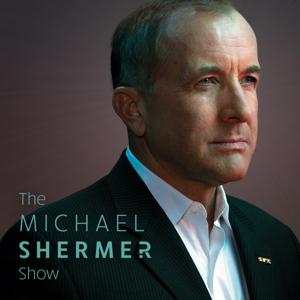

Outside of the academics and activists whose ideology came to dominate the West in the second decade of the twenty-first century, arguably no group influenced public discourse as much as the Intellectual Dark Web.
Challenging the intellectual and cultural orthodoxies that engulfed universities, the media, and big tech, this group—a loose collective of politically diverse intellectuals, commentators, and scholars critical of political correctness, identity politics, and cancel culture—relied on alternative platforms like podcasts, digital magazines, and YouTube to promote free speech, universal rights, and individual liberty.
While the term is most commonly identified with Sam Harris, Ben Shapiro, Jordan Peterson, Bret and Eric Weinstein, and Joe Rogan, the group's concerns and philosophy extended more broadly to include a wide range of individuals who helped mainstream critiques of "woke" culture and a robust defense of free speech, including Steven Pinker, Michael Shermer, Jonathan Haidt, Dave Rubin, Ayaan Hirsi Ali, and Stephen Fry.
The Intellectual Dark Web's coherence began to unravel in the early 2020s due to internal differences (such as over the response to COVID-19 and climate change), and its full legacy and historical impact are yet to be determined.
Jamie Roberts is a lecturer in the Department of Government and International Relations at the University of Sydney. His new book is The Intellectual Dark Web: A History (and Possible Future).
 View all episodes
 By Michael Shermer

4.4
900900 ratings
Outside of the academics and activists whose ideology came to dominate the West in the second decade of the twenty-first century, arguably no group influenced public discourse as much as the Intellectual Dark Web.
Challenging the intellectual and cultural orthodoxies that engulfed universities, the media, and big tech, this group—a loose collective of politically diverse intellectuals, commentators, and scholars critical of political correctness, identity politics, and cancel culture—relied on alternative platforms like podcasts, digital magazines, and YouTube to promote free speech, universal rights, and individual liberty.
While the term is most commonly identified with Sam Harris, Ben Shapiro, Jordan Peterson, Bret and Eric Weinstein, and Joe Rogan, the group's concerns and philosophy extended more broadly to include a wide range of individuals who helped mainstream critiques of "woke" culture and a robust defense of free speech, including Steven Pinker, Michael Shermer, Jonathan Haidt, Dave Rubin, Ayaan Hirsi Ali, and Stephen Fry.
The Intellectual Dark Web's coherence began to unravel in the early 2020s due to internal differences (such as over the response to COVID-19 and climate change), and its full legacy and historical impact are yet to be determined.
Jamie Roberts is a lecturer in the Department of Government and International Relations at the University of Sydney. His new book is The Intellectual Dark Web: A History (and Possible Future).
26,380 Listeners
2,267 Listeners
845 Listeners
1,065 Listeners
907 Listeners
2,275 Listeners
4,167 Listeners
796 Listeners
1,662 Listeners
506 Listeners
617 Listeners

18 Listeners
954 Listeners
221 Listeners
247 Listeners