
Sign up to save your podcasts
Or



Facebook founder Mark Zuckerberg has said that privacy is no longer a “social norm”.
However, what impacts does this lack of privacy and use of social media have on us? What does the world look like if we fail to properly address the impacts of social media on mental health, especially in young people?
Nicky Jacobs has a unique insight into the teenage mind and how its impacted by social media. Her research shows that teenage brains operate differently and are differently impacted by social media. In this episode we’ll talk to Nicky about what happens to the next generation if we don’t change how they engage with and use social media, and what’s happening inside those brains of theirs right now.
See omnystudio.com/listener for privacy information.
So what can you do to save us all from a world without art? On this episode our experts share all their best tips for finding art in new places, adding it into your own life. And why now, more than ever, art matters.
See omnystudio.com/listener for privacy information.
In this episode we hear from two people who are finding and creating art in places and ways in which wouldn't have been possible, or even imagined, 20 or even 10 years ago. They believe the future of art is bright, as long as we learn to look for and at it differently. Jon McCormack is an artist with a PhD in Computer Science and is a Professor of IT, which might seem an incongruous combination, but he believes the future of art is in human-robot collaboration. Nick McGuigan is an accountant who urges people to look for art where it may not obviously be. His highly successful Artist in Residence program in the Monash faculty of Business and Economics embeds art into accounting, pushing back against the ‘boring accountant’ stereotype.
See omnystudio.com/listener for privacy information.
What could happen to our world if we no longer have an appreciation for art and culture? At times when our most basic needs are at threat, can we even afford to consider art, let alone lament its loss? How does the world look and feel without new art being created? Or do we simply need to start looking for and at art differently? In this episode we hear from Ali Alizadeh, a literary critic, poet and writer on the philosophy of art, who sees the biggest threat to art as the growing need for it to have function, serve a purpose or send a message, rather than simply existing for the sake of art.
See omnystudio.com/listener for privacy information.
In this episode we've gathered all the very best practical tips and ideas from our experts to help you find your way through the massive amounts of news and information we see each day, how to identify misinformation and how to ensure you're getting the most objective, accurate and up to date information from your news sources.
See omnystudio.com/listener for privacy information.
What can be done to help counter these misinformation campaigns and fake news? We’ll talk to some of the experts exploring what we can change to help counter these campaigns. Dr David Holmes specialises in a different type of communication, using research and evidence to strategically send critical messages. The aim is to draw attention to climate change, to help people better understand the science, and therefore the impacts. The Hub works closely with weather presenters and media outlets to help ensure information they provide on weather and climate is scientifically accurate, up to date, and easy for the average person to understand and absorb.
The Public Interest Journalism Initiative is on a mission to save democracy from the decline it faces at the hands of reducing news budgets and increasingly concentrated media ownership. Margaret Simons is one of the nation's most respected reporters, commentators and educators on the state of the media and politics. She was the founding chair of the PIJI and is a current board member.
See omnystudio.com/listener for privacy information.
The US elections, Australia’s bushfire disaster and now Covid-19 - major events plagued by online agenda-driven misinformation campaigns and the spread of fake news, amplified by mainstream media outlets with their own agenda. Monash School of Media, Film and Journalism experts Mark Andrejevic and Johan Lidberg ponder the possibility of a future in which it’s impossible to verify sources and objectivity of information due to lack of diversity in media ownership and ongoing resource cuts to journalism. They consider the potential effect on our democracy and our society if we don’t act to prevent these campaigns continuing to drive divisions with false information. They fear the very democratic institutions we rely on for a common understanding of the world are in a state of collapse.
See omnystudio.com/listener for privacy information.
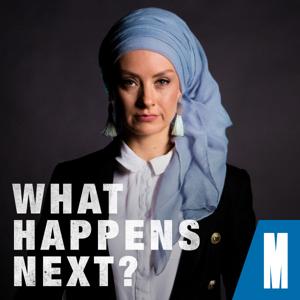
The events of 2020 have brought us closer than we could have imagined to the dystopian futures of The Handmaid’s Tale, Mad Max and Brave New World. Academic and commentator Dr Susan Carland is back, exploring a new range of issues on Monash podcast What Happens Next?
She’ll talk to thought leaders and seek answers to big questions - What does our future look like if we don’t take action? Who’s at the forefront of the fight? Is there anything we can do at an individual level?
In this series we’ll take a closer look at vital issues including fake news, the impact of art, social media and mental health, renewable energy and masculinity. Learn from experts, meet the people making a difference and discover how you yourself can help drive change.
If you're new to What Happens Next, why not go back and check out Series One now!
See omnystudio.com/listener for privacy information.
What should we do when confronted by right wing extremism in our daily lives? Our behaviour change expert shares the best strategies.
See omnystudio.com/listener for privacy information.
30.1.20
What Happens Next?
What's Rightfully Ours – What Happens If We Ignore Right-Wing Extremism? | 8
Right-wing extremism is on the rise and presents a complex and concerning phenomenon. Terrorism and extremism expert Pete Lentini, an associate professor in Monash University’s Faculty of Arts, talks to host Dr Susan Carland about the state of right-wing extremism in Australia and across the globe.
Pete identifies the fear of a loss of status, cultural heritage and privilege as primary drivers of this type of extremism. These fears manifest as a perceived threat of extinction for the white race and traditional values, fuelling sentiments of resentment and exclusion.
Despite the prevalence and threat posed by right-wing extremism, it’s not always taken as seriously as it should be. There are also unique challenges in countering this form of radicalisation.
Pete points out that certain right-wing radical ideas have seeped into mainstream political discourse, contributing to a shift in the political landscape. This normalisation may further legitimise extremist viewpoints, creating a breeding ground for radicalisation.
So is censorship a solution? Find out what Pete thinks about balancing the need for security with the preservation of democratic values and civil liberties.
A full transcript of this episode is available on Monash Lens.
In this series:
Learn more about right-wing extremism:
If you’re enjoying the show, don’t forget to subscribe, or rate or review “What Happens Next?” to help listeners like yourself discover it.
Subscribe to Monash’s YouTube channel to watch the video version of each full episode.
See omnystudio.com/listener for privacy information.
From the publisher's feed
The Handmaid’s Tale. Brave New World. Mad Max. Fictional dystopias have never seemed so close to becoming reality. Is it too late to change our course?
What Happens Next?, a podcast from Monash University, examines some of the biggest challenges facing our world and asks the experts, what will happen if we don't change? And what can we do to create a better future? Learn from leaders, listen to the people making a difference, and discover how you can help drive change.
100 Listeners
770 Listeners
759 Listeners
13 Listeners
61 Listeners
10 Listeners

235 Listeners
150 Listeners

26 Listeners

127 Listeners
24 Listeners

114 Listeners
65 Listeners
17 Listeners

4 Listeners