
Sign up to save your podcasts
Or

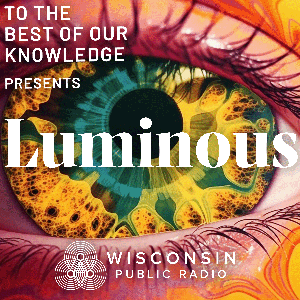

Psychedelics have a unique capacity to open up the mind so that everything feels fresh and full of possibilities. Especially as you get older, it can be easy to get stuck in a rut — but under a psychedelic, the brain can become more plastic. This time period, though, is limited - it might last just a few days, or a few weeks. So it’s really important to understand this “critical period” when our minds are so open — and also so vulnerable.
These “critical periods” are what Gul Dolen has been studying for years. She’s a neuroscientist at Johns Hopkins that has done some groundbreaking investigation of the “critical periods” of psychedelics, including studies that involve giving MDMA — also known as “Molly” in some circles — to octopuses.
She’s also challenging a lot of the scientific work that’s been done on psychedelics — she has serious doubts about the value of neuroimaging, or even a concept like the “default mode network.” If you heard our last Luminous episode on the neuroscience of psychedelics, you’ll want to listen to this interview.
For more from Luminous, visit our website at ttbook.org/luminous
Original Air Date: August 12, 2023
Interviews In This Hour:
Guests:
Gul Dolen
Never want to miss an episode? Subscribe to the podcast.
Want to hear more from us, including extended interviews and favorites from the archive? Subscribe to our newsletter.
 View all episodes
 By Steve Paulson

4.9
8383 ratings
Psychedelics have a unique capacity to open up the mind so that everything feels fresh and full of possibilities. Especially as you get older, it can be easy to get stuck in a rut — but under a psychedelic, the brain can become more plastic. This time period, though, is limited - it might last just a few days, or a few weeks. So it’s really important to understand this “critical period” when our minds are so open — and also so vulnerable.
These “critical periods” are what Gul Dolen has been studying for years. She’s a neuroscientist at Johns Hopkins that has done some groundbreaking investigation of the “critical periods” of psychedelics, including studies that involve giving MDMA — also known as “Molly” in some circles — to octopuses.
She’s also challenging a lot of the scientific work that’s been done on psychedelics — she has serious doubts about the value of neuroimaging, or even a concept like the “default mode network.” If you heard our last Luminous episode on the neuroscience of psychedelics, you’ll want to listen to this interview.
For more from Luminous, visit our website at ttbook.org/luminous
Original Air Date: August 12, 2023
Interviews In This Hour:
Guests:
Gul Dolen
Never want to miss an episode? Subscribe to the podcast.
Want to hear more from us, including extended interviews and favorites from the archive? Subscribe to our newsletter.

43,986 Listeners

38,579 Listeners

43,719 Listeners

10,563 Listeners

10,153 Listeners

919 Listeners

12,766 Listeners

2,518 Listeners

233 Listeners

563 Listeners
311 Listeners
1,896 Listeners

10 Listeners
471 Listeners
14,337 Listeners

46 Listeners
54 Listeners

148 Listeners