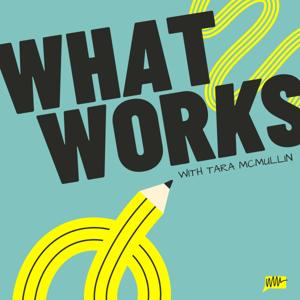
What Works
Download on the App Store

What Works episodes

  • EP 276: Tools For Building An Online Personal Training Business With Holly Myers and Arryn Grogan From Lift With Holly & Arryn


    In This Episode:


    * How personal trainers Holly Myers and Arryn Grogan use systems and software to run a thriving online coaching business* Why they invest in new training and certifications as tools to use in their business* What coaching online has allowed them to accomplish* What tools they use to communicate with clients, produce a library worth of content, and build programs for people to purchase


    My routine has been disrupted.


    It’s been six weeks since I’ve been to the gym and I’m quite certain my neighbors are very confused about what I’m doing with the kettlebells in the backyard.


    Like most gym-goers, I’ve been experimenting with working out from home and hoping that my gym family is well.


    Luckily, I also have an Instagram gym family—and they’ve been motivating, educating, and challenging me since long before this all started. It’s been so fun watch them re-learn how to do business overnight while, at the same time, providing an immense amount of leadership for the people they care about.


    Now, all that said, this episode sounds like a no-brainer—but I assure you, it was recorded weeks before every gym in America shut down.


    This week, we’re taking a look at the tools that personal trainers use to run their businesses online. And since I realize that you’re most likely not a personal trainer, I want assure you that this episode is still full of interesting ways to think about your business and the tools you use to run it.


    My guests today are Holly Myers and Arryn Grogan from Lift With Holly And Arryn. They were running an online personal training business before taking your personal training business online was corona-cool!


    I found Holly and Arryn through my Instagram gym family and fell in love with their joy, strength, and precision. Their content is incredibly useful and very fun and real at the same time.


    Because Holly and Arryn specialize in training other coaches on the techniques they’ve mastered, they realized that online coaching was a great fit for them early on. Instead of constraining their client base to their hometown, they’re able to coach people from all over—and coach while they’re on the road, as well.


    In this episode, we talk about the tools and systems they’ve used to build their online training business—including the equipment they prefer, the software they use for coaching, the system they use for putting together programs, and how they build content for Instagram.


    We also talk about some of their favorite tools for working on the road.


    Now, let’s find out What Works for Holly Myers and Arryn Grogan!


    What Works Is Brought To You By


    Mighty Networks powers brands and businesses – like yours! – that bring people together.With a Mighty Network, online business owners just like you can bring together in one place:


    * Your website* Your content* Your courses* Your community* Your events online and in real life* And charge for them…all while building YOUR brand.


    Visit mightynetworks.com to see more examples of brands bringing people together and taking their businesses to the next level.
    ★ Support this podcast ★
    35 min
  • EP 275: Tools For Building A Copywriting Agency With Content Bistro Founder Prerna Malik


    In This Episode:


    * The process Prerna Malik, founder of Content Bistro, uses to create effective copy for her clients* Why she keeps her tools simple and isn’t quick to change them just because there are new options out there* How Prerna uses experience, testing, and research to push the edge and try new things with the copy she writes* What she did to translate her service processes into a program for other agency owners and service-based businesses


    Your process is your most valuable tool.


    By that, I mean that the way you do what you do, the system you use to create results, the pattern you follow time and time again is what all the value-generating activities of your business are based on.


    Now, when you’re just getting started with your business, your process probably feels pretty loose and undefinable. You might even call it magic.


    And so then it’s no wonder that you have trouble explaining it or documenting it—let alone putting a dollar value on it.


    But as your business matures, your process (should) become clearer and clearer. You can explain it. You can document it. You can see the financial value in it.


    Everything else in your business layers on top of your process to create clarity and efficiency.


    Your process provides the foundation for every other tool you introduce into the way you run your business.


    This month, we’re examining the tools we use to run our businesses. So far, we’ve talked through some of the tools that Sean and I use to work with clients in our podcast production agency. I talked with Jessica Stansberry about the tools she uses to run her content-driven digital products business.


    And this week, I’m talking with Prerna Malik about the tools she uses to run her copywriting agency, Content Bistro.


    Yes, Prerna and I get into the specific tools she uses—things like Google Drive, Notion, and CrazyEgg. But we also talk a lot about her process—how she does what she does.


    Like I said, process is the most valuable tool in your business and your process should determine the tools that you use.


    Prerna’s approach certainly demonstrates this. Her tools help her make her process work. They help her make her process more efficient. And ultimately, it’s her process that’s helped her build an incredible business.


    Now, let’s find out what works for Prerna Malik.


    Tools In This Episode:


    * Google Drive – document collaboration and file storage* Notion – project & process management* CrazyEgg – heat maps, user recordings, and A/B testing* Book Like A Boss – scheduling system


    What Works Is Brought To You By


    Mighty Networks powers brands and businesses – like yours! – that bring people together.With a Mighty Network, online business owners just like you can bring together in one place:


    * Your website* Your content* Your courses* Your community* Y...
    ★ Support this podcast ★
    45 min
  • EP 274: The Tools That Power A Content-Driven Business With Grit Host Jessica Stansberry


    In This Episode:


    * What tools Jessica Stansberry uses to run her content-driven business* How she knows when it’s time to switch tools and what criteria she uses to pick a new one* What project management tool she’d make out with if she could* How her systems and workflows help her get the most out the software she uses to run her business


    Most small businesses today create some form of content.


    Some are sporadically posting updates & photos on social media.


    Others take the time to create helpful articles, entertaining videos, or valuable podcast episodes.


    But there’s a whole category of small business that I would consider content-driven. In other words, these businesses rely on the steady production of content that keeps the existing audience happy while it also helps attract new audience members.


    These businesses might make money by selling advertising, leveraging affiliate marketing partnerships, or selling their own digital products. And often, it’s a combination of all three.


    These businesses—and the creators behind them—have a lot to teach us about the tools and workflows that can make the content we create easier to manage, more effective, and more profitable.


    We’re continuing our series on the tools we use to run our small businesses…


    …by taking a look at the tools a content-driven business uses to create, manage, and publish all that content—as well as how it actually drives revenue, too.


    I could think of no one better than my friend Jessica Stansberry to talk content & tools with. Jessica is a YouTuber, podcaster, and fellow lover of tools.


    She’s the host of Grit, a podcast about business and lifestyle design. She’s also produces videos on planning, productivity, business, and marketing for over 66,000 subscribers on YouTube.


    Jessica and I chat about the hardware, software, and systems she uses to manage it all—plus her criteria for selecting or switching tools! I also asked her about the tools she uses to manage her life outside of business.


    Now, let’s find out what works for Jessica Stansberry!


    Tools In This Episode:


    * Clickup – project management software* Canon D70 – camera for video* Ring light – lighting for video* ATR2100 – microphone* Zoom H1n – portable audio recorder* Premiere Pro – video editing* MemberVault – learning management system for online courses* GoodNotes – iPad app for notetaking* Keywords Everywhere – SEO research Chrome extension


    What Works Is Brought To You By


    Mighty Networks powers brands and businesses – like yours! – that bring people together.With a Mighty Network, online business owners just like you can bring together in one place:
    ★ Support this podcast ★
    44 min
  • EP 273: The Tools We Use To Run a Podcast Production Agency with YellowHouse.Media Co-Founders Sean and Tara McMullin


    In This Episode:


    * Sean and Tara McMullin, co-founders of YellowHouse.Media share the tools they use to run their podcast production agency* Sean shares the value of templates across a variety of tools* Tara sheds light on some of the “magic” tools that help them make standout podcasts* And they both share what’s working when it comes to tools for managing stress & anxiety right now


    When I started my business over 11 years ago, the only tool I worried about was WordPress.


    My business was my website and my website was my business. WordPress made it all work.


    And while I still use WordPress to this day, there are dozens of other tools I use to run both of my companies. There’s my email provider, my web host, our community platform, the graphic design tools I use, the communication software we chat on… each tool has it’s purpose and place within the larger business.


    This month, we’re going to take a deep dive into the tools that different businesses rely on to run.


    We’ll talk software, systems, and processes—plus how it all works together.


    We’ll talk about how things have changed, what’s stayed the same, and how to know when it’s time to switch up your tools.


    And, we’ll talk with business owners that run different kinds of businesses—digital products, 1:1 services, and agencies.


    Focusing on tools is especially relevant right now because many business owners are looking for ways to run more efficiently and more effectively so that they can boost profit or create new streams of revenue as the economy is changing.


    We’re also trying out new tools to cope with interruptions and stress.


    So in this kick off episode, I wanted to talk about both of those pieces of the puzzle with my podcasting partner-in-crime, my husband and the production coordinator for What Works, Sean McMullin.


    Together, Sean and I run YellowHouse.Media, a full-service podcast production agency that specializes in helping small business owners create standout podcasts that power their marketing and sales.


    We’ll get into the tools we use to run YellowHouse—including how we set up client dashboards, manage projects, edit audio, and consult on content strategy. But first, we wanted to share some of the tools we’re using to mange stress and anxiety right now.


    Let’s get into it!


    Tools Mentioned In This Episode:


    * Headspace – meditation app* Rode Procaster – Tara’s microphone* Audio Technica ATR2100 – Sean’s microphone* Google Drive – documents, spreadsheets, storage, and more* Descript – transcripts and audio editing* Headliner – app for creating audiograms* Canva – graphic design tool* Notion – project management and organization tool* Squadcast – remote interview recording tool


    Some of the links above are affiliate links—meaning that we may earn a com...
    ★ Support this podcast ★
    1 hr 12 min
  • EP 272: Making Your Brand Personal With Stasia’s Style School Creator Stasia Savasuk


    My brand is more “me” than ever.


    Which is funny because, up until 2017, my brand was my name.


    That year, I made a conscious effort to move away from my personal brand and build out a company brand, something that could represent an idea that was much bigger than me.


    At that same time, I started to do some significant personal work. I drank less. I ate better. I started moving my body. Later, I did a heap ton of mindset work. I discovered the great outdoors.


    I started to feel like a new person… and at the same time, I started to feel more myself. More comfortable with myself. More confident, more whole.


    Along the way, the brand I was building evolved. It created a space where I could fully belong—as a leader, a businesswoman, and as a human.


    I wasn’t playing at who Tara Gentile was anymore. I wasn’t hoping to become something that I really wasn’t. I wasn’t putting on a nice dress and fancy makeup and hoping people would trust me.


    I could just be me.


    We’re closing out this month on branding by getting personal.


    We’re looking at how who we are informs what we create and how those brands evolve over time.


    Like I mentioned, my business brand is more “me” than it’s ever been.


    Just because my brand represents a company and a community doesn’t mean that it’s not extremely personal.


    So whether your business is represented by your name and your face or whether you’re building something separate from you, there’s a lot to dig into in this episode.


    Today, I’m joined by Stasia Savasuk, the creator of Stasia’s Style School. Stasia helps people find the courage, clarity, and congruency to rock their personal style.


    I wanted to showcase her story during this month as a way of helping you reexamine the stories and patterns that we inadvertently fall into because of what we believe it takes to fit in, to be professional enough, or to earn credibility.


    Stasia’s personal story—and how she’s turned her passion into a thriving business—will shed light on all the hangups you might have about your personal style and the way your personality plays into the brand you’re building.


    We chat about how Stasia realized she was fitting herself into imaginary boxes, how the birth of her first child changed how she approaches her own body & style, how she finds the guts to dress the way she wants, and how her personal style informs her personal brand.


    Now, let’s find out what works for Stasia Savasuk!
    ★ Support this podcast ★
    44 min
  • EP 271: Brand-Building Is More Important Than Ever


    People are still spending money.


    It’s a message I’ve shared over and over again over the last 2 weeks. Not everyone is spending money… and not everyone has the money to spend. But plenty of people are still investing in goods and services that will make their lives and businesses better.


    And along those lines, my friend Mark Butler shared some great insight with his audience last week after investing in a program–even in the midst of our current economic situation.


    He said that, even when times are tough, when we need help, we’ll invest with the people & businesses that we trust.


    Who do we trust? Well, they’re the people–the brands–that have made a lasting impact on us over the years. They’re the people and companies that have made an effort to connect with us, that share our values, that represent what we want to see more of in the world.


    I’m Tara McMullin and you’re listening to What Works–the show that transcends the hype to bring you stories of what’s really working for small business owners today.


    Yes, people are still spending money and they’re spending it with brands they like and trust.


    This weekend, I spent money at my local brewery because I want to support them as they try to keep their workers employed. I spent money at a local cafe. And I spent money at Whole Foods, which might be a big corporation but one that does a helluva lot of good for its workers and our local economy.


    These brands are really important to me. They represent my home, my friends, and the world that I want to live in. I value their presence and I want to see them thrive.


    They’ve worked hard to build brands that truly connect with people.


    The small business owners we support at The What Works Network are doing the same. We asked 4 of them to share how they approach brand-building and what they’ve done to create a genuine connection between how they show up and the people they care about.


    Now, I want to let you know that each of these contributions was recorded before the outbreak had fully hit North America. But I think sharing them with you and inviting you to think about how you want to approach your own brand-building is more important than ever.


    You’ll hear from Layla Pomper from Process-Driven, Lou Blaser from Second Breaks, Julie O’Hara from Hearts & Brains Consulting, and Margy Thomas from ScholarShape.


    Let’s get into it!


    What Works Is Brought To You By


    Mighty Networks powers brands and businesses – like yours! – that bring people together.With a Mighty Network, online business owners just like you can bring together in one place:


    * Your website* Your content* Your courses* Your community* Your events online and in real life* And charge for them…all while building YOUR brand.


    Visit mightynetworks.com to see more examples of brands bringing people together and taking their businesses to the next level.
    ★ Support this podcast ★
    25 min
  • Introducing Small Business Masterclass


    How are you holding up?


    Hey, it’s Tara—and that’s the question I seem to be asking over and over again right now.


    Now is the time to be taking care of yourself, thinking about new opportunities, and triaging the fallout. And no matter how you’re holding up right now, I hope you’re taking some time for yourself.


    At the same time, you might be looking to learn some new skills or play with some new ideas for your small business. And I’d like to help.


    We’re continuing to share the real-life stories of what’s working for small business owners like you right here on What Works.


    But I’ve also launched a new podcast feed where I’m sharing and curating masterclasses designed to help you navigate a changing economy.


    It’s called Small Business Masterclass and we’re covering topics like hosting virtual events, producing a standout podcast, responding quickly with new offers, productizing your services, and building financial resilience.


    You can find Small Business Masterclass wherever you listen to What Works. And if you love it, I’d really appreciate it if you leave us a rating & review or share the new show with a friend or colleague. I know they’ll thank you!
    4 min
  • EP 270: Building A Brand That Defies Stereotypes With 300 Pounds And Running Host Martinus Evans


    In This Episode:


    * Why Martinus Evans started running in the first place* How his idea of a runner changed at the starting line of his first race* Why Toastmasters played a bit part in his decision to play bigger* How he’s defining his brand on his own terms


    My now-husband and I agreed on our second date: we are not people who run for fun.


    Run to escape zombies, sure. Run as a necessary part of a pickup game of basketball, okay.


    But run for miles on end chasing some feeling of inner contentment? Hell no.


    It was much to his dismay, then, when I started running 3 years ago.


    I started running because I wanted to move my body more and practice personal accountability. Running seemed the easiest way to do it—no gym membership, no expensive equipment. Just sneakers and pavement.


    But still, I was not running for fun. I was not one of those people.


    Now, let’s pause for a second and imagine what those people look like and sound like.


    Maybe you picture Rob Lowe’s character from Parks & Rec—high energy, frenetic, obsessive, and very trim.


    Maybe you picture marathon runner Des Linden who became the first American woman to win the Boston Marathon in 33 years back in 2018. She’s petite, wiry, and has that stare of someone completely focused on her goals.


    Maybe you picture a friend of yours, a coworker, or a family member who has been running their whole life.


    That’s how I pictured those people—the people who run for fun—a few years ago too.


    When I started running races, however, I realized that the picture of a runner that I had in my mind couldn’t be further from the truth. I mean, sure—there are plenty of wiry, high-energy, trim people who toe the starting line.


    But there are also people of all different shapes, personalities, and backgrounds who race, too.


    We’re all runners—no matter how “off brand” any of us might seem.


    Now, I know I use running & fitness metaphors quite a bit on this show. But today, there’s a very good reason why I’m talking about running.


    Back on that second date with my husband, I had a certain idea of who a runner was and how someone got to enjoy running. Think of that as the brand of “running.” When I started running, I didn’t feel very on-brand.


    Now, my guest is Martinus Evans, the host of the 300lbs And Running podcast and the founder of the Slow AF Run Club.


    Martinus isn’t very “on brand” either if you consider a runner someone wears short shorts and only eats salads. But Martinus is very much a runner. And Martinus has built a brand around rebranding who you think of when you think of a runner.


    Today, we’re talking about building a brand that defies convention and stereotypes.


    Martinus and I chat about how he got started sharing his journey to become a runner, how his first race changed his own idea of who a runner is, and why Toastmasters played a big part in him finding the confidence to go big. We also talk about dealing with negativity online and why he chose to create the Slow AF Run Club as a standalone community instead of a Facebook group.


    Now, let’s find out what works for Martinus Evans!


    ★ Support this podcast ★

    39 min
  • EP 269: Co-Creating A Brand In Community With Shameless Mom Academy Host Sara Dean


    In This Episode:


    * Shameless Mom Academy founder & host Sara Dean shares how her brand developed over time and in partnership with her community* Why she started the podcast in the first place, as well as why it was key she didn’t have a business in mind at first* How she came to understand the rewards of imperfect action* Why she took some big risks to bring her community together in person and how it paid off


    It’s tempting to think that you control your own brand.


    After all, you’re the one paying for the logo art, the web design, the copywriting, the photo shoots…


    Your money, your decisions.


    Your story, your brand.


    Except…


    A brand is really only as strong as the idea of it in your customer’s mind.


    Let me say that a different way: you can put loads of thought and money into carefully crafting a brand for yourself or your business but, at the end of the day, if the customer thinks of you or your company as something else entirely, none of that thought or money matters.


    Your brand is what your customer thinks it is.


    Your brand is what your customer thinks it is. It’s the impression they have about who you are, what you do, and how you help them.


    So in essence, all brands are co-created with their customers.


    We saw this in my conversation with Gina Bianchini from Mighty Networks in Episode 267. Gina and her team is in constant contact with their user base to understand how people want to use their product and what that means for leveling up the brand.


    We saw it again in Episode 268 with Alyssa Catalano from Studebaker Metals. Alyssa shared that their unique approach to genderless accessories was always sparking conversations with new customers. Those 2-way conversations go a long way to create a stronger brand identity for Studebaker.


    And I’ve experienced this first hand. The hardest part of my business transitions and pivots over the years hasn’t been the process of changing a name or redoing a website. That’s the easy part.


    The hardest part of rebranding has been rebuilding the idea our customers and community have about who we are and what we do for them.


    That process is never a one-way conversation. It’s collaborative and co-creative, especially in a community-based business like ours.


    My guest today also runs a community-based business and she’s intimately familiar with the role that her community members play in the brand she’s building.


    Sara Dean is the founder and host of Shameless Mom Academy.


    As the Shameless Mom Academy podcast started to take off, Sara realized that what she was creating wasn’t just hers. It wasn’t just her sharing her thoughts and stories behind a mic and her audience listening, all from their respective houses, in their separate communities.


    No, Shameless Mom Academy was a connection between women wrestling with their identities as mothers and ambitious women. This connection was the real story, the real brand powering an emerging business.


    Today, Sara leads the Momentum Mamas membership community,
    ★ Support this podcast ★

    41 min
  • SPECIAL: COVID-19 And The Impact On Small Business Owners


    Well, things are weird out there.


    We’re all wondering how the coronavirus pandemic will shape our lives and work in the months (or years) to come.


    For many small business owners, there’s real uncertainty about how COVID-19 will play out. Many are feeling the immediate effects. More still are planning for the long-term fallout.


    Now more than ever, we need honest conversations that transcend the hype, uncertainty, and panic. This is a special episode of What Works.


    Normally on What Works, we talk with small business owners about what’s actually working for them. Not the hype about starting or growing a small business, but the reality of how marketing sales systems and management work on a day to day basis.


    But in this episode, I wanted to have an honest conversation with three business owners who I love and respect about the impact the COVID-19 pandemic is having on their businesses now and what they expect that impact to be in the coming months.


    I’ve personally had to make difficult choices this week, as well as leading our digital community through this uncertainty. So I know that the stress of the uncertainty is real.


    And while I know that nothing beats an actual conversation with another human being, I also know that, often, the next best thing is listening in to a conversation between people you trust. So that’s what I wanted to bring you today.


    I invited Jacquette Timmons, Autumn Witt Boyd, and Lauren Caselli to talk with me about their experience so far dealing with the COVID-19 crisis, the impact they’re experiencing now and how they’re preparing for the future, plus what they’re both fearful of and optimistic about.


    Jacquette Timmons is a financial behaviorist, the host of More Than Money, and a sought after speaker on how our choices impact our money.


    Lauren Caselli is the founder of Lauren Caselli events, a boutique events planning agency specializing in events for the tech sector.


    Autumn Witt Boyd is the founder of the AWB firm, a law practice that works with small business owners on intellectual property, contracts and agreements, and employment.


    Now, our goal was to give you a look at what we’re thinking about and how we’re approaching taking care of business and taking care of ourselves in this uncertain time.


    You’ll hear about the ripple effects we’re considering, the legal gray area we’re navigating, the way we’re planning for the short and long term, and you’ll hear about the emotional impact we’re dealing with.


    One last thing before we dive into this conversation: this conversation was planned in about 24 hours and we wanted to turn it around fast. In the process, we had some tech mishaps at the beginning of the recording, so we ended up recording on a platform that doesn’t have the sound quality you’re used to hearing on What Works.


    My hope is that you’ll value the conversation enough to forgive us for the lower fidelity!


    ***


    P.S. We know a lot of small business owners are looking for thoughtful spaces to process what’s going on, plan for the future, and connect with people who understand their concerns. We’ve extended a 30-day free trial of The What Works Network so you can join in on the conversati...
    ★ Support this podcast ★

    51 min

About What Works

From the publisher's feed

Work is central to the human experience. It helps us shape our identities, care for those we love, and contribute to our communities. Work can be a source of power and a catalyst for change.…

More shows like What Works

This American Life by This American Life

This American Life

90,452 Listeners

Hidden Brain by Hidden Brain, Shankar Vedantam

Hidden Brain

43,335 Listeners

The Tim Ferriss Show by Tim Ferriss: Bestselling Author, Human Guinea Pig

The Tim Ferriss Show

16,104 Listeners

The Moth by The Moth

The Moth

27,066 Listeners

Creative Pep Talk by Andy J. Pizza

Creative Pep Talk

2,006 Listeners

Good Life Project by Jonathan Fields / Acast

Good Life Project

3,483 Listeners

How I Built This with Guy Raz by Guy Raz | Vox Media

How I Built This with Guy Raz

30,122 Listeners

The Lazy Genius Podcast by Kendra, The Lazy Genius

The Lazy Genius Podcast

6,676 Listeners

The Goal Digger Podcast | Top Business and Marketing Podcast for Creatives, Entrepreneurs, and Women in Business by Jenna Kutcher

The Goal Digger Podcast | Top Business and Marketing Podcast for Creatives, Entrepreneurs, and Women in Business

12,080 Listeners

The Diary Of A CEO with Steven Bartlett by DOAC

The Diary Of A CEO with Steven Bartlett

8,349 Listeners

How To! with Charles Duhigg by How To!

How To! with Charles Duhigg

1,937 Listeners

Raising Good Humans by Aliza Pressman

Raising Good Humans

1,897 Listeners

The Clearing with Katherine May by Katherine May

The Clearing with Katherine May

153 Listeners

Handsome by Headgum

Handsome

13,610 Listeners

Culture Study Podcast by Anne Helen Petersen

Culture Study Podcast

797 Listeners