
Sign up to save your podcasts
Or

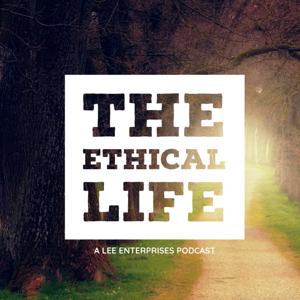

Episode 230: In an era when every major news event seems to demand an immediate opinion, “The Ethical Life” podcast asks a harder question: When is speaking up a moral obligation, and when is silence the wiser choice?
In this episode, hosts Richard Kyte and Scott Rada explore the growing pressure to publicly comment on political controversies, social justice issues and breaking news — especially on social media, where silence is often treated as consent. The conversation is rooted in recent national debates sparked by aggressive immigration enforcement actions in the Twin Cities and the intense online reactions that followed.
The hosts examine why the urge to speak can feel so urgent, even when facts are incomplete or emotions are raw. They question whether constant public commentary actually persuades anyone, or whether it more often deepens division by rewarding outrage and certainty over patience and understanding.
The discussion draws a careful distinction between private and public speech, noting that social media exists in a murky space between the two. Kyte argues that while working through ideas aloud can be valuable in trusted relationships, public platforms are often poorly suited for nuance, uncertainty or moral reflection.
The hosts also revisit lessons from the civil rights movement, including the example of Martin Luther King Jr., not just as a model of moral courage but of discipline, preparation and restraint. They contrast that approach with today’s expectation that everyone should weigh in on every controversy, often without time to listen or reflect.
 View all episodes
 By Scott Rada and Richard Kyte


3.8
2323 ratings
Episode 230: In an era when every major news event seems to demand an immediate opinion, “The Ethical Life” podcast asks a harder question: When is speaking up a moral obligation, and when is silence the wiser choice?
In this episode, hosts Richard Kyte and Scott Rada explore the growing pressure to publicly comment on political controversies, social justice issues and breaking news — especially on social media, where silence is often treated as consent. The conversation is rooted in recent national debates sparked by aggressive immigration enforcement actions in the Twin Cities and the intense online reactions that followed.
The hosts examine why the urge to speak can feel so urgent, even when facts are incomplete or emotions are raw. They question whether constant public commentary actually persuades anyone, or whether it more often deepens division by rewarding outrage and certainty over patience and understanding.
The discussion draws a careful distinction between private and public speech, noting that social media exists in a murky space between the two. Kyte argues that while working through ideas aloud can be valuable in trusted relationships, public platforms are often poorly suited for nuance, uncertainty or moral reflection.
The hosts also revisit lessons from the civil rights movement, including the example of Martin Luther King Jr., not just as a model of moral courage but of discipline, preparation and restraint. They contrast that approach with today’s expectation that everyone should weigh in on every controversy, often without time to listen or reflect.

91,297 Listeners
21,954 Listeners

43,837 Listeners

38,430 Listeners

43,687 Listeners

38,950 Listeners

27,011 Listeners
10,387 Listeners
7,718 Listeners
12,730 Listeners

113,121 Listeners

2,380 Listeners
16,512 Listeners
14,324 Listeners
10 Listeners

48 Listeners

16,525 Listeners
8 Listeners

4 Listeners

11 Listeners
8 Listeners