
Sign up to save your podcasts
Or

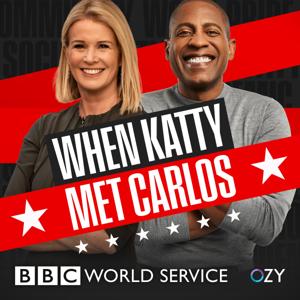


President Joe Biden promised to restore the soul of America. He took office during a time of crisis. Can his administration pull the country together?
Since Franklin Delano Roosevelt, it’s become a tradition to take stock after a president’s first 100 days in office. While Washington DC has felt quieter, the president and his administration have been quick to work: from signing executive orders, to passing multi-trillion dollar legislation through Congress, and sailing past vaccination targets.
But the challenges are acute – with the pandemic dragging on, a crisis on the border, widespread racial justice protests, and a climate crisis, just to name a few. And with the 2022 midterm elections on the horizon, how likely is it that the Democrats will maintain control of Congress?
Katty and Carlos are joined by former congressman and 2020 presidential candidate Beto O’Rourke. He captured national attention when in 2018 he ran a hard fought campaign to unseat Texas Senator Ted Cruz.
They also speak to Jennifer Kerns, a long-time Republican who worked in the California state government. She says President Biden is reaping the success of foundations laid by his predecessor.
A BBC World Service and OZY Media co-production, presented by the BBC’s Katty Kay from World News
This week’s guest wears many hats. Dr Atul Gawande is a medical doctor, a surgeon and a best-selling author, and has also been an advisor to presidents, including on the Covid pandemic.
Katty Kay of the BBC World Service and Carlos Watson of Ozy Media discuss a wide range of issues with Dr Gawande, including how we should face up to death and dying, and how we should speak to our loved ones about it.
A BBC World Service and OZY Media co-production.
Katty Kay and Carlos Watson discuss police brutality and shooting cases in the US. What needs to change?
America’s Covid-19 vaccination programme is progressing at a staggering pace and states are beginning to reopen. But the country also tops world rankings when it comes to deaths from the virus. As worrying new variants emerge, could they now undermine America’s progress?
Across the US, communities of colour have been impacted disproportionately by the pandemic. Despite that, vaccinations of Black and Hispanic Americans have lagged. One person who’s trying to change that is retired clinical social worker, Cynthia Finch, in eastern Tennessee. By keeping an ever-expanding list of people in her community who want vaccines, she’s helped facilitate thousands of jabs. “We have created an access for our people of colour to get into the lines”.
Dr. Michael Osterholm is one of the world’s leading epidemiologists. In early 2020 he raised the alarm over the severity of the incoming pandemic. Now he’s warning that if the US doesn’t help vaccinate lower income countries quickly, it will continue to be impacted by dangerous new variants of Covid-19. “I have said for the past few months, that I thought the darkest days of the pandemic were still ahead of us… we are not out of the danger zone yet with this virus on a global level”.
With China on the rise, how will America react?
Katty and Carlos’ guests are:
A co-production from the BBC World Service and OZY Media.
It was in 2017, with numerous allegations against Harvey Weinstein, that #MeToo went viral around the world.
One of the most outspoken people was the actress Rose McGowan, who accused Weinstein of raping her. A number of other women also accused the disgraced movie producer. He was found guilty of rape and sentenced to 23 years in prison in February 2020.
Katty Kay and Carlos Watson speak to Rose McGowan about her personal story, and what drove her to speak out and “fight the system.” They also discuss what more needs to be done to prevent sexual abuse – of girls and women, and of boys and men.
A co-production from the BBC World Service and OZY Media.
How can we feel good again? It goes without saying that it’s been a tough year, but as things start to open up again, can Americans regain some sense of positivity, or has the traditional idea of American optimism been changed forever?
Dr Cicely Horsham Brathwaite is a therapist and career coach. Many of her clients are African American, and she says the constant discussions around racism add an extra layer of stress and anxiety to an already impossible year. She says getting involved in activism, volunteering and reading positive stories about your community can help.
Adam Grant is an organizational psychologist and author of the new book Think Again: The Power of Knowing What You Don’t Know. He argues this may be time for us to change our attitudes.
A co-production from the BBC World Service and Ozy Media.
Once again, the cryptocurrency Bitcoin is making headlines for rocketing in value. As more companies back it, could it be here to stay? And if so, how is it changing our world? Katty Kay and Carlos Watson look at Bitcoin’s latest price surge and discuss how it and other digital currencies are being adopted around the globe - from the U.S., to Venezuela, to China.
In the last 15 years, America has lost around 25% of its local and regional newspapers. Many others have shrunk dramatically in size. This has led to an increasing number of so-called “news deserts” across the US. There is growing evidence that this has a detrimental impact on local democracy, as well as the local economy.
Emily Brindley is a 25-year-old reporter on the country’s longest continuously published newspaper, the Hartford Courant, in Connecticut. The paper has recently lost dozens of newsroom staff, as well as its physical newsroom, and is set to be taken over by a hedge fund that is notorious for making swingeing cuts.
Penelope Abernathy started her career in local journalism, before moving to the business side of newspapers, including working for the New York Times and helping it expand nationally and internationally. She has written a number of reports on the state of local media in the US.
At the height of the pandemic, Native Americans were dying of Covid at twice the rate of white Americans. Huge inequalities have been highlighted, not just in terms of health, but also housing, education and wealth. Twenty-three percent of Native Americans live below the poverty line, compared to 10 percent of white Americans, and Native Americans are 19 times more likely to live without running water in their home. But there’s some good news too. If confirmed, Deb Haaland will make history as the first Native American in a cabinet secretary role. She’ll be the Secretary of the Interior, which oversees the Bureau of Indian Affairs. Could this historic appointment change the fate of Native Americans today?
There’s a lot of history to undo. Jonodev Chaudhuri, ambassador for the Muscogee (Creek) Nation, explains how his mother was forced to go to a boarding school where she was forbidden from speaking her native language, and her arm was broken by her teachers. The poor education she received didn’t set her up well in life. He says the federal government has broken promises made in treaties to safeguard the health, education and safety of his people in return for their land.
From the publisher's feed
A BBC World Service and OZY Media co-production, presented by the BBC’s Katty Kay from World News America, and journalist and OZY co-founder Carlos Watson. When Katty Met Carlos looks at the issues…

7,611 Listeners
1,044 Listeners

5,481 Listeners
1,794 Listeners
1,825 Listeners
1,028 Listeners

751 Listeners
3,218 Listeners
713 Listeners

1,594 Listeners