
Sign up to save your podcasts
Or

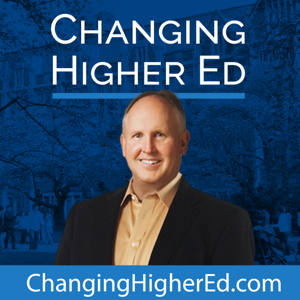

Civic preparedness in higher education can no longer be treated as an assumed byproduct of a college education. In this episode of the Changing Higher Ed® podcast, Dr. Drumm McNaughton speaks with Raj Vinnakota, president of the Institute for Citizens & Scholars, about how colleges and universities can rebuild the civic skills students need to navigate disagreement, evaluate credible information, and solve problems across difference.
Drawing on his work with college presidents, faculty, employers, and Gen Z leaders, Vinnakota explains why higher education has drifted too far toward a private-good narrative focused almost entirely on jobs and individual outcomes. He makes the case that institutions must also reclaim their public-good responsibility by preparing students to participate productively in civic life.
The conversation also explores College Presidents for Civic Preparedness, or CP², a coalition of 135 college and university presidents working together to lower the political and institutional risk of leading civic preparedness work alone. Vinnakota explains why opt-in programming is not enough, why faculty need support to teach contentious issues, and why shared measurement is needed to move civic preparedness from rhetoric to campus-wide culture change.
This conversation is especially relevant for presidents, boards, provosts, faculty leaders, and institutional teams working to strengthen civic learning, rebuild public trust, and prepare graduates for a more polarized and information-saturated world.
Topics Covered:
Real-World Examples Discussed:
Three Key Takeaways for Leadership:
This episode offers a practical look at how higher education can move civic preparedness from isolated programming to institution-wide practice, and why presidents, boards, faculty, and students all have a role in rebuilding the civic capacity colleges were once assumed to produce.
Read the transcript: https://changinghighered.com/civic-preparedness-in-higher-ed-coalition-of-college-presidents/
#CivicPreparedness #HigherEducation #HigherEducationPodcast #CollegePresidents #StudentSuccess
 View all episodes
 By Dr. Drumm McNaughton
5
88 ratings
Civic preparedness in higher education can no longer be treated as an assumed byproduct of a college education. In this episode of the Changing Higher Ed® podcast, Dr. Drumm McNaughton speaks with Raj Vinnakota, president of the Institute for Citizens & Scholars, about how colleges and universities can rebuild the civic skills students need to navigate disagreement, evaluate credible information, and solve problems across difference.
Drawing on his work with college presidents, faculty, employers, and Gen Z leaders, Vinnakota explains why higher education has drifted too far toward a private-good narrative focused almost entirely on jobs and individual outcomes. He makes the case that institutions must also reclaim their public-good responsibility by preparing students to participate productively in civic life.
The conversation also explores College Presidents for Civic Preparedness, or CP², a coalition of 135 college and university presidents working together to lower the political and institutional risk of leading civic preparedness work alone. Vinnakota explains why opt-in programming is not enough, why faculty need support to teach contentious issues, and why shared measurement is needed to move civic preparedness from rhetoric to campus-wide culture change.
This conversation is especially relevant for presidents, boards, provosts, faculty leaders, and institutional teams working to strengthen civic learning, rebuild public trust, and prepare graduates for a more polarized and information-saturated world.
Topics Covered:
Real-World Examples Discussed:
Three Key Takeaways for Leadership:
This episode offers a practical look at how higher education can move civic preparedness from isolated programming to institution-wide practice, and why presidents, boards, faculty, and students all have a role in rebuilding the civic capacity colleges were once assumed to produce.
Read the transcript: https://changinghighered.com/civic-preparedness-in-higher-ed-coalition-of-college-presidents/
#CivicPreparedness #HigherEducation #HigherEducationPodcast #CollegePresidents #StudentSuccess

32,100 Listeners

38,856 Listeners
25,797 Listeners
373 Listeners
9,622 Listeners
10,193 Listeners

56,508 Listeners
139 Listeners
57 Listeners
58,066 Listeners

15,950 Listeners

501 Listeners
3,483 Listeners
88 Listeners
56 Listeners