
Sign up to save your podcasts
Or


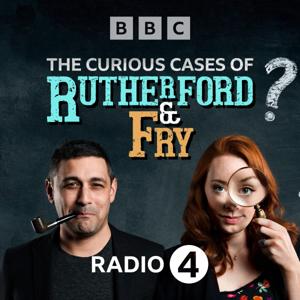
"What happens to the human voice as we age? If I hear a voice on the radio, I can guess roughly how old they are. But singer's voices seem to stay relatively unchanged as they age. Why is this?" All these questions were sent in by Jonathan Crain from Long Island in New York.
Doctors Adam Rutherford and Hannah Fry discover how the human voice is produced and listen to how our voice sounds when it emerges from our vocal cords. Acoustic engineer Trevor Cox, author of Now You're Talking, explains why German and French babies have a different accent. And neuroscientist Sophie Scott describes what happens when boys' voices break, and why a similar thing can happen to women during the menopause.
Finally, our voices often change dramatically in later life, as demonstrated by comedy impressionist Duncan Wisbey. Expect cameos from David Attenborough, Dumbledore and Paul McCartney.
Bird Song
"Winter is finally over and the birds are all singing their hearts out at dawn. What is all the noise about? And why are some songs so elaborate?" asks Tony Fulford from Cambridgeshire in the UK.
We find out how birds produce multiple notes at once, which one has the widest repertoire of songs, and why males like to show off quite so much. Plus, we talk to researcher Lauryn Benedict about the project which aims to solve the mystery of why female birds sing.
Featuring interviews with RSPB president and nature presenter Miranda Krestovnikoff, and world-renowned birdsong expert and sound recordist, Don Kroodsma from the University of Massachusetts. TV archive courtesy of The One Show, BBC TV.
Please send your cases for consideration for the next series to [email protected].
Presenters: Adam Rutherford, Hannah Fry
(Photo: Eurasian Wren (Troglodytes troglodytes). Credit: Getty Images)
 View all episodes
 By BBC World Service

4.4
940940 ratings
"What happens to the human voice as we age? If I hear a voice on the radio, I can guess roughly how old they are. But singer's voices seem to stay relatively unchanged as they age. Why is this?" All these questions were sent in by Jonathan Crain from Long Island in New York.
Doctors Adam Rutherford and Hannah Fry discover how the human voice is produced and listen to how our voice sounds when it emerges from our vocal cords. Acoustic engineer Trevor Cox, author of Now You're Talking, explains why German and French babies have a different accent. And neuroscientist Sophie Scott describes what happens when boys' voices break, and why a similar thing can happen to women during the menopause.
Finally, our voices often change dramatically in later life, as demonstrated by comedy impressionist Duncan Wisbey. Expect cameos from David Attenborough, Dumbledore and Paul McCartney.
Bird Song
"Winter is finally over and the birds are all singing their hearts out at dawn. What is all the noise about? And why are some songs so elaborate?" asks Tony Fulford from Cambridgeshire in the UK.
We find out how birds produce multiple notes at once, which one has the widest repertoire of songs, and why males like to show off quite so much. Plus, we talk to researcher Lauryn Benedict about the project which aims to solve the mystery of why female birds sing.
Featuring interviews with RSPB president and nature presenter Miranda Krestovnikoff, and world-renowned birdsong expert and sound recordist, Don Kroodsma from the University of Massachusetts. TV archive courtesy of The One Show, BBC TV.
Please send your cases for consideration for the next series to [email protected].
Presenters: Adam Rutherford, Hannah Fry
(Photo: Eurasian Wren (Troglodytes troglodytes). Credit: Getty Images)

7,639 Listeners

876 Listeners

1,046 Listeners

5,520 Listeners

1,799 Listeners

1,763 Listeners

1,049 Listeners

1,979 Listeners

599 Listeners
766 Listeners

90 Listeners

407 Listeners

410 Listeners

821 Listeners
757 Listeners

731 Listeners

217 Listeners

366 Listeners

476 Listeners

238 Listeners

3,177 Listeners

720 Listeners
113 Listeners

1,002 Listeners