
Sign up to save your podcasts
Or


4/6 Part 1: Déjà vu
"Do we know what causes déjà vu?" asks Floyd Kitchen from Queenstown in New Zealand.
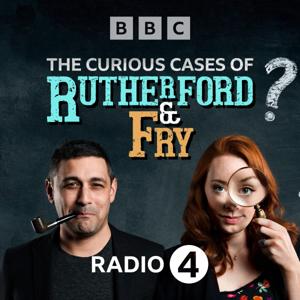
Drs Rutherford and Fry investigate this familiar feeling by speaking to world-leading reseacher Chris Moulin from the University of Grenoble in France and memory expert Catherine Loveday from Westminster University. Plus, they find out why early investigations classed déjà vu as a type of paranormal phenomenon.
For most of us, it's a fleetingly strange experience, but for some people it can become a serious problem. Lisa from Hulme in Manchester started experiencing déjà vu when she was 22 with episodes that could last all day. The origin of her déjà vu has been the key to helping psychologists investigate its cause.
Part 2: Randomness
"Is anything truly random, or is everything predetermined?" asks Darren Spalding from Market Harborough.
Hannah and Adam go in search of random events, from dice throws to lava lamps. Can we predict the outcome of any event?
"How do computers manage to pick random numbers?" asks Jim Rennie from Mackinaw in Illinois. Random numbers are vital for things like cyber security and banking. But true randomness is surprisingly hard to produce, as the team discover.
Joining them for this case we have a random selection of experts: mathematician Colva Roney-Dougal, technology journalist Bill Thompson, Science Museum Curator Tilly Blyth and quantum physicist Jim AlKhalili.
Presenters: Hannah Fry, Adam Rutherford
Main Image: A fan of the New York Yankees holds up a sign which reads "It's Deja Vu" at the Yankee Stadium, New York City 29 Oct 2009. Credit: Jed Jacobsohn / Getty Images
 View all episodes
 By BBC World Service

4.4
940940 ratings
4/6 Part 1: Déjà vu
"Do we know what causes déjà vu?" asks Floyd Kitchen from Queenstown in New Zealand.
Drs Rutherford and Fry investigate this familiar feeling by speaking to world-leading reseacher Chris Moulin from the University of Grenoble in France and memory expert Catherine Loveday from Westminster University. Plus, they find out why early investigations classed déjà vu as a type of paranormal phenomenon.
For most of us, it's a fleetingly strange experience, but for some people it can become a serious problem. Lisa from Hulme in Manchester started experiencing déjà vu when she was 22 with episodes that could last all day. The origin of her déjà vu has been the key to helping psychologists investigate its cause.
Part 2: Randomness
"Is anything truly random, or is everything predetermined?" asks Darren Spalding from Market Harborough.
Hannah and Adam go in search of random events, from dice throws to lava lamps. Can we predict the outcome of any event?
"How do computers manage to pick random numbers?" asks Jim Rennie from Mackinaw in Illinois. Random numbers are vital for things like cyber security and banking. But true randomness is surprisingly hard to produce, as the team discover.
Joining them for this case we have a random selection of experts: mathematician Colva Roney-Dougal, technology journalist Bill Thompson, Science Museum Curator Tilly Blyth and quantum physicist Jim AlKhalili.
Presenters: Hannah Fry, Adam Rutherford
Main Image: A fan of the New York Yankees holds up a sign which reads "It's Deja Vu" at the Yankee Stadium, New York City 29 Oct 2009. Credit: Jed Jacobsohn / Getty Images

7,639 Listeners

876 Listeners

1,046 Listeners

5,520 Listeners

1,799 Listeners

1,763 Listeners

1,049 Listeners

1,979 Listeners

599 Listeners
766 Listeners

90 Listeners
407 Listeners

410 Listeners

821 Listeners
757 Listeners
731 Listeners
217 Listeners

366 Listeners

476 Listeners
238 Listeners

3,177 Listeners

720 Listeners
113 Listeners

1,002 Listeners