
Sign up to save your podcasts
Or

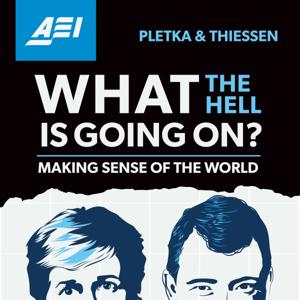

Over the weekend, the United States signed a memorandum of understanding with Iran to begin negotiations on a nuclear deal. To understand what a good deal would entail, it is important to assess the status of Iran's nuclear weapons program following Operations Midnight Hammer and Epic Fury, as well as the timeline on which Tehran could produce a weapon despite these setbacks. David Albright argues that securing Tehran's admission of the program's existence and permitting on-the-ground IAEA inspections should be among the top priorities. A weak agreement lacking robust verification measures and proper extraction of nuclear materials could ultimately strengthen Iran, given the potential influx of fungible cash and the absence of sanctions that have allegedly circled discussions. In that case, is no deal better than a bad deal? What will it take to disarm the nuclear threat?
David Albright is the founder and President of the non-profit Institute for Science and International Security in Washington, D.C. He has written numerous assessments on secret nuclear weapons programs throughout the world has authored or co-authored nine books and briefed policymakers on non-proliferation policy making. Albright cooperated with the IAEA Action Team analyzing Iraqi documents and was the first non-governmental inspector of the Iraqi nuclear program. Previously, Albright was a member of the Health Advisory Panel in his capacity as a physicist and was appointed to the Department of Energy Openness Advisory Panel. He is currently an American Physical Society (APS) Fellow and the 2006 recipient of the APS’s Joseph A. Burton Forum Award.
Read the transcript here.
Subscribe to our Substack here.
 View all episodes
 By AEI Podcasts

4.4
614614 ratings
Over the weekend, the United States signed a memorandum of understanding with Iran to begin negotiations on a nuclear deal. To understand what a good deal would entail, it is important to assess the status of Iran's nuclear weapons program following Operations Midnight Hammer and Epic Fury, as well as the timeline on which Tehran could produce a weapon despite these setbacks. David Albright argues that securing Tehran's admission of the program's existence and permitting on-the-ground IAEA inspections should be among the top priorities. A weak agreement lacking robust verification measures and proper extraction of nuclear materials could ultimately strengthen Iran, given the potential influx of fungible cash and the absence of sanctions that have allegedly circled discussions. In that case, is no deal better than a bad deal? What will it take to disarm the nuclear threat?
David Albright is the founder and President of the non-profit Institute for Science and International Security in Washington, D.C. He has written numerous assessments on secret nuclear weapons programs throughout the world has authored or co-authored nine books and briefed policymakers on non-proliferation policy making. Albright cooperated with the IAEA Action Team analyzing Iraqi documents and was the first non-governmental inspector of the Iraqi nuclear program. Previously, Albright was a member of the Health Advisory Panel in his capacity as a physicist and was appointed to the Department of Energy Openness Advisory Panel. He is currently an American Physical Society (APS) Fellow and the 2006 recipient of the APS’s Joseph A. Burton Forum Award.
Read the transcript here.
Subscribe to our Substack here.
3,295 Listeners
2,835 Listeners
210 Listeners

1,837 Listeners
128 Listeners

1,532 Listeners
1,400 Listeners
5,166 Listeners
4,892 Listeners
6,611 Listeners
2,825 Listeners
18 Listeners
41 Listeners
18 Listeners
28 Listeners

711 Listeners
18 Listeners
6,272 Listeners
21 Listeners
619 Listeners

850 Listeners

8,439 Listeners

37 Listeners
1,087 Listeners