You Cannot Be Serious

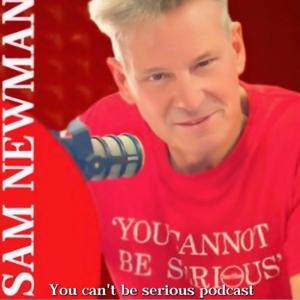
You Cannot Be Serious

By Sam NewmanSportsNews
Download on the App Store
  • Favorites

    729

    Followers

  • Typical duration

    45 min

    per episode

  • If it hooks

    60%

    finish an episode

Based on Podcast App listening data

You Cannot Be Serious episodes

  • Episode 216 - Part 2 - AFL Legend Big Nick
    The Carlton Football Club recruited Nicholls from the Maryborough Football Club in 1957 after recruiting his elder brother, Don, the previous year their father ensured that both brothers would play together at one club. Don played 77 senior games as a centreman for Carlton from 1956, when he was Carlton's best first-year player, to 1961. Nicholls enjoyed an outstanding season in 1966, winning his second consecutive Robert Reynolds Trophy, and finishing second in the Brownlow Medal count, four votes behind St Kilda champion Ian Stewart.
    Success as captain-coach
    In his first year as captain-coach, Nicholls led the Blues to the minor premiership with 18 wins and a draw, followed by Richmond with 18 wins. 1972 was the first season in which the McIntyre "Final Five" system was used, and so because Carlton finished on top of the ladder, this meant that they had a week's break before facing Richmond in the Second Semi-final. The match was drawn, which in those days meant that a replay was required the following week, thus shifting every other match back another week. Richmond won the replay by 41 points, but in the post-match interviews Nicholls refused to panic:
    Carlton has not hit a form slump. We just had a dismal day – our worst for the season. There'll be no panic just because we went down by 41 points. There won't be more than one or two changes.  We will be sticking to the same players because it was, they who put us where we finished at the end of the home-and-away games. I know the players will redeem themselves next week. We just won't beat St. Kilda – we will win well. And if we team together as I know we can I know we are good enough to take the premiership.
    Robert Walls who was serving as vice-captain, recalled that the day after the semi-final defeat, the players arrived at training feeling flat, but Nicholls revealed to them the outline of his plan to win the premiership with all-out attacking football. But first, Carlton had to defeat St Kilda in the Preliminary Final. The Saints had played in the previous year's Grand Final and still boasted a strong team. Nicholls chose not to implement his plan, trusting that his players would get the job done. The Blues prevailed by 16 points and earned the right to redeem themselves against their arch-rival.Richmond went into the Grand Final as clear favourites, but this would be the day when Nicholls established once and for all his reputation as one of the greats of the game. The element of surprise in Nicholls' plan lay in his team selection; he handed the rucking responsibilities to "Percy" Jones, whilst stationing himself in the forward pocket with the intent of kicking goals. He also deployed Barry Armstrong in the centre while Vin Waite was given the task of minding Barry Richardson. Finally, in the lead-up to the match, Nicholls had given his players three simple instructions: get to the ball first, kick long into attack and contest for 100 minutes.The plan succeeded in the most spectacular fashion possible. In an enthralling spectacle of attacking football from both teams, Carlton piled on the goals to lead at half time with an incredible score of 18.6 (114) to 10.9 (69). The shell-shocked Tigers tried to claw their way back into the game, but every goal they scored was met with a Carlton reply. When the final siren sounded, Carlton had registered a record score of 28.9 (177) while Richmond's score of 22.18 (150), enough to win most games, remains the highest losing score in a Grand Final. While every Carlton player contributed, Nicholls himself had a field day, kicking six goals on Ray Boyanich. He said afterwards that had he not kicked six, he felt he would have failed in the position. Walls, who also kicked six goals, was nominated best on ground.
    Stung by their defeat, Richmond didn't have to wait long to avenge their humiliation as the two rivals squared off again in the following season's Grand Final.  On a hot and blustery day, Richmond prevailed in a
    58 min
  • Episode 213 - Part 4 - Showbiz Frank Howson
    Frank Michael Howson (born 1952)] has had a career in entertainment. He directed Flynn (1996) on the early life of Errol Flynn and Hunting (1991). Howson, with Peter Boyle, helped establish Boulevard Films which produced thirteen films from Boulevard of Broken Dreams (1988) to Flynn; besides producing for Boulevard Films, Howson often wrote scripts and directed.
    Early Years
    Howson was born in Melbourne and started in show business when he was seven. After leaving school, Christian Brothers College, St Kilda (1963–1967), Howson's first job was with Melbourne radio station 3UZ as office boy. Eventually promoted to panel operator, he worked on John McMahon's popular weekly show Radio Auditions (see 3UZ). Whenever not enough acts showed up, young Frank was summoned to perform under made up names. During this period Howson was nicknamed 'Magical Frank' when asked to perform on a pilot for a TV talent show by 3UZ's Jimmy Hannan.
    Recording Artist
    DJ Stan Rofe signed Howson to a recording deal and produced his first single: "Seventeen Ain't Young" (written by Jeff Barry) / Hide and seek (Richie Adams, Mark Barkan) performed by "Frankie Howson" (1969) who was seventeen during recording, it became a Top 40 hit in Melbourne.
    Howson released two other singles This Night (Howson, Kenneth Firth, Miller) and 1983 The Heart Is A Lonely Hunter (John Capek, Howson).
    Music Publisher
    Howson was manager of the Australian branch of German-based I.C. Records to publish musical works (including his own) distributed by EMI. He co-wrote John Paul Young's 1984 album One Foot in Front. He signed New romantic and Pseudo Echo and co-wrote their songs Autumnal Park and Destination Unknown with Tony Lugton, they later had a 1987 No. 1 hit in Australia with their version of Funky Town. I.C. Records scored 3 national hits in Australia in its first 12 months of operation. Howson and Peter Boyle were Executive Producers for John Paul Young's 1983 hit Soldier of Fortune (John Capek, Marc Jordan) reaching No. 15.
    Howson and Allan Zavod wrote Time Can't Keep Us Apart which won the 1987 Asian Popular Song contest performed by Kate Ceberano to an estimated TV audience of 500 million.
    Theatre works
    Frank Howson began his career as stage actor, singer and dancer, and appeared in 21 major productions (including the Australian production of Oliver!) before turning 21. In the early 1970s, Howson met fellow actor Barry Ferrier while they were both appearing in the original Australian production of Jesus Christ Superstar, and the two men subsequently collaborated on a number of theatre-related projects. The first of these was a children's musical entitled The Faraway Land of Magical Frank, which was produced at the Toral Theatre in Melbourne in January 1976. Later that year, Howson and Ferrier released a concept recording of a follow-up children's musical, entitled The Boy who dared to dream, performed by Trevor White, pop singer Mark Holden and actors Johnd Waters and Tommy Dysart. The first staged production of the show (featuring some of the actors from the concept recording) was mounted in Melbourne in January 1978, with a second production in May 1981.
    Frank Howson went on to create two more children's musicals, without Ferrier's involvement: Aladdin and his Wonderful Lamp (music by Robert Gavin, 1981) and Sinbad the Sailor: The Last Adventure (music by Ian McKean, 1982). Both were initially staged at the Alexander Theatre at Monash University.
    Filmmaking
    Boulevard Films was a production company on Errol St, North Melbourne. Boulevard's notable productions include:
    1988 Boulevard of Broken Dreams (Howson screenwriter, cameo) won two AFI Awards: John Waters: "Best Actor" and Kym Gyngell "Best Supporting"; nominated for five others including "Best Picture". Its soundtrack (with nine Howson co-compositions) was nominated for an ARIA Award for Best Soundtrack Album of the Year.
    1989 'Heaven Tonight' (Howson co-wrote the screenplay as well as songs for this film

    56 min

About You Cannot Be Serious

From the publisher's feed

Topical chat and opinions on the hear and now

Best of You Cannot Be Serious

Ranked by our users in the last 21 days

More shows like You Cannot Be Serious

The Rush Hour with JB & Billy by Triple M

The Rush Hour with JB & Billy

59 Listeners

Triple M Rocks Footy AFL by Triple M

Triple M Rocks Footy AFL

51 Listeners

The Howie Games by LiSTNR

The Howie Games

301 Listeners

The Sounding Board by SEN

The Sounding Board

59 Listeners

Ben Fordham Live on 2GB Breakfast by Radio 2GB

Ben Fordham Live on 2GB Breakfast

17 Listeners

SEN Breakfast by SEN

SEN Breakfast

62 Listeners

Whateley by SEN

Whateley

38 Listeners

Life and Crimes with Andrew Rule by True Crime Australia

Life and Crimes with Andrew Rule

402 Listeners

Footy & Friends by Clubby Sports

Footy & Friends

67 Listeners

Naked City by The Age and Sydney Morning Herald

Naked City

61 Listeners

I Catch Killers with Gary Jubelin by News.com.au

I Catch Killers with Gary Jubelin

530 Listeners

Straight Talk with Mark Bouris by Mentored.com.au

Straight Talk with Mark Bouris

336 Listeners

Life of Brian by Life of Brian

Life of Brian

24 Listeners

Bizarre with Mick Molloy and Titus O’Reily by Sport Bizarre

Bizarre with Mick Molloy and Titus O’Reily

64 Listeners

Shaped by Trent Cotchin by Stitch Up

Shaped by Trent Cotchin

17 Listeners