
Sign up to save your podcasts
Or



Based on Podcast App listening data
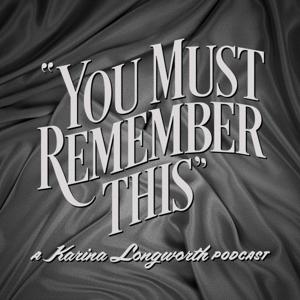
John Garfield was Brando before Brando -- a Method-style actor who repped the New York working class while becoming a major sex symbol in film noir and World War II films. Garfield was not a Communist; most of his friends -- and his wife -- were, but they mostly thought “Julie” was well meaning but not a serious political animal. HUAC disagreed, and in the early 1950s, Garfield became the biggest star to be blacklisted.
Barbara Stanwyck’s first marriage helped to inspire A Star is Born. Her second marriage, to heartthrob Robert Taylor, didn’t make sense in a lot of ways, but the pair were united by their conservative politics. Both joined the blacklist-stoking Motion Picture Alliance for the Preservation of American Ideals, but only Taylor testified before HUAC. Called to shame MGM for forcing him to star in wartime pro-Soviet film Song of Russia, Taylor would become the only major star to name names. Today we’ll talk about Taylor and Stanwyck’s relationship, and the difference between her groundbreaking career as the rare actress who refused to sign long term studio contracts, and his much more conventional experience as MGM chattel.
In the late 1940s, as the country was moving to the right and there was pressure on Hollywood to do the same, Katharine Hepburn, Humphrey Bogart and John Huston all protested HUAC in ways that damaged their public personas and their ability to work in Hollywood. Hepburn’s outspokenness resulted in headlines branding her a "Red" and, allegedly, audiences stoning her films. Bogart and Huston were prominent members of the Committee For the First Amendment, a group of Hollywood stars who came to Washington to support the Hollywood Ten -- and lived to regret it. With their career futures uncertain, the trio collaborated on the most difficult film any of them would ever make, The African Queen.
Humphrey Bogart was Warner Brothers' most valuable star in 1947, when he, his wife Lauren Bacall, his future African Queen co-star Katharine Hepburn, his friend and frequent director John Huston and many other stars actively protested HUAC. We'll get into that next week. This week, we're flashing back to our episode on Bogart from 2014, describing how the Casablanca star struggled to find his niche in Hollywood during the first part of his film career, the tough guy roles that changed things around, and finally his transformative romance with Lauren Bacall.
The New Yorker columnist, poet and celebrated Algonquin Roundtable wit spent years in Hollywood, working as a screenwriter in partnership with her second husband, Alan Campbell, and contributing to important films such as the original A Star is Born and Alfred Hitchcock’s Saboteur. Much to the surprise of many of her closest friends, beginning in the late 1920s Parker became increasingly drawn to socialist causes. Parker’s political calling was merely socially problematic before World War II, when Parker spearheaded the formation of the Hollywood Anti-Nazi League; after the war, when Parker’s name was named before HUAC, her political convictions killed her Hollywood career at its peak.
In 1947, the House Un-American Activities Committee subpoenaed dozens of Hollywood workers to come to Washington and testify to the presence of Communists in the film industry. 19 of those who were subpoenaed announced that they wouldn't co-operate with the Committee; of those 19, 10 "unfriendly" witnesses were called to the stand and refused to answer "The $64 Question": "Are you now or have you ever been a Communist?" Those 10 men were subsequently denied employment, imprisoned; afraid of collateral damage to the industry, the studio moguls were thus moved to design the Blacklist. This episode will explore the work and politics of the Hollywood Ten – and films on which they came together, such as Crossfire – and delve into the far-reaching consequences of their false assumption that the Constitution would protect them.
This episode will trace the roots of both communism and anti-communism in Hollywood, through the Depression, union struggles and scandals, and World War II. The major characters of the series will be introduced, including members of the Hollywood Ten like Dalton Trumbo and Edward Dmytryk, two Party members who collaborated on a film called Tender Comrade, which starred one of Hollywood's proudest Conservatives, Ginger Rogers. Tender Comrade epitomizes the political evolution that made the Blacklist happen: considered patriotic American propaganda during the War, the film was recast as problematically anti-capitalist after the war, and its makers branded with the epithet "prematurely anti-fascist."
In the 1940s, Louis B. Mayer was the highest paid man in America, one of the first celebrity CEOs and the figurehead of what for most Americans was the most glamorous industry on Earth. In 1951, Mayer was fired from the studio that bore his name. What happened -- to Mayer, and to Movies on the whole -- to hasten the end of the golden era of hollywood?
Elizabeth Taylor grew up on the MGM lot, spending 18 years as what she referred to as “MGM chattel.” The last four years of that 18 year sentence were arguably the most interesting. From 1956-1960, she made a run of really interesting films including Giant, Cat on a Hot Tin Roof and Butterfield 8, and she met the “love of her life”, Mike Todd, and turned him into her third husband. When Todd died a year later Liz sought comfort in the arms of Todd’s friend - and Debbie Reynolds’ husband — Eddie Fisher. Taylor capped off the decade by almost dying, winning her first Oscar, and breaking free from MGM to become the highest paid actress up to that time. This episode is brought to you by Harry's. Make every morning he shaves feel like a Holiday. Harry’s will give you $5 off your first order with code REMEMBER. Free shipping for the Holidays ends on December 10th, so act now. Harrys.com enter code REMEMBER.
Gloria Grahame arrived in Hollywood in 1944, after Louis B. Mayer personally plucked her from the New York stage, and changed her name. But Grahame was the rare actress who Mayer didn’t know how to turn into a star. Finally in 1947, Mayer gave up on Grahame and sold her contract to RKO, where she flourished as a femme fatale in film noir. Grahame's career would be marred by her compulsive plastic surgery, her increasingly eccentric on-set behavior, and gossip about her love life, which included marriages to both director Nicholas Ray, and his son, Tony. This episode is brought to you by Harry's. Make every morning he shaves feel like a Holiday. Harry’s will give you $5 off your first order with code REMEMBER. Free shipping for the Holidays ends on December 10th, so act now. Harrys.com enter code REMEMBER. This episode is also brought to you by The Message, a new science fiction podcast from Panoply and GE Podcast Theater. Search for The Message in iTunes.
From the publisher's feed
Ranked by our users in the last 21 days

3,957 Listeners
1,104 Listeners
6,191 Listeners
1,012 Listeners

686 Listeners

4,261 Listeners
2,116 Listeners
21,917 Listeners
4,735 Listeners
3,354 Listeners
553 Listeners
1,156 Listeners

5,461 Listeners
3,590 Listeners

2,730 Listeners