
Sign up to save your podcasts
Or

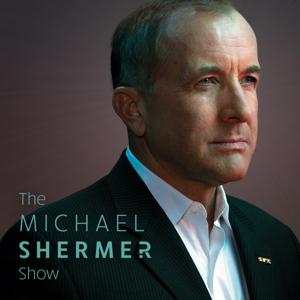

Psychologists have long understood that social environments profoundly shape our behavior, sometimes for the better, often for the worse. But social influence is a two-way street — our environments are themselves products of our behavior. Under the Influenceexplains how to unlock the latent power of social context. We are building bigger houses, driving heavier cars, and engaging in a host of other activities that threaten the planet — mainly because that's what friends and neighbors do. In the wake of the hottest years on record, only robust measures to curb greenhouse gases promise relief from more frequent and intense storms, droughts, flooding, wildfires, and famines. Robert Frank describes how the strongest predictor of our willingness to support climate-friendly policies, install solar panels, or buy an electric car is the number of people we know who have already done so. Frank and Shermer also discuss:
Robert H. Frank received his M.A. in statistics from the University of California at Berkeley in 1971, and his Ph.D. in economics in 1972, also from U.C. Berkeley. He is the Goldwin Smith Professor of Economics at Cornell University, where he has taught since 1972 and where he currently holds a joint appointment in the department of economics and the Johnson Graduate School of Management. He has published on a variety of subjects, including price and wage discrimination, public utility pricing, the measurement of unemployment spell lengths, and the distributional consequences of direct foreign investment. For the past several years, his research has focused on rivalry and cooperation in economic and social behaviour.
Listen to Science Salon via Apple Podcasts, Spotify, Google Play Music, Stitcher, iHeartRadio, and TuneIn.
 View all episodes
 By Michael Shermer

4.4
884884 ratings
Psychologists have long understood that social environments profoundly shape our behavior, sometimes for the better, often for the worse. But social influence is a two-way street — our environments are themselves products of our behavior. Under the Influenceexplains how to unlock the latent power of social context. We are building bigger houses, driving heavier cars, and engaging in a host of other activities that threaten the planet — mainly because that's what friends and neighbors do. In the wake of the hottest years on record, only robust measures to curb greenhouse gases promise relief from more frequent and intense storms, droughts, flooding, wildfires, and famines. Robert Frank describes how the strongest predictor of our willingness to support climate-friendly policies, install solar panels, or buy an electric car is the number of people we know who have already done so. Frank and Shermer also discuss:
Robert H. Frank received his M.A. in statistics from the University of California at Berkeley in 1971, and his Ph.D. in economics in 1972, also from U.C. Berkeley. He is the Goldwin Smith Professor of Economics at Cornell University, where he has taught since 1972 and where he currently holds a joint appointment in the department of economics and the Johnson Graduate School of Management. He has published on a variety of subjects, including price and wage discrimination, public utility pricing, the measurement of unemployment spell lengths, and the distributional consequences of direct foreign investment. For the past several years, his research has focused on rivalry and cooperation in economic and social behaviour.
Listen to Science Salon via Apple Podcasts, Spotify, Google Play Music, Stitcher, iHeartRadio, and TuneIn.
26,327 Listeners
2,272 Listeners
843 Listeners
246 Listeners
1,061 Listeners
908 Listeners
4,181 Listeners

799 Listeners
1,640 Listeners
504 Listeners
572 Listeners

29 Listeners
392 Listeners
825 Listeners
8,697 Listeners