
Sign up to save your podcasts
Or

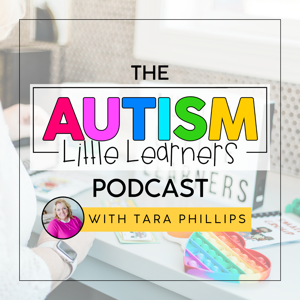

In this episode, we continue the play series by talking about the gentle bridge from exploratory play into functional play. If a child loves dumping toys, spinning wheels, dropping objects, or lining things up, it can be tempting to rush toward "using the toy the right way."
But functional play grows best when it feels safe, connected, and joyful. This episode explores how to support the shift from sensory-driven exploratory play into one-step and early multi-step functional play without turning it into a power struggle.
Instead of forcing imitation or moving too quickly into adult-led teaching, we'll walk through how to build from what the child already loves by using regulation, connection, and one small expansion at a time.
This conversation is especially helpful for educators, therapists, and caregivers supporting autistic children who are ready for the next layer of play but still need the sensory and emotional safety of familiar patterns.
In This Episode, You'll Learn• What functional play looks like in practical, classroom-friendly terms • Why cause and effect is often the first bridge out of exploratory play • Why rushing the shift into functional play can create stress and resistance • The simple framework: Regulate → Connect → Expand • How to expand dumping, spinning, and "put in" play patterns • Readiness signs that tell you a child may be ready for one-step play • Why building multiple one-step actions makes pretend play easier later • How to keep functional play playful instead of turning it into drill work • Why goals should guide exposure rather than create performance pressure • How small expansions support long-term sequencing and symbolic play
Key Takeaways• Functional play is the next natural layer after exploratory play • Cause-and-effect toys and routines often create the safest bridge • Regulation and connection need to come before expansion • One small variation is more effective than pushing a full new skill • Readiness cues help us know when the stretch is safe • One-step actions become the building blocks for multi-step and pretend play • Joy and emotional safety keep the brain open for learning • Development unfolds in layers and cannot be rushed
When we focus on small bridges instead of big leaps, play expands in a way that feels safe and sustainable.
Try This• Identify one exploratory play pattern the child already loves • Join the action before offering a new idea • Add one simple cause-and-effect variation • Model one clear one-step action like push, drop, or press • Pause and wait without adding pressure • Track which one-step actions the child enjoys repeating
Sometimes the most meaningful progress comes from one tiny bridge built on something the child already trusts.
Related Resources & LinksAutism Little Learners Membership www.autismlittlelearners.com/pod
Play and Learn
Functional Play and Autism
Play-Based Learning for Autistic Children
Honoring Diverse Styles of Play
Fine Motor and Sensory Bins
Gently Expanding Autistic Play: Tips For Parents and Educators
Visual Support Starter Set
Visual Supports Facebook Group
Functional play is not about replacing exploratory play. It is about building on the sensory and emotional safety that exploratory play already provides. When we honor the stage and expand gently, new layers of learning unfold naturally.
 View all episodes
 By Tara Phillips

4.8
115115 ratings
In this episode, we continue the play series by talking about the gentle bridge from exploratory play into functional play. If a child loves dumping toys, spinning wheels, dropping objects, or lining things up, it can be tempting to rush toward "using the toy the right way."
But functional play grows best when it feels safe, connected, and joyful. This episode explores how to support the shift from sensory-driven exploratory play into one-step and early multi-step functional play without turning it into a power struggle.
Instead of forcing imitation or moving too quickly into adult-led teaching, we'll walk through how to build from what the child already loves by using regulation, connection, and one small expansion at a time.
This conversation is especially helpful for educators, therapists, and caregivers supporting autistic children who are ready for the next layer of play but still need the sensory and emotional safety of familiar patterns.
In This Episode, You'll Learn• What functional play looks like in practical, classroom-friendly terms • Why cause and effect is often the first bridge out of exploratory play • Why rushing the shift into functional play can create stress and resistance • The simple framework: Regulate → Connect → Expand • How to expand dumping, spinning, and "put in" play patterns • Readiness signs that tell you a child may be ready for one-step play • Why building multiple one-step actions makes pretend play easier later • How to keep functional play playful instead of turning it into drill work • Why goals should guide exposure rather than create performance pressure • How small expansions support long-term sequencing and symbolic play
Key Takeaways• Functional play is the next natural layer after exploratory play • Cause-and-effect toys and routines often create the safest bridge • Regulation and connection need to come before expansion • One small variation is more effective than pushing a full new skill • Readiness cues help us know when the stretch is safe • One-step actions become the building blocks for multi-step and pretend play • Joy and emotional safety keep the brain open for learning • Development unfolds in layers and cannot be rushed
When we focus on small bridges instead of big leaps, play expands in a way that feels safe and sustainable.
Try This• Identify one exploratory play pattern the child already loves • Join the action before offering a new idea • Add one simple cause-and-effect variation • Model one clear one-step action like push, drop, or press • Pause and wait without adding pressure • Track which one-step actions the child enjoys repeating
Sometimes the most meaningful progress comes from one tiny bridge built on something the child already trusts.
Related Resources & LinksAutism Little Learners Membership www.autismlittlelearners.com/pod
Play and Learn
Functional Play and Autism
Play-Based Learning for Autistic Children
Honoring Diverse Styles of Play
Fine Motor and Sensory Bins
Gently Expanding Autistic Play: Tips For Parents and Educators
Visual Support Starter Set
Visual Supports Facebook Group
Functional play is not about replacing exploratory play. It is about building on the sensory and emotional safety that exploratory play already provides. When we honor the stage and expand gently, new layers of learning unfold naturally.
3,375 Listeners

3,636 Listeners
963 Listeners

6,713 Listeners

12,084 Listeners

424 Listeners

69,626 Listeners

9,194 Listeners

434 Listeners

1,888 Listeners

420 Listeners

41,512 Listeners

20,222 Listeners

4,286 Listeners

12,559 Listeners