
Sign up to save your podcasts
Or

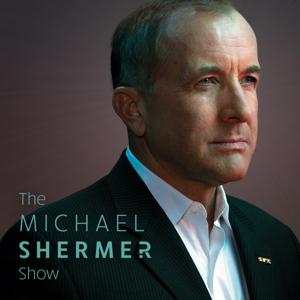

In this conversation, based on the book The Spirit of Green: The Economics of Collisions and Contagions in a Crowded World, Nobel Prize-winning pioneer in environmental economics Dr. Nordhaus explains how and why "green thinking" could cure many of the world's most serious problems — from global warming to pandemics. Solving the world's biggest problems requires, more than anything else, coming up with new ways to manage the powerful interactions that surround us. For carbon emissions and other environmental damage, this means ensuring that those responsible pay their full costs rather than continuing to pass them along to others, including future generations. Nordhaus describes a new way of green thinking that would help us overcome our biggest challenges without sacrificing economic prosperity, in large part by accounting for the spillover costs of economic collisions. In a discussion that ranges from the history of the environmental movement to the Green New Deal, Nordhaus explains how rethinking economic efficiency, sustainability, politics, profits, taxes, individual ethics, corporate social responsibility, finance, and more would improve the effectiveness and equity of our society.
 View all episodes
 By Michael Shermer

4.4
884884 ratings
In this conversation, based on the book The Spirit of Green: The Economics of Collisions and Contagions in a Crowded World, Nobel Prize-winning pioneer in environmental economics Dr. Nordhaus explains how and why "green thinking" could cure many of the world's most serious problems — from global warming to pandemics. Solving the world's biggest problems requires, more than anything else, coming up with new ways to manage the powerful interactions that surround us. For carbon emissions and other environmental damage, this means ensuring that those responsible pay their full costs rather than continuing to pass them along to others, including future generations. Nordhaus describes a new way of green thinking that would help us overcome our biggest challenges without sacrificing economic prosperity, in large part by accounting for the spillover costs of economic collisions. In a discussion that ranges from the history of the environmental movement to the Green New Deal, Nordhaus explains how rethinking economic efficiency, sustainability, politics, profits, taxes, individual ethics, corporate social responsibility, finance, and more would improve the effectiveness and equity of our society.
26,336 Listeners
2,274 Listeners

856 Listeners
247 Listeners
1,069 Listeners

905 Listeners

4,161 Listeners

799 Listeners
1,644 Listeners
501 Listeners
569 Listeners

26 Listeners

390 Listeners
825 Listeners
8,789 Listeners