
Sign up to save your podcasts
Or

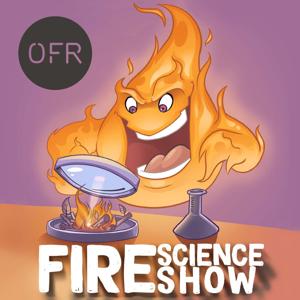

In this episode we dive into the ap between standardized tests and experiments, trying to figure out (a) is there a difference and (b) if there is, could not understanding the difference quietly erode safety. With guest David Morrisset (Queensland University), we unpack furnace ratings that read like time but aren’t, cladding classifications that were never meant for façades, and the infamous bird-strike test that shows how any standard bakes in choices and consequences. The throughline: context rules everything.
We talk plainly about what tests actually deliver—repeatability, reproducibility, and comparability under fixed boundary conditions—and why that’s powerful but limited. Then we pivot to experiments: how to define a clear question, choose boundary conditions that matter, use standard apparatus for non-standard insights, and document deviations without pretending they’re compliant. We share stories from timber in furnaces to car park fires and design curves, showing when consistency beats a shaky chase for “realistic,” and when exploratory burns are the fastest way to find the unknowns that really drive risk.
If you’ve ever tried to drop a cone calorimeter value into a performance model, equated furnace minutes to evacuation time, or treated a single burn as gospel, this conversation will help you do this safely and prevent you from falling into some well known caveats. You’ll leave with practical heuristics for reading test data without overreach, structuring experiments that answer narrow questions well, and communicating uncertainty so decision-makers understand what the numbers can and cannot promise.
Essential reading after this episode:
----
The Fire Science Show is produced by the Fire Science Media in collaboration with OFR Consultants. Thank you to the podcast sponsor for their continuous support towards our mission.
 View all episodes
 By Wojciech Wegrzynski

4.8
1616 ratings
In this episode we dive into the ap between standardized tests and experiments, trying to figure out (a) is there a difference and (b) if there is, could not understanding the difference quietly erode safety. With guest David Morrisset (Queensland University), we unpack furnace ratings that read like time but aren’t, cladding classifications that were never meant for façades, and the infamous bird-strike test that shows how any standard bakes in choices and consequences. The throughline: context rules everything.
We talk plainly about what tests actually deliver—repeatability, reproducibility, and comparability under fixed boundary conditions—and why that’s powerful but limited. Then we pivot to experiments: how to define a clear question, choose boundary conditions that matter, use standard apparatus for non-standard insights, and document deviations without pretending they’re compliant. We share stories from timber in furnaces to car park fires and design curves, showing when consistency beats a shaky chase for “realistic,” and when exploratory burns are the fastest way to find the unknowns that really drive risk.
If you’ve ever tried to drop a cone calorimeter value into a performance model, equated furnace minutes to evacuation time, or treated a single burn as gospel, this conversation will help you do this safely and prevent you from falling into some well known caveats. You’ll leave with practical heuristics for reading test data without overreach, structuring experiments that answer narrow questions well, and communicating uncertainty so decision-makers understand what the numbers can and cannot promise.
Essential reading after this episode:
----
The Fire Science Show is produced by the Fire Science Media in collaboration with OFR Consultants. Thank you to the podcast sponsor for their continuous support towards our mission.
78,688 Listeners

43,837 Listeners

32,246 Listeners
26,242 Listeners

30,870 Listeners
54 Listeners
5,109 Listeners
773 Listeners
495 Listeners
2,303 Listeners

3,858 Listeners

851 Listeners
131 Listeners
4 Listeners

1,153 Listeners