
Sign up to save your podcasts
Or

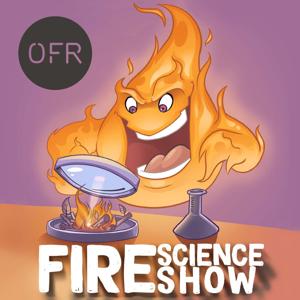

Welcome to another fire fundamentals episode! Today we dig into how to place a fire in a model so results reflect real physics. From plume inputs to FDS burners, we show where HRRPUA, radiative fraction, and D* make or break smoke your calculations. Things considered in this episode:
• why defining the design HRR is separate from placing the source
• what a flame is and why we cannot resolve its chemistry
• plume models compared by inputs: perimeter, Q, Qc
• entrainment, virtual origin, and effective diameter
• realistic HRRPUA ranges for building-scale fires
• radiative vs convective fractions and why they matter
• zone model linkage to plumes for smoke control
• volumetric smoke and heat sources for CFD: volume, placement, and limits
• fuel-based fires in CFD and oxygen constraints
• growth modeling via area expansion vs flux ramping
• soot yields, heat of combustion, and visibility
• D* and meshing guidance for credible resolution
• why predictive fire spread modelling for design use does not really exist...
Resources, resources!
----
The Fire Science Show is produced by the Fire Science Media in collaboration with OFR Consultants. Thank you to the podcast sponsor for their continuous support towards our mission.
 View all episodes
 By Wojciech Wegrzynski

4.8
1616 ratings
Welcome to another fire fundamentals episode! Today we dig into how to place a fire in a model so results reflect real physics. From plume inputs to FDS burners, we show where HRRPUA, radiative fraction, and D* make or break smoke your calculations. Things considered in this episode:
• why defining the design HRR is separate from placing the source
• what a flame is and why we cannot resolve its chemistry
• plume models compared by inputs: perimeter, Q, Qc
• entrainment, virtual origin, and effective diameter
• realistic HRRPUA ranges for building-scale fires
• radiative vs convective fractions and why they matter
• zone model linkage to plumes for smoke control
• volumetric smoke and heat sources for CFD: volume, placement, and limits
• fuel-based fires in CFD and oxygen constraints
• growth modeling via area expansion vs flux ramping
• soot yields, heat of combustion, and visibility
• D* and meshing guidance for credible resolution
• why predictive fire spread modelling for design use does not really exist...
Resources, resources!
----
The Fire Science Show is produced by the Fire Science Media in collaboration with OFR Consultants. Thank you to the podcast sponsor for their continuous support towards our mission.

78,688 Listeners

43,837 Listeners

32,246 Listeners
26,242 Listeners

30,870 Listeners
54 Listeners

5,109 Listeners
773 Listeners
495 Listeners
2,303 Listeners

3,858 Listeners

851 Listeners

131 Listeners
4 Listeners

1,153 Listeners