
Sign up to save your podcasts
Or


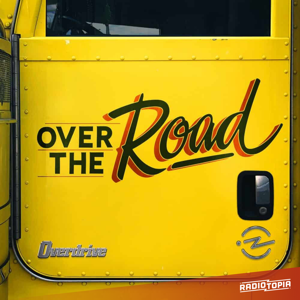
John Steinbeck called it the “Mother Road.” Songwriter Bobby Troup described it as the route to get your kicks on. And Mickey Mantle said, “If it hadn’t been for Highway 66 I never would have been a Yankee.” For the Dust Bowl refugees of the 1930s, for the thousands who migrated after World War II, and for the generations of tourists and vacationers, Route 66 was “the Way West.”
Route 66, the first continuously paved highway linking east and west was the most traveled and well known road in America for almost fifty years. From Chicago, it ran through the Ozarks of Missouri, across Oklahoma and the Texas Panhandle, up the mesas of New Mexico and Arizona, and down into California to the Pacific Ocean. The first road of it’s kind, it came to represent America’s mobility and freedom—inspiring countless stories, songs, and even a TV show.
In part II of Route 66, Studs Terkel reads from “The Grapes of Wrath” and comments on the great 1930s migration along Highway 66. We hear from black and white musicians including Clarence Love, head of Clarence Love and his Orchestra, Woody Guthrie, and Eldin Shamblin, guitar player for Bob Wills and his Texas Playboys—who remember life on the road for musicians during the 1930s. We travel the history of the road from its beginnings as “The Main Street of America,” through the “Road of Flight” in the 1930s, to the “Ghost Road” of the 1980s, as the interstates bypass the businesses and road side attractions of another era.
Produced by The Kitchen Sisters and narrated by actor David Selby.
 View all episodes
 By The Kitchen Sisters & Radiotopia

4.5
12661,266 ratings
John Steinbeck called it the “Mother Road.” Songwriter Bobby Troup described it as the route to get your kicks on. And Mickey Mantle said, “If it hadn’t been for Highway 66 I never would have been a Yankee.” For the Dust Bowl refugees of the 1930s, for the thousands who migrated after World War II, and for the generations of tourists and vacationers, Route 66 was “the Way West.”
Route 66, the first continuously paved highway linking east and west was the most traveled and well known road in America for almost fifty years. From Chicago, it ran through the Ozarks of Missouri, across Oklahoma and the Texas Panhandle, up the mesas of New Mexico and Arizona, and down into California to the Pacific Ocean. The first road of it’s kind, it came to represent America’s mobility and freedom—inspiring countless stories, songs, and even a TV show.
In part II of Route 66, Studs Terkel reads from “The Grapes of Wrath” and comments on the great 1930s migration along Highway 66. We hear from black and white musicians including Clarence Love, head of Clarence Love and his Orchestra, Woody Guthrie, and Eldin Shamblin, guitar player for Bob Wills and his Texas Playboys—who remember life on the road for musicians during the 1930s. We travel the history of the road from its beginnings as “The Main Street of America,” through the “Road of Flight” in the 1930s, to the “Ghost Road” of the 1980s, as the interstates bypass the businesses and road side attractions of another era.
Produced by The Kitchen Sisters and narrated by actor David Selby.

90,954 Listeners

43,979 Listeners

38,233 Listeners
27,053 Listeners

26,226 Listeners

11,626 Listeners

3,029 Listeners

2,884 Listeners

6,895 Listeners

1,269 Listeners

3,642 Listeners

10,425 Listeners

17,611 Listeners

2,242 Listeners

2,139 Listeners
5,213 Listeners

3,557 Listeners
1,116 Listeners
4,840 Listeners
5,760 Listeners
145 Listeners

271 Listeners

445 Listeners

116 Listeners

568 Listeners

71 Listeners

13 Listeners
36 Listeners
0 Listeners

0 Listeners

47 Listeners

98 Listeners
1 Listeners