
Sign up to save your podcasts
Or

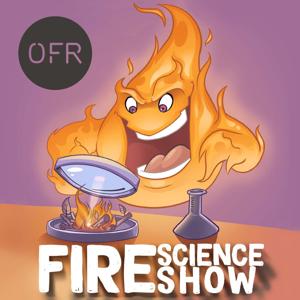

I’m not stressed by AI itself. I’m stressed by the insatiable greed of those who profit from it, even if it means sacrificing large parts of the population. I'm also stressed about how ruthlessly it can be abused to cause deliberate harm.
In this episode I'm not taking you into world of fire science, but rather into my own thoughts on how the AI revolution influences our lives. And I was influenced it just last week - through a phishing attack on the IAFSS, and through reading a very disturbing piece of fiction I found on the Internet...
In the episode I comment on the targeted phishing attack against our association that used well-researched details and a cloned voice pulled from public audio. From there, we step into a stark forecast of near-term AI disruption in white-collar work. Agent teams can already write, review, and ship production code in loops, compressing time and cost while jolting stock prices across entire sectors the moment capabilities drop.
Then we get specific about our field. Some tasks in fire safety are ripe for automation—code interpretation, routine calculations, device placement, and documentation—where speed and consistency help. But holistic fire strategy is contextual and slow to validate, with scarce, standardized case data and long feedback loops. Buildings are messy, multidisciplinary systems; that friction is a temporary moat against full automation. The larger risk may be macroeconomic: if AI compresses demand and margins across white-collar industries, construction cools, and safety work gets squeezed. Paradoxically, low digitalization in construction buys time, making it harder to train and deploy one-size-fits-all models.
I'm still to large extent positive Fire Safety Engineering won't be directly disrupted at the same scale as Software Engineers got, but as a part of a larger ecosystem we won't be untouched either... I hope the version of the future that plays out is more optimistic than the one I got worried about.
Read the Citrini piece here, if you have not yet: https://www.citriniresearch.com/p/2028gic
Update: A week later there has been a lot of works that have refuted the dark scenario in Citrini piece, like here: https://www.businessinsider.com/ai-job-losses-wall-street-strategist-citrini-research-citadel-securities-2026-2?IR=T
Some are showing Software Engineering job openings rising etc. Perhaps world is not in the dark scenario - I highly hope so!
----
The Fire Science Show is produced by the Fire Science Media in collaboration with OFR Consultants. Thank you to the podcast sponsor for their continuous support towards our mission.
 View all episodes
 By Wojciech Wegrzynski

4.8
1616 ratings
I’m not stressed by AI itself. I’m stressed by the insatiable greed of those who profit from it, even if it means sacrificing large parts of the population. I'm also stressed about how ruthlessly it can be abused to cause deliberate harm.
In this episode I'm not taking you into world of fire science, but rather into my own thoughts on how the AI revolution influences our lives. And I was influenced it just last week - through a phishing attack on the IAFSS, and through reading a very disturbing piece of fiction I found on the Internet...
In the episode I comment on the targeted phishing attack against our association that used well-researched details and a cloned voice pulled from public audio. From there, we step into a stark forecast of near-term AI disruption in white-collar work. Agent teams can already write, review, and ship production code in loops, compressing time and cost while jolting stock prices across entire sectors the moment capabilities drop.
Then we get specific about our field. Some tasks in fire safety are ripe for automation—code interpretation, routine calculations, device placement, and documentation—where speed and consistency help. But holistic fire strategy is contextual and slow to validate, with scarce, standardized case data and long feedback loops. Buildings are messy, multidisciplinary systems; that friction is a temporary moat against full automation. The larger risk may be macroeconomic: if AI compresses demand and margins across white-collar industries, construction cools, and safety work gets squeezed. Paradoxically, low digitalization in construction buys time, making it harder to train and deploy one-size-fits-all models.
I'm still to large extent positive Fire Safety Engineering won't be directly disrupted at the same scale as Software Engineers got, but as a part of a larger ecosystem we won't be untouched either... I hope the version of the future that plays out is more optimistic than the one I got worried about.
Read the Citrini piece here, if you have not yet: https://www.citriniresearch.com/p/2028gic
Update: A week later there has been a lot of works that have refuted the dark scenario in Citrini piece, like here: https://www.businessinsider.com/ai-job-losses-wall-street-strategist-citrini-research-citadel-securities-2026-2?IR=T
Some are showing Software Engineering job openings rising etc. Perhaps world is not in the dark scenario - I highly hope so!
----
The Fire Science Show is produced by the Fire Science Media in collaboration with OFR Consultants. Thank you to the podcast sponsor for their continuous support towards our mission.

78,688 Listeners

43,837 Listeners

32,246 Listeners
26,242 Listeners

30,870 Listeners
54 Listeners
5,109 Listeners
773 Listeners

495 Listeners
2,303 Listeners
3,858 Listeners

851 Listeners
131 Listeners
4 Listeners

1,153 Listeners