
Sign up to save your podcasts
Or

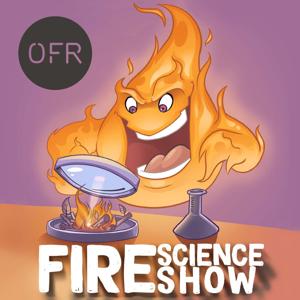

You don’t always need a furnace to end up with a fire resistance rating, but you do need to understand what kind of “proof” you’re actually creating. I’m joined again by Dr. Piotr Turkowski from ITB to unpack calculation methods for fire resistance and the real-world chain from engineering assumptions to a Declaration of Performance. We talk about when standards and European Assessment Documents (EADs) explicitly allow Eurocode-based assessment, and how different methods will lead you to your resulting class in a different way.
We spend a lot of time on the practical heart of structural fire engineering: concrete and steel. For reinforced concrete (Eurocode 2, EN 1992-1-2), we compare tabulated data, simplified calculation approaches like the zone method, and advanced global modeling that starts to look more like performance-based fire safety engineering than classification. For steel (Eurocode 3, EN 1993-1-2), we break down critical temperature, utilization, section factor, and what you can realistically expect from unprotected members under the standard fire curve.
Then we get into the more challenging part that tables or simplified methods can’t completely capture: fire protection materials. Sprayed mortars, boards, and intumescent coatings change properties with temperature, moisture, and expansion, and their performance can hinge on stickability, cracking, and detachment during large deflections. Finally, Piotr shares a strong caution on masonry, where tabulated data can be dangerously optimistic for some concrete hollow blocks, and we close with a look at what machine learning might someday add to fire resistance prediction.
Here is a link to the paper about Masonry: https://www.sciencedirect.com/science/article/abs/pii/S0379711226000512
ITB and Piotr have international courses on fire resistance and fire testing - keep an eye out on them!
----
The Fire Science Show is produced by the Fire Science Media in collaboration with OFR Consultants. Thank you to the podcast sponsor for their continuous support towards our mission.
 View all episodes
 By Wojciech Wegrzynski

4.8
1616 ratings
You don’t always need a furnace to end up with a fire resistance rating, but you do need to understand what kind of “proof” you’re actually creating. I’m joined again by Dr. Piotr Turkowski from ITB to unpack calculation methods for fire resistance and the real-world chain from engineering assumptions to a Declaration of Performance. We talk about when standards and European Assessment Documents (EADs) explicitly allow Eurocode-based assessment, and how different methods will lead you to your resulting class in a different way.
We spend a lot of time on the practical heart of structural fire engineering: concrete and steel. For reinforced concrete (Eurocode 2, EN 1992-1-2), we compare tabulated data, simplified calculation approaches like the zone method, and advanced global modeling that starts to look more like performance-based fire safety engineering than classification. For steel (Eurocode 3, EN 1993-1-2), we break down critical temperature, utilization, section factor, and what you can realistically expect from unprotected members under the standard fire curve.
Then we get into the more challenging part that tables or simplified methods can’t completely capture: fire protection materials. Sprayed mortars, boards, and intumescent coatings change properties with temperature, moisture, and expansion, and their performance can hinge on stickability, cracking, and detachment during large deflections. Finally, Piotr shares a strong caution on masonry, where tabulated data can be dangerously optimistic for some concrete hollow blocks, and we close with a look at what machine learning might someday add to fire resistance prediction.
Here is a link to the paper about Masonry: https://www.sciencedirect.com/science/article/abs/pii/S0379711226000512
ITB and Piotr have international courses on fire resistance and fire testing - keep an eye out on them!
----
The Fire Science Show is produced by the Fire Science Media in collaboration with OFR Consultants. Thank you to the podcast sponsor for their continuous support towards our mission.

78,682 Listeners

43,979 Listeners

32,105 Listeners
26,226 Listeners

30,794 Listeners
55 Listeners
5,108 Listeners
768 Listeners
490 Listeners
2,300 Listeners

3,255 Listeners

777 Listeners
133 Listeners
4 Listeners

1,104 Listeners