
Sign up to save your podcasts
Or

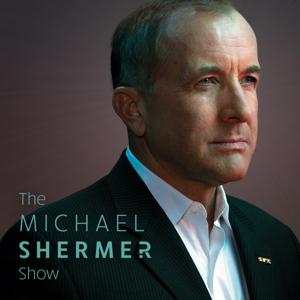

The democratic ideal demands that the citizenry think critically about matters of public import. Yet many Democrats and Republicans in the United States have fallen short of that standard because political tribalism motivates them to acquire, perceive and evaluate political information in a biased manner. The result is an electorate that is more extreme, hostile and willing to reject unfavorable democratic outcomes.
Shermer and Redmond discuss: why we have political duopoly (Duverger's law) • parties vs. policies • Are we living in a post-truth, fake-news, alternative facts world? • How do we know political polarization is worse now than in the past? • acquiring, perceiving, and evaluating political information • evaluating: false political information, political numbers and arguments, claims of rigged election • whataboutism • cognitive responsibilities of citizenship • cognitive biases • political polarization • myside bias • numeracy vs. innumeracy • solutions to the polarization problem.
Timothy J. Redmond received his PhD in political science from the University at Buffalo. He is an award-winning educator and author of over one hundred articles on critical thinking and politics. He is a professor at Daemen University where he teaches a political science and history course for education students.
 View all episodes
 By Michael Shermer

4.4
884884 ratings
The democratic ideal demands that the citizenry think critically about matters of public import. Yet many Democrats and Republicans in the United States have fallen short of that standard because political tribalism motivates them to acquire, perceive and evaluate political information in a biased manner. The result is an electorate that is more extreme, hostile and willing to reject unfavorable democratic outcomes.
Shermer and Redmond discuss: why we have political duopoly (Duverger's law) • parties vs. policies • Are we living in a post-truth, fake-news, alternative facts world? • How do we know political polarization is worse now than in the past? • acquiring, perceiving, and evaluating political information • evaluating: false political information, political numbers and arguments, claims of rigged election • whataboutism • cognitive responsibilities of citizenship • cognitive biases • political polarization • myside bias • numeracy vs. innumeracy • solutions to the polarization problem.
Timothy J. Redmond received his PhD in political science from the University at Buffalo. He is an award-winning educator and author of over one hundred articles on critical thinking and politics. He is a professor at Daemen University where he teaches a political science and history course for education students.
26,353 Listeners
2,274 Listeners

855 Listeners

248 Listeners
1,065 Listeners

905 Listeners
4,165 Listeners

801 Listeners
1,643 Listeners
501 Listeners
568 Listeners

26 Listeners

390 Listeners
825 Listeners
8,767 Listeners