
Sign up to save your podcasts
Or

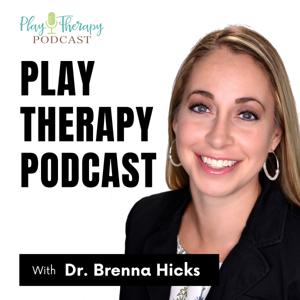

In this episode, I answer a thoughtful question about how child-centered play therapy works if children are not yet capable of abstract reasoning. I explain the important distinction between children being able to memorize and learn information versus having the cognitive ability for true introspection, logic, and abstract thought. Drawing from Piaget's developmental framework, I discuss why children under approximately age 12–13 are primarily experiential and emotional learners, not cognitive processors in the way adults are. This is exactly why CCPT is so developmentally appropriate—it meets children where they are, rather than expecting them to function like miniature adults.
I also explore why some older children, especially ages 9–11, may appear reflective or want to sit and talk during sessions. While preteens begin developing more self-awareness and verbal sophistication, their primary mode of growth is still emotional and experiential. In CCPT, children heal not because they intellectually analyze themselves, but because they experience unconditional acceptance, emotional attunement, and relationship in a way that changes how they feel about themselves and others. This episode dives into the deeper "why" behind the model and reinforces why trusting development is essential to effective play therapy.
Join me for our LIVE 400th Episode! Register by clicking the following link to join me LIVE on a Zoom call on May 28, 2026 12:00 PM EST. (please note the time zone) www.playtherapypodcast.com/400
PlayTherapyNow.com is my HUB for everything I do! playtherapynow.com. Sign up for my email newsletter, stay ahead with the latest CCPT CEU courses, personalized coaching opportunities and other opportunities you need to thrive in your CCPT practice. If you click one link in these show notes, this is the one to click!
Topical Playlists! All of the podcasts are now grouped into topical playlists on YouTube. Please go to https://www.youtube.com/kidcounselorbrenna/playlists to view them.
If you would like to ask me questions directly, check out www.ccptcollective.com, where I host two weekly Zoom calls filled with advanced CCPT case studies and session reviews, as well as member Q&A. You can take advantage of the two-week free trial to see if the CCPT Collective is right for you.
Ask Me Questions: Call (813) 812-5525, or email: [email protected] Brenna's CCPT Hub: https://www.playtherapynow.com CCPT Collective (online community exclusively for CCPTs): https://www.ccptcollective.com Podcast HQ: https://www.playtherapypodcast.com APT Approved Play Therapy CE courses: https://childcenteredtraining.com Facebook: https://facebook.com/playtherapypodcast
Common References: Cochran, N., Nordling, W., & Cochran, J. (2010). Child-Centered Play Therapy (1st ed.). Wiley. VanFleet, R., Sywulak, A. E., & Sniscak, C. C. (2010). Child-centered play therapy. Guilford Press. Landreth, G.L. (2023). Play Therapy: The Art of the Relationship (4th ed.). Routledge. Landreth, G.L., & Bratton, S.C. (2019). Child-Parent Relationship Therapy (CPRT): An Evidence-Based 10-Session Filial Therapy Model (2nd ed.). Routledge. https://doi.org/10.4324/9781315537948 Benedict, Helen. Themes in Play Therapy. Used with permission to Heartland Play Therapy Institute.
 View all episodes
 By Dr. Brenna Hicks

4.9
8888 ratings
In this episode, I answer a thoughtful question about how child-centered play therapy works if children are not yet capable of abstract reasoning. I explain the important distinction between children being able to memorize and learn information versus having the cognitive ability for true introspection, logic, and abstract thought. Drawing from Piaget's developmental framework, I discuss why children under approximately age 12–13 are primarily experiential and emotional learners, not cognitive processors in the way adults are. This is exactly why CCPT is so developmentally appropriate—it meets children where they are, rather than expecting them to function like miniature adults.
I also explore why some older children, especially ages 9–11, may appear reflective or want to sit and talk during sessions. While preteens begin developing more self-awareness and verbal sophistication, their primary mode of growth is still emotional and experiential. In CCPT, children heal not because they intellectually analyze themselves, but because they experience unconditional acceptance, emotional attunement, and relationship in a way that changes how they feel about themselves and others. This episode dives into the deeper "why" behind the model and reinforces why trusting development is essential to effective play therapy.
Join me for our LIVE 400th Episode! Register by clicking the following link to join me LIVE on a Zoom call on May 28, 2026 12:00 PM EST. (please note the time zone) www.playtherapypodcast.com/400
PlayTherapyNow.com is my HUB for everything I do! playtherapynow.com. Sign up for my email newsletter, stay ahead with the latest CCPT CEU courses, personalized coaching opportunities and other opportunities you need to thrive in your CCPT practice. If you click one link in these show notes, this is the one to click!
Topical Playlists! All of the podcasts are now grouped into topical playlists on YouTube. Please go to https://www.youtube.com/kidcounselorbrenna/playlists to view them.
If you would like to ask me questions directly, check out www.ccptcollective.com, where I host two weekly Zoom calls filled with advanced CCPT case studies and session reviews, as well as member Q&A. You can take advantage of the two-week free trial to see if the CCPT Collective is right for you.
Ask Me Questions: Call (813) 812-5525, or email: [email protected] Brenna's CCPT Hub: https://www.playtherapynow.com CCPT Collective (online community exclusively for CCPTs): https://www.ccptcollective.com Podcast HQ: https://www.playtherapypodcast.com APT Approved Play Therapy CE courses: https://childcenteredtraining.com Facebook: https://facebook.com/playtherapypodcast
Common References: Cochran, N., Nordling, W., & Cochran, J. (2010). Child-Centered Play Therapy (1st ed.). Wiley. VanFleet, R., Sywulak, A. E., & Sniscak, C. C. (2010). Child-centered play therapy. Guilford Press. Landreth, G.L. (2023). Play Therapy: The Art of the Relationship (4th ed.). Routledge. Landreth, G.L., & Bratton, S.C. (2019). Child-Parent Relationship Therapy (CPRT): An Evidence-Based 10-Session Filial Therapy Model (2nd ed.). Routledge. https://doi.org/10.4324/9781315537948 Benedict, Helen. Themes in Play Therapy. Used with permission to Heartland Play Therapy Institute.
74 Listeners
679 Listeners

1,331 Listeners

2,528 Listeners

1,392 Listeners

128 Listeners

14,969 Listeners
667 Listeners
51 Listeners

86 Listeners

62,395 Listeners

41,512 Listeners

20,222 Listeners

10,883 Listeners
1 Listeners