
Sign up to save your podcasts
Or

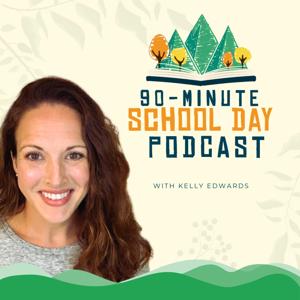


“I’m not reading, but everyone else is.”
If you’ve ever heard your child say this (or felt it echo quietly in your own head) this conversation is for you.
In this episode, I’m joined by Carrie DeFrancisco for a live conversation inside Day in the Life (DITL) community. Carrie is a longtime homeschool parent, former classroom teacher, homeschool coach, and podcaster. And she’s also an accidental homeschooler and the mother of a neurodivergent, dyslexic learner.
Together, we talk about what really helps when a child’s reading timeline looks different.
Not from a place of fixing or rushing.
Instead, we explore:
This conversation is about reading, yes … but it’s also about trust, identity, and what happens when we let development unfold without a stopwatch.
If you have a dyslexic learner, listen closely.
If you don’t, still listen … because every child has a place where their timeline looks different.
This is a conversation for parents who are done chasing benchmarks and ready to notice what’s already growing.
Resources + Links
Winter can be a hard season for homeschooling parents...
Especially if you are raising neurodivergent kids while navigating burnout, nervous system exhaustion, and the pressure to “reset.”
In this episode, we explore how watercolor can support nervous system regulation, deschooling, and gentle self-care in real life.
Meet artist and unschooling parent Cyrielle Tignard to talk about releasing perfectionism, creating with interruptions, and giving yourself permission to pause, play, and care for your own nervous system alongside your child’s.
Watercolor as nervous system regulation and burnout recovery
Deschooling as a practice of process, not performance
Parenting and learning alongside neurodivergent children
Letting go of perfection and trusting growth beneath the surface
Why creative self-care matters in homeschooling families
Free 3-Day Introduction to Watercolor Mini Course (Cyrielle Tignard)
Day In The Life Community (DITL)
Private Coaching with Kelly Edwards
If this episode met you where you are, please rate and review The 90-Minute School Day. Your reviews help other homeschooling parents find support and encouragement. Thank you!
Let's explore how boundaries and belonging work together to create safety, connection, and authenticity in our families. Especially for those of us parenting and home educating neurodivergent and PDA children who need spaciousness, autonomy, and felt-safety to thrive and learn.
Rachel Rainbolt is a therapist, unschooling mother, family guide, and founder of Sage Family. In this episode, Rachel shares grounded, practical tools for navigating real-life relationship dynamics during an emotionally complex season. With her warm, compassionate wisdom, she helps us understand boundaries not as lines drawn to control others, but as choices we make to care for ourselves while staying connected.
Together, we talk through:
This is a gentle, insightful guide for moving through the next season with more clarity, compassion, and confidence.
Connect with Rachel Rainbolt
Connect with Kelly + The 90-Minute School Day
Taking a Break — Recommended Episodes to Revisit
As we take a holiday break from releasing new podcast episodes, now is an ideal time to revisit or check out a few favorites that align beautifully with today’s themes of boundaries, belonging, connection, and preparing for the season ahead:
The conclusion of the “Start Where You Are” series
Dive deep with us into the idea that conventional schools might be contributing to the very struggles many people associate with dyslexia.
This bonus episode originally aired as Episode 38, and we’re bringing it back as the perfect conclusion to our 5-part “Start Where You Are” series (Episodes 48–52). After exploring grief, the joy of slow, learning readiness, math, and writing, this conversation invites you to rethink reading and the ways schools impact children’s learning.
I’m joined by Je’anna Clements, an advocate for self-directed learning and a dyslexic learner herself, to discuss her eye-opening perspective on DYSlexia (school-created) vs. dyslexia (a neurotype).
Je’anna explains how conventional interventions often offer “helpful harm,” leading to poorer outcomes than self-directed educational approaches for dyslexic learners. She shares how shifting our perspective allows all children to thrive in ways that truly honor their unique needs. We also explore the powerful connections between felt-safety, self-determination theory, flow in learning, and consent—and how these elements are key to fostering meaningful, lifelong learning.
We dive into the idea of “inherent wisdom”—the concept that children already possess what they need to find their own learning solutions. Je’anna shares how self-directed learning, rooted in trust and understanding, helps children mature in their own ways—especially those who’ve been labeled as “dyslexic.”
This conversation challenges conventional educational norms and invites you to rethink learning, reading, and the holistic development and respect of children.
In this episode, you’ll learn:
The difference between DYSlexia (school-created) and dyslexia (a neurotype)
Why some common reading interventions might actually be harmful
How felt-safety, self-determination, and flow impact learning
The role of consent in a child’s learning process
The importance of connecting learning to a child’s innate interests and curiosity
Why trusting your child’s natural learning process can be the key to thriving in home education
Connect with Je’Anna:
Resources mentioned in this episode:
Join the Conversation!
🎉Doors are open now! (Thru Nov. 4th)🎉
Want to join us for support, connection, and more conversations like this?
Listen to the other episodes in the “Starting Where You Are” series:
Ever wonder why it’s hard to express yourself in writing?
Join Julie Bogart, myself, and the DITL community for a down-to-earth conversation about helping the resistant writer in all of us become brave writers.
In this episode, Julie shares her own journey from homeschool parent to national voice for authentic education, unpacking what writing really is and why so many of us, parents and kids alike, carry writing wounds. Together, we explore how to help our children find their voices through partnership, play, and trust, and how parents and kids can begin to heal their own relationships with writing along the way.
So, if you have a child who hides under the table when the pencil comes out or fills notebooks with stories, this conversation will leave you excited, hopeful, and equipped to support writing as a natural form of expression…not a performance.
**This episode is part 5 of a 5-part podcast series, Start Where You Are. (Be sure to catch up with the rest of the series, linked below.)
What We Talk About
Connect with Julie
Join the Community
Did this conversation leave you wanting more?
Our Day in the Life members stayed on for a live Q+A with Julie, diving deeper into real-life applications and parent questions. In fact, we studied writing together for an entire month.
If you’re raising an out-of-the-box, neurodivergent, or special needs child, you’ll find a warm homecoming inside the Day in the Life community. It’s a space for parents practicing flow over force, learning to trust the process, and supporting each other through the hard and beautiful work of homeschooling differently.
Doors open November 1st by invite only.
Stay Connected
Listen to the other episodes in the “Starting Where You Are” series:
Follow along at 90MinuteSchoolDay.com or on Instagram @90MinuteSchoolDay.
What if math wasn’t actually the problem—just the way we’ve been taught to see it?
In this episode, we welcome longtime unschooling advocate Sue Patterson, founder of Unschooling Mom2Mom, to explore one of the biggest sources of stress for homeschooling parents: math.
Together, we unpack how our own school experiences and fears around math can shape the way we approach learning with our kids—and how shifting that mindset can open the door to curiosity, trust, and genuine growth.
You’ll hear about:
This is part 4 of 5 in our Start Where You Are series, and it’s one you won’t want to miss.
Whether you love math or dread it, this conversation will help you reimagine what learning math can look like when we let go of control and trust the process.
Links & Resources Mentioned in This Episode:
Listen to the other episodes in the “Starting Where You Are” series:
Before academics, worksheets, or curriculum—there’s one foundational question: Is my child ready to learn?
Learning starts with the body.
In this conversation, we are joined by Sarah Collins, homeschool mom and occupational therapist behind Homeschool OT.
Sarah helps us step into an OT’s perspective on learning readiness by unpacking retained primitive reflexes, regulation, and how to observe our kids with new eyes.
Together, we explore:
Sarah brings both expertise and empathy, reminding parents that you don’t have to do everything—just start where you are, with what you have.
Links & Resources Mentioned in This Episode:
📌Learn more about Sarah, her classes and consulting at Homeschool OT
📌 Listen to Sarah’s podcast The Homeschool OT Is In
📌 Check out Day in the Life (DITL) Community.
📌 Kelly offers one-on-one coaching and a self-paced course on the 90-Minute School Day method.
📌 There is also Guide Training™, a live group learning environment, for those who prefer community learning.
📌Listen to or invite Kelly to speak about the 90-Minute School Day™.
🎧 Listen to the other episodes in the “Starting Where You Are” series:
The pressure to “do more” in homeschooling is constant—cover more subjects, check more boxes, keep up with the pace of everyone else.
But what if all that rushing is the very thing keeping kids (and parents) from real learning?
In this episode, Leslie Martino, author of The Joy of Slow, pushes back on the myths of falling behind and faster is better. She explains why slowing down is not about doing less, but about creating the space where values, curiosity, and connection can actually take root.
Highlights include:
This episode is part 2 in our 5-part Start Where You Are series, following the conversation on grief and meaning-making we began in Episode 48. Both episodes pair together to reveal the same truth: meaning is never found in speed—it’s found in slowing down enough to notice.
📌 Connect with Leslie: lesliemartino.com
📌 Join Leslie’s 30 Days of Connection
🎧 Catch Part 1 here: Grief, Acceptance, and Meaning-Making with Emily Souder
🎧 Catch Part 3 here: Body Before Brain: Unlock Learning with Sarah Collins
🎧 Catch Part 4 here: What If Math Wasn't The Problem? with Sue Patterson
🎧 Catch Part 5 here: Becoming Brave Learners with Julie Bogart
This episode is the first in a brand new 5-part series on the podcast: Start Where You Are.
This series is designed to meet you wherever you are in your homeschooling journey, offering the resourcing you need to move forward with meaning and acceptance. And to begin, we’re going straight to the foundation—by naming the elephant in the room: grief.
Grief isn’t only about death. It’s about the losses, big and small, that come with parenting and homeschooling—especially for families raising neurodivergent kids. It’s the grief of unmet expectations. The invisible grief of constant adaptation. The grief of medical interventions, school refusal, autistic burnout, and family rhythms that look nothing like we imagined.
Too often, grief is dismissed, mislabeled, or buried under burnout. Grief is not an enemy to fight—it’s a friend to make room for. It’s a teacher that invites us toward healing, wholeness, and connection.
In this conversation, I’m joined by my friend and Day In The Life community member Emily Souder—therapist, author, homeschool mom, and parent of neurodivergent kids. Emily knows this territory intimately, both through her personal story and her work in the world of neonatal loss and grief.
Together, we explore what it means to befriend grief and create space for it in our families—because tending to grief is not only vital for our own healing, but for the well-being of our children.
What grief is and how it shows up in our nervous system
Why the 5 stages of grief are often misunderstood
The Dual Process Model of Grief and how it helps us balance grieving and living
What happens when we suppress or avoid grief
Supporting our children in their own experiences of grief
Practical ways to tend to grief in our family rhythms
Learn more about Emily Souder on her website
Pre-order Emily’s newest book, Your NICU Story
Join us for the next Day In The Life Community Open House
Listen to the Rest of this Podcast Series
🎧 Catch Part 2 here: Falling Behind is a Myth with Leslie Martino
🎧 Catch Part 3 here: Body Before Brain: Unlock Learning with Sarah Collins
🎧 Catch Part 4 here: What If Math Wasn't The Problem? with Sue Patterson
🎧 Catch Part 5 here: Becoming Brave Learners with Julie Bogart
In this final episode of our four-part series on technology and learning, we're tackling a topic that feels like the "Wild West": artificial intelligence + kids.
Is this a threat, a tool, or something else entirely?
Join us for a grounded and thoughtful conversation with Andrew Dugan, a former teacher and software engineer who created Aris.chat, a customizable AI designed for kids. He helps us demystify what generative AI and large language models (LLMs) actually are, offering a critical and creative look at how these tools can be used for learning.
Andrew shares his unique perspective as a parent, teacher, software engineer, and consumer, exploring the promises and pitfalls of AI, especially for neurodivergent kids. We'll discuss how to use AI for self-directed learning, the importance of maintaining human connection in a digital world, and what red flags to look for in a tech tool.
This is a must-listen for any parent trying to make sense of AI. Tune in for an engaging conversation that tackles the tough questions about AI's role in children's lives, offering guidance, hope, and practical tips for navigating this brave new world.
RESOURCES MENTIONED:
Ready to talk about this and other topics with other parents?
Looking to catch up on the other episodes in this Tech + Learning Series?
From the publisher's feed

3,366 Listeners
2,971 Listeners
696 Listeners
895 Listeners
961 Listeners
1,427 Listeners
2,207 Listeners

269 Listeners

2,524 Listeners
2,017 Listeners
312 Listeners
177 Listeners

370 Listeners
478 Listeners

768 Listeners