
Sign up to save your podcasts
Or



Based on Podcast App listening data
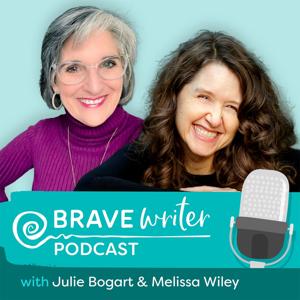
What if the thing standing between us and a satisfying homeschool rhythm isn’t the curriculum, but our resistance to sitting down and making a plan?
We’re looking at how attention, boredom, confusion, and even our phones shape the way we approach learning. Then we get practical, building a flexible monthly rhythm around read-alouds, Poetry Teatime, copywork, dictation, freewriting, nature study, and meaningful writing projects.
The goal isn’t a rigid schedule or endless workbook pages. It’s enough preparation to help learning feel alive, responsive, and sustainable.
Join us and discover how a little scaffolding can create more freedom in your homeschool.
Resources:
Connect with Julie:
Connect with Melissa:
Produced by NOVA
What rights do we forget we have when homeschooling becomes an all-consuming family project?
Staying home to educate our kids can be meaningful, joyful work, but it is still work. We deserve a voice in family finances, time to maintain employable skills, space for lesson preparation, personal interests, exercise, rest, and a say in the educational decisions we spend our days carrying out.
We also get to change our minds. Homeschooling does not require signing away the rest of our adulthood.
We’re talking about financial agency, shared household labor, professional development, supportive partnerships, and why caring for our own future belongs inside the homeschool plan too.
Listen in, then ask yourself: what would change if you treated homeschooling like the real career it is?
Resources:
Connect with Julie:
Connect with Melissa:
Produced by NOVA
What if movie day isn’t a break from learning, but one of the ways we build a rich education?
Movies give our kids stories, language, history, cultural references, and characters they can return to again and again. We talk about why rewatching counts, how film can make Shakespeare and Jane Austen more accessible, and what happens when favorite lines become family lore. We also explore modern adaptations, film clubs, fandom, and the joy of recognizing an old story in a new form.
So dim the lights, grab the popcorn, and give yourself permission to count the movie. Then tell us what your family is watching!
Resources:
Connect with Julie:
Connect with Melissa:
Produced by NOVA
What if one of the best tools in your homeschool is already free?
We’re celebrating the library as a place where curiosity gets to roam and the default answer can be “yes.” We explore how browsing the stacks creates discoveries no search bar can replicate, why learning the Dewey Decimal System can empower kids, and how a regular library rhythm can enrich your homeschool.
Then we make the case for picture books at every age. From visual literacy and sophisticated vocabulary to science, art, emotional insight, and family traditions, these books offer far more than beginning reading practice.
Grab your library card and come rediscover the stacks with us!
Resources:
Connect with Julie:
Connect with Melissa:
Produced by NOVA
What if the missing ingredient in your homeschool isn’t a better curriculum, but a bigger toolkit for teaching?
When kids resist a lesson, it’s easy to reach for familiar parenting strategies: consequences, bargaining, reminders, and demands for cooperation. But learning asks something different of us. We need teaching tactics that spark curiosity, invite collaboration, leave room for contemplation, and celebrate real growth.
We explore playful, practical ways to make math, history, writing, and other subjects more meaningful, while helping our kids develop genuine ownership of what they learn.
Tune in and discover how to trade “Come on, you guys!” for richer learning experiences.
Resources:
Connect with Julie:
Connect with Melissa:
Produced by NOVA
What if feeding our kids didn’t have to feel like a test we could pass or fail?
Registered dietitian and Kids Eat in Color founder Jennifer Anderson joins us to talk about raising capable, curious eaters without getting trapped by nutrition trends, food guilt, or rigid rules. We explore picky eating, growth and weight concerns, food advertising, introducing unfamiliar foods, and why the “best practice” isn’t always the best fit for the child in front of us. Jennifer also shares ideas from her new book, Feed Them Well, for helping kids care for their bodies while enjoying food.
Come rethink what it means to feed our children well.
Resources:
Connect with Julie:
Connect with Melissa:
Produced by NOVA
Can you really homeschool well while also holding down a job? Yes, but the answer may require us to rethink when, where, and how learning happens.
With Brave Writer president Dawn Smith joining us, we explore flexible schedules, morning meetings, night schooling, body doubling, buddy reading, planning from behind, and the art of “triangling in” support. We also look at why homeschool doesn't need to imitate a nine-to-three school day and how ordinary moments, from breakfast to dishwashing, can become rich opportunities for connection and learning.
Come discover how work and homeschool can fit into the same family tapestry.
Resources:
Connect with Julie:
Connect with Melissa:
Produced by NOVA
What changes when we stop treating homeschooling as something we do to our children and begin learning alongside them?
Connection is at the heart of meaningful education: connection to ourselves, to the subjects we study, and to one another. We explore how curiosity leads to purpose, why collaboration matters more than perfect independence, and how low-stakes practice can help children build confidence without turning every lesson into an evaluation.
From fractions and cookies to grammar, handwriting, games, and writing revision, we look at practical ways to turn abstract academics into learning that feels useful and alive.
Join us and discover what can happen when we trade coercion for connection.
Resources:
Connect with Julie:
Connect with Melissa:
Produced by NOVA
What if one of the simplest tools for improving reading, memory, attention, and creative thinking is already sitting in your pencil cup?
We’re revisiting handwriting and the surprising neuroscience behind why it still matters in a digital age. We explore how forming letters supports early reading, why handwritten notes encourage deeper thinking, and how copywork can build skill without limiting a child’s original ideas. We also share playful ways to practice, from cornmeal and sidewalk chalk to gel pens and tablets.
Download the free companion handout at bravewriter.com/handwriting, then join us as we make handwriting a satisfying part of the homeschool day.
Resources:
Connect with Julie:
Connect with Melissa:
Produced by NOVA
What changes when we stop rushing children toward the lesson we planned and start noticing the learning already unfolding?
A visit with Julie’s six-year-old granddaughter becomes a fresh look at poetry, reading, art museums, and the remarkable power of one-on-one attention. We explore how treasure hunts turn worksheets into quests, why a child’s “wrong” answer contains useful logic, and how patient observation helps us see familiar subjects differently.
Homeschooling does not always provide daily proof of progress. Often, we collect a few luminous moments surrounded by plenty of ordinary space. Join us as we learn to trust that the pearls are enough.
Resources:
Connect with Julie:
Connect with Melissa:
Produced by NOVA
From the publisher's feed
Ranked by our users in the last 21 days

3,361 Listeners
2,971 Listeners

2,481 Listeners
515 Listeners
5,663 Listeners
2,085 Listeners
965 Listeners
6,694 Listeners
2,313 Listeners
3,138 Listeners
2,213 Listeners
2,020 Listeners
431 Listeners
179 Listeners
468 Listeners