
Sign up to save your podcasts
Or

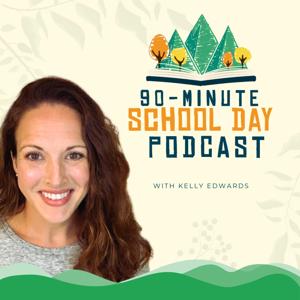


This quick pop-up episode is here to remind you—
Day In The Life is open for enrollment through Saturday, August 2!
Day In The Life (DITL) is a virtual community for homeschooling parents raising exceptional, neurodivergent, or resistant kids. It’s a space to deschool, reconnect with your values, and build rhythms that support thriving kids and joyful parents.
Inside DITL, you’ll find:
Weekly Zoom gatherings on meaningful monthly topics
Daily connection through the Marco Polo video app
Small life groups + topical discussion groups
A growing library of written, video, and audio resources
A supportive space to be real, reflect, and grow
🎉 August’s theme is “Slow Starts Bring Joy” — and we’re welcoming guest expert Leslie Martino, author of Joy of Slow, to help us ground in nervous system health and resist the pressure of the back-to-school frenzy.
This episode (and enrollment!) will disappear soon. We won’t reopen again until November.
🎥 Click below to watch the Open House replay and join us:
Ready to join now? Click Here.
We hear it all the time: “But what about socialization?”
Socialization for homeschooled kids isn’t just same-aged peer associations and blindly following rules. It’s about nervous system safety, real relationships, and being known and accepted for who you are. Especially for neurodivergent kids, socialization must be safe enough to be meaningful.
But that’s not the socialization we’re here to talk about today.
This episode is about you—the homeschooling parent. The one navigating the invisible labor of parenting and educating kids with complex needs, while trying to re-parent yourself, manage burnout, and build a life that actually works.
And maybe feeling deeply alone in it.
If you've ever thought, “Where are the people like me?” or “Why does no one talk about how lonely this is?”—this episode is for you.
You’ll hear:
Let’s stop pretending we can do this alone. Let’s talk about the kind of socialization you need to thrive.
Mentioned in This Episode:
Come to our next Day In the Life Open House and see what it looks like to support your homeschool life with a community that gets you.
Save your spot for the Open House
We’ll show you what a real-life, sustainable, child-honoring homeschool actually looks like.
Stay connected:
At the end of the day, trust your instincts and explore alternatives to what isn’t working!
I’d love to connect personally, find me on Instagram.
Want to help another parent?
Friend, is your homeschool driven by the fear that your child is falling behind?
Do you find yourself itching to double down on academics—despite your neurodivergent child’s resistance—because that’s what society says learning looks like?
In today’s myth-busting episode, we unpack one of the most pervasive homeschooling fears: that more academic work = more learning. We’ll examine why this belief is misleading, what it overlooks about how learning actually works (especially for neurodivergent kids), and what to do instead when your child is in burnout, shutdown, or full-blown resistance.
If you feel like you’re walking a knife’s edge trying to wear both the “parent” and “teacher” hats, this episode is for you.
What You'll Learn:
Come to our next Day In the Life Open House and see what it looks like to build a homeschool that works with your child’s nervous system—not against it.
🗓️ Save your spot for the Open House
We’ll show you what a real-life, sustainable, child-honoring homeschool actually looks like.
Share This Episode:
Trying to stick to the plan? Maybe that’s the problem. In part 3 of our mini-series answering the most common homeschooling questions, you’ll hear a no-nonsense episode at what’s really underneath the question of “What should our homeschool schedule look like?”
If you’ve ever built a beautiful schedule only to abandon it two weeks later, you’ll want to tune-in. Don’t worry, you’re definitely NOT failing—you’re just trying to meet too many needs without enough margin. Let’s talk about why rigid plans rarely work (especially for neurodivergent families), how to shift toward rhythm, and how to start noticing what’s already working in your home.
You’ll also hear how the 90-Minute School Day framework helps families create a flexible container for consistent connection, story, and shared learning—without pressure, overwhelm, or performance.
In this episode, you’ll learn:
Links & Resources:
Share This Episode:
Know a friend who’s overwhelmed by homeschool planning or stuck in the schedule spiral? Send this their way. It’s a breath of fresh air—and a much-needed mindset shift.
Enjoying the Podcast?
Take 5 seconds to rate it or leave a review. This is a fast way to support our work and help other parents find this free resource.
You don’t need a better curriculum. You need a better question.
If you’ve been wondering which curriculum is best for your child—this episode is for you.
Homeschooling parents often carry the weight of making the “right” choice when it comes to planning, materials, and structure. But what if that whole line of thinking is leading you away from what your child actually needs?
In this second episode of our mini-series answering the most common homeschooling questions, we reframe the search for the perfect curriculum—and offer something far more valuable than a product recommendation: clarity, confidence, and a new approach to homeschooling that honors your child and your real life.
In this episode, you’ll learn:
Mentioned in this episode:
Join our Day In The Life Open House →
Get helpful tools + support when you RSVP!
Stay connected:
“What do I legally have to do to homeschool my child?”
In this clarity-packed mini-episode, Kelly answers one of the most common (and anxiety-inducing) questions from homeschooling parents:
Whether you're just getting started or deep into deschooling, this episode delivers no-nonsense insight into what most laws really require—and why the language is often intentionally vague. Kelly shares how to translate everyday life into valid documentation, why curriculum isn’t always the answer (especially for neurodivergent kids), and how deschooling builds your confidence as an educator and parent.
Plus, she introduces the Day in the Life (DITL) community and invites you to the upcoming Open House on July 29.
What You’ll Learn
Mentioned in This Episode
Related episodes:
Join the DITL Community
This is part 3 of our 4-part series on screens, technology, and learning. In today’s episode, I’m joined by my client-turned-friend and founding Day in the Life (DITL) member, Emily Biolsi.
Emily is a former public school teacher with a master's in curriculum design and instruction who now homeschools her two young children with an unschooling, interest-led approach.
Like many of us, she found herself wondering: How do I keep track of all the rich, real learning we’re doing—especially without a curriculum?
Enter: AI.
Listen-in as Emily walks us through exactly how she’s been experimenting with AI as a tool for documenting learning in her homeschool.
She shares with us:
This conversation is an invitation to think creatively about tools that might support your homeschooling.
If you’re craving more real-life stories and strategies like this, join us inside the Day in the Life (DITL) community. We continue these conversations weekly and store them in our growing member library.
Want to see what that feels like?
Come to our next Day in the Life Open House.
We’d love to have you.
Click here to RSVP
Part 1 and 2 in the Tech & Learning Series:
The 90-Minute School Day Framework: Self-Paced Course
Be a Guide Not a Teacher, Learn About Guide Training™: Group Coaching
“I did everything they tell you, and I did it perfectly—and it failed me and almost destroyed my child.”
Amanda re-joins the podcast (Ep. 13) for a conversation that challenges everything you’ve been taught to fear about screentime.
This episode was recorded live inside 90-Minute School Day In The Life (DITL) homeschool community, where Amanda dropped in straight from the soccer field and jumped into a vulnerable, grounded discussion about screens, shame, and agency.
Together, we explore:
You’ll also hear anonymized responses from DITL community members about how screentime looks in their homes—showcasing the rich diversity of approaches, and the shared heart of parents trying to lead with love.
This is Part 2 in our 4-part Tech & Learning series, so make sure to check out the other episodes where we explore mindsets, boundaries, using AI in our homeschools, play, and learning in the digital age.
🔗 Links & Resources:
💬 Leave a Review
Loving the podcast? Share with a friend. Take a moment to rate and review the show—it helps other thoughtful, brave, and curious parents discover this space and feel less alone.
If the word “screens" or "screen time” makes your shoulders tense up, you’re not alone.
🎧 Hit subscribe—this is the first in a four-part series on tech and learning!
In this episode is the invite you need to slow down, tune-in, and reconsider your relationship with technology—especially in the context of homeschooling and neurodivergent learners. From unpacking cultural double standards to exploring how screens can be tools for regulation, creativity, and connection, this episode kicks off a series on screens and learning with nuance, compassion, and curiosity.
Together, we explore how deschooling can help us see screens not as a problem to solve—but as a window into our children's worlds.
In this episode, you'll learn:
The double standard around screen use
How deschooling shifts anxiety around screens
Screens as tools for regulation and connection
What the research also says
Screens as a playground for modern kids
The shift from limiting to witnessing
Self-reflection questions & curiosity prompts
Resources Mentioned:
Free to Learn by Peter Gray
AAP Pediatrics study on media co-engagement
Let’s Keep the Conversation Going:
We gather weekly on Zoom and connect daily via asynchronous Marco Polo video chats. If you can't live in a real-life village with fellow homeschoolers … this is the next best thing.
Try This at Home:
Then gently reflect: What do you reach for when you need rest, joy, or curiosity?
Dive deep with us–into the idea that conventional schools might be contributing to the very struggles many people associate with dyslexia. I’m joined by Je’anna Clements, an advocate for self-directed learning and a dyslexic learner herself, to discuss her eye-opening perspective on DYSlexia (school-created) vs. dyslexia (a neurotype).
Je'anna explains how conventional interventions often offer “helpful harm,” leading to poorer outcomes than self-directed educational approaches for dyslexic learners. She shares how shifting our perspective allows all children to thrive in learning in ways that truly honor their unique needs. We also explore the powerful connections between felt-safety, self-determination theory, flow in learning, and consent—and how these elements are key to fostering meaningful, lifelong learning.
We also dive into the idea of “inherent wisdom”—the concept that children already possess what they need to find their own learning solutions. Je’anna shares her perspective on how self-directed learning, rooted in trust and understanding, can help children mature in their own ways—especially those who’ve been labeled as “dyslexic.”
This conversation challenges conventional educational norms and invites us to rethink how we approach learning, reading, and the holistic development and respect of children.
In this episode, you’ll learn:
90-Minute School Day Guide Training™
If this conversation resonated with you, and you’re looking for guidance, structure, and support in creating a self-directed learning environment that truly works for your family, Guide Training™ is here to help. This group coaching program provides personalized mentorship, community, and tools to help you break free from the constraints of traditional schooling and build a thriving homeschool experience.
Enrollment is open now through March 18th—learn more and sign up here: https://90minuteschoolday.com/guide-training/
Connect with Je’Anna:
Resources mentioned in this episode:
Join the Conversation!
Want to join us for support, connection, + more conversations like this?
👉 Learn more at 90minuteschoolday.com/day-in-the-life/.
From the publisher's feed

3,366 Listeners

2,971 Listeners
696 Listeners
895 Listeners
961 Listeners
1,427 Listeners
2,207 Listeners

269 Listeners

2,524 Listeners
2,017 Listeners
312 Listeners
177 Listeners

370 Listeners
478 Listeners
768 Listeners