
Sign up to save your podcasts
Or

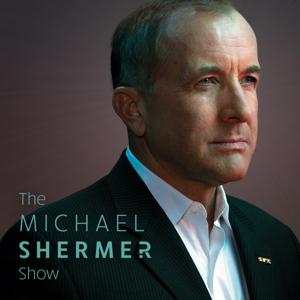

An exploration of the scientific mindset — such character virtues as curiosity, veracity, attentiveness, and humility to evidence — and its importance for science, democracy, and human flourishing. Exemplary scientists have a characteristic way of viewing the world and their work: their mindset and methods all aim at discovering truths about nature. In An Instinct for Truth, Robert Pennock explores this scientific mindset and argues that what Charles Darwin called "an instinct for truth, knowledge, and discovery" has a tacit moral structure — that it is important not only for scientific excellence and integrity but also for democracy and human flourishing. In an era of "post-truth," the scientific drive to discover empirical truths has a special value. Taking a virtue-theoretic perspective, Pennock explores curiosity, veracity, skepticism, humility to evidence, and other scientific virtues and vices. Shermer and Pennock discuss:
Robert T. Pennock is University Distinguished Professor of History, Philosophy, and Sociology of Science at Michigan State University in the Lyman Briggs College and the Departments of Philosophy and Computer Science and Engineering. He is the author of Tower of Babel: The Evidence Against the New Creationism.
Listen to Science Salon via Apple Podcasts, Spotify, Google Play Music, Stitcher, iHeartRadio, and TuneIn.
 View all episodes
 By Michael Shermer

4.4
884884 ratings
An exploration of the scientific mindset — such character virtues as curiosity, veracity, attentiveness, and humility to evidence — and its importance for science, democracy, and human flourishing. Exemplary scientists have a characteristic way of viewing the world and their work: their mindset and methods all aim at discovering truths about nature. In An Instinct for Truth, Robert Pennock explores this scientific mindset and argues that what Charles Darwin called "an instinct for truth, knowledge, and discovery" has a tacit moral structure — that it is important not only for scientific excellence and integrity but also for democracy and human flourishing. In an era of "post-truth," the scientific drive to discover empirical truths has a special value. Taking a virtue-theoretic perspective, Pennock explores curiosity, veracity, skepticism, humility to evidence, and other scientific virtues and vices. Shermer and Pennock discuss:
Robert T. Pennock is University Distinguished Professor of History, Philosophy, and Sociology of Science at Michigan State University in the Lyman Briggs College and the Departments of Philosophy and Computer Science and Engineering. He is the author of Tower of Babel: The Evidence Against the New Creationism.
Listen to Science Salon via Apple Podcasts, Spotify, Google Play Music, Stitcher, iHeartRadio, and TuneIn.
26,336 Listeners
2,272 Listeners

843 Listeners
246 Listeners
1,061 Listeners

908 Listeners
4,181 Listeners
799 Listeners

1,640 Listeners
504 Listeners

572 Listeners

29 Listeners
392 Listeners

825 Listeners

8,697 Listeners