
Sign up to save your podcasts
Or

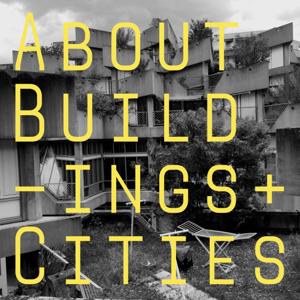


Based on Podcast App listening data
The first of a two part episode exploring Le Corbusier’s infamous and much-derided urban proposals, exhibited in the Esprit Nouveau Pavilion in 1925. In this part, we’re conducting a close reading of ‘Urbanism’ (sometimes known as ‘The City of Tomorrow and its Planning’).
We mostly stayed on topic but there are allusions to
Music —
Follow us on twitter // instagram // facebook
We’re on the web at aboutbuildingsandcities.org
This podcast is powered by Pinecast.
Franz Kafka’s first, and least-finished, novel is an imaginary journey around the USA (a country he never visited). Written in 1912, it’s a fantasy of America at a time when seemed, to Europeans at least, to be the most futuristic (and mysterious) place on Earth.
Kafka’s fascination with machinery, technology and engineering is on display in ‘Amerika’, in which the young Karl Rossmann finds himself cut adrift in a land of glass elevators, miles-long traffic jams, endless hotels, filled with delirious extremes of luxury, poverty and inventiveness.
The edition we read is the current Penguin translation by Michael Hoffman.
We made brief reference to Joseph Roth, and to Neuromancer’s ‘Villa Straylight’.
Thanks for listening and Happy New Year!
Music:
Follow us on twitter // instagram // facebook
We’re on the web at aboutbuildingsandcities.org
This podcast is powered by Pinecast.
For our Christmas episode, we're discussing the early Purist villas!
Knowing the right people, and a relentless programme of self-publicity yielded a steady stream of clients for Le Corbusier in the early 1920s, and allowed him to explore an architectural complement to Purism, most notably in a pair of houses for art-loving ‘batchelors’ — the Ozenfant Studio and Villa La Roche. We found time to discuss (probably with unwarranted levity, sorry) the death of Le Corbusier’s father George, and his troubled marriage to Yvonne Gallis.
Topics include —
Villa La Roche
The Architectural promenade
Villa Le Lac in Corseaux
Yvonne Gallis
Music —
Follow us on twitter // instagram // facebook
We’re on the web at aboutbuildingsandcities.org
This podcast is powered by Pinecast.
A new epoch has begun! Le Corbusier’s ‘discovery’ is that the style of future architecture is to be found new inventions of the machine age — planes, cars, ocean liners. But ‘Towards a New Architecture’ is, at its heart, an argument for a fusion of timeless values and contemporary technology — provocatively encapsulated in its juxtaposition of a sports car and the Parthenon.
We went through the book in order, focussing on the chapters:
Three Reminders to Architects
Eyes Which Do Not See
Mentioning along the way:
Music is by Lee Rosevere
The outdo is by Mde. Ed. Bolduc ‘J’ai un bouton sur la langue’ archive.org
Follow us on twitter // instagram // facebook
We’re on the web at aboutbuildingsandcities.org
This podcast is powered by Pinecast.
We’re in Paris, 1917, where Charles-Edouard Jeanneret is making friends, thinking about sex (and writing enormous letters about it), designing the occasional mechanised abattoir / concrete garden terrace, going bankrupt, trying to sell concrete blocks to postwar society, inventing a new style of painting, launching a highly costly art magazine, and (finally!) acquiring the name under which he would become famous — Le Corbusier!
One of us had a very creaky chair in this episode. Also we were drinking again. Apologies for both.
We discussed —
(for no good reason) Upton Sinclair’s ‘The Jungle’ (1906)
a Water Tower in Podensac
Pierre Jeanneret
We’ve been reading —
Music —
Follow us on twitter // instagram // facebook
We’re on the web at aboutbuildingsandcities.org
This podcast is powered by Pinecast.
We’re taking on the origin story of (for better or worse) the most important architect of the 20th century — Charles-Edouard Jeanneret aka Le Corbusier. His origins — petit bourgeois, Swiss, provincial — can make his eventual rise to world-enveloping notoriety and era-defining influence seem all the more unlikely. We’re digging into his childhood, family, education and travels as a young man before taking on a couple of early projects.
We discuss —
Early projects —
Travels, and meetings with —
And a more detailed look at —
We've been reading —
Music —
An excerpt from —
Britt Brothers — ‘Alpine Milkman Yodel’ (1933) from archive.org
Thanks for listening!
Follow us on twitter // instagram // facebook
We’re on the web at aboutbuildingsandcities.org
This podcast is powered by Pinecast.
First announced in 1931, the project for the Palace of the Soviets in Moscow evolved into a staggeringly vast and bizarre proposal which stalled during WWII when only the foundations had been completed. A 400m tall neoclassical fantasy topped with a vast statue of Lenin; the Palace would probably, if completed, have still been the tallest building in the world in the year 2000. Forming a counterpart of sorts to our discussion of the Chicago Tribune — the Palace is another worldwide competition of the interwar period in which the battle over architectural style and ideology played out in the process of selection and development, as the old 1920s avant grade felt the ground shift under them and the ideology of Stalinist architecture began to solidify.
A couple of helpful listener corrections (here)[https://www.instagram.com/p/BbUxAq2FLaj/] (and here)[https://www.instagram.com/p/BbUxB0vlmnJ/]
We discussed —
Russian Avant-gardists —
The League of Nations Competition entries of Le Corbusier & Hannes Meyer
Foreign modernists in Russia
And the entries of —
The winners —
Plus the later designs of —
Alexander Brodsky’s Reminiscences
Anatole Kopp ‘Foreign architects in the Soviet Union during the first two five-year plans’
Music —
Follow us on twitter // instagram // facebook
We’re on the web at aboutbuildingsandcities.org
This podcast is powered by Pinecast.
Don’t listen if you haven’t seen the movie yet!
We discuss Denis Villeneuve’s Blade Runner 2049. It’s pretty formless and we forgot the names of most of the characters, actors, significant plot entities. You’ll get who we’re talking about it you’ve seen it.
We refer in passing to —
Outro —
Follow us on twitter // instagram // facebook
We’re on the web at aboutbuildingsandcities.org
This podcast is powered by Pinecast.
As a postscript to our discussion of Cyberpunk in episodes 20-21, and vaguely looking ahead to the release of the upcoming sequel, we talked about Ridley Scott’s 1982 film ‘Blade Runner’.
We were really winging it on the research for this one and as a result it marks a high point for getting key facts completely wrong, including — the name of a key character (see if you can guess which one!), various attributions of ethnicity, dates, names, places, the ending of the book on which it’s based, and a bunch of other things. Oh well. I edited out what I could… some moments deserve to be lost in time & without any tears being shed over it…
Things we mentioned —
Music and sound effects are from the film.
This podcast is powered by Pinecast.
We conclude our discussion of the 1922 Chicago Tribune competition, going through a few of the less favoured entries, and discussing how it’s been seen and understood in the years since. Apologies for some clipping on the audio – we’ve tried to edit most of it out but some is still left.
As before, you can see all the entries in this book
We discuss the entries of –
Plus anonymous entries by –
Manfredo Tafuri’s 'The Disenchanted Mountain' — published in ‘The American City’ (Cambridge, MIT Press, 1979)
Ludwig Hilberseimer’s unentered design
Hugh Feriss’s Envelope Drawings
Pier Vittorio Aureli’s ‘The Barest Form in which Architecture Can Exist’
The book of ‘Late Entries’ can be found here
Diana Agrest ‘Architectural Anagrams’ in Oppositions 11
Music includes
This podcast is powered by Pinecast.
From the publisher's feed

26,180 Listeners

303 Listeners

5,486 Listeners

603 Listeners

74 Listeners

297 Listeners
289 Listeners

134 Listeners
491 Listeners

38 Listeners
444 Listeners
366 Listeners

201 Listeners
145 Listeners

333 Listeners