
Sign up to save your podcasts
Or

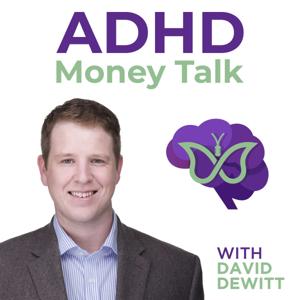

The final segment of our three-part series, we'll wrap up our discussion with Dr. Russell Ramsay, co-founder and co-director of the University of Pennsylvania's adult ADHD treatment and research program and associate professor of clinical psychology in the department of psychiatry at the Perelman School of Medicine.
We all know we should do things like eat better and get our money straight, but what kind of implementation strategies do we use to put those things in motion?
Focusing on the Positives
The average ADHD person has up to 20,000 more negative experiences or interactions as they grow up than those who don't have ADHD. The power of negative experiences can be a positive thing insofar as helping us to avoid danger, allowing for problem-solving and learning from setbacks.
It can take as many as four positive experiences to outweigh one negative, so it takes willpower and determination not to give up when things don't go as planned.
Component Features of CBT (Cognitive Behavioral Therapy)
The component features of CBT include behavioral interventions, engagement, and tasks. Tasks are broken down into a sequence of steps, like a menu, as minutely as needed for you to feel they are manageable to complete. Otherwise, you risk what is often known as progressivity, which is escaping a higher priority task. For folks with ADHD, you haven't broken it down small enough if you're not starting a particular task.
For example, you should be preparing for a meeting, but instead, you start doing something else you've been procrastinating. This type of positive procrastination allows you to feel the accomplishment of getting something done, just not what you set out to do initially.
The progressivity task tends to be more manual or hands-on, even among academic tasks like reading or writing.
Front End Perfectionism
Perfectionism is the number one thinking error endorsed by adults with ADHD and is an emotional regulation strategy. We often say, "If I can get this done the first time perfectly, I can be done with it." The reality of that scenario is that it rarely happens.
Things have to be perfect as a precondition to getting started. You tell yourself you have to be in the right mood, or you're nervous about meeting a new client because what will they think about you? We run anticipatory simulations in our heads that may never happen, causing anxiety and self-doubt.
Instead, focus on what you can control, such as being professional, helpful and drawing on positive past experiences.
Resources:
Part 1 of this interview series
Part 2 with Dr. Russell Ramsay
Dr. Ramsay's book: Rethinking Adult ADHD: Helping Clients Turn Intentions Into Actions
Want to work with me?
Check out my ADHD Planning & Coaching service.
Help Me Out!
If you enjoyed this podcast, the best way to help me is share it with a friend. Reviews and ratings are also appreciated:
Click here to leave a review on Apple
Click here to leave a review on my website
Give me five stars on Spotify
Helping ADHD'ers unleash their financial potential through planning and coaching.
DeWittCM.com/adhd to book free discovery session
Head over to our YouTube channel for the full experience on future episodes.
Learn more about ADHD-friendly financial coaching
Follow me on YouTube
Subscribe to the newsletter
 View all episodes
 By David DeWitt, CFP®

4.6
4141 ratings
The final segment of our three-part series, we'll wrap up our discussion with Dr. Russell Ramsay, co-founder and co-director of the University of Pennsylvania's adult ADHD treatment and research program and associate professor of clinical psychology in the department of psychiatry at the Perelman School of Medicine.
We all know we should do things like eat better and get our money straight, but what kind of implementation strategies do we use to put those things in motion?
Focusing on the Positives
The average ADHD person has up to 20,000 more negative experiences or interactions as they grow up than those who don't have ADHD. The power of negative experiences can be a positive thing insofar as helping us to avoid danger, allowing for problem-solving and learning from setbacks.
It can take as many as four positive experiences to outweigh one negative, so it takes willpower and determination not to give up when things don't go as planned.
Component Features of CBT (Cognitive Behavioral Therapy)
The component features of CBT include behavioral interventions, engagement, and tasks. Tasks are broken down into a sequence of steps, like a menu, as minutely as needed for you to feel they are manageable to complete. Otherwise, you risk what is often known as progressivity, which is escaping a higher priority task. For folks with ADHD, you haven't broken it down small enough if you're not starting a particular task.
For example, you should be preparing for a meeting, but instead, you start doing something else you've been procrastinating. This type of positive procrastination allows you to feel the accomplishment of getting something done, just not what you set out to do initially.
The progressivity task tends to be more manual or hands-on, even among academic tasks like reading or writing.
Front End Perfectionism
Perfectionism is the number one thinking error endorsed by adults with ADHD and is an emotional regulation strategy. We often say, "If I can get this done the first time perfectly, I can be done with it." The reality of that scenario is that it rarely happens.
Things have to be perfect as a precondition to getting started. You tell yourself you have to be in the right mood, or you're nervous about meeting a new client because what will they think about you? We run anticipatory simulations in our heads that may never happen, causing anxiety and self-doubt.
Instead, focus on what you can control, such as being professional, helpful and drawing on positive past experiences.
Resources:
Part 1 of this interview series
Part 2 with Dr. Russell Ramsay
Dr. Ramsay's book: Rethinking Adult ADHD: Helping Clients Turn Intentions Into Actions
Want to work with me?
Check out my ADHD Planning & Coaching service.
Help Me Out!
If you enjoyed this podcast, the best way to help me is share it with a friend. Reviews and ratings are also appreciated:
Click here to leave a review on Apple
Click here to leave a review on my website
Give me five stars on Spotify
Helping ADHD'ers unleash their financial potential through planning and coaching.
DeWittCM.com/adhd to book free discovery session
Head over to our YouTube channel for the full experience on future episodes.
Learn more about ADHD-friendly financial coaching
Follow me on YouTube
Subscribe to the newsletter

32,100 Listeners

228,383 Listeners

43,528 Listeners

39,153 Listeners

1,422 Listeners

27,775 Listeners

930 Listeners
11 Listeners

1,424 Listeners

15,950 Listeners

19,524 Listeners

0 Listeners
7 Listeners