
Sign up to save your podcasts
Or



Based on Podcast App listening data
This October, I'm putting community, real experiences and practical support at the heart of ADHD Awareness Month. There are live conversations and ways for you to share what actually helps in your own life. Visit the Events page to see what’s happening and get involved.
Understood.org's The ADHD Channel for Women features three shows hosted by three different hosts, unpacking a different side of life with ADHD. They cover everything from sex, dating, and relationships to deep dives into where neurodivergence meets the biggest news stories, like how a newly discovered gene variant could change the way we treat ADHD. There's also an ADHD coach who answers listeners' questions.
Check out The ADHD Channel for Women here
This episode from The ADHD Channel for Women is called ‘ADHD and autism: Do I have AuDHD?’ You’ll hear a clear and compassionate look at where ADHD and autism meet, where they part ways and what it means when you recognise yourself in both.
AuDHD isn’t a formal diagnosis. But it’s everywhere online, and for many late-diagnosed women it’s the first language that has ever truly fitted. Dr. J, a licensed psychologist and host of Understood.org’s ADHD and podcast, explains why the overlap is the norm rather than the exception. Research suggests that 30 to 50 percent of autistic people also meet the criteria for ADHD.
She unpacks the push and pull so many people with AuDHD describe. Craving routine but struggling to keep it. Wanting deep connection but hitting a wall of social exhaustion. She also talks honestly about what comes next, including the grief that can surface if a label you’ve found community in doesn’t become your diagnosis.
This week’s episode is sponsored by Understood.org, the leading nonprofit dedicated to empowering the millions of people with learning and thinking differences, such as ADHD and dyslexia.
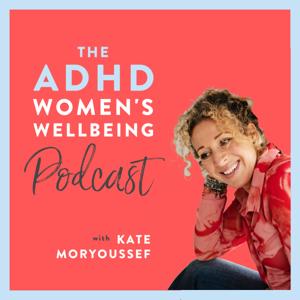
For all things ADHD Women's Wellbeing, including the podcast, resources and events, head here: www.adhdwomenswellbeing.co.uk
Learn more about your ad choices. Visit megaphone.fm/adchoices
This ADHD Awareness Month 2026, ADHD Women's Wellbeing is putting this community, lived experiences, and practical support front and center. There are live conversations, Instagram Lives, podcast events and ways for you to share what actually helps in your own life.
Visit the Events page to see what’s happening and get involved.
We talk a lot about hormones and ADHD. But this conversation goes much deeper.
What if the fatigue, anxiety, gut issues, difficult periods and the way your ADHD seems to shift throughout your cycle aren’t separate problems? What if they’re all giving you information about what’s happening in your body?
This week on The ADHD Women’s Wellbeing Podcast, I’m joined by Dr Jolene Brighten for a fascinating and powerful deep dive into the biology behind ADHD in women, and some of the connections we just aren’t talking about enough.
Jolene is a board-certified naturopathic endocrinologist, nutritionist, certified menopause specialist and bestselling author of Beyond the Pill and Is This Normal? Her new book, ADHD and Women: A Guide to Understanding Your Hormones and Thriving with ADHD, is out now.
And she does not hold back in this conversation.
We get into progesterone, histamine, endometriosis, PMDD and perimenopause, and what they can mean for women with ADHD. We explore why symptoms that appear unrelated may be more connected than we realise, why so many women have spent years being passed between specialists and why understanding ADHD as something that affects the whole body can completely change the conversation.
Jolene also shares her own story, from her son’s ADHD diagnosis to being diagnosed with endometriosis after 29 years of periods and later discovering she is autistic.
This is one of those episodes that may have you joining dots you didn’t even realise were connected. If you’ve ever felt as though your hormones, brain and body are all speaking different languages, this conversation could help you understand the bigger picture.
Advertisement⏐Try AG1 now at https://drinkag1.com/adhdwomen and get £20 off your first order + 5 AG1 Travel Packs for on the go, a bottle of Vitamin D3+K2, and the Welcome Kit for FREE. No risk with the 30-day money-back guarantee. Find all details about the health benefits in the link. Study results are on file with AG1, 2023.
_____________________
In this episode, we cover:
Timestamps:
00:00 - Welcome and introducing Dr Jolene Brighten
02:30 - Jolene's journey to ADHD, endometriosis and autism diagnoses
05:30 - Entrepreneurship, accommodations and the support nobody sees
08:00 - What endometriosis can look like, including when there's no pain
10:00 - Jolene's endometriosis story, from childhood gut issues to secondary infertility
15:00 - Mast cells, histamine and the brain, immune and hormone connection
17:00 - Kate's experience with endometriosis, adenomyosis and continuous progesterone
21:00 - Access to care in the UK, US and Canada
23:00 - Why ADHD is the operating system you were born with
25:00 - What happens to the brain when oestrogen and progesterone drop
27:00 - PMDD: why it may be more than one condition
29:00 - NAC, mitochondria and the ADHD brain in perimenopause
32:00 - Progesterone, progestins and the research on contraception and depression
35:00 - ADHD as a full-body condition and the gut microbiome
37:00 - Progesterone intolerance, dosing and different ways of taking it
42:00 - Serotonin, dopamine and how the ADHD brain adapts
43:00 - Exercise, BDNF and giving your brain more energy
46:00 - Hysterectomies, unsupported women and the generations before us
48:00 - Alcohol, GABA and the luteal phase
49:00 - Rejecting productivity culture and honouring the need to rest
53:00 - Superpowers, kryptonite and asking what it's costing you
56:00 - Where to find Jolene's book and resources
Links and Resources:
See Explore Worldwide's range of destinations in the link HERE
If today’s episode brought up anything for you, these organisations offer support and information:
Kate Moryoussef is a women's ADHD lifestyle and wellbeing coach and EFT practitioner who helps overwhelmed and unfulfilled newly diagnosed women with ADHD find more calm, balance, hope, health, compassion, creativity, and clarity.
Learn more about your ad choices. Visit megaphone.fm/adchoices
What Actually Helps YOU: This ADHD Awareness Month 2026, I'm putting community, real experiences, and practical support throughout the month. There are live podcast recordings, Instagram Lives, podcast events and ways for you to share what actually helps in your own life. Visit the Events page to see what’s happening and get involved.
This one is a little different. No guest, no workshop clip — just me, talking to you about what's coming next and why community is at the heart of everything we're building here.
Today I'm sharing a personal update about what's happening at ADHD Women's Wellbeing this October and beyond, including some exciting plans for live events in 2027, how you can get involved in ADHD Awareness Month right now, and how I want your wisdom to shape something I'm creating for this community.
This one is warm, unscripted and very much from the heart. Sign up for the ADHD WW events waitlist here
Advertisement⏐Try AG1 now at https://drinkag1.com/adhdwomen and get £20 off your first order + 5 AG1 Travel Packs for on the go, a bottle of Vitamin D3+K2, and the Welcome Kit for FREE. No risk with the 30-day money-back guarantee. Find all details about the health benefits in the link. Study results are on file with AG1, 2023.
In this episode, I cover:
Links and Resources:
Kate Moryoussef is a women's ADHD lifestyle and wellbeing coach and EFT practitioner who helps overwhelmed and unfulfilled newly diagnosed women with ADHD find more calm, balance, hope, health, compassion, creativity, and clarity.
Learn more about your ad choices. Visit megaphone.fm/adchoices
What Actually Helps You?
This ADHD Awareness Month, I’m putting real experiences, community and practical support at the heart of the conversation. Join live conversations, podcast events and opportunities to share what actually helps you. Add your name to my event waitlist as well!
Visit the Events page to see what’s happening and get involved.
_________________________________________
What if the burnout, the guilt and the relentless doing weren't signs that you were failing, but signs that the playbook you'd been given was never designed for you in the first place?
On this week's episode of The ADHD Women's Wellbeing Podcast, I'm joined by Meghan French Dunbar, bestselling author, business anthropologist and founder of Conscious Company Magazine, the first nationally distributed print magazine in the US focusing on impact-driven business.
Meghan's book, This Isn't Working: How Working Women Can Overcome Stress, Guilt, and Overload to Find True Success, is a USA Today bestseller and Next Big Idea Club selection. She works with companies including Coach, John Deere, Torani and Kate Spade on leadership and culture strategy, writes for Forbes, Fast Company and Inc, and hosts the podcast Unbehaved. She was diagnosed with ADHD four years ago, and this conversation made a lot of sense of a lot of things.
We talk about purpose burnout, motherhood, identity, joy and what it actually looks like to build a life and career around meaning rather than productivity. Meghan is warm, honest and brilliantly funny, and this is one of those conversations that leaves you feeling both validated and quietly ready to do something differently.
In this episode, we cover:
Timestamps:
Links and Resources:
Kate Moryoussef is a women's ADHD lifestyle and wellbeing coach and EFT practitioner who helps overwhelmed and unfulfilled newly diagnosed women with ADHD find more calm, balance, hope, health, compassion, creativity, and clarity.
Learn more about your ad choices. Visit megaphone.fm/adchoices
ADHD Awareness Month 2026: What Actually Helps?
This October, I'm putting community, real experiences and practical support at the heart of ADHD Awareness Month. There are live conversations and ways for you to share what actually helps in your own life. Visit the Events page to see what’s happening and get involved.
Understood.org's The ADHD Channel for Women features three shows hosted by three different hosts, unpacking a different side of life with ADHD. They cover everything from sex, dating, and relationships to deep dives into where neurodivergence meets the biggest news stories, like how a newly discovered gene variant could change the way we treat ADHD. There's also an ADHD coach who answers listeners' questions.
Check out The ADHD Channel for Women here
This episode from The ADHD Channel for Women is called 'I’ve never felt like a good woman...' You'll hear a complex conversation about ADHD, femininity, gender, and why talking about the hard stuff is important.
Cate sits down with Rae Jacobson, host of Understood.org’s Hyperfocus podcast, journalist, and a producer on this show. They talk about something they’ve both struggled to name: the collision between ADHD, femininity, and gender expression. They dig into what it felt like to watch other girls “get it.” The tidiness. The calm. The effortlessness. All things that executive dysfunction made feel out of reach.
They talk about the pressure to be nurturing, organized, and endlessly available — and what happens when your brain doesn’t cooperate with any of it. And they look at the research on outcomes for women and girls with ADHD."
This week’s episode is sponsored by Understood.org, the leading nonprofit dedicated to empowering the millions of people with learning and thinking differences, such as ADHD and dyslexia.
For all things ADHD Women's Wellbeing, including the podcast, resources and events, head here: www.adhdwomenswellbeing.co.uk
Learn more about your ad choices. Visit megaphone.fm/adchoices
ADHD Awareness Month 2026: What Actually Helps?
This October, I'm putting community, real experiences and practical support at the heart of ADHD Awareness Month. There are live conversations, Instagram Lives, podcast events and ways for you to share what actually helps in your own life. Visit the Events page to see what’s happening and get involved.
On this week's episode of The ADHD Women's Wellbeing Podcast, I'm delighted to welcome back Dr Miguel Toribio-Mateas, clinical neuroscientist, applied microbiologist, nutrition researcher, Honorary Research Fellow at Cardiff University and Senior Lecturer at the University of West London.
Miguel has just published his brilliant new book, ADHD Body and Mind: A Compassionate Guide to Rewilding Your Nervous System with Neuroscience, Nutrition, and Gut-Brain Health, published by Jessica Kingsley/Hachette. His research has appeared in leading journals including the BMJ and BMC Psychiatry, and his work is known for translating complex science into something genuinely human and accessible.
This is one of those conversations that covers a huge amount of ground while never once feeling overwhelming. We talk about why the ADHD brain is wired for resilience and what that actually costs us, why the gut-brain connection matters so much for neurodivergent people, how to approach nutrition with compassion rather than perfectionism, and why your safe foods are not something to be ashamed of. We also get into the language of science, why terms like comorbidity matter, and how researchers like Miguel are slowly shifting the field towards a more neuroaffirmative approach.
Advertisement⏐Try AG1 now at http://drinkag1.com/adhdwomen and get £20 off your first order + 5 AG1 Travel Packs for on the go, a bottle of Vitamin D3+K2, and the Welcome Kit for FREE. No risk with the 30-day money-back guarantee. Find all details about the health benefits in the link. Study results are on file with AG1, 2023.
In this episode, we cover:
Chapters:
Links and Resources:
Kate Moryoussef is a women's ADHD lifestyle and wellbeing coach, author of The ADHD Women's Wellbeing Toolkit and EFT practitioner who helps overwhelmed and unfulfilled newly diagnosed women with ADHD find more calm, balance, hope, health, compassion, creativity, and clarity.
Learn more about your ad choices. Visit megaphone.fm/adchoices
ADHD Awareness Month 2026: What Actually Helps?
This October, I'm putting community, real experiences and practical support at the heart of ADHD Awareness Month. There are live conversations, Instagram Lives, podcast events and ways for you to share what actually helps in your own life. Visit the Events page to see what’s happening and get involved.
Welcome to this week's More Yourself Monday episode. Today I'm sharing a clip from one of my workshops on the nervous system, polyvagal theory and how understanding both can genuinely change the way you move through your days with ADHD.
This is not a clinical lecture. This is a simple, accessible explanation of why your nervous system behaves the way it does, what the polyvagal ladder actually means in real life, and how you can start to work with your nervous system rather than against it. I also introduce the concept of glimmers, those small micro moments of safety and joy that can shift your entire day when you learn to notice and actively seek them out.
The full workshop is available on my website, and the link is below.
In this episode, we cover:
Links and Resources:
Kate Moryoussef is a women's ADHD lifestyle and wellbeing coach and EFT practitioner who helps overwhelmed and unfulfilled newly diagnosed women with ADHD find more calm, balance, hope, health, compassion, creativity, and clarity.
Learn more about your ad choices. Visit megaphone.fm/adchoices
ADHD Awareness Month 2026: What Actually Helps?
This October, I'm putting community, real experiences and practical support at the heart of ADHD Awareness Month. There are live conversations, Instagram Lives, podcast events and ways for you to share what actually helps in your own life. Visit the Events page to see what’s happening and get involved.
Content note: This episode contains references to suicide and family bereavement. If you are struggling, please reach out to a trusted support resource.
In the UK, the Samaritans can be contacted on 116 123. In the US, the National Suicide Prevention Hotline is 1-800-273-8255. In Australia, the crisis support service Lifeline is on 13 11 14. Hotlines in other countries can be found here. You can also check out the Campaign Against Living Miserably here
On this week's episode of The ADHD Women's Wellbeing Podcast, I'm joined by Laura Day, New York Times bestselling author, teacher and intuitive consultant who has spent four decades working with individuals and some of the world's largest companies to help them identify and achieve their goals.
Laura's new book, The Prism: Seven Steps to Heal Your Past and Transform Your Future, is the book she describes as an ADHD manual — a practical, evidence-informed framework for building the scaffolding that helps neurodivergent brains thrive. With two New York Times bestsellers to her name and a 40-year teaching community, Laura is also someone who has lived with ADHD her entire life, and this conversation is one of the most honest, warm and genuinely surprising I have had on the podcast.
We talk about Laura's childhood in a household where neurodivergence was everywhere but unnamed, why girls of her generation were never allowed to act out and what that suppression cost them, how she built a career advising billion-dollar companies using her intuitive mind, and why the ADHD brain is uniquely suited to intuition, just not always in the way we expect.
In this episode, we cover:
Timestamps:
Links and Resources:
Kate Moryoussef is a women's ADHD lifestyle and wellbeing coach and EFT practitioner who helps overwhelmed and unfulfilled newly diagnosed women with ADHD find more calm, balance, hope, health, compassion, creativity, and clarity.
Learn more about your ad choices. Visit megaphone.fm/adchoices
If you've ever left a GP appointment feeling dismissed, confused or like you had to fight to be taken seriously, this episode will help you understand why, and what you can actually do about it.
On this week's episode of The ADHD Women's Wellbeing Podcast, I'm joined by Dr Victoria Galvis, a GP based in Greater Manchester with over 20 years of lived experience of neurodivergence and a fierce passion for changing how the healthcare system supports neurodivergent people.
Victoria qualified as a doctor in Colombia and has been practising in the UK since 2010, working across both hospital medicine and primary care. Alongside Dr Safiya Virji, GP and Associate Professor at Queen Mary University of London, she has written Neurodivergence in Primary Care: A Practical Guide for UK Healthcare Professionals, a comprehensive, research-backed resource designed to educate clinicians and support patients in navigating the system more effectively.
In this episode, Victoria explains the structural reasons why GPs often don't know enough about ADHD and neurodivergence, and it is not as simple as them not caring. She talks about the discrimination she faced as a neurodivergent doctor, why the 10-minute consultation is both a challenge and something patients can learn to work with, and how the book came about from 20 years of clinical experience and a determination to change things for her son, her patients and the next generation of healthcare professionals.
In this episode, we cover:
Timestamps:
Links and Resources:
Kate Moryoussef is a women's ADHD lifestyle and wellbeing coach and EFT practitioner who helps overwhelmed and unfulfilled newly diagnosed women with ADHD find more calm, balance, hope, health, compassion, creativity, and clarity.
Learn more about your ad choices. Visit megaphone.fm/adchoices
Looking for further guidance and support on ADHD Women's Wellbeing? Check out my workshop library here or search for any topic on the Podcast here. Find my popular ADHD Women's Wellbeing workshops and resources on my website here.
September has always felt more like a new start than January. And if you're ready to think differently about how you structure your days, this episode is a good place to begin.
On this week's More Yourself Monday episode, I'm sharing a clip from one of my workshops on ADHD routines and structures, because this time of year tends to bring up that familiar urge to get organised and finally get on top of things.
But this isn't about neurotypical productivity systems or trying to force your ADHD brain into a shape it was never meant to hold. This is about understanding your own energy, working with your nervous system rather than against it, and finding a rhythm that actually feels sustainable for you.
In this clip I introduce my four-pillar framework for building a personalised daily flow, talk about the difference between rituals and routines and why that distinction matters, and explore why so many of us get stuck in boom-and-bust cycles, even when we genuinely want things to be different.
The full workshop is available on my website with a discount code below.
In this episode, we cover:
Links and Resources:
Kate Moryoussef is a women's ADHD lifestyle and wellbeing coach and EFT practitioner who helps overwhelmed and unfulfilled newly diagnosed women with ADHD find more calm, balance, hope, health, compassion, creativity, and clarity.
Learn more about your ad choices. Visit megaphone.fm/adchoices
From the publisher's feed
Ranked by our users in the last 21 days
1,329 Listeners

3,596 Listeners
915 Listeners
30 Listeners
2,868 Listeners
251 Listeners
713 Listeners
625 Listeners
174 Listeners

291 Listeners
97 Listeners

25 Listeners
631 Listeners
281 Listeners