
Sign up to save your podcasts
Or



Based on Podcast App listening data
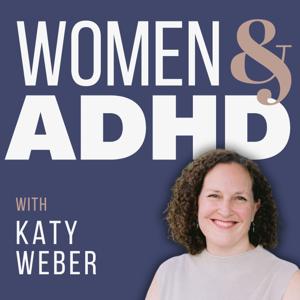
Episode 219 with Katy Weber & Kalin Johnson
Welcome back to our ongoing series, “Unmasking Our Health,” in which host Katy Weber teams up with medical expert Dr. Kalin Johnson, PharmD, to look beyond the neurodivergent brain and explore what it means to live in a neurodivergent body.
In this episode, we explore the relationship between ADHD and gut health, including IBS, constipation, diarrhea, bloating, and abdominal pain. We discuss how the gut and brain communicate, why ADHD-related behaviors, routines, and medication can all affect digestion, and why a one-size-fits-all approach to gut health can miss what an individual actually needs.
The conversation also looks at what supportive care can involve: listening to your body, making manageable changes, and finding a provider who’s curious about the whole picture — not just one symptom.
In this episode, we cover:
Note: Nothing in this episode constitutes medical advice. Always consult with your physician and pharmacist before starting, stopping, or changing any medication.
Kalin’s website: kalinjohnson.com
Instagram: @kalinpharmd
Links & Resources:
- - - - -
Episode edited by E Podcast Productions
- - - - -
Women & ADHD coaching: www.womenandadhd.com/coaching
- - - - -
Work 1-on-1 with Katy: www.womenandadhd.com/katy
- - - - -
Order the “Hey, it’s ADHD!” course: www.womenandadhd.com/adhdcourse
- - - - -
Did you love this episode? Click here to pledge a one-time donation to the podcast!
- - - - -
If you are a woman who was diagnosed with ADHD and you’d like to apply to be a guest on this podcast, visit womenandadhd.com/podcastguest.
Instagram: @womenandadhdpodcast
Tiktok: @womenandadhdpodcast
Twitter: @womenandadhd
Facebook: @womenandadhd
Episode 218 with Greer Jones.
Greer is the creator of The Unfinished Idea, a community that supports mamas raising neurodivergent kids. After her son, husband, and later herself were diagnosed, she walked through a dark season of overwhelm, burnout, and isolation. Over time, she discovered people and rhythms that supported her neurodivergent brain, rebuilt her family’s routines, and found the lights that guided her out — community, real stories, and small wins that gave her hope again. Today, she uses her voice, lived experience, and practical tools to help overwhelmed neurodivergent moms feel understood, equipped, and confident in the lives they’re building.
In our conversation, Greer shares what it was like to pursue an adult diagnosis in the UK, advocate for her neurodivergent son, and make sense of the ways ADHD has shaped her life. We talk about the relief of finally having an explanation, the grief and self-compassion that can come with looking back, and why ADHD in women doesn’t always look like hyperactivity on the outside.
We explore what meaningful connection can look like when life is messy, schedules are unpredictable, and nobody has all the answers. And finally, we talk about the Beautifully Wired Summit — a free, three-day online event hosted by Greer, bringing together over 20 experts to share practical, real-life strategies for raising neurodivergent kids. From navigating meltdowns and school advocacy to creating doable daily routines, it’s packed with neuro-affirming tools that actually work. The summit takes place October 5th through 7th, and you can grab your free ticket right now by heading to womenandadhd.com/summit. I’ve also placed that link right at the top of the show notes for you.
Key topics:
Website: theunfinishedidea.com
Instagram: @theunfinishedidea
Links & Resources:
- - - - -
Episode edited by E Podcast Productions
- - - - -
Women & ADHD coaching: www.womenandadhd.com/coaching
- - - - -
Work 1-on-1 with Katy: www.womenandadhd.com/katy
- - - - -
Order the “Hey, it’s ADHD!” course: www.womenandadhd.com/adhdcourse
- - - - -
Did you love this episode? Click here to pledge a one-time donation to the podcast!
- - - - -
If you are a woman who was diagnosed with ADHD and you’d like to apply to be a guest on this podcast, visit womenandadhd.com/podcastguest.
Instagram: @womenandadhdpodcast
Tiktok: @womenandadhdpodcast
Twitter: @womenandadhd
Facebook: @womenandadhd
Episode 217 with Katy Weber & Kalin Johnson
Welcome back to our new series, “Unmasking Our Health,” in which host Katy Weber teams up with medical expert Dr. Kalin Johnson, PharmD, to look beyond the neurodivergent brain and explore what it means to live in a neurodivergent body.
After years of interviewing late‑diagnosed women and seeing the same patterns — chronic pain, fatigue, autoimmune issues, hormonal chaos, gut problems, “mystery” symptoms — Katy created the Unmasking Our Health series to explore the bigger questions behind neurodivergence: What if ADHD isn’t just about our brains, but about our whole bodies — and how and why is the medical system missing the full picture?
In Part 2 of a 2-part series, we continue the conversation on hypermobility, hypermobile Ehlers-Danlos Syndrome, and the often misunderstood symptoms that can show up alongside ADHD and autism. This episode focuses on the signs people miss, why those symptoms happen, and what kinds of support may help rather than hurt.
Kalin explains the connective tissue and autonomic nervous system connections behind bruising, fatigue, digestive issues, migraines, dizziness, pelvic floor problems, and joint pain, while Katy shares personal examples of how these patterns have shown up in her own life.
In this episode, we cover:
Note: Nothing in this episode constitutes medical advice. Always consult with your physician and pharmacist before starting, stopping, or changing any medication.
Kalin’s website: kalinjohnson.com
Instagram: @kalinpharmd
Links & Resources:
- - - - -
Episode edited by E Podcast Productions
- - - - -
Women & ADHD coaching: www.womenandadhd.com/coaching
- - - - -
Work 1-on-1 with Katy: www.womenandadhd.com/katy
- - - - -
Order the “Hey, it’s ADHD!” course: www.womenandadhd.com/adhdcourse
- - - - -
Did you love this episode? Click here to pledge a one-time donation to the podcast!
- - - - -
If you are a woman who was diagnosed with ADHD and you’d like to apply to be a guest on this podcast, visit womenandadhd.com/podcastguest.
Instagram: @womenandadhdpodcast
Tiktok: @womenandadhdpodcast
Twitter: @womenandadhd
Facebook: @womenandadhd
Episode 216 with Elizabeth Ahmann & Micah Saviet
Elizabeth Ahmann, ScD, RN, PCC, NBC-HWC is an ADHD and health and wellness coach, professor, researcher, and Micah Saviet, LCSW-C, NBC-HWC is a trauma-informed, neurodiversity-affirming clinician.
Their book, Flourishing with Adult ADHD, offers a research-informed, strengths-based, and trauma-informed framework for supporting adults with ADHD beyond symptom management. Grounded in neuroscience, psychology, public health, and wellness research, the book challenges deficit-based models and provides practical, affirming guidance for professionals supporting adults with ADHD.
Rather than focusing solely on coping strategies, this book centers flourishing — supporting adults with ADHD in developing self-trust, self-compassion, emotional regulation, clarity, and lives aligned with their values.
We talk about how coaching and therapy can work together, why Liz and Micah originally wrote the book for clinicians but found it resonated with adults with ADHD, and their hopes for the future of ADHD care, from better training to broader acceptance.
Key topics:
Website: https://www.pathways-ahead.com/ ; https://www.adulttraumaandadhdsolutions.com
Instagram: @adulttrauma_adhdsolutions
LinkedIn: https://www.linkedin.com/in/micah-saviet/ ; https://www.linkedin.com/in/lizahmann/
Links & Resources:
- - - - -
Episode edited by E Podcast Productions
- - - - -
Women & ADHD coaching: www.womenandadhd.com/coaching
- - - - -
Work 1-on-1 with Katy: www.womenandadhd.com/katy
- - - - -
Order the “Hey, it’s ADHD!” course: www.womenandadhd.com/adhdcourse
- - - - -
Did you love this episode? Click here to pledge a one-time donation to the podcast!
- - - - -
If you are a woman who was diagnosed with ADHD and you’d like to apply to be a guest on this podcast, visit womenandadhd.com/podcastguest.
Instagram: @womenandadhdpodcast
Tiktok: @womenandadhdpodcast
Twitter: @womenandadhd
Facebook: @womenandadhd
Episode 215 with Katy Weber & Kalin Johnson
Welcome back to our new series, “Unmasking Our Health,” in which host Katy Weber teams up with medical expert Dr. Kalin Johnson, PharmD, to look beyond the neurodivergent brain and explore what it means to live in a neurodivergent body.
After years of interviewing late‑diagnosed women and seeing the same patterns — chronic pain, fatigue, autoimmune issues, hormonal chaos, gut problems, “mystery” symptoms — Katy created the Unmasking Our Health series to explore the bigger questions behind neurodivergence: What if ADHD isn’t just about our brains, but about our whole bodies — and how and why is the medical system missing the full picture?
In part one of a 2-part series, we unpack hypermobile Ehlers-Danlos syndrome (hEDS) and hypermobility, and why these connective tissue conditions so often show up alongside ADHD and autism. This episode focuses on the lived experience, the diagnostic gray areas, and the body-wide symptoms that can look unrelated until you understand the connective tissue thread running through them.
We discuss how hypermobility is different from flexibility, why the Beighton score can miss real cases, and why symptoms like bruising, pain, dizziness, brain fog, and poor stamina often get mislabeled as “just clumsiness” or “just anxiety.”
In this episode, we cover:
Note: Nothing in this episode constitutes medical advice. Always consult with your physician and pharmacist before starting, stopping, or changing any medication.
Kalin’s website: kalinjohnson.com
Instagram: @kalinpharmd
Links & Resources:
- - - - -
Episode edited by E Podcast Productions
- - - - -
Women & ADHD coaching: www.womenandadhd.com/coaching
- - - - -
Work 1-on-1 with Katy: www.womenandadhd.com/katy
- - - - -
Order the “Hey, it’s ADHD!” course: www.womenandadhd.com/adhdcourse
- - - - -
Did you love this episode? Click here to pledge a one-time donation to the podcast!
- - - - -
If you are a woman who was diagnosed with ADHD and you’d like to apply to be a guest on this podcast, visit womenandadhd.com/podcastguest.
Instagram: @womenandadhdpodcast
Tiktok: @womenandadhdpodcast
Twitter: @womenandadhd
Facebook: @womenandadhd
Episode 214 with Dr. Brady Bradshaw
In this special interview episode, guest host and ADHD Life Coach Lindsey Buchanan sits down with her sister, psychiatrist Dr. Brady Bradshaw, MD, for an honest, evidence-based conversation about ADHD and autism in girls and women.
Drawing on both medical expertise and deeply personal experience — Lindsey has her own ADHD diagnosis and is the mother of a daughter with Level 1 autism — this episode covers the symptoms, the overlap, the myths, and the path forward for families navigating neurodivergence.
In this episode, we cover:
Autism in Girls & Women:
Autism in Girls & Women:
Debunking Myths:
After the Diagnosis — What's Next:
Websites: bradybradshawmd.com ; womenandadhd.com/lindsey
Links & Resources:
- - - - -
Episode edited by E Podcast Productions
- - - - -
Women & ADHD coaching: www.womenandadhd.com/coaching
- - - - -
Work 1-on-1 with Katy: www.womenandadhd.com/katy
- - - - -
Order the “Hey, it’s ADHD!” course: www.womenandadhd.com/adhdcourse
- - - - -
Did you love this episode? Click here to pledge a one-time donation to the podcast!
- - - - -
If you are a woman who was diagnosed with ADHD and you’d like to apply to be a guest on this podcast, visit womenandadhd.com/podcastguest.
Instagram: @womenandadhdpodcast
Tiktok: @womenandadhdpodcast
Twitter: @womenandadhd
Facebook: @womenandadhd
Episode 213 with Katy Weber & Kalin Johnson
In this first episode of our new series “Unmasking Our Health,” host Katy Weber teams up with cohost Kalin Johnson, PharmD, to explore a side of ADHD in women that isn’t talked about enough: What it’s like to live in a neurodivergent body.
After years of interviewing late‑diagnosed women and seeing the same patterns — chronic pain, fatigue, autoimmune issues, hormonal chaos, gut problems, “mystery” symptoms — Katy created the Unmasking Our Health series to explore the bigger questions behind neurodivergence: What if ADHD isn’t just about our brains, but about our whole bodies — and how and why is the medical system missing the full picture?
Our first topic for discussion: the explosion of GLP-1 medications (think Ozempic, Wegovy, Mounjaro) and what their surprising, wide-reaching effects are revealing about the deeply intertwined relationship between metabolic health, inflammation, hormones, and ADHD.
In this episode, we cover:
Note: Nothing in this episode constitutes medical advice. Always consult with your physician and pharmacist before starting, stopping, or changing any medication.
Kalin’s website: kalinjohnson.com
Instagram: @kalinpharmd
Links & Resources:
- - - - -
Episode edited by E Podcast Productions
- - - - -
Women & ADHD coaching: www.womenandadhd.com/coaching
- - - - -
Work 1-on-1 with Katy: www.womenandadhd.com/katy
- - - - -
Order the “Hey, it’s ADHD!” course: www.womenandadhd.com/adhdcourse
- - - - -
Did you love this episode? Click here to pledge a one-time donation to the podcast!
- - - - -
If you are a woman who was diagnosed with ADHD and you’d like to apply to be a guest on this podcast, visit womenandadhd.com/podcastguest.
Instagram: @womenandadhdpodcast
Tiktok: @womenandadhdpodcast
Twitter: @womenandadhd
Facebook: @womenandadhd
Episode 212 with Caroline Maguire
“All the kids I worked with were like, 'I would love to have a friend.' All the adults were like, 'Something's wrong with me, I don't have friends.' And I was like — no, no, no. Nothing's wrong with you.”
Caroline Maguire is an ADHD coach, friendship expert, and author of the new book, “Friendship Skills for Neurodivergent Adults: A Guide for the Anxious, Uniquely Wired, and Easily Distracted.” If you’ve ever felt like you missed the “how to be a friend” manual — or that you can do intense one‑on‑one connection but still don’t feel like you truly belong anywhere — this conversation is for you.
We dig into why neurodivergent wiring affects the way we show up in friendships, and what it actually looks like to build connection on our own terms. Caroline offers a deeply neuroaffirming roadmap to adult friendship, with language for patterns many of us have felt but never named, plus practical tools that don’t ask you to mask or be “less” of yourself.
Key topics discussed:
Website: carolinemaguireauthor.com
Instagram: @authorcarolinem
Links & Resources:
- - - - -
Episode edited by E Podcast Productions
- - - - -
Women & ADHD coaching: www.womenandadhd.com/coaching
- - - - -
Work 1-on-1 with Katy: www.womenandadhd.com/katy
- - - - -
Order the “Hey, it’s ADHD!” course: www.womenandadhd.com/adhdcourse
- - - - -
Did you love this episode? Click here to pledge a one-time donation to the podcast!
- - - - -
If you are a woman who was diagnosed with ADHD and you’d like to apply to be a guest on this podcast, visit womenandadhd.com/podcastguest.
Instagram: @womenandadhdpodcast
Tiktok: @womenandadhdpodcast
Twitter: @womenandadhd
Facebook: @womenandadhd
Episode 211 with Tory Berry & Chele Morony
“People say DBT is for borderline personality disorder. I’m like, what are you talking about? DBT is for everyone. One of the most common refrains that we hear in the group is ‘Where has this been? I needed this in high school!’”
This episode combines two of my favorite topics: ADHD coaching and Dialectical Behavior Therapy (DBT)!
Tory and Chele are a mother-daughter duo from Southern California who have created something really special in the neurodivergent support space.
Tory is the founder of ADHD Works Now, and she is also one of our amazing ADHD coaches at Women & ADHD.
Tory was diagnosed with both ADHD and autism in adulthood, and she’s channeled her own lived experience into helping other neurodivergent adults through 1-on-1 coaching and specially adapted DBT groups.
Chele is a Licensed Clinical Social Worker with over 35 years of experience. She is also Tory’s business partner, bringing a clinical perspective to their work together.
We talk about Tory’s adult diagnosis and how Chele missed her ADHD and autism in childhood, despite her own clinical training.
We also talk about the fundamentals of DBT, and how the focus on validation, acceptance, and practical skill development makes it particularly powerful for neurodivergent clients who've spent years asking, “What’s wrong with me?” And Tory & Chele share about their collaborative group approach and how they’re making DBT skills applicable to the neurodivergent experience.
Tory & Chele’s DBT groups fill up quickly. The June cohort is already full, but you can sign up at the link below for the next cohort waitlist.
Key topics discussed:
Website: adhdworksnow.com
Links & Resources:
- - - - -
Episode edited by E Podcast Productions
- - - - -
Women & ADHD coaching: www.womenandadhd.com/coaching
- - - - -
Work 1-on-1 with Katy: www.womenandadhd.com/katy
- - - - -
Order the “Hey, it’s ADHD!” course: www.womenandadhd.com/adhdcourse
- - - - -
Did you love this episode? Click here to pledge a one-time donation to the podcast!
- - - - -
If you are a woman who was diagnosed with ADHD and you’d like to apply to be a guest on this podcast, visit womenandadhd.com/podcastguest.
Instagram: @womenandadhdpodcast
Tiktok: @womenandadhdpodcast
Twitter: @womenandadhd
Facebook: @womenandadhd
Episode 210 with Dani Donovan
“I either get 30 minutes worth of work done in 8 hours or 8 hours worth of work done in 30 minutes — those are the only two options.”
Dani is an ADHD content creator, speaker, and the celebrated author of “The Anti-Planner: How to Get Sh*t Done When You Don't Feel Like It.”
Dani became an overnight sensation when a flowchart she drew mapping out her winding, ADHD storytelling style went viral on Twitter. Since then, she has built a massive community by bringing radical vulnerability, humor, and data visualization to the neurodivergent experience. She’s spoken at major companies like Microsoft, Amazon, and Adobe, and she is the founder of The Anti-Boring Project.
We dive deep into misconceptions about ADHD, including being told you are “too smart to have ADHD.” Dani shares her story of growing up with teachers who dismissed her mother's ADHD inquiries because she was getting good grades.
We also explore the magic behind visual storytelling for ADHD brains, why traditional productivity systems tend to fail us, and how the “Anti-Planner” organizes strategies based on your current emotional resistance — such as feeling stuck, overwhelmed, or unmotivated.
Plus, Dani shares some exclusive details about an exciting new app she is prototyping!
Key topics discussed:
Website: anti-planner.com
Instagram: @danidonovan
Tiktok: @danidonovan
Links & Resources:
The Anti-Planner: How to Get Sh*t Done When You Don't Feel Like It
- - - - -
Episode edited by E Podcast Productions
- - - - -
Women & ADHD coaching: www.womenandadhd.com/coaching
- - - - -
Work 1-on-1 with Katy: www.womenandadhd.com/katy
- - - - -
Order the “Hey, it’s ADHD!” course: www.womenandadhd.com/adhdcourse
- - - - -
Did you love this episode? Click here to pledge a one-time donation to the podcast!
- - - - -
If you are a woman who was diagnosed with ADHD and you’d like to apply to be a guest on this podcast, visit womenandadhd.com/podcastguest.
Instagram: @womenandadhdpodcast
Tiktok: @womenandadhdpodcast
Twitter: @womenandadhd
Facebook: @womenandadhd
From the publisher's feed
A late diagnosis turned her world upside down. Now Katy Weber interviews women who discovered they have ADHD in adulthood, while exploring the topics and life experiences unique to adult-diagnosed…
Ranked by our users in the last 21 days
1,327 Listeners
2,097 Listeners

3,620 Listeners
414 Listeners

33 Listeners
2,875 Listeners
711 Listeners
173 Listeners
176 Listeners

19,071 Listeners

283 Listeners
98 Listeners

27 Listeners
81 Listeners