
Sign up to save your podcasts
Or

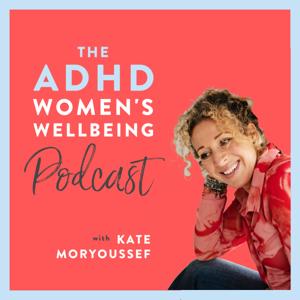
By Kate Moryoussef


4.8
154154 ratings


The podcast currently has 348 episodes available.
The most played episodes among Podcast App listeners.
Want to join our first-ever live podcast and Q&A this week? More info here Have you always been more sensitive than most people you know to rejection, criticism or the feeling that you've fallen short? If that question just landed somewhere deep, this episode is for you. Today I'm sharing a clip from one of my most popular workshops, "What Is RSD?," as a way of bringing this topic back into focus, because rejection sensitive dysphoria is one of those things that so many of us have felt our entire lives without ever having the language for it. In this clip, I talk about what Rejection Sensitive Dysphoria actually is, how Dr William Dodson first articulated it, how it shows up physically and emotionally, and why understanding it as a neurological trait rather than a personality flaw changes everything. I also share some practical ways to begin working with RSD rather than against it, including how EFT tapping can help calm the nervous system response in the moment and over time. The full RSD workshop is available on my website with 10% off here In this episode, we cover: What rejection sensitive dysphoria is and how it was first identified and named Why RSD shows up as part of the emotional dysregulation profile of ADHD What RSD can feel like physically, not just emotionally, and why that matters How RSD shows up across childhood, relationships, work, parenting and social life Why RSD episodes can feel all-consuming and then end surprisingly quickly How past social trauma can resurface and amplify RSD triggers later in life Why keeping your guard up to avoid RSD can become its own form of exhaustion The self-regulation tools that can help including EFT, DBT, somatic work and breathwork How lifestyle foundations like sleep, movement and nutrition build resilience against RSD Why EFT tapping helps calm the amygdala and reduce cortisol in the moment A simple introduction to tapping and how to use it before, during or after an RSD episode lookingAre you Looking for further support on ADHD Women's Wellbeing? Check out my workshop library here or search for any topic on the Podcast here. Timestamps: 00:00 - Welcome and introduction to today's More Yourself episode 01:30 - Why RSD is such an important part of understanding ADHD 04:00 - The workshop clip begins: Dr William Dodson's defining question 05:30 - What RSD is and how it shows up emotionally and physically 08:00 - The clear trigger, the mood shift and why episodes can end as suddenly as they start 10:00 - How past social trauma can keep RSD patterns alive 12:00 - How RSD impacts self-esteem, relationships, parenting and career 14:00 - What we can do: self-regulation tools, EFT, DBT and somatic approaches 16:00 - Why brain and gut health matter for RSD resilience 18:00 - Self-talk, journaling and the self-compassion that only you can give yourself 20:00 - EFT tapping explained: the meridian points, cortisol reduction and the amygdala 22:00 - How tapping creates perspective and shifts the threat response 24:00 - Using tapping before a difficult situation to stay regulated Links and Resources: Find my popular ADHD Women's Wellbeing workshops and resources on my website here. Follow the podcast on Instagram: @adhd_womenswellbeing_pod Get my book, The ADHD Women's Wellbeing Toolkit (also available in ebook and audiobook) here Join the More Yourself membership community here Get the full What Is RSD? workshop with 10% off here Kate Moryoussef is a women's ADHD lifestyle and wellbeing coach and EFT practitioner who helps overwhelmed and unfulfilled newly diagnosed women with ADHD find more calm, balance, hope, health, compassion, creativity, and clarity. Learn more about your ad choices. Visit megaphone.fm/adchoices

Find my popular ADHD Women's Wellbeing workshops and resources on my website here. So many of us were told for years that our painful periods, flooding cycles, monthly mood crashes and hormonal struggles were just something to push through. This compilation episode is about what's actually been going on hormonally all along. This week's episode is all about the overlap between ADHD, hormones and women's health — a connection Kate has been talking about since the very beginning of the podcast, and one that is still not being taken seriously enough in clinical practice. We hear from three conversations. Dr Lotta Borg Skoglund, Associate Professor of Psychiatry and specialist in ADHD and hormonal health, on the link between estrogen and heart health, why perimenopause doesn't follow a straight line, and why so many neurodivergent women are still being told they're too young or not symptomatic enough to be taken seriously. Dr Liz Murray, doctor, activist and author of Not Just Painful Periods, on her own decade-long road to an endometriosis diagnosis, what coming off the pill without the right information can do, and what she's doing through her charity to change the way the next generation of doctors are trained. And Laura Federico and Morgan Miller, authors of The Cycle Book, on why cycle tracking is so much more than period data, how it can help us understand RSD, mood, energy and focus across the month, and why reconnecting with our bodies might be one of the most compassionate things we can do for ourselves. In this episode, we cover: The link between estrogen, heart health and menopause, and why this is the number one cause of death in post-menopausal women Why perimenopause doesn't follow a straight line, and why symptoms can start long before periods become irregular Why neurodivergent women are more likely to experience PMDD, endometriosis, PCOS and severe PMS How losing estrogen suddenly can significantly raise cardiovascular risk, and why this is so often dismissed Dr Liz Murray's own endometriosis story, and why being a doctor didn't protect her from a delayed diagnosis What can happen when women come off the pill without understanding what it may have been masking Why the conversation GPs need to have with women about the pill is still not happening What women need to know about the red flag symptoms that warrant further investigation The overlap between ADHD, hypermobility, connective tissue issues and hormonal conditions Why cycle tracking is far more than knowing when your period is due How tracking can help you notice patterns like RSD intensifying in the second half of your cycle Why reconnecting to your body, even briefly each day, is a genuinely life-changing act Timestamps: 00:00 - Welcome and introduction to this week's compilation 03:00 - Dr Lotta Borg Skoglund: estrogen, heart health and what women need to know 06:00 - Why cardiovascular risk rises after menopause, and what that means for ADHD women 08:00 - The lifestyle factors that compound risk for neurodivergent women 10:00 - Why perimenopause symptoms can appear while periods are still regular 12:00 - The confusion of fluctuating estrogen levels and what it feels like from the inside 16:00 - Dr Liz Murray: a decade to diagnosis and what went wrong 18:00 - How the pill masked endometriosis and what coming off it without guidance cost her 20:00 - What GPs can do, and the conversations that still aren't happening 22:00 - Red flags that warrant further investigation, and why you don't need to wait 24:00 - The overlap between ADHD, neurodivergence and hormonal conditions 28:00 - What Liz's charity is doing to change how future doctors are trained 31:00 - Laura Federico and Morgan Miller: cycle tracking as a tool for self-understanding 35:00 - Tracking through perimenopause, HRT and changing cycles 37:00 - How cycle data helps you understand mood, energy and RSD across the month 39:00 - Coming back into your body as a radical act of self-compassion 42:00 - Tracking when your cycle isn't regular or predictable Links and Resources: Kate Moryoussef is a women's ADHD lifestyle and wellbeing coach and EFT practitioner who helps overwhelmed and unfulfilled newly diagnosed women with ADHD find more calm, balance, hope, health, compassion, creativity, and clarity. Discover my popular ADHD Women's Wellbeing workshops and resources on my website here. Follow the podcast on Instagram: @adhd_womenswellbeing_pod Get my book, The ADHD Women's Wellbeing Toolkit (also available in ebook and audiobook) here Join the More Yourself membership community here Visit Dr Lotta Borg Skoglund's website: lottaborgskoglund.com Connect with Dr Lotta Borg Skoglund on Instagram Get Dr Lotta Borg Skoglund's book: Female Hormones and ADHD: The Impact on Brain and Body Visit Dr Liz Murray's website: drlizmurray.com Connect with Dr Liz Murray on Instagram Get Dr Liz Murray's book: Not Just Painful Periods: Endometriosis, Fibroids and Menstrual Health Visit Laura and Morgan's website: itslauraandmorgan.com Get The Cycle Book: An Interactive Step-by-Step Guide to Tracking Hormones and Knowing Your Body Learn more about your ad choices. Visit megaphone.fm/adchoices
Looking for further guidance and support on ADHD Women's Wellbeing? Check out my workshop library here or search for any topic on the Podcast here. So many of us arrive at an ADHD diagnosis carrying years of shame, self-criticism and the quiet belief that something is fundamentally wrong with us. This episode is about what starts to shift when we finally have the right information. Welcome to this week's summer compilation. This one follows the journey from diagnosis to self-acceptance: the barriers so many of us still face in getting taken seriously, the practical tools that can help us quieten the inner critic, and a completely different way of seeing our ADHD traits, not as defects to fix, but as strengths that just need the right context and support. We hear from three guests across three different conversations. Vicki George, clinical nurse specialist and founder of The ADHD Nurse, on what the DIVA-5 assessment is really meant to be, why ADHD still carries more stigma than almost any other mental health condition, and how to advocate for yourself with a GP even when it feels uncomfortable. Cynthia Hammer, author of Living with Inattentive ADHD and founder of the Inattentive ADHD Coalition, on how understanding and accepting a diagnosis can bring more happiness even when the symptoms themselves haven't changed, and why replacing negative self-talk requires something to replace it with. And Hannah Miller, author of The Purpose Pursuit and host of The Purpose Pursuit Podcast, on what limiting beliefs actually are, how self-sabotage shows up for ADHD women, and her four-part framework for taking stock of where you are and finding your way forward. In this episode, we cover: What the DIVA-5 assessment is and why it should be a guided conversation, not a form you fill out alone Why ADHD diagnosis still carries more stigma than most other mental health conditions, and how unhelpful media headlines keep feeding that Why a GP cannot refuse to refer you for an ADHD assessment, and how to keep the appointment focused on that goal The challenges of titration and why finding the right medication is rarely a quick or straightforward process How understanding and accepting a diagnosis brought more happiness to the women Cynthia interviewed, even when their symptoms hadn't changed Why you can't simply get rid of a negative thought without replacing it with something else, and what that can look like in practice Why earlier diagnosis matters so much, and why girls with inattentive ADHD are still so frequently missed Hannah's four-part framework: taking stock, naming your strengths, identifying limiting behaviours and clarifying your values Why our traits are not defects, and how Clifton Strengths can help neurodivergent women begin to see themselves differently Why we don't have to be everything, and how leaning on others' strengths is part of thriving, not failing Timestamps: 00:00 - Welcome and introduction to this week's compilation 03:00 - Vicki George: what the DIVA-5 assessment is and why it matters 06:00 - Why the person being assessed is always believed over a parent or observer 08:00 - Why ADHD still carries more stigma than other mental health conditions 10:30 - How to advocate for yourself with a GP and what they can and can't do 13:00 - Titration, medication and why the process is so rarely straightforward 18:00 - Cynthia Hammer: how diagnosis brings happiness even when symptoms remain 21:00 - Interrupting negative self-talk and why replacement matters 24:00 - Why girls with inattentive ADHD are still being missed by standard tools 27:00 - Why whole-family screening matters when one person is diagnosed 30:00 - Hannah Miller: what happens when diagnosis collides with limiting beliefs 33:00 - The four-part framework: taking stock, strengths, limiting behaviors, values 36:00 - Why traits we've labelled as flaws can become our greatest strengths 39:00 - Clifton Strengths and why it works well for neurodivergent women 42:00 - We don't have to be everything, we just have to be good at something Links and Resources: Find my popular ADHD Women's Wellbeing workshops and resources on my website here. Follow the podcast on Instagram: @adhd_womenswellbeing_pod Get my book, The ADHD Women's Wellbeing Toolkit (also available in e-book and audiobook) here Join the More Yourself membership community here Visit Vicki George's website: theadhdnurse.co.uk Connect with Vicki George on Instagram Visit Cynthia Hammer's website: iadhd.org Connect with Cynthia Hammer on Instagram Get Cynthia Hammer's book: Living with Inattentive ADHD: Climbing the Circular Staircase of Attention Deficit Hyperactivity Disorder Visit Cynthia's advocacy project: findtheadhdgirls.org Visit Hannah Miller's website: hellosidekick.co Connect with Hannah Miller on Instagram Get Hannah Miller's book: The Purpose Pursuit Listen to Hannah's podcast: The Purpose Pursuit Podcast Kate Moryoussef is a women's ADHD lifestyle and wellbeing coach and EFT practitioner who helps overwhelmed and unfulfilled newly diagnosed women with ADHD find more calm, balance, hope, health, compassion, creativity, and clarity. Learn more about your ad choices. Visit megaphone.fm/adchoices
Looking for further guidance and support on ADHD Women's Wellbeing? Check out my resource library here or search for any topic you need on the Podcast here. Whether you've been with your partner for years or you're navigating dating after a late diagnosis, ADHD changes how we love, connect and show up in relationships, and this episode is entirely about that. Welcome to this week's summer compilation episode. Rather than a single conversation, I've pulled together some of the most resonant clips from three different episodes on ADHD, love, intimacy and relationships, because I wanted to bring all of this into one place for you. We begin with Lisa Rabinowitz, couples counsellor, certified Gottman and PACT therapist and author of Why Won't You Stop Interrupting Me? Lisa talks about how blame rarely helps either partner, why neurodivergence is often present on both sides of a relationship, and how working as a team rather than against each other can genuinely turn things around. Then we hear from Sara-Louise Ackrill and Bontle Senne, AuDHD therapists, writers, and advocates and co-authors of The ND Lovers Club. They talk about psychological safety, masking in relationships, self-disclosure, and why understanding yourself is always the foundation before you can truly connect with someone else. And we close with Dr Angela Wright, a trauma-trained clinical sexologist, sex medicine practitioner and menopause clinician, who talks honestly about how hormones, the nervous system and ADHD all intersect when it comes to desire, intimacy and what changes in midlife. In this episode, we cover:Why neurodivergence is often present in both partners, even when only one has a diagnosisHow to move from blame to teamwork in a neurodiverse relationshipLisa's concept of the "talk nook" and why having a dedicated space for connection mattersWhy psychological safety is the foundation of intimacy for neurodivergent peopleHow masking and people pleasing quietly erode intimacy over timeWhat self-disclosure in relationships and dating really looks like for ND womenWhy so many neurodivergent women are reconsidering traditional relationship structuresHow hormones and perimenopause affect desire, arousal and connectionWhy the ADHD brain's need for novelty and dopamine can complicate long term relationshipsHow the nervous system underpins sexual arousal, and why feeling safe comes first Timestamps:00:00 - Welcome and introduction to this week's compilation episode03:30 - Lisa Rabinowitz: why both partners are often neurodivergent05:47 - Moving from blame to understanding in a neurodiverse relationship08:00 - How couples come back from the brink with awareness and teamwork10:15 - The three legged race: working toward the finish line together14:48 - Focusing on strengths and creating the talk nook16:29 - Sara-Louise Ackrill and Bontle Senne: psychological safety in relationships20:53 - Why masking is survival, not a quirky personality trait23:27 - Self-disclosure: what to share, when and why28:27 - How perimenopause and diagnosis collide in midlife relationships33:04 - Celebrating the traits neurodivergent women bring to relationships34:33 - Dr Angela Wright: dopamine, novelty and desire in long term relationships37:00 - How hormones affect arousal and what changes in perimenopause41:22 - The nervous system, safety and why emergency mode kills desire Links and Resources:Find my popular ADHD workshops and resources on my website here.Follow the podcast on Instagram: @adhd_womenswellbeing_podGet my book, The ADHD Women's Wellbeing Toolkit (also available in ebook and audiobook) hereJoin the More Yourself membership community hereVisit Lisa's website: counselorforcouples.comConnect with Lisa on Instagram: @rabinowitzcounselingGet Lisa's book: Why Won't You Stop Interrupting Me? Simple Solutions for ADHD CouplesVisit Sara-Louise and Bontle's website: builttodiverge.comGet their book: The ND Lovers Club: How Neurodivergent Women Lust, Like and LoveVisit Dr Angela Wright's website: spicedpearhealth.co.uk Kate Moryoussef is a women's ADHD lifestyle and wellbeing coach, author and EFT practitioner who helps overwhelmed and unfulfilled newly diagnosed women with ADHD find more calm, balance, hope, health, compassion, creativity, and clarity. Learn more about your ad choices. Visit megaphone.fm/adchoices
If you've ever left a GP appointment feeling dismissed, confused or like you had to fight to be taken seriously, this episode will help you understand why, and what you can actually do about it. On this week's episode of The ADHD Women's Wellbeing Podcast, I'm joined by Dr Victoria Galvis, a GP based in Greater Manchester with over 20 years of lived experience of neurodivergence and a fierce passion for changing how the healthcare system supports neurodivergent people. Victoria qualified as a doctor in Colombia and has been practising in the UK since 2010, working across both hospital medicine and primary care. Alongside Dr Safiya Virji, GP and Associate Professor at Queen Mary University of London, she has written Neurodivergence in Primary Care: A Practical Guide for UK Healthcare Professionals, a comprehensive, research-backed resource designed to educate clinicians and support patients in navigating the system more effectively. In this episode, Victoria explains the structural reasons why GPs often don't know enough about ADHD and neurodivergence, and it is not as simple as them not caring. She talks about the discrimination she faced as a neurodivergent doctor, why the 10-minute consultation is both a challenge and something patients can learn to work with, and how the book came about from 20 years of clinical experience and a determination to change things for her son, her patients and the next generation of healthcare professionals. In this episode, we cover: Why GPs receive less than two hours of ADHD training and have zero budget to update their knowledge How media narratives and ableist assumptions about ADHD have shaped clinical attitudes Victoria's own experience of disability discrimination as a neurodivergent doctor, and why she kept going Why ADHD and autism could not even be co-diagnosed until 2013, and what that means for the doctors currently practising How the 10-minute GP consultation works, and practical ways to make the most of it Why bringing a list to a GP appointment is genuinely helpful, not annoying How to ask for the right GP in your practice for your specific needs When and how to share your own research with your doctor, and how most GPs actually receive it Why executive dysfunction affects how patients experience healthcare at every stage The importance of bringing someone with you, recording the appointment or using other memory tools Why most mental health presentations in primary care have a deep-rooted neurodivergent component Kate and Victoria's grassroots idea for getting this book into every GP surgery Timestamps: 00:00 - Welcome and introducing Dr Victoria Galvis 02:00 - Victoria's ADHD diagnosis at 19 and her early career in the UK 05:00 - The discrimination she faced as a neurodivergent doctor and why she fought back 09:00 - Why GPs don't know more about ADHD, and why it is not their fault 13:00 - Zero training budget, no CPD funding and what that means in practice 16:00 - Why most mental health presentations have a neurodivergent component 19:00 - How the 10-minute consultation works from the doctor's side 23:00 - Practical tips for making the most of your GP appointment 28:00 - How to share your own research with your GP and what to expect 32:00 - When to ask for a follow-up, and why you should book with the right person 36:00 - How the book came about, and what it covers 40:00 - Kate and Victoria's grassroots idea: getting the book into every GP surgery 43:00 - How to get the book and where to find Victoria Links and Resources: Find my popular ADHD Women's Wellbeing workshops and resources on my website here. Connect with the podcast on Instagram: @adhd_womenswellbeing_pod Get my book, The ADHD Women's Wellbeing Toolkit (also available in ebook and audiobook) here Join the More Yourself membership community here Visit Victoria's website: victoriagalvis.com Get the book: Neurodivergence in Primary Care: A Practical Guide for UK Healthcare Professionals - Also available free on Kindle Unlimited Kate Moryoussef is a women's ADHD lifestyle and wellbeing coach and EFT practitioner who helps overwhelmed and unfulfilled newly diagnosed women with ADHD find more calm, balance, hope, health, compassion, creativity, and clarity. Learn more about your ad choices. Visit megaphone.fm/adchoices
The podcast currently has 348 episodes available.
1,336 Listeners

3,474 Listeners

902 Listeners
44 Listeners
2,890 Listeners
267 Listeners
709 Listeners
631 Listeners
169 Listeners

281 Listeners
98 Listeners

24 Listeners
691 Listeners

282 Listeners