
Sign up to save your podcasts
Or


“The Future of Life Institute has been working on AI governance-related issues for the last decade. We're already over 10 years old, and our mission is to steer very powerful technology away from large-scale harm and toward very beneficial outcomes. You could think about any kind of extreme risks from AI, all the way to existential or extinction risk, the worst kinds of risks and the benefits. You can think about any kind of large benefits that humans could achieve from technology, all the way through to utopia, right? Utopia is the biggest benefit you can get from technology. Historically, that has meant we have focused on climate change, for example, and the impact of climate change. We have also focused on bio-related risks, pandemics and nuclear security issues. If things go well, we will be able to avoid these really bad downsides in terms of existential risk, extinction risks, mass surveillance, and really disturbing futures. We can avoid that very harmful side of AI or technology, and we can achieve some of the benefits.”
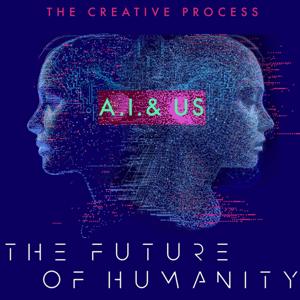
Today, we take a closer look at the future of artificial intelligence and the policies that determine its place in our societies. Risto Uuk is Head of EU Policy and Research at the Future of Life Institute in Brussels, and a philosopher and researcher at KU Leuven, where he studies the systemic risks posed by AI. He has worked with the World Economic Forum, the European Commission, and leading thinkers like Stuart Russell and Daniel Susskind. He also runs one of the most widely read newsletters on the EU AI Act. As this technology is transforming economies, politics, and human life itself, we’ll talk about the promises and dangers of AI, how Europe is trying to regulate it, and what it means to build safeguards for a technology that may be more powerful than anything we’ve seen before.
Episode Website
www.creativeprocess.info/pod
Instagram:@creativeprocesspodcast
 View all episodes
 By The Creative Process Original Series: Artificial Intelligence, Technology, Innovation, Engineering, Robotics & Internet of Things

4.7
1414 ratings
“The Future of Life Institute has been working on AI governance-related issues for the last decade. We're already over 10 years old, and our mission is to steer very powerful technology away from large-scale harm and toward very beneficial outcomes. You could think about any kind of extreme risks from AI, all the way to existential or extinction risk, the worst kinds of risks and the benefits. You can think about any kind of large benefits that humans could achieve from technology, all the way through to utopia, right? Utopia is the biggest benefit you can get from technology. Historically, that has meant we have focused on climate change, for example, and the impact of climate change. We have also focused on bio-related risks, pandemics and nuclear security issues. If things go well, we will be able to avoid these really bad downsides in terms of existential risk, extinction risks, mass surveillance, and really disturbing futures. We can avoid that very harmful side of AI or technology, and we can achieve some of the benefits.”
Today, we take a closer look at the future of artificial intelligence and the policies that determine its place in our societies. Risto Uuk is Head of EU Policy and Research at the Future of Life Institute in Brussels, and a philosopher and researcher at KU Leuven, where he studies the systemic risks posed by AI. He has worked with the World Economic Forum, the European Commission, and leading thinkers like Stuart Russell and Daniel Susskind. He also runs one of the most widely read newsletters on the EU AI Act. As this technology is transforming economies, politics, and human life itself, we’ll talk about the promises and dangers of AI, how Europe is trying to regulate it, and what it means to build safeguards for a technology that may be more powerful than anything we’ve seen before.
Episode Website
www.creativeprocess.info/pod
Instagram:@creativeprocesspodcast

32,066 Listeners
229,760 Listeners

87,802 Listeners

112,746 Listeners

8,814 Listeners
276 Listeners

16,101 Listeners
4 Listeners
150 Listeners

539 Listeners

151 Listeners
598 Listeners
27 Listeners
51 Listeners
55 Listeners
46 Listeners
35 Listeners
7 Listeners
88 Listeners
33 Listeners

13 Listeners

7 Listeners
18 Listeners

33 Listeners
39 Listeners
82 Listeners

11 Listeners
35 Listeners
2 Listeners

3 Listeners
8,348 Listeners
965 Listeners