
Sign up to save your podcasts
Or




Based on Podcast App listening data
In recent episodes of the All Things Sustainable podcast, we've heard how some of the biggest companies across sectors are navigating the changing sustainability landscape. In today's episode, we sit down with one of the world's largest chemical and plastic production companies, Dow.
"Sustainability used to be something nice to have, but now it's a key part of the business strategy," Han Zhang, Ph.D., Dow's Global Sustainability Director, Packaging and Specialty Plastics, tells us during S&P Global's CERAWeek energy conference in Houston. This is due to regulations, commitments from brand owners, and consumer demand, he says. "All of this creates a lot of opportunities to companies who can develop those sustainable solutions."
Dow has sustainability targets related to climate change, transforming waste, and advancing a circular economy where products are reused or recycled. Han says the company sees decarbonization and circularity as interconnected issues that can't be treated in silos.
"We cannot decarbonize the society without circular plastic, and we cannot achieve a circular economy" with higher carbon emissions, Han says. "At Dow as a company, we're tackling both in the same lens and I highly encourage the industry to do the same."
Listen to our episode, What's at stake in UN plastic pollution treaty talks
Listen to our episode, What companies are doing to address the plastic pollution problem
Learn more about S&P Global's Energy Transition data
This piece was published by S&P Global Sustainable1, a part of S&P Global.
Copyright ©2025 by S&P Global
DISCLAIMER
By accessing this Podcast, I acknowledge that S&P GLOBAL makes no warranty, guarantee, or representation as to the accuracy or sufficiency of the information featured in this Podcast. The information, opinions, and recommendations presented in this Podcast are for general information only and any reliance on the information provided in this Podcast is done at your own risk. This Podcast should not be considered professional advice. Unless specifically stated otherwise, S&P GLOBAL does not endorse, approve, recommend, or certify any information, product, process, service, or organization presented or mentioned in this Podcast, and information from this Podcast should not be referenced in any way to imply such approval or endorsement. The third party materials or content of any third party site referenced in this Podcast do not necessarily reflect the opinions, standards or policies of S&P GLOBAL. S&P GLOBAL assumes no responsibility or liability for the accuracy or completeness of the content contained in third party materials or on third party sites referenced in this Podcast or the compliance with applicable laws of such materials and/or links referenced herein. Moreover, S&P GLOBAL makes no warranty that this Podcast, or the server that makes it available, is free of viruses, worms, or other elements or codes that manifest contaminating or destructive properties.
S&P GLOBAL EXPRESSLY DISCLAIMS ANY AND ALL LIABILITY OR RESPONSIBILITY FOR ANY DIRECT, INDIRECT, INCIDENTAL, SPECIAL, CONSEQUENTIAL OR OTHER DAMAGES ARISING OUT OF ANY INDIVIDUAL'S USE OF, REFERENCE TO, RELIANCE ON, OR INABILITY TO USE, THIS PODCAST OR THE INFORMATION PRESENTED IN THIS PODCAST.
Building out the infrastructure needed for the low-carbon energy transition will require a substantial increase in the production of critical minerals and metals such as copper, nickel, zinc and lithium. These minerals are needed for many different technologies including electric vehicles and battery storage, clean hydrogen, geothermal, wind, solar and electricity networks.
In this episode of the All Things Sustainable podcast, we'll hear how one of the biggest producers of critical minerals, Vale Base Metals, is approaching this increased demand. And we'll explore how the company thinks about balancing those demands with other sustainability issues including community engagement, biodiversity, waste management, and physical climate risks.
We sit down with Vale Base Metals Chief Sustainability and Corporate Affairs Officer Emily Olson on the sidelines of S&P Global's CERAWeek energy conference. Vale Base Metals is a subsidiary of mining company Vale SA with operations in Canada, the UK, Brazil, Japan and Indonesia.
Emily says Vale Base Metals factors sustainability into its operations from the start. "You cannot be a miner without having sustainability in all of its elements integrated into how you run your operations," she says. "It's a big operation — we impact the land, we impact communities. And so for us, your social license and how you are willing to create that mutual and shared value, that's the first stop."
Emily also discusses how the company is navigating current market uncertainty from tariffs and the potential impacts on the company's supply chains. "Policy aside, mining needs dependable supply chains," she says. "We are a long life, long lead business. Having dependable diversified supply chains is really important."
Read S&P Global Sustainable1 research: Rocks and hard places: The ecosystem risks of mining for energy transition minerals
Learn more about the S&P Global Sustainable1 Nature & Biodiversity Risk dataset.
This piece was published by S&P Global Sustainable1, a part of S&P Global.
Copyright ©2025 by S&P Global
DISCLAIMER
By accessing this Podcast, I acknowledge that S&P GLOBAL makes no warranty, guarantee, or representation as to the accuracy or sufficiency of the information featured in this Podcast. The information, opinions, and recommendations presented in this Podcast are for general information only and any reliance on the information provided in this Podcast is done at your own risk. This Podcast should not be considered professional advice. Unless specifically stated otherwise, S&P GLOBAL does not endorse, approve, recommend, or certify any information, product, process, service, or organization presented or mentioned in this Podcast, and information from this Podcast should not be referenced in any way to imply such approval or endorsement. The third party materials or content of any third party site referenced in this Podcast do not necessarily reflect the opinions, standards or policies of S&P GLOBAL. S&P GLOBAL assumes no responsibility or liability for the accuracy or completeness of the content contained in third party materials or on third party sites referenced in this Podcast or the compliance with applicable laws of such materials and/or links referenced herein. Moreover, S&P GLOBAL makes no warranty that this Podcast, or the server that makes it available, is free of viruses, worms, or other elements or codes that manifest contaminating or destructive properties.
S&P GLOBAL EXPRESSLY DISCLAIMS ANY AND ALL LIABILITY OR RESPONSIBILITY FOR ANY DIRECT, INDIRECT, INCIDENTAL, SPECIAL, CONSEQUENTIAL OR OTHER DAMAGES ARISING OUT OF ANY INDIVIDUAL'S USE OF, REFERENCE TO, RELIANCE ON, OR INABILITY TO USE, THIS PODCAST OR THE INFORMATION PRESENTED IN THIS PODCAST.
The rise of AI means more datacenters, and that means huge increases in electricity demand. In the US, natural gas is expected to play a prominent role in powering the AI boom.
In this episode of the All Things Sustainable podcast, we're talking with EQT, one of the nation's largest natural gas companies, to understand what's ahead for AI, the energy transition and sustainability.
We sit down with Courtney Loper, EQT's Head of Government Relations and Public Affairs, on the sidelines of S&P Global's CERAWeek energy conference. She says natural gas can help the world shift away from coal-fired generation, which has a higher concentration of carbon emissions per unit of energy than natural gas. And she says EQT is focused on making its product as clean as possible, including by curbing carbon and methane emissions in its production of natural gas.
"A big focus for EQT has been the replacement of international coal with US natural gas and really thinking about the emissions offset that can come from that," Courtney says.
She says permitting reforms are needed in the US to get natural gas pipelines and other infrastructure built to meet growing energy demands from AI.
Courtney also tells us the company's view on sustainability remains "unchanged."
"Regardless of what winds shift in any sort of way around the idea of sustainability, it's something that we're going to continue to engage in, it's something that we're going to continue to promote, because it's important for the long-term viability of natural gas," she says.
Learn more about S&P Global's energy transition data here.
Read S&P Global Sustainable1 research, "Can AI become net positive for net-zero?"
Explore S&P Global Sustainable1 net-zero data.
Listen to our podcast interview with ExxonMobil at CERAWeek.
Listen to our podcast interview with JPMorganChase.
This piece was published by S&P Global Sustainable1, a part of S&P Global.
Copyright ©2025 by S&P Global
DISCLAIMER
By accessing this Podcast, I acknowledge that S&P GLOBAL makes no warranty, guarantee, or representation as to the accuracy or sufficiency of the information featured in this Podcast. The information, opinions, and recommendations presented in this Podcast are for general information only and any reliance on the information provided in this Podcast is done at your own risk. This Podcast should not be considered professional advice. Unless specifically stated otherwise, S&P GLOBAL does not endorse, approve, recommend, or certify any information, product, process, service, or organization presented or mentioned in this Podcast, and information from this Podcast should not be referenced in any way to imply such approval or endorsement. The third party materials or content of any third party site referenced in this Podcast do not necessarily reflect the opinions, standards or policies of S&P GLOBAL. S&P GLOBAL assumes no responsibility or liability for the accuracy or completeness of the content contained in third party materials or on third party sites referenced in this Podcast or the compliance with applicable laws of such materials and/or links referenced herein. Moreover, S&P GLOBAL makes no warranty that this Podcast, or the server that makes it available, is free of viruses, worms, or other elements or codes that manifest contaminating or destructive properties.
S&P GLOBAL EXPRESSLY DISCLAIMS ANY AND ALL LIABILITY OR RESPONSIBILITY FOR ANY DIRECT, INDIRECT, INCIDENTAL, SPECIAL, CONSEQUENTIAL OR OTHER DAMAGES ARISING OUT OF ANY INDIVIDUAL'S USE OF, REFERENCE TO, RELIANCE ON, OR INABILITY TO USE, THIS PODCAST OR THE INFORMATION PRESENTED IN THIS PODCAST.
In this episode of the All Things Sustainable podcast, we sit down with Shinjini Menon, Senior Vice President of System Planning and Engineering at Southern California Edison, an investor-owned public utility operating as a subsidiary of Edison International.
Southern California Edison is one of the largest US electric utilities, and Shinjini explains how it is prioritizing energy reliability and affordability while also building climate resilience — a topic that is particularly urgent in Southern California, where the risk of wildfires is so high.
"We have put forward a pretty ambitious goal for decarbonization and the electrification that we believe is necessary for affordable decarbonization," Shinjini says.
"At the end of the day, it's about all of our communities having affordable access to energy, reliable energy, and having that energy security."
Shinjini explains how the utility uses technology, modeling and data to mitigate wildfire risks and make the grid more resilient. She says Southern California Edison has learned from peers in the US and other parts of the world as it works to build climate resilience.
Listen to last week's interviews from the CERAWeek conference hosted by S&P Global here.
Listen to our podcast episode about 2025 wildfires in Los Angeles here.
Read research from S&P Global Sustainable1 about the projected financial costs of climate change for the world's largest companies.
Learn more about the S&P Global Sustainable1 Physical Risk dataset.
This piece was published by S&P Global Sustainable1, a part of S&P Global.
Copyright ©2025 by S&P Global
DISCLAIMER
By accessing this Podcast, I acknowledge that S&P GLOBAL makes no warranty, guarantee, or representation as to the accuracy or sufficiency of the information featured in this Podcast. The information, opinions, and recommendations presented in this Podcast are for general information only and any reliance on the information provided in this Podcast is done at your own risk. This Podcast should not be considered professional advice. Unless specifically stated otherwise, S&P GLOBAL does not endorse, approve, recommend, or certify any information, product, process, service, or organization presented or mentioned in this Podcast, and information from this Podcast should not be referenced in any way to imply such approval or endorsement. The third party materials or content of any third party site referenced in this Podcast do not necessarily reflect the opinions, standards or policies of S&P GLOBAL. S&P GLOBAL assumes no responsibility or liability for the accuracy or completeness of the content contained in third party materials or on third party sites referenced in this Podcast or the compliance with applicable laws of such materials and/or links referenced herein. Moreover, S&P GLOBAL makes no warranty that this Podcast, or the server that makes it available, is free of viruses, worms, or other elements or codes that manifest contaminating or destructive properties.
S&P GLOBAL EXPRESSLY DISCLAIMS ANY AND ALL LIABILITY OR RESPONSIBILITY FOR ANY DIRECT, INDIRECT, INCIDENTAL, SPECIAL, CONSEQUENTIAL OR OTHER DAMAGES ARISING OUT OF ANY INDIVIDUAL'S USE OF, REFERENCE TO, RELIANCE ON, OR INABILITY TO USE, THIS PODCAST OR THE INFORMATION PRESENTED IN THIS PODCAST.
To understand how companies at the heart of the energy industry are approaching the energy transition, we took the All Things Sustainable podcast on the road to Houston, Texas to cover CERAWeek, the annual S&P Global conference informally known as the industry's "Super Bowl."
As we'll hear from today's guests, many discussions at CERAWeek 2025 March 10-14 focused on pragmatism and realism.
We talk with S&P Global Ratings Chief Economist Paul Gruenwald about balancing near-term concerns around energy affordability, security and reliability with longer-term concerns about sustainability and climate change.
Paul also discusses the impact of tariff uncertainty in the US.
"Markets hate uncertainty, whether you're in the financial markets or you're in the energy markets and producing the energy that we all need," Paul says. "Even if you align with the broad objectives of the new administration, I think all the back-and-forth and the drama around the tariffs have really put a damper on some of that excitement."
We speak to Arshad Mansoor about how the world can meet demand for electricity to power growing AI usage. Arshad is President and CEO of the Electric Power Research Institute (EPRI), a research organization that focuses on US electricity generation and delivery.
To understand how energy companies are navigating the current transition landscape, we sit down with Cate Hight, a partner at global consultancy Bain & Company.
And we talk to Damian Beauchamp about the role of policy in enabling technology innovation. Damian is President and Chief Development Officer at 8 Rivers, a clean energy and climate technology company that develops sustainable infrastructure solutions like carbon capture to help the global energy industry achieve net-zero.
Listen to a replay of the S&P Global webinar, 'Capturing $60T energy transition opportunities, while managing $25T climate risks'.
Listen to our podcast episode, 'Talking energy transition with the US Department of Energy'.
Listen to our podcast interview with ExxonMobil at CERAWeek.
Learn more about S&P Global's energy transition data here.
This piece was published by S&P Global Sustainable1 and not by S&P Global Ratings, which is a separately managed division of S&P Global.
Copyright ©2025 by S&P Global
DISCLAIMER
By accessing this Podcast, I acknowledge that S&P GLOBAL makes no warranty, guarantee, or representation as to the accuracy or sufficiency of the information featured in this Podcast. The information, opinions, and recommendations presented in this Podcast are for general information only and any reliance on the information provided in this Podcast is done at your own risk. This Podcast should not be considered professional advice. Unless specifically stated otherwise, S&P GLOBAL does not endorse, approve, recommend, or certify any information, product, process, service, or organization presented or mentioned in this Podcast, and information from this Podcast should not be referenced in any way to imply such approval or endorsement. The third party materials or content of any third party site referenced in this Podcast do not necessarily reflect the opinions, standards or policies of S&P GLOBAL. S&P GLOBAL assumes no responsibility or liability for the accuracy or completeness of the content contained in third party materials or on third party sites referenced in this Podcast or the compliance with applicable laws of such materials and/or links referenced herein. Moreover, S&P GLOBAL makes no warranty that this Podcast, or the server that makes it available, is free of viruses, worms, or other elements or codes that manifest contaminating or destructive properties.
S&P GLOBAL EXPRESSLY DISCLAIMS ANY AND ALL LIABILITY OR RESPONSIBILITY FOR ANY DIRECT, INDIRECT, INCIDENTAL, SPECIAL, CONSEQUENTIAL OR OTHER DAMAGES ARISING OUT OF ANY INDIVIDUAL'S USE OF, REFERENCE TO, RELIANCE ON, OR INABILITY TO USE, THIS PODCAST OR THE INFORMATION PRESENTED IN THIS PODCAST.
The United Nations' annual World Water Day observance took place on March 22, with a focus on supporting the achievement of Sustainable Development Goal 6: water and sanitation for all by 2030.
In this episode of the All Things Sustainable podcast, we dive into the water stewardship practices at Amazon, one of the world's largest companies with a market cap of more than $2 trillion dollars. Amazon Water Sustainability Lead Will Hewes outlines the company's approach to water in the communities it serves and across Amazon's business lines, which range from e-commerce to online entertainment streaming services to grocery stores and cloud computing.
Will explains that one of the company's goals is to be "water positive" in its datacenter operations at Amazon Web Services by 2030 — meaning AWS aims to return more water to communities than it uses in direct operations.
Amazon operates in several countries and regions facing water-related challenges that are being exacerbated by climate change, and Will says the company is working with communities to support their adaptation efforts.
"We can't solve that entire crisis on our own, obviously," Will says. "But how can we help plug in and help support some of those adaptations that need to happen to make sure that communities and the environment still have water they need, when they need it?"
Read further research from S&P Global Sustainable1:
How climate change is exacerbating drought risks
For the world's largest companies, climate physical risks have a $1.2 trillion annual price tag by the 2050s
Learn more about S&P Global Sustainable1's climate physical risk dataset, which include financial calculations on water stress and drought risks, here.
Listen to our podcast episode featuring an interview with the CEO of Water.org here.
This piece was published by S&P Global Sustainable1, a part of S&P Global.
Copyright ©2025 by S&P Global
DISCLAIMER
By accessing this Podcast, I acknowledge that S&P GLOBAL makes no warranty, guarantee, or representation as to the accuracy or sufficiency of the information featured in this Podcast. The information, opinions, and recommendations presented in this Podcast are for general information only and any reliance on the information provided in this Podcast is done at your own risk. This Podcast should not be considered professional advice. Unless specifically stated otherwise, S&P GLOBAL does not endorse, approve, recommend, or certify any information, product, process, service, or organization presented or mentioned in this Podcast, and information from this Podcast should not be referenced in any way to imply such approval or endorsement. The third party materials or content of any third party site referenced in this Podcast do not necessarily reflect the opinions, standards or policies of S&P GLOBAL. S&P GLOBAL assumes no responsibility or liability for the accuracy or completeness of the content contained in third party materials or on third party sites referenced in this Podcast or the compliance with applicable laws of such materials and/or links referenced herein. Moreover, S&P GLOBAL makes no warranty that this Podcast, or the server that makes it available, is free of viruses, worms, or other elements or codes that manifest contaminating or destructive properties.
S&P GLOBAL EXPRESSLY DISCLAIMS ANY AND ALL LIABILITY OR RESPONSIBILITY FOR ANY DIRECT, INDIRECT, INCIDENTAL, SPECIAL, CONSEQUENTIAL OR OTHER DAMAGES ARISING OUT OF ANY INDIVIDUAL'S USE OF, REFERENCE TO, RELIANCE ON, OR INABILITY TO USE, THIS PODCAST OR THE INFORMATION PRESENTED IN THIS PODCAST.
In recent episodes of the All Things Sustainable podcast, we've interviewed some of the world's biggest financial and technology companies about how they're approaching sustainability and the energy transition. But how is the energy industry thinking about these topics — including the world's largest fossil fuel companies?
To answer that question, we traveled to Houston, Texas, to cover the annual CERAWeek conference hosted by S&P Global — an event informally known as the 'Super Bowl' of the energy industry. In today's episode we sit down on the sidelines of CERAWeek with Matt Kolesar, Chief Environmental Scientist at ExxonMobil. US-based ExxonMobil is one of the largest publicly traded oil and gas companies in the world, with operations in more than 60 countries and a market cap of more than $490 billion.
Matt explains the company's sustainability strategy and approach to the energy transition. Stay tuned for future episodes, where we'll bring you more interviews with stakeholders across the energy value chain.
This piece was published by S&P Global Sustainable1, a part of S&P Global.
Copyright ©2025 by S&P Global
DISCLAIMER
By accessing this Podcast, I acknowledge that S&P GLOBAL makes no warranty, guarantee, or representation as to the accuracy or sufficiency of the information featured in this Podcast. The information, opinions, and recommendations presented in this Podcast are for general information only and any reliance on the information provided in this Podcast is done at your own risk. This Podcast should not be considered professional advice. Unless specifically stated otherwise, S&P GLOBAL does not endorse, approve, recommend, or certify any information, product, process, service, or organization presented or mentioned in this Podcast, and information from this Podcast should not be referenced in any way to imply such approval or endorsement. The third party materials or content of any third party site referenced in this Podcast do not necessarily reflect the opinions, standards or policies of S&P GLOBAL. S&P GLOBAL assumes no responsibility or liability for the accuracy or completeness of the content contained in third party materials or on third party sites referenced in this Podcast or the compliance with applicable laws of such materials and/or links referenced herein. Moreover, S&P GLOBAL makes no warranty that this Podcast, or the server that makes it available, is free of viruses, worms, or other elements or codes that manifest contaminating or destructive properties.
S&P GLOBAL EXPRESSLY DISCLAIMS ANY AND ALL LIABILITY OR RESPONSIBILITY FOR ANY DIRECT, INDIRECT, INCIDENTAL, SPECIAL, CONSEQUENTIAL OR OTHER DAMAGES ARISING OUT OF ANY INDIVIDUAL'S USE OF, REFERENCE TO, RELIANCE ON, OR INABILITY TO USE, THIS PODCAST OR THE INFORMATION PRESENTED IN THIS PODCAST.
Released in February 2025, the European Commission's Omnibus Simplification Package would drastically reduce the number of companies subject to corporate sustainability reporting requirements in a bid to slash red tape, particularly for small and medium-sized enterprises (SMEs). The proposals include measures to simplify the Corporate Sustainability Reporting Directive (CSRD), the Corporate Sustainability Due Diligence Directive (CSDDD) and the EU Taxonomy.
If adopted, the proposals could alter the sustainability reporting landscape for companies doing business in the EU. We speak to Marc Rotter, counsel at law firm Ropes & Gray, who explains why the timeline for the legislative process remains uncertain and could last several months.
We talk to Andreas Rasche, Professor of Business in Society at the Centre for Sustainability at Copenhagen Business School, who explains how the proposals could change investor access to data.
"For investors that, at the end of the day, means less data by less companies. And I think it should be a legitimate concern to investors as it limits access to comparable and also reliable ESG data," Andreas says of the proposals.
And we hear from Aleksandra Palinska, Executive Director of Eurosif, a European forum that promotes sustainable investment.
This piece was published by S&P Global Sustainable1, a part of S&P Global.
Copyright ©2025 by S&P Global
DISCLAIMER
By accessing this Podcast, I acknowledge that S&P GLOBAL makes no warranty, guarantee, or representation as to the accuracy or sufficiency of the information featured in this Podcast. The information, opinions, and recommendations presented in this Podcast are for general information only and any reliance on the information provided in this Podcast is done at your own risk. This Podcast should not be considered professional advice. Unless specifically stated otherwise, S&P GLOBAL does not endorse, approve, recommend, or certify any information, product, process, service, or organization presented or mentioned in this Podcast, and information from this Podcast should not be referenced in any way to imply such approval or endorsement. The third party materials or content of any third party site referenced in this Podcast do not necessarily reflect the opinions, standards or policies of S&P GLOBAL. S&P GLOBAL assumes no responsibility or liability for the accuracy or completeness of the content contained in third party materials or on third party sites referenced in this Podcast or the compliance with applicable laws of such materials and/or links referenced herein. Moreover, S&P GLOBAL makes no warranty that this Podcast, or the server that makes it available, is free of viruses, worms, or other elements or codes that manifest contaminating or destructive properties.
S&P GLOBAL EXPRESSLY DISCLAIMS ANY AND ALL LIABILITY OR RESPONSIBILITY FOR ANY DIRECT, INDIRECT, INCIDENTAL, SPECIAL, CONSEQUENTIAL OR OTHER DAMAGES ARISING OUT OF ANY INDIVIDUAL'S USE OF, REFERENCE TO, RELIANCE ON, OR INABILITY TO USE, THIS PODCAST OR THE INFORMATION PRESENTED IN THIS PODCAST.
Welcome to the Terra Carta Series of the All Things Sustainable podcast, a collaboration with the Sustainable Markets Initiative (SMI). Throughout 2025, we'll be interviewing SMI member CEOs from around the world and across industries about how they're approaching sustainability challenges and opportunities.
The SMI is a network of over 250 global CEOs across finance and industry. It facilitates private sector diplomacy with the ambition of making sustainability the driving force of global markets and value creation. S&P Global is a proud SMI member.
We're calling this the Terra Carta Series based on the SMI's Terra Carta mandate. This is the guiding mandate for the SMI and sets out ambitious and practical actions to help the private sector accelerate progress toward a sustainable future. The name Terra Carta is a play on the historic Magna Carta.
In this first episode, we're talking to SMI CEO Jennifer Jordan-Saifi ahead of the organization's five-year anniversary event in London March 10th and 11th.
Jennifer explains how His Majesty King Charles III launched the SMI in 2020 when he was the Prince of Wales. She talks about how member companies are navigating a challenging sustainability landscape and staying focused on long-term solutions. And she explains how the SMI works to bridge the gap between the public and private sectors.
"Having a group of global CEOs with such enormous reach across the global economy, there's just this real opportunity to have systems-level change," Jennifer says. "As we connect the private sector into governments and align private sector objectives with public sector objectives, then we really start to see transformational change happening in a way that's really positive for economic growth, for trade, for jobs — and that's really what the SMI is about."
This piece was published by S&P Global Sustainable1, a part of S&P Global.
Copyright ©2025 by S&P Global
DISCLAIMER
By accessing this Podcast, I acknowledge that S&P GLOBAL makes no warranty, guarantee, or representation as to the accuracy or sufficiency of the information featured in this Podcast. The information, opinions, and recommendations presented in this Podcast are for general information only and any reliance on the information provided in this Podcast is done at your own risk. This Podcast should not be considered professional advice. Unless specifically stated otherwise, S&P GLOBAL does not endorse, approve, recommend, or certify any information, product, process, service, or organization presented or mentioned in this Podcast, and information from this Podcast should not be referenced in any way to imply such approval or endorsement. The third party materials or content of any third party site referenced in this Podcast do not necessarily reflect the opinions, standards or policies of S&P GLOBAL. S&P GLOBAL assumes no responsibility or liability for the accuracy or completeness of the content contained in third party materials or on third party sites referenced in this Podcast or the compliance with applicable laws of such materials and/or links referenced herein. Moreover, S&P GLOBAL makes no warranty that this Podcast, or the server that makes it available, is free of viruses, worms, or other elements or codes that manifest contaminating or destructive properties.
S&P GLOBAL EXPRESSLY DISCLAIMS ANY AND ALL LIABILITY OR RESPONSIBILITY FOR ANY DIRECT, INDIRECT, INCIDENTAL, SPECIAL, CONSEQUENTIAL OR OTHER DAMAGES ARISING OUT OF ANY INDIVIDUAL'S USE OF, REFERENCE TO, RELIANCE ON, OR INABILITY TO USE, THIS PODCAST OR THE INFORMATION PRESENTED IN THIS PODCAST.
This week, the All Things Sustainable podcast delves into the intersection of climate change and gender equality with Rachel Vestergaard, Founder and CEO of Empower Co.
Empower Co. is a brokerage firm that is building a global voluntary market for women's empowerment as measured by the W+ Standard, which is hosted by the S&P Global Commodity Insights Environmental Registry.
Studies have showed that the climate crisis is not gender neutral, with women and girls experiencing the greatest impacts of climate change. As we approach International Women's Day on March 8, Rachel discusses how her company is creating a global voluntary market for women's empowerment using the W+ Standard, which measures six domains critical for women's empowerment: Time Savings, Income & Assets, Health, Leadership, Education & Knowledge, and Food Security.
Rachel emphasizes that women are also crucial to finding solutions. "Without that, we are completely fighting this climate crisis issue with one hand behind our back," she says.
This episode highlights the importance of integrating gender equity into climate solutions and the role businesses can play in supporting this mission, especially as we look ahead to the UN's COP30 climate change conference in Brazil this November.
Read more about the W+ Standard here: https://view.highspot.com/viewer/66047cb70b83e1a2d28f9003?utm_campaign=Oktopost-Global-Cross+Commodity-Random+Posts&utm_content=Oktopost-linkedin&utm_medium=social&utm_source=linkedin#1
Listen to a previous episode that explores the topic of climate change and gender here: https://www.spglobal.com/esg/podcasts/intersection-of-gender-and-climate-in-focus-ahead-of-cop28
This piece was published by S&P Global Sustainable1, a part of S&P Global.
Copyright ©2025 by S&P Global
DISCLAIMER
By accessing this Podcast, I acknowledge that S&P GLOBAL makes no warranty, guarantee, or representation as to the accuracy or sufficiency of the information featured in this Podcast. The information, opinions, and recommendations presented in this Podcast are for general information only and any reliance on the information provided in this Podcast is done at your own risk. This Podcast should not be considered professional advice. Unless specifically stated otherwise, S&P GLOBAL does not endorse, approve, recommend, or certify any information, product, process, service, or organization presented or mentioned in this Podcast, and information from this Podcast should not be referenced in any way to imply such approval or endorsement. The third party materials or content of any third party site referenced in this Podcast do not necessarily reflect the opinions, standards or policies of S&P GLOBAL. S&P GLOBAL assumes no responsibility or liability for the accuracy or completeness of the content contained in third party materials or on third party sites referenced in this Podcast or the compliance with applicable laws of such materials and/or links referenced herein. Moreover, S&P GLOBAL makes no warranty that this Podcast, or the server that makes it available, is free of viruses, worms, or other elements or codes that manifest contaminating or destructive properties.
S&P GLOBAL EXPRESSLY DISCLAIMS ANY AND ALL LIABILITY OR RESPONSIBILITY FOR ANY DIRECT, INDIRECT, INCIDENTAL, SPECIAL, CONSEQUENTIAL OR OTHER DAMAGES ARISING OUT OF ANY INDIVIDUAL'S USE OF, REFERENCE TO, RELIANCE ON, OR INABILITY TO USE, THIS PODCAST OR THE INFORMATION PRESENTED IN THIS PODCAST.
From the publisher's feed
Ranked by our users in the last 21 days
1,247 Listeners
403 Listeners
99 Listeners
6 Listeners
41 Listeners
9 Listeners
6 Listeners

134 Listeners

651 Listeners
125 Listeners

229 Listeners
28 Listeners
28 Listeners
9 Listeners
459 Listeners
4 Listeners
28 Listeners
13 Listeners
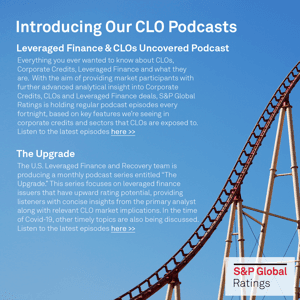
5 Listeners
83 Listeners
178 Listeners
28 Listeners

637 Listeners

1 Listeners
283 Listeners
226 Listeners
152 Listeners
194 Listeners
7 Listeners
4 Listeners
0 Listeners

7 Listeners
6 Listeners

5 Listeners