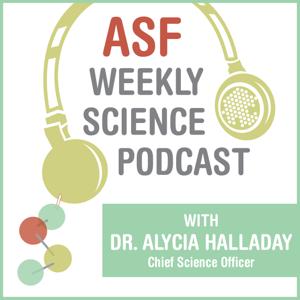
Autism Science Foundation Weekly Science Report

Autism Science Foundation Weekly Science Report

Download on the App Store

Autism Science Foundation Weekly Science Report episodes

  • Tooth brushing: It’s not for sissies

    Parents or caregivers of children with ASD sometimes have a lot of difficulty helping their child brush their teeth. Parents and caregivers of children not on the spectrum have difficulty helping their child brush their teeth. By working with families on an individual level, coaching, encouraging and breaking down each of the steps of tooth brushing into something manageable, a group of Medicaid-eligible parents helped their children learn these skills on some level by the end of the study. Incredibly, 93% of parents who are trying to do it all with less, stayed in the program and felt more confident about their abilities. This study also used a randomized clinical trial design which compared the training and coaching with just those who got some toothbrushes and toothpastes in the mail. In this week’s #ASFpodcast, you get to hear from the leaders and the therapists who helped these families, what they did, and what worked. Join me with Dr. Eric Butter, Kelly Birmingham and Dr. Rachel Fenning to hear more about this study.


    https://pubmed.ncbi.nlm.nih.gov/35211746/
    52 min
  • A 2022 Day of Learning Quickie

    This year’s Day of Learning was a huge success, with topics ranging from biological sex differences to mobile technologies all the way to the importance and documented value of leisure activities in people on the spectrum. the speakers included a discussion of the IACC, sex differences, the value of prevalence data, mobile technologies, leisure activities, and a recognition of two advocates who made or make a difference in families: Samantha Els and Suzanne Wright. Listen to this week’s podcast for a quickie, but don’t let it prevent you from watching the longer videos, a link to which can be found below


    www.babynavigator.com


    www.autismnavigator.com


    Day of Learning

    28 min
  • Can animals be autistic?

    The answer is obviously “no”, however, animal models are necessary to help understand brain circuitry and improve interventions and supports for not just core symptoms but associated issues like anxiety, OCD, seizures and GI issues. Scientists view behaviors consistent with an ASD diagnosis differently, and this has created some problems in interpretation of animal model data. This week’s #ASFpodcast will break down a recent paper in Genes, Brain and Behavior which addresses inconsistencies in the literature and makes recommendations on how researchers should shift how they think about how they can replicate features of ASD in a model system.


    https://pubmed.ncbi.nlm.nih.gov/35285132/
    16 min
  • Environmental factors as both causes and interventions?

    Environmental exposures, including toxic chemicals, can contribute to the causes of ASD. But how do other environmental factors, like behavioral supports, work in the brain to improve behaviors associated with ASD? For this, you need a broad interpretation of the term “environmental” and an animal model so you can see the mechanism involved. Studies show while environmental factors can contribute, they can also provide modifications in cellular and molecular function which support learning and improved developmental trajectory. Finally, on a different topic, are autistic adults more likely to be involved in a crime compared to other groups? No, they are not, but there are factors which affect the risk of being involved with the criminal justice system, at least in the UK. Read more in the studies below.


    https://pubmed.ncbi.nlm.nih.gov/34972219/


    https://pubmed.ncbi.nlm.nih.gov/35259351/


    https://pubmed.ncbi.nlm.nih.gov/35261275/

    12 min
  • New ways to solve old problems

    This week’s podcast focuses on innovative methodologies to understand how to reach black families, understand why and when autistic people prefer not to look at faces and how interventions can improve conversation and social communication. They use culturally and racially matched mentors, old home video tapes (keep taking those!) and machine learning to look not just at novel methods but novel ways of studying a particular outcome.


    https://pubmed.ncbi.nlm.nih.gov/35232271/


    https://pubmed.ncbi.nlm.nih.gov/35228613/


    https://pubmed.ncbi.nlm.nih.gov/35229983/


    21 min
  • Is Autism Inflammation Nation?

    Several studies have linked the immune system to autism, but how are they connected? Two new studies this week illustrate differences in immune function in those with a diagnosis compared to those without, and also find differences in the blood of of pregnant mothers who go on to have an autistic child. Women who go on to have autistic girls show higher levels and more inflammatory markers than mothers who go on to have boys, the finding of elevated IL1 is now a finding that has been replicated across countries. However, it’s too early to tell if this information can be used to help with a diagnosis and it’s probably not specific to autism. But the message is the same as it was before: getting sick during pregnancy is not great. Get vaccinated! Stay away from sick people and wash your hands.


    https://pubmed.ncbi.nlm.nih.gov/35110990/


    https://pubmed.ncbi.nlm.nih.gov/34987169/
    17 min
  • Watershed moments in development

    Autism diagnosis at 3 years of age isn’t something that happens suddenly. It evolves, there are deficits seen early on and markers that are evident prior to 3 years. Some of them are cascading events – with problems in one area like motor function, other behaviors like reaching, grasping, and learning about the environment and interactions with other people are stunted. Sometimes, these cascading moments lead to a loss of language. Early intervention can turn these early deficits around so that communication, learning and daily functioning are continually supported and instead of one trajectory, another can be reached. This podcast highlights studies that demonstrate that with data, and with theory. But it is never boiled down to one thing, despite early studies that screen time use is linked with an ASD diagnosis.


    https://pubmed.ncbi.nlm.nih.gov/35098539/


    https://pubmed.ncbi.nlm.nih.gov/35099540/


    https://srcd.onlinelibrary.wiley.com/doi/abs/10.1111/cdep.12439
    18 min
  • What I like about you.

    This week is a “brick-a-brack”: of topics. They include: 1. how COVID-19 is especially dangerous for people with neurodevelopmental disorders; 2. how certain genes associated with neurodevelopmental disorders can affect other body functions other than the brain (like the digestive system and kidney function and metabolism); and finally, 3. why parents think their autistic children are so great. No overall theme, just information we hope you can use.


    https://www.ijidonline.com/action/showPdf?pii=S1201-9712%2822%2900048-0


    https://link.springer.com/content/pdf/10.1007/s10803-021-05405-x.pdf


    https://jamanetwork.com/journals/jamapsychiatry/article-abstract/2788262
    16 min
  • Parents! Parents! Parents!

    Parents are now used as intervention partners through a design called parent-mediated intervention. It started to be studied before the pandemic but has now become a necessity. Does it work? Should it always work for everything? How long should the intervention last and how often? These are all questions of interest, and while research is still early, parents can be amazing partners in intervention especially below age 5. The provide opportunities for learning and communication, and they can utilize more hours during the day at home than traditional in-clinic services can. Of course not every family is the same and may not have the same abilities to learn the intervention, and in the future more of these contextual factors need to be studied. But for now, three cheers for parents helping their kids!


    https://pubmed.ncbi.nlm.nih.gov/34867556/


    https://pubmed.ncbi.nlm.nih.gov/35037520/


    https://pubmed.ncbi.nlm.nih.gov/35040001/
    18 min
  • Advice for better understanding underrepresented groups in autism research

    This week, we talk to Karla Rivera-Figueroa and Inge-Marie Eigsti, who together with Nana Yaa A. Marfo published a systematic review asking about parental perceptions of autism in both LatinX and Black Sociocultural contexts. Six themes popped out, and the question for Karla and Dr Eigsti were “how can research help”? What funding opportunities, culturally relevant materials, and future research directions need to be focused on? The conversation included ways to battle stigma, improve provider relationships, recruit a more diverse sample in research and fund those underrepresented scientists who want to study autism. As a note, ASF will be releasing their undergraduate fellowship mechanism on Tuesday which will focus on underrepresented groups.


    https://pubmed.ncbi.nlm.nih.gov/34979034/
    43 min

About Autism Science Foundation Weekly Science Report

From the publisher's feed

The week in autism research discoveries

More shows like Autism Science Foundation Weekly Science Report

This American Life by This American Life

This American Life

91,022 Listeners

Fresh Air by NPR

Fresh Air

38,016 Listeners

Hidden Brain by Hidden Brain, Shankar Vedantam

Hidden Brain

43,359 Listeners

Ideas by CBC

Ideas

405 Listeners

10% Happier with Dan Harris by 10% Happier

10% Happier with Dan Harris

12,714 Listeners

The Daily by The New York Times

The Daily

111,799 Listeners

Up First from NPR by NPR

Up First from NPR

56,447 Listeners

Where Should We Begin? with Esther Perel by Esther Perel Global Media

Where Should We Begin? with Esther Perel

14,897 Listeners

The Indicator from Planet Money by NPR

The Indicator from Planet Money

9,537 Listeners

The Peter Attia Drive by Peter Attia, MD

The Peter Attia Drive

8,001 Listeners

The Happiness Lab with Dr. Laurie Santos by Pushkin Industries

The Happiness Lab with Dr. Laurie Santos

14,353 Listeners

Uniquely Human: The Podcast by ART19    Uniquely Human

Uniquely Human: The Podcast

422 Listeners

The Ezra Klein Show by New York Times Opinion

The Ezra Klein Show

15,882 Listeners

Good Inside with Dr. Becky by Good Inside

Good Inside with Dr. Becky

4,492 Listeners

The Mel Robbins Podcast by Mel Robbins

The Mel Robbins Podcast

19,254 Listeners