
Sign up to save your podcasts
Or

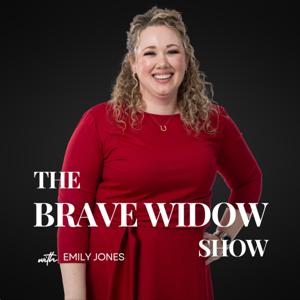


Does moving forward after loss mean you are leaving your husband behind?
Early enrollment ends November 30, 2026. Academy begins January 20, 2027.
Brave Widow Resources
Many widows feel guilty when they begin to laugh, make plans, experience joy, or imagine a future again. It can feel like moving forward means moving away from the person they love.
But what if you could rebuild a life you love without abandoning your connection to your husband?
In this episode of The Brave Widow Show, Emily explores:
You don’t have to choose between honoring your husband and enjoying life again.
You can miss him and still move forward.
You can grieve and still experience joy.
You can love the life you had and build a new one.
Chapters
00:00 Welcome to The Brave Widow Show
00:45 Brave Widow Academy early enrollment
03:10 Does moving forward mean leaving your husband behind?
04:30 Why moving forward creates fear and guilt
08:00 Is suffering a way to prove your love?
10:00 What connection can look like after loss
14:00 Your emotional relationship does not end
15:30 Challenging the stories you tell yourself
17:30 You can honor your person and rebuild your life
19:00 Learning to coach your own mind
22:00 Join the Brave Widow community
💬 If this episode helped you, please:
* Hit Subscribe
* Leave a quick rating & review – it helps more widows find this support
* Share this with a friend who’s facing grief or the holidays without their person
If you’re new here, my name is Emily Tanner. I’m the founder of Brave Widow and Brave Widow Academy.
I help widows move from barely surviving their loss… to rebuilding a life they can actually love again without feeling like they’re betraying their person.
By day (and for 20+ years), I’ve led large teams and complex operations in the corporate world.
After my husband Nathan died in 2021, just shy of our 20-year anniversary, I took everything I knew about leadership, systems, and change — and started applying it to grief.
Since then, I’ve:
Shared my story publicly to make widows feel less alone.
Launched the Brave Widow podcast, now with 180+ episodes and listeners around the world.
Coached hundreds of widows 1:1 and in groups, and talked with thousands more through the podcast, communities, and events.
Built Brave Widow Academy, a 6-month coaching program with a clear framework for moving from deep grief to rebuilding a life you can love again.
I don’t teach “just think positive” grief tips.
I teach widows how to:
Heal their heart.
Stop waiting on “time” to fix everything.
Take small, brave steps toward a life that feels meaningful again.
How I Got Here…
2021: My husband Nathan dies unexpectedly. I’m 4 kids in, overwhelmed, and drowning in paperwork, decisions, and pain. Therapy helps, but I still feel stuck with no roadmap.
2021–2022: I start devouring books, interviewing widows, trying grief groups, and studying coaching — desperate to find something that actually helps me feel different.
2022: I start the Brave Widow podcast, recording episodes while terrified and crying between takes — but determined that no widow should feel as alone as I did.
Year 1: I begin coaching widows 1:1. Word spreads quietly. The same patterns and problems keep showing up, so I start building frameworks instead of one-off advice.
Year 2: I created Brave Widow Academy — a structured, 6-month coaching program with a step-by-step path: from deep grief, to stability, to rebuilding.
Year 3: Brave Widow has listeners around the world. I’ve personally coached hundreds of widows and spoken with thousands more through consults, lives, emails, and DMs.
Today: My work is simple:
Help widows stop surviving each day… and start rebuilding a life that makes them genuinely glad to be alive again.
Connect with Lisa:
Instagram: lifewithlisa9, https://www.instagram.com/lifewithlisa9?dlrf=MWZvOHhhaWxmMWN5OQ%3D%3D&utm_source=qr
Facebook: Life With Lisa, https://facebook.com/lifewithlisa9
Website: https://lisaromerodugal.com
Brave Widow Resources
What if you’re not too old?
What if it’s not too late?
What if your life after loss can still hold hope, purpose, dreams, and becoming?
In this episode of The Brave Widow Show, Lisa Dugal shares her powerful story of widowhood, faith, recovery, reinvention, and rebuilding after losing her husband of 36 years.
Lisa lost Steven unexpectedly after he suffered cardiac arrest. In the months that followed, she navigated grief, panic attacks, loneliness, faith struggles, and the fear that pursuing new dreams might somehow mean leaving Steven behind.
Instead, Lisa chose to carry their love forward.
At age 56, she returned to college and graduated. She wrote and published her memoir, Chosen: A Memoir of Adoption, Addiction, and One Woman’s Unapologetic Becoming. She also trained for an Everesting challenge, completing 12 ascents in honor of the hiking passion she shared with Steven.
This conversation is a reminder that grief may change your life, but it does not eliminate your capacity for hope, purpose, courage, or new dreams.
In this episode:
Chapters
00:00 You are not too old or too late
01:43 Lisa’s story and marriage to Steven
04:40 Losing Steven unexpectedly
06:50 Finding hope through community and faith
11:20 The new version of you after loss
14:15 Creating an exit plan during grief
17:00 Graduating college at 56
19:20 Writing Chosen
20:40 Climbing toward hope
22:00 Fear of losing connection while moving forward
25:00 Dreaming again after loss
29:00 “As long as there’s breath in your lungs, there’s hope”
Find Lisa and her memoir:https://lisaromerodugal.com
💬 If this episode helped you, please:
* Hit Subscribe
* Leave a quick rating & review – it helps more widows find this support
* Share this with a friend who’s facing grief or the holidays without their person
If you’re new here, my name is Emily Tanner. I’m the founder of Brave Widow and Brave Widow Academy.
I help widows move from barely surviving their loss… to rebuilding a life they can actually love again without feeling like they’re betraying their person.
By day (and for 20+ years), I’ve led large teams and complex operations in the corporate world.
After my husband Nathan died in 2021, just shy of our 20-year anniversary, I took everything I knew about leadership, systems, and change — and started applying it to grief.
Since then, I’ve:
Shared my story publicly to make widows feel less alone.
Launched the Brave Widow podcast, now with 180+ episodes and listeners around the world.
Coached hundreds of widows 1:1 and in groups, and talked with thousands more through the podcast, communities, and events.
Built Brave Widow Academy, a 6-month coaching program with a clear framework for moving from deep grief to rebuilding a life you can love again.
I don’t teach “just think positive” grief tips.
I teach widows how to:
Heal their heart.
Stop waiting on “time” to fix everything.
Take small, brave steps toward a life that feels meaningful again.
How I Got Here…
2021: My husband Nathan dies unexpectedly. I’m 4 kids in, overwhelmed, and drowning in paperwork, decisions, and pain. Therapy helps, but I still feel stuck with no roadmap.
2021–2022: I start devouring books, interviewing widows, trying grief groups, and studying coaching — desperate to find something that actually helps me feel different.
2022: I start the Brave Widow podcast, recording episodes while terrified and crying between takes — but determined that no widow should feel as alone as I did.
Year 1: I begin coaching widows 1:1. Word spreads quietly. The same patterns and problems keep showing up, so I start building frameworks instead of one-off advice.
Year 2: I created Brave Widow Academy — a structured, 6-month coaching program with a step-by-step path: from deep grief, to stability, to rebuilding.
Year 3: Brave Widow has listeners around the world. I’ve personally coached hundreds of widows and spoken with thousands more through consults, lives, emails, and DMs.
Today: My work is simple:
Help widows stop surviving each day… and start rebuilding a life that makes them genuinely glad to be alive again.
If you’ve been struggling to make decisions, second-guessing yourself, or wondering where your confidence went after losing your person, this episode is for you.
Brave Widow Resources
Grief does more than make you sad. It can disrupt your sense of safety, confidence, decision-making, and ability to trust yourself.
In this episode, we talk about:
You don’t need certainty before taking the next step. You need a process, support, and the belief that you can figure things out as you go.
If you’re ready for structured tools, weekly support, and a community of widows rebuilding their lives, learn more about Brave Widow Academy: bravewidow.com/academy
Join the free Brave Widow community: bravewidow.com/free
💬 If this episode helped you, please:
* Hit Subscribe
* Leave a quick rating & review – it helps more widows find this support
* Share this with a friend who’s facing grief or the holidays without their person
If you’re new here, my name is Emily Tanner. I’m the founder of Brave Widow and Brave Widow Academy.
I help widows move from barely surviving their loss… to rebuilding a life they can actually love again without feeling like they’re betraying their person.
By day (and for 20+ years), I’ve led large teams and complex operations in the corporate world.
After my husband Nathan died in 2021, just shy of our 20-year anniversary, I took everything I knew about leadership, systems, and change — and started applying it to grief.
Since then, I’ve:
Shared my story publicly to make widows feel less alone.
Launched the Brave Widow podcast, now with 180+ episodes and listeners around the world.
Coached hundreds of widows 1:1 and in groups, and talked with thousands more through the podcast, communities, and events.
Built Brave Widow Academy, a 6-month coaching program with a clear framework for moving from deep grief to rebuilding a life you can love again.
I don’t teach “just think positive” grief tips.
I teach widows how to:
Heal their heart.
Stop waiting on “time” to fix everything.
Take small, brave steps toward a life that feels meaningful again.
How I Got Here…
2021: My husband Nathan dies unexpectedly. I’m 4 kids in, overwhelmed, and drowning in paperwork, decisions, and pain. Therapy helps, but I still feel stuck with no roadmap.
2021–2022: I start devouring books, interviewing widows, trying grief groups, and studying coaching — desperate to find something that actually helps me feel different.
2022: I start the Brave Widow podcast, recording episodes while terrified and crying between takes — but determined that no widow should feel as alone as I did.
Year 1: I begin coaching widows 1:1. Word spreads quietly. The same patterns and problems keep showing up, so I start building frameworks instead of one-off advice.
Year 2: I launch Brave Widow Academy — a structured, 6-month coaching program with a step-by-step path: from deep grief, to stability, to rebuilding.
Year 3: Brave Widow has listeners around the world. I’ve personally coached hundreds of widows and spoken with thousands more through consults, lives, emails, and DMs.
Today: My work is simple:
Help widows stop surviving each day… and start rebuilding a life that makes them genuinely glad to be alive again.
Healing after the death of your spouse can feel confusing, especially when your grief does not follow the timeline you expected.
Brave Widow Resources
In Episode 217 of The Brave Widow Show, Emily shares five myths many widows believe about healing and explains what healing can actually look like.
The Five Myths
Myth 1: If I’m healing, I should feel better every day.
Healing is not linear. Hard days, grief waves, triggers, and painful seasons do not mean you are moving backward.
Myth 2: Time heals all wounds.
Time matters, but time alone is not the solution. Time plus intentional processing, support, learning, and growth can help you move forward.
Myth 3: To heal, I have to let my person go.
You do not have to erase your relationship or leave your loved one behind. Healing can include continuing bonds through memories, values, rituals, and shared experiences.
Myth 4: If I’m happy again, it means I didn’t love my person enough.
Joy, laughter, travel, excitement, and new relationships do not diminish the love you shared. You can carry grief and happiness at the same time.
Myth 5: Healing means going back to my old self.
You may reconnect with parts of who you were, but grief can also change your identity, priorities, boundaries, and vision for the future.
Healing is not about becoming who you were before your loss. It is about growing your capacity to hold more than grief, including gratitude, peace, new memories, connection, and joy.
If you are struggling, you do not have to walk through grief alone. Join the free Brave Widow community at bravewidow.com/free.
Learn more about Brave Widow Foundations at bravewidow.com/foundations.
Chapters
00:00 Five myths widows believe about healing
00:48 Myth 1: Healing should feel better every day
06:30 Myth 2: Time heals all wounds
12:00 Myth 3: I have to let my person go
18:20 Myth 4: Happiness means I didn’t love them enough
23:20 Myth 5: Healing means returning to my old self
28:30 What healing actually looks like
32:00 Brave Widow community and upcoming opportunities
Research & References
Grief does not follow fixed stages: Margaret Stroebe, Henk Schut, and Kathrin Boerner (2017). “Cautioning Health-Care Professionals: Bereaved Persons Are Misguided Through the Stages of Grief.” OMEGA—Journal of Death and Dying, 74(4), 455–473. Read the article.
Moving between grieving and everyday living: Margaret Stroebe and Henk Schut (1999). “The Dual Process Model of Coping with Bereavement: Rationale and Description.” Death Studies, 23(3), 197–224. Read the article.
Help for persistent, impairing grief: M. Katherine Shear and colleagues (2016). “Optimizing Treatment of Complicated Grief: A Randomized Clinical Trial.” JAMA Psychiatry, 73(7), 685–694. Read the study.
Maintaining a connection with someone who died: Helen Hewson, Niall Galbraith, Claire Jones, and Gemma Heath (2024; published online 2023). “The Impact of Continuing Bonds Following Bereavement: A Systematic Review.” Death Studies, 48(10), 1001–1014. Read the review.
Laughter and positive emotion during grief: Dacher Keltner and George A. Bonanno (1997). “A Study of Laughter and Dissociation: Distinct Correlates of Laughter and Smiling During Bereavement.” Journal of Personality and Social Psychology, 73(4), 687–702. Read the study.
Rebuilding identity after losing a spouse: Erin C. Wehrman (2023). “‘I Don’t Even Know Who I Am’: Identity Reconstruction After the Loss of a Spouse.” Journal of Social and Personal Relationships. View the research summary.
💬 If this episode helped you, please:
* Hit Subscribe
* Leave a quick rating & review – it helps more widows find this support
* Share this with a friend who’s facing grief or the holidays without their person
If you’re new here, my name is Emily Tanner. I’m the founder of Brave Widow and Brave Widow Academy.
I help widows move from barely surviving their loss… to rebuilding a life they can actually love again without feeling like they’re betraying their person.
By day (and for 20+ years), I’ve led large teams and complex operations in the corporate world.
After my husband Nathan died in 2021, just shy of our 20-year anniversary, I took everything I knew about leadership, systems, and change — and started applying it to grief.
Since then, I’ve:
Shared my story publicly to make widows feel less alone.
Launched the Brave Widow podcast, now with 180+ episodes and listeners around the world.
Coached hundreds of widows 1:1 and in groups, and talked with thousands more through the podcast, communities, and events.
Built Brave Widow Academy, a 6-month coaching program with a clear framework for moving from deep grief to rebuilding a life you can love again.
I don’t teach “just think positive” grief tips.
I teach widows how to:
Heal their heart.
Stop waiting on “time” to fix everything.
Take small, brave steps toward a life that feels meaningful again.
How I Got Here…
2021: My husband Nathan dies unexpectedly. I’m 4 kids in, overwhelmed, and drowning in paperwork, decisions, and pain. Therapy helps, but I still feel stuck with no roadmap.
2021–2022: I start devouring books, interviewing widows, trying grief groups, and studying coaching — desperate to find something that actually helps me feel different.
2022: I start the Brave Widow podcast, recording episodes while terrified and crying between takes — but determined that no widow should feel as alone as I did.
Year 1: I begin coaching widows 1:1. Word spreads quietly. The same patterns and problems keep showing up, so I start building frameworks instead of one-off advice.
Year 2: I launch Brave Widow Academy — a structured, 6-month coaching program with a step-by-step path: from deep grief, to stability, to rebuilding.
Year 3: Brave Widow has listeners around the world. I’ve personally coached hundreds of widows and spoken with thousands more through consults, lives, emails, and DMs.
Today: My work is simple:
Help widows stop surviving each day… and start rebuilding a life that makes them genuinely glad to be alive again.
What do you do when grief feels overwhelming and one loss after another keeps piling up?
In this episode, I’m sharing the five fundamentals I teach inside the Chaos to Calm series. These are the building blocks I return to whenever life feels chaotic, heavy, or impossible to manage.
When grief is intense, you may need to temporarily rearrange your life, lower your expectations, and focus only on what is essential. You are not failing because you cannot function at your normal capacity. You are moving through something deeply difficult, and your priorities may need to change.
1. Routine
Simplify your calendar and focus on what truly has to get done. Remove unnecessary obligations and leave space to rest and recover.
2. Self-Care
Prioritize your physical needs, including sleep, nutrition, hydration, and gentle movement. Self-care does not have to be complicated. Sometimes it means sitting in the sunshine or walking around your home.
3. Help
Ask for help, accept help, and allow people to support you. You do not have to carry every responsibility alone.
4. Emotional Healing
Process what is happening instead of isolating yourself. Find at least one safe person or community where you can talk honestly about the loneliness, pain, confusion, and heaviness of grief.
5. Spiritual Connection
Bring your anger, questions, disappointment, confusion, and pain to God. Spiritual connection does not require pretending everything is fine. It is about pursuing closeness with God in the middle of a painful season.
If grief feels overwhelming right now, return to these five fundamentals and ask: What is the one area where I need support today?
You can also join the free Brave Widow community at bravewidow.com/free.
00:00 What to do when grief feels overwhelming
00:45 The Chaos to Calm framework
01:20 Fundamental 1: Routine
02:15 Fundamental 2: Self-care
03:15 Fundamental 3: Help
03:50 Fundamental 4: Emotional healing
04:40 Fundamental 5: Spiritual connection
05:35 The five fundamentals recap
Join Brave Through the Holidays: bravewidow.com/holidays
This 12-week pop-up group includes coaching, worksheets, community support, holiday planning, communication guidance, and vision planning for 2027.
The holidays can feel painful, overwhelming, and completely different after losing your spouse.
And the second year does not automatically feel easier.
Brave Widow Resources
The holidays can bring joy, but they can also bring powerful grief triggers for widows and widowers.
In this episode, I’m sharing three things people often don’t tell you about experiencing the holidays after the loss of your spouse:
You are not doing grief wrong if the holidays still feel painful. You are not required to participate in every tradition, attend every gathering, or pretend everything feels normal.
You can make decisions in advance. You can create a plan. You can choose what feels supportive, set boundaries, and prepare for the moments that may feel especially difficult.
If you want support navigating the holiday season, join us inside Brave Through the Holidays.
You’ll receive weekly guidance, worksheets, coaching, replays, and community support through the end of January.
Learn more: bravewidow.com/holidays
You can also join the free Brave Widow community at bravewidow.com/free.
Chapters
00:00 Why holiday grief can feel overwhelming
02:00 Why avoiding the holidays can make things harder
06:00 Thing 1: No one is coming to rescue your holidays
10:00 You get to decide what your holidays look like
11:30 Thing 2: Your nervous system knows the holiday schedule
14:00 Why holiday triggers can feel so unexpected
15:00 Thing 3: The second and third holidays may feel harder
17:00 Healing does not mean forgetting
19:00 Recap of the three things
20:00 Why join Brave Through the Holidays
23:00 Free Brave Widow community
💬 If this episode helped you, please:
* Hit Subscribe
* Leave a quick rating & review – it helps more widows find this support
* Share this with a friend who’s facing grief or the holidays without their person
If you’re new here, my name is Emily Tanner. I’m the founder of Brave Widow and Brave Widow Academy.
I help widows move from barely surviving their loss… to rebuilding a life they can actually love again without feeling like they’re betraying their person.
By day (and for 20+ years), I’ve led large teams and complex operations in the corporate world.
After my husband Nathan died in 2021, just shy of our 20-year anniversary, I took everything I knew about leadership, systems, and change — and started applying it to grief.
Since then, I’ve:
Shared my story publicly to make widows feel less alone.
Launched the Brave Widow podcast, now with 180+ episodes and listeners around the world.
Coached hundreds of widows 1:1 and in groups, and talked with thousands more through the podcast, communities, and events.
Built Brave Widow Academy, a 6-month coaching program with a clear framework for moving from deep grief to rebuilding a life you can love again.
I don’t teach “just think positive” grief tips.
I teach widows how to:
Heal their heart.
Stop waiting on “time” to fix everything.
Take small, brave steps toward a life that feels meaningful again.
How I Got Here…
2021: My husband Nathan dies unexpectedly. I’m 4 kids in, overwhelmed, and drowning in paperwork, decisions, and pain. Therapy helps, but I still feel stuck with no roadmap.
2021–2022: I start devouring books, interviewing widows, trying grief groups, and studying coaching — desperate to find something that actually helps me feel different.
2022: I start the Brave Widow podcast, recording episodes while terrified and crying between takes — but determined that no widow should feel as alone as I did.
Year 1: I begin coaching widows 1:1. Word spreads quietly. The same patterns and problems keep showing up, so I start building frameworks instead of one-off advice.
Year 2: I launch Brave Widow Academy — a structured, 6-month coaching program with a step-by-step path: from deep grief, to stability, to rebuilding.
Year 3: Brave Widow has listeners around the world. I’ve personally coached hundreds of widows and spoken with thousands more through consults, lives, emails, and DMs.
Today: My work is simple:
Help widows stop surviving each day… and start rebuilding a life that makes them genuinely glad to be alive again.
Join Brave Through the Holidays: bravewidow.com/holidays
This 12-week pop-up group includes coaching, worksheets, community support, holiday planning, communication guidance, and vision planning for 2027.
The holidays can feel painful, overwhelming, and completely different after losing your spouse.
And the second year does not automatically feel easier.
Brave Widow Resources
In this episode of The Brave Widow Show, I share my personal experience navigating Thanksgiving and Christmas after Nathan died, including the year I canceled Thanksgiving and the year I created an entire project-management chart just to host Christmas dinner.
I also explain how widows and widowers can create a more peaceful holiday plan by deciding:
You do not have to recreate the holidays exactly as they were. You are allowed to change your mind, set boundaries, participate differently, or take a break.
You do not need the perfect holiday plan. You need a plan that supports you.
Chapters
00:00 Why the holidays can feel harder after loss
00:55 An invitation from Stand in the Gap Ministries
02:00 Is the second year of grief harder?
03:12 My first Thanksgiving after Nathan died
04:25 When I tried to do everything for Christmas
06:20 The expectations widows put on themselves
08:00 Why avoiding holiday planning creates more stress
09:25 Create a Plan A, Plan B, and escape plan
11:15 Which traditions should you keep, change, or release?
13:20 Handling family expectations and guilt
14:30 Planning for loneliness and empty space
15:35 Join Brave Through the Holidays
21:20 A real-life donkey interruption
The holidays can bring grief, loneliness, family pressure, painful traditions, and the fear of facing another “first” without your person.
Ready to build your personalized holiday plan with support?
Brave Through the Holidays begins Wednesday, October 21, 2026, and includes 12 weeks of support, live sessions, replays, worksheets, and tools through January 31, 2027.
Join here: bravewidow.com/holidays
Brave Widow Resources
In this episode of The Brave Widow Show, Emily shares five ways widows and widowers can plan ahead and make the holiday season feel lighter, gentler, and more manageable.
You do not have to maintain every tradition. You don’t have to make everyone else comfortable. You’re allowed to create a holiday plan that supports your grief and your real capacity.
You’ll learn how to plan for:
You’ll also hear about creating a Plan A, Plan B, and an escape plan for overwhelming situations.
Chapters
00:00 Why the holidays can feel overwhelming after loss
02:00 Why holiday dread shows up
04:00 Five areas to plan for
05:20 Family expectations and pressure
10:45 Why delayed conflict becomes harder
14:00 Traditions: keep, change, or release
16:45 Planning for grief triggers
18:15 Loneliness, isolation, and support anchors
20:15 Entering the new year without leaving your person behind
23:15 Recap: the five-part holiday plan
24:00 Brave Through the Holidays invitation
25:30 Free Brave Widow community
💬 If this episode helped you, please:
If you’re new here, my name is Emily Tanner. I’m the founder of Brave Widow and Brave Widow Academy.
I help widows move from barely surviving their loss… to rebuilding a life they can actually love again without feeling like they’re betraying their person.
By day (and for 20+ years), I’ve led large teams and complex operations in the corporate world.
After my husband Nathan died in 2021, just shy of our 20-year anniversary, I took everything I knew about leadership, systems, and change — and started applying it to grief.
Since then, I’ve:
Shared my story publicly to make widows feel less alone.
Launched the Brave Widow podcast, now with 180+ episodes and listeners around the world.
Coached hundreds of widows 1:1 and in groups, and talked with thousands more through the podcast, communities, and events.
Built Brave Widow Academy, a 6-month coaching program with a clear framework for moving from deep grief to rebuilding a life you can love again.
I don’t teach “just think positive” grief tips.
I teach widows how to:
Heal their heart.
Stop waiting on “time” to fix everything.
Take small, brave steps toward a life that feels meaningful again.
How I Got Here…
2021: My husband Nathan dies unexpectedly. I’m 4 kids in, overwhelmed, and drowning in paperwork, decisions, and pain. Therapy helps, but I still feel stuck with no roadmap.
2021–2022: I start devouring books, interviewing widows, trying grief groups, and studying coaching — desperate to find something that actually helps me feel different.
2022: I start the Brave Widow podcast, recording episodes while terrified and crying between takes — but determined that no widow should feel as alone as I did.
Year 1: I begin coaching widows 1:1. Word spreads quietly. The same patterns and problems keep showing up, so I start building frameworks instead of one-off advice.
Year 2: I launch Brave Widow Academy — a structured, 6-month coaching program with a step-by-step path: from deep grief, to stability, to rebuilding.
Year 3: Brave Widow has listeners around the world. I’ve personally coached hundreds of widows and spoken with thousands more through consults, lives, emails, and DMs.
Today: My work is simple:
Help widows stop surviving each day… and start rebuilding a life that makes them genuinely glad to be alive again.
Have you ever felt like you were finally doing better, only to be hit by an unexpected wave of grief?
Brave Widow Resources
You may wonder if you’re going backward, if your progress was fake, or if you’re doing grief “wrong.” You’re not.
In this episode, Emily explains why grief is not linear, how memories and seasons can trigger intense grief waves, and what healing actually looks like after loss.
You’ll learn:
Chapters
00:00 When grief suddenly hits again
01:00 The power of one-on-one coaching
04:00 Choosing the right Brave Widow support
06:00 The myth of linear healing
08:00 Unexpected grief triggers
11:00 Learning to ride the waves
17:00 Why grief feels like going backward
23:00 What a grief wave does not mean
24:00 What to do when grief hits
29:00 Redefining healing and progress
31:00 You do not have to walk alone
💬 If this episode helped you, please:
If you’re new here, my name is Emily Tanner. I’m the founder of Brave Widow and Brave Widow Academy.
I help widows move from barely surviving their loss… to rebuilding a life they can actually love again without feeling like they’re betraying their person.
By day (and for 20+ years), I’ve led large teams and complex operations in the corporate world.
After my husband Nathan died in 2021, just shy of our 20-year anniversary, I took everything I knew about leadership, systems, and change — and started applying it to grief.
Since then, I’ve:
Shared my story publicly to make widows feel less alone.
Launched the Brave Widow podcast, now with 180+ episodes and listeners around the world.
Coached hundreds of widows 1:1 and in groups, and talked with thousands more through the podcast, communities, and events.
Built Brave Widow Academy, a 6-month coaching program with a clear framework for moving from deep grief to rebuilding a life you can love again.
I don’t teach “just think positive” grief tips.
I teach widows how to:
Heal their heart.
Stop waiting on “time” to fix everything.
Take small, brave steps toward a life that feels meaningful again.
How I Got Here…
2021: My husband Nathan dies unexpectedly. I’m 4 kids in, overwhelmed, and drowning in paperwork, decisions, and pain. Therapy helps, but I still feel stuck with no roadmap.
2021–2022: I start devouring books, interviewing widows, trying grief groups, and studying coaching — desperate to find something that actually helps me feel different.
2022: I start the Brave Widow podcast, recording episodes while terrified and crying between takes — but determined that no widow should feel as alone as I did.
Year 1: I begin coaching widows 1:1. Word spreads quietly. The same patterns and problems keep showing up, so I start building frameworks instead of one-off advice.
Year 2: I launch Brave Widow Academy — a structured, 6-month coaching program with a step-by-step path: from deep grief, to stability, to rebuilding.
Year 3: Brave Widow has listeners around the world. I’ve personally coached hundreds of widows and spoken with thousands more through consults, lives, emails, and DMs.
Today: My work is simple:
Help widows stop surviving each day… and start rebuilding a life that makes them genuinely glad to be alive again.
If you’re functioning on the outside but barely surviving on the inside, this episode is for you.
Brave Widow Resources
After my husband died, I thought healing meant eventually returning to the person I used to be and the life I used to have. But grief does not work that way. Our old life is gone, and rebuilding requires a different kind of roadmap.
In this episode, I walk through the three phases many widows experience:
You’ll also learn why staying busy cannot help you outrun grief, how to grow your capacity for both grief and joy, and why being surrounded by the right people can change the direction of your life.
Chapters
00:00 When you look fine but are barely surviving
01:00 Phase One: Stabilize
03:00 Why staying busy does not heal grief
06:00 The Chaos to Calm blueprint
09:00 Building a foundation
10:30 Phase Two: Explore
12:00 Who am I now?
16:00 Experimenting with your new life
20:00 Grief, guilt, and learning to hold both
26:00 Phase Three: Rebuild
30:00 The “and” life
34:00 Why community helps you move forward
41:00 The three-phase roadmap and next steps
💬 If this episode helped you, please:
If you’re new here, my name is Emily Tanner. I’m the founder of Brave Widow and Brave Widow Academy.
I help widows move from barely surviving their loss… to rebuilding a life they can actually love again without feeling like they’re betraying their person.
By day (and for 20+ years), I’ve led large teams and complex operations in the corporate world.
After my husband Nathan died in 2021, just shy of our 20-year anniversary, I took everything I knew about leadership, systems, and change — and started applying it to grief.
Since then, I’ve:
Shared my story publicly to make widows feel less alone.
Launched the Brave Widow podcast, now with 180+ episodes and listeners around the world.
Coached hundreds of widows 1:1 and in groups, and talked with thousands more through the podcast, communities, and events.
Built Brave Widow Academy, a 6-month coaching program with a clear framework for moving from deep grief to rebuilding a life you can love again.
I don’t teach “just think positive” grief tips.
I teach widows how to:
Heal their heart.
Stop waiting on “time” to fix everything.
Take small, brave steps toward a life that feels meaningful again.
How I Got Here…
2021: My husband Nathan dies unexpectedly. I’m 4 kids in, overwhelmed, and drowning in paperwork, decisions, and pain. Therapy helps, but I still feel stuck with no roadmap.
2021–2022: I start devouring books, interviewing widows, trying grief groups, and studying coaching — desperate to find something that actually helps me feel different.
2022: I start the Brave Widow podcast, recording episodes while terrified and crying between takes — but determined that no widow should feel as alone as I did.
Year 1: I begin coaching widows 1:1. Word spreads quietly. The same patterns and problems keep showing up, so I start building frameworks instead of one-off advice.
Year 2: I launch Brave Widow Academy — a structured, 6-month coaching program with a step-by-step path: from deep grief, to stability, to rebuilding.
Year 3: Brave Widow has listeners around the world. I’ve personally coached hundreds of widows and spoken with thousands more through consults, lives, emails, and DMs.
Today: My work is simple:
Help widows stop surviving each day… and start rebuilding a life that makes them genuinely glad to be alive again.
From the publisher's feed
688 Listeners
346 Listeners

85 Listeners

19,975 Listeners