
Sign up to save your podcasts
Or

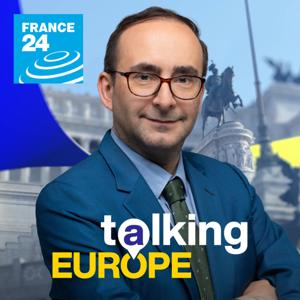

On January 1, Bulgaria officially joined the eurozone, becoming the 21st country to join the European single currency. Sofia's adoption of the euro brings hope of major economic benefits, but it also comes at a moment of deep political polarisation and mass anti-corruption protests, which culminated in the resignation of both the country's government and president.
Our reporters Elitsa Gadeva and Charlotte Prudhomme were on the ground during the first weeks of the transition, as Bulgarians had one month to adapt to the new currency. From February 1, the country's only legal tender is the euro.
In this programme, we also speak to Ekaterina Zaharieva, the EU Commissioner for Startups, Research and Innovation, and a former deputy prime minister of Bulgaria.
"I think this will open a huge opportunity for the whole private sector," Zaharieva says about Bulgaria joining the euro. "And of course, startups are really flexible by their nature. They have employees from different countries. So this will definitely be a big improvement for the private sector."
On the broader strategic significance of the move, Zaharieva says: "As a minister in different governments who really worked hard for Bulgaria to join the eurozone, I really think it's a big moment for Bulgaria and for Europe. Because in this geopolitical instability, the European Union has become a beacon of stability, of predictability. And you see that the euro is getting stronger and stronger as a currency. So I think it's really positive news for Bulgarian businesses and for Bulgarian citizens."
Programme prepared by Oihana Almandoz, Perrine Desplats and Isabelle Romero
 View all episodes
 By FRANCE 24 English

4.5
22 ratings
On January 1, Bulgaria officially joined the eurozone, becoming the 21st country to join the European single currency. Sofia's adoption of the euro brings hope of major economic benefits, but it also comes at a moment of deep political polarisation and mass anti-corruption protests, which culminated in the resignation of both the country's government and president.
Our reporters Elitsa Gadeva and Charlotte Prudhomme were on the ground during the first weeks of the transition, as Bulgarians had one month to adapt to the new currency. From February 1, the country's only legal tender is the euro.
In this programme, we also speak to Ekaterina Zaharieva, the EU Commissioner for Startups, Research and Innovation, and a former deputy prime minister of Bulgaria.
"I think this will open a huge opportunity for the whole private sector," Zaharieva says about Bulgaria joining the euro. "And of course, startups are really flexible by their nature. They have employees from different countries. So this will definitely be a big improvement for the private sector."
On the broader strategic significance of the move, Zaharieva says: "As a minister in different governments who really worked hard for Bulgaria to join the eurozone, I really think it's a big moment for Bulgaria and for Europe. Because in this geopolitical instability, the European Union has become a beacon of stability, of predictability. And you see that the euro is getting stronger and stronger as a currency. So I think it's really positive news for Bulgarian businesses and for Bulgarian citizens."
Programme prepared by Oihana Almandoz, Perrine Desplats and Isabelle Romero
4,129 Listeners

121 Listeners
4 Listeners
11 Listeners

0 Listeners
0 Listeners
2 Listeners
21 Listeners
180 Listeners

4 Listeners

0 Listeners
4 Listeners
23 Listeners
6 Listeners
5 Listeners
39 Listeners
1,749 Listeners
103 Listeners
9,546 Listeners
3 Listeners
646 Listeners
4 Listeners
141 Listeners
4 Listeners
1 Listeners
0 Listeners
0 Listeners

0 Listeners
1,887 Listeners
10 Listeners
140 Listeners