
Sign up to save your podcasts
Or




Based on Podcast App listening data
As shares tumble and talk of regulation increases, we ask whether Facebook, Google and Amazon are facing a crisis.
High-profile data breaches, falling user numbers and presidential questions over tax affairs have upped the pressure on these corporate giants in recent weeks. Bilal Hafeez, from the Japanese investment bank Nomura, tells us why he thinks their tech bubble is bursting.
Another troubled tech firm, Uber, is under pressure once again - Jeremy Wagstaff tells us that this time it is from rivals in Southeast Asia.
Plus, we take to the skies with real-life Iron Man Richard Browning, founder of tech start-up Gravity, who has set a world record in his jet-powered suit.
(Picture: A man holding a smartphone showing Facebook's logo. Credit: Kirill Kudryavtsev, Getty Images.)
Does the world face a food crisis in the next 10 years? Or could the solution to world hunger already be at hand? Laurence Knight explores whether technological solutions like multi-storey indoor farms and self-driving tractors could help provide affordable food for everyone.
Producer: Laurence Knight
(Photo: Greens growing on floating beds. Credit: Mira Oberman/AFP/Getty Images)
Africa has the youngest population of any continent in the world and that figure is expected to double in less than 30 years. The BBC's Tamasin Ford travels across three countries to hear from young people about their hopes and dreams for their working lives. In Ghana, she talks to award winning actor and producer Yvonne Nelson. In Ivory Coast Tamasin hears from Edith Brou, CEO of her own Digital Agency, the Africa Content Group. And in Liberia, young people tell Tamasin about their hopes for the future in a country where youth unemployment is very high amongst the sixty percent of the population who are under 25.
(Photo; Young men on the streets of Monrovia, Liberia. Credit: Tamasin Ford)
As the country prepares for elections, Ed Butler visits Sierra Leone to find out how people are feeling about the economy as it fights back following the devastating Ebola outbreak. Ed speaks to top politicians and also hears from ordinary people struggling to make a living. And he asks what happened to money donated to deal with Ebola victims, amid reports of corruption.
(Picture: Children attending school on November 15, 2017 at the Old Skool Camp.
Business Daily hears remarkable stories from Yemen's civil war. The tens of thousands of African economic migrants risking everything each year to travel into the world's worst humanitarian crisis. And the man who decided to start a coffee export business out of the very heart of the war-zone. Ed Butler talks to Mokhtar Alkhanshali from the Port of Mokha coffee company, humanitarian worker Rabih Sarieddine at the International Organization for Migration's office in the Yemeni port of Aden and journalist Iona Craig who's been reporting on Yemen for many years. The programme contains descriptions of kidnapping and violence.
(picture: Yemeni tribesmen from the Popular Resistance Committees, keep watch at Nihm district, on the eastern edges of the capital Sanaa, on February 2, 2018. (Credit ABDULLAH AL-QADRY/AFP/Getty Images)
Are you saving for a rainy day? Eight of the world's major economies will between them have a joint shortfall of some $400 trillion in the next thirty years in terms of pension provision, according to the World Economic Forum. The assumption here is that most of us need about 70% of our working income to get by in our retirement years. But the shortfall they've come up with is a staggering 5 times the size of global stock markets. Luckily, Dan Ariely, a behavioural economist based at Duke University in the US, has been studying some of the simple human tricks that perhaps might nudge us towards a more prudent attitude.
(Picture: Getty images)
US President Donald Trump has pledged a major upgrade to the country's nuclear deterrent, but are a handful of private defence contractors driving the multi-billion dollar modernisation programme?
Jonathan King, a veteran campaigner against nuclear proliferation and professor at MIT, argues guaranteed profit margins and secrecy make the industry very attractive to such companies.
But Hawk Carlisle, chief executive of the US National Defense Industrial Association, tells Ed Butler the private sector is the only area capable of building such weapons and that there is adequate competition and government scrutiny.
Plus, how complicated is it to make a bomb these days? Robert Kelley, a former weapons inspector in Iraq, says technology is advancing so fast that it's getting easier and easier.
Producer: Laurence Knight
(Picture: Ballistic missiles being launched in North Korea. Credit: AFP photo/KCNA via KNS, Getty Images)
We predict and discuss the biggest business and economic trends of the coming year. Have we failed at handling globalisation, and how can we deal with it in the coming year? The Nobel prize winner Joseph Stiglitz tells us how the global economy can thrive without the failings of globalisation which we have seen so far - and advises us on how to handle the increasing tendency towards interdependence between countries.
And the BBC's Rahul Tandon hears the woes of street market sellers in India. Hawkers sell their products at a much cheaper price than many other retailers - but at what cost to the country and society? We look at the role of the open market seller in an increasingly regulated economy.
Plus, we take a look at what's in store for global stock exchanges and industries with experts Stephanie Hare, an independent political risk analyst, and Gabriel Sterne from Oxford Economics.
(Image: Reflection of Jubilee Bridge and Central Business District of Singapore during dusk hour in a glass ball. Credit: Getty Images)
There's been another round of revelations from the Paradise Papers - the leaked documents from a big offshore law firm. The leaks put Apple's tax affairs under scrutiny. The company shopped around for a tax haven after a crackdown on its controversial tax practices in Ireland. The BBC's Andrew Walker explains the background and Manuela Saragosa asks tax specialist Rita de la Feria, professor of tax law at the University of Leeds, whether it is possible to create a level playing field for tax globally. Also in the programme: Daniel Gallas reports from Brazil two years after the country's worst ever environmental accident. On November 5th 2015, a dam operated by the iron ore company Samarco - a joint venture between commodity giants Vale and BHP Biliton - burst in the town of Mariana. Two years on, has the region's economy recovered?
A huge new leak of financial documents has revealed how the powerful and ultra-wealthy, including the British Queen's private estate, secretly invest vast amounts of cash in offshore tax havens. Donald Trump's commerce secretary is shown to have a stake in a firm dealing with Russians sanctioned by the US. The leak, dubbed the Paradise Papers, contains 13.4m documents, mostly from one leading firm in offshore finance. Manuela Saragosa hears more from the BBC's Dominic O'Connell. Also in the programme we hear from the Premier of Bermuda David Burt and the Secretary General of the OECD OECD - and its secretary general Angel Gurria.
From the publisher's feed
The daily drama of money and work from the BBC.
Ranked by our users in the last 21 days

7,611 Listeners

4,117 Listeners
1,044 Listeners
284 Listeners
424 Listeners

5,481 Listeners
1,794 Listeners

2,098 Listeners
363 Listeners

423 Listeners

52 Listeners

228 Listeners

240 Listeners

345 Listeners
234 Listeners
646 Listeners
227 Listeners

320 Listeners

3,218 Listeners
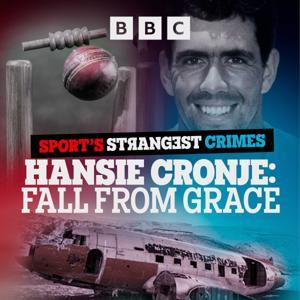
73 Listeners

752 Listeners

528 Listeners
627 Listeners
378 Listeners
38 Listeners

241 Listeners

57 Listeners
139 Listeners
74 Listeners

71 Listeners