Byte Sized Biographies…

Byte Sized Biographies…

Download on the App Store

Byte Sized Biographies… episodes

  • King Ludwig II of Bavaria, (Volume 1, Podcast 8)
    King Ludwig II of Bavaria, a Beautiful Madness Wonderful Atlantic Monthly Photo Essay on Ludwig II Ludwig II was born on August 25, 1845.  His father, Maximillian, was then the Crown Prince of Bavaria.  His grandfather, Ludwig I, was the King of Bavaria and a member of the House of Wittlesbach, the ruling dynasty that had governed the Kingdom of Bavaria, for over six hundred years. Upon Maximilian’s death, Ludwig became Ludwig II at the … Continue reading King Ludwig II of Bavaria, (Volume 1, Podcast 8) →
    55 min
  • Billie Holiday, Lady Day
    Billie Holiday, Lady Day Billie Holiday, 1917 Sometimes the most remarkable artistic genius can emerge from the humblest of beginnings.  Sarah Julia Harris was born on August 16, 1895 in Baltimore, MD.  Disowned by her father, she was raised by her mother, who ultimately married another man and had two more children.  Like her siblings, Sarah, nicknamed “Sadie”, began working at cleaning jobs at an early age, a lack of education rendered her virtually illiterate.  She was employed on the railroad trains that operated between Baltimore and Philadelphia.  When she became pregnant at age nineteen, she was kicked out of her family’s home and fired from her job.  With few options, she agreed to be admitted into the Philadelphia General Hospital, performing menial tasks in exchange for shelter and care.  Her child was born on April 7, 1915.  This child had several versions of her first name listed on official documents, various approximations of the name Eleanora.  Although she started life as Eleanora Harris, eventually the world would come to know this illegitimate daughter of an unemployed domestic by a different name: Billie Holiday. Billie Holiday, performing in the forties. Fortunately, addiction had not yet seriously diminished her talent.  Performing mostly in New York, her trademark gardenia in her hair, 1943 and 1944 would be the high point of her live career. Billie Holiday, backstage with her dog "Mister." Billie Holiday, federal prison mug shot This behavior would come to public attention when Billie Holiday and Joe Guy were arrested by federal narcotics agents in New York City for possession of heroin.  Drugs and hypodermic needles were found in a search of a room that both individuals had occupied in Philadelphia.  Despite a flimsy case, Billie disdained legal advice and plead guilty and was sentenced to a year and a day in a federal reformatory in Alderson, West Virginia. Billie Holiday, later years. Despite her legal problems and her lack of any recently recorded hits, Billie remained immensely popular.  Her persona, which had been that of someone “unlucky in love,” was now changing towards someone unlucky in life.  It didn’t take long for her to lapse back into addiction, which became the cause of cancelled recording sessions and missed concert dates.  If she did show up she would seem disinterested, would play a short set and disappear.  Clearly, her lifestyle was beginning to affect her performance.
    37 min
  • Billie Holiday (Volume 1, Podcast 7)
    Billie Holiday, Lady Day Sometimes the most remarkable artistic genius can emerge from the humblest of beginnings.  Sarah Julia Harris was born on August 16, 1895 in Baltimore, MD.  Disowned by her father, she was raised by her mother, who ultimately married another man and had two more children.  Like her siblings, Sarah, nicknamed “Sadie”, began working at cleaning jobs at an early age, a lack of education rendered her virtually illiterate.  She was employed … Continue reading Billie Holiday (Volume 1, Podcast 7) →
    37 min
  • Edgar Allan Poe, Utterly Mysterious
    Edgar Allan Poe: Life Sucks and Then You Die Edgar Allan Poe, only days after his suicide attempt, 1848 Poe was born Edgar Poe on January 19, 1809, in the city of Boston.  His parents, David and Eliza were actors that travelled a circuit along the Eastern seaboard.  His mother performed a week before his birth and would return again to the Boston stage a month later, which is indicative of the economic stability of Poe’s family.  David Poe had abandoned a career in law to try and achieve his wife’s level of dramatic success.  That he was unable to do so became a source of frustration and anger that eventually ended the marriage.  He disappeared and was dead by 1811.  Eliza took her three young children to Richmond where she would contract tuberculosis and also die in 1811, on December 8. Virginia Clemm Poe, the only likeness of Poe's wife that exists. On May 16, 1836 Poe married Virginia Clemm.  The groom was twenty-seven, the bride, fourteen.  The specifics regarding when and if Poe enjoyed a physical relationship with his young cousin is a matter of dispute.  It is widely believed that initially Poe and his wife’s relationship was platonic in nature but as she grew older their relationship became more typically romantic.  That they were emotionally close and that Virginia Clemm practically idolized her husband has never been disputed. Maria Clemm Poe and Maria Clemm remained in the Bronx, and 1847 started off reasonably well when he prevailed in a libel suit that provided a few hundred dollars.  But Poe would write very little in 1847, depressed, distracted and his own health now deteriorating. Rufus Griswold As if Poe had not suffered enough in life, upon his death, his literary estate and even personal reputation came under immediate attack.  Rufus Griswold was a prominent anthologist who published the very popular “The Poets and Poetry of America.”, throughout the 1840’s.  Wanting to be included in this anthology Poe naturally attempted to cultivate Griswold and Griswold, wanting Poe’s critical approval included occasional poems and corresponded with Poe.  At best this was merely a business relationship, at times Poe lashed out at Griswold, both in criticism and lectures, that Griswold was the purveyor of the type of mediocre literature that Poe routinely would savage in his critical columns.  Poe must have felt that their occasional disputes were behind them late in life because in his final years he is alleged to have appointed Griswold the executor of his literary estate.  Unfortunately, Poe could not have been more mistaken in underestimating the deep animosity that Griswold still harbored for him.  Within two days of Poe’s death, Griswold, using the pseudonym “Ludwig” published a lengthy obituary in the prominent New York Daily Tribune which disparaged Poe’s professional criticism, mentioned his wife’s death amidst extreme poverty and included such personal descriptions as “he walked the streets, in madness or melancholy, with lips moving in indistinct curses.”  Because of his reputation as a Baptist minister and respected anthologist, Griswold’s slanderous profile gained traction with the press and public and severely damaged Poe’s reputation. Sarah Helen Whitman With his professional life at a dead end, Poe turned to another alternative to resuscitate his economic fortunes: marriage.  With celebrity, Poe became the object of female attention that continued throughout the decade of the 1840’s.  Poe became quite friendly with some of these women and now, he decided that one of them, Sarah Helen Whitman, six years older than Poe at forty-five, was worthy of more serious pursuit.  A widow, Helen Whitman lived in Providence, Rhode Island and travelled within literary and intellectual circles.  In 1848, Poe and Helen Whitman exchanged correspondence and Poe showed up in Providence without notice on September 21 and within days hastily proposed marriage.  Poe had literally begged her to rescue him and reinvigorate his genius but Helen said that she would have to think it over.  Ultimately, aware of the rumors of drunkenness and instability, Helen turned him down. Elmira Royster Shelton While in Richmond, Poe attempted to rekindle a very old relationship.  This time it was with Sarah Elmira Royster Shelton, his former next-door neighbor and fifteen-year old sweetheart.  Elmira’s husband, Alexander, a wealthy businessman had died in 1844, leaving behind a large estate. Although the will stipulated that Elmira would lose three quarters of the bequest upon remarriage and her family was hostile, Poe quickly proposed and insisted upon an immediate response.  It is unclear whether Elmira Royster Shelton ever agreed to marry Edgar Allan Poe but on September 27, Poe left by steamer for New York.  There he intended to settle his affairs, fetch his aunt and return to Richmond, where he at least believed his marriage would eventually take place. Edgar Allan Poe Tomb, Westminster Cemetery, Baltimore, MD, (Philip D. Gibbons photo) Following the distraction of the Civil War, a group of Baltimore public educators began a campaign within the school system to appropriately memorialize Edgar Allan Poe.  It took ten years but the pennies and nickels collected by students as well as a sizable donation from a Philadelphia newspaper owner eventually provided the funds for a suitable monument.  The impressive memorial was dedicated with great fanfare on November 17, 1875.  Poe and his Aunt Maria Clemm were exhumed and reburied within an impressive marble structure.

    53 min
  • Edgar Allan Poe (Volume 1, Podcast 6)
    Edgar Allan Poe: Life Sucks and Then You Die Poe was born Edgar Poe on January 19, 1809, in the city of Boston.  His parents, David and Eliza were actors that travelled a circuit along the Eastern seaboard.  His mother performed a week before his birth and would return again to the Boston stage a month later, which is indicative of the economic stability of Poe’s family.  David Poe had abandoned a career in law … Continue reading Edgar Allan Poe (Volume 1, Podcast 6) →
    52 min
  • Ernesto "Che" Guevara, Myth of the "Guerrillero Heroico"
    Ernesto "Che" Guevara, Revolutionary Poster Boy Che Guevara, El Guerrillero Heroico, by Korda Ernesto Guevara de la Serna was born in Rosario, Argentina on May 14, 1928.   His upper class parents forged his birth certificate to read June 14 to conceal the fact that Ernesto was conceived out of wedlock.  Ernesto Guevara Lynch and Celia de la Serna y Llosa both came from socially well-connected families.  Despite Ernesto Sr.’s attempts at several money-making ventures, the family lived on Celia’s inheritance. Original Photo, before Massetti and Palm tree were cropped out. On March 4, 1960 Che Guevara was meeting with industrial management associates in downtown Havana, when a massive explosion ripped through the wharf area of the city.  A French freighter, La Coubre, had been unloading armaments directly onto the dock when a momentous explosion occurred.  Thirty minutes later, with a massive emergency aid effort underway, another explosion went off, killing even more people.  Approximately seventy-five people died and two hundred more were injured in an incident that Castro immediately charged was planned and carried out by the CIA.  He ordered a state funeral with a procession through Havana to a speaker’s platform set up in front of the city’s prominent Colon cemetery.  Castro used the occasion for a typically lengthy and aggressive speech.  Alberto Korda, a former fashion photographer who had joined Castro’s entourage and recorded such events began to photograph various government officials standing in Castro’s vicinity.  He suddenly noticed Che Guevara standing off to the side, gazing introspectively into the crowd.  Korda had only a few seconds to take two photographs before Che Guevara sat down behind Castro.  Although Korda immediately knew he had taken two excellent photos, neither would be published in any newspaper accounts of the memorial.  He cropped the palm tree and profile of another individual out of the picture, tilted Che’s head slightly and tacked the photo to the wall of his studio. Che on his honeymoon with Hilda Gadea Seems like a rather tense occasion. Che and Aleida March on their honeymoon For Che Guevara personally, the grim reality of his marriage also reared its head early in the first days of the Cuban revolutionary government.  His wife, Hilda, and daughter arrived from Peru but Che Guevara immediately told her of the “other woman” and asked for a divorce.  Hilda later wrote an unverifiably sentimental account of their discussion but the divorce was granted and Che Guevara quickly married Aleida March. Che in Red Square The Bay of Pigs combined with a disastrous Kennedy-Khrushchev summit meeting at Vienna to prompt the most dangerous episode of the Cold War.  Thinking that his American counterpart was a weak intellectual who could be intimidated, Khrushchev began negotiations with Castro regarding the installation of nuclear missiles in Cuba.  The Soviet Union had been forced to accept similar American missiles in Turkey and the Soviet leader saw an opportunity to humiliate the US and also guarantee Cuba’s security.  Castro, with Che Guevara’s enthusiastic urging, agreed, in principle.  As an indication of Che Guevara’s importance in the Cuban government hierarchy, it was Che who was sent to the USSR in August of 1962 to finalize the deal. Tamara Bunke, aka "Tania" Much of the success of the Cuban revolution was due to a well organized courier underground that allowed the Cuban rebels to communicate their needs at all times.  Tamara Bunke aka “Tania” was attempting to serve this purpose and  connected with Che’s unit in early January.  She had brought with her two agents from Cuban intelligence, Ciro Bustos and Simon Debray.  Unfortunately, a Bolivian communist informer tipped off the government as to her true identity and she could no longer return to La Paz where she had been able to inform Havana by coded radio messages as to the progress of and whereabouts of Che’s mission. Patty Hearst aka "Tania", Symbionese Liberation Army Che and Felix Rodriguez in front of La Higuera schoolhouse, minutes before Che's execution. The following morning local senior officials of the Bolivian military as well as Felix Rodriguez arrived in La Higuera by helicopter.  Rodriguez would eventually recount his encounter with the captive Che. “He looked like a beggar, He did not even have a uniform, he did not have any boots, he had some pair of leather tied down to his foot.  He was very filthy and it was a tremendous shock to see the way this man looked at this point in time.” Che Guevara's body on display at Vallegrande, Bolivia hospital As the sergeant entered, Che supposedly said “I know you have come to kill me.  Shoot, coward, you are only going to kill a man.”  It was ten after one PM on October 9, 1967.  Ernesto “Che” Guevara was thirty-nine years old. Leather shoes of Che Guevara worn when he was captured. Blood is from the leg wound suffered in combat. Che, the man was dead.  The Bolivian government would do everything possible to diminish his memory.  After unceremoniously displaying his body to the international press in a hospital in Vallegrande, Bolivia, they cut off and preserved his hands lest anyone claim that Che had not died and then they buried the body in a secret location in Vallegrande.
    54 min
  • Ernesto “Che” Guevara (Volume 1, Podcast 5)
    Ernesto “Che” Guevara, Revolutionary Poster Boy
    Ernesto Guevara de la Serna was born in Rosario, Argentina on May 14, 1928.   His upper class parents forged his birth certificate to read June 14 to conceal the fact that Ernesto was conceived out of wedlock.  Ernesto Guevara Lynch and Celia de la Serna y Llosa both came from socially well-connected families.  Despite Ernesto Sr.’s attempts at several money-making ventures, the family lived on Celia’s inheritance.
    On March 4, 1960 Che Guevara was meeting with industrial management associates in downtown Havana, when a massive explosion ripped through the wharf area of the city.  A French freighter, La Coubre, had been unloading armaments directly onto the dock when a momentous explosion occurred.  Thirty minutes later, with a massive emergency aid effort underway, another explosion went off, killing even more people.  Approximately seventy-five people died and two hundred more were injured in an incident that Castro immediately charged was planned and carried out by the CIA.  He ordered a state funeral with a procession through Havana to a speaker’s platform set up in front of the city’s prominent Colon cemetery.  Castro used the occasion for a typically lengthy and aggressive speech.  Alberto Korda, a former fashion photographer who had joined Castro’s entourage and recorded such events began to photograph various government officials standing in Castro’s vicinity.  He suddenly noticed Che Guevara standing off to the side, gazing introspectively into the crowd.  Korda had only a few seconds to take two photographs before Che Guevara sat down behind Castro.  Although Korda immediately knew he had taken two excellent photos, neither would be published in any newspaper accounts of the memorial.  He cropped the palm tree and profile of another individual out of the picture, tilted Che’s head slightly and tacked the photo to the wall of his studio.
    Seems like a rather tense occasion.
    For Che Guevara personally, the grim reality of his marriage also reared its head early in the first days of the Cuban revolutionary government.  His wife, Hilda, and daughter arrived from Peru but Che Guevara immediately told her of the “other woman” and asked for a divorce.  Hilda later wrote an unverifiably sentimental account of their discussion but the divorce was granted and Che Guevara quickly married Aleida March.
    The Bay of Pigs combined with a disastrous Kennedy-Khrushchev summit meeting at Vienna to prompt the most dangerous episode of the Cold War.  Thinking that his American counterpart was a weak intellectual who could be intimidated, Khrushchev began negotiations with Castro regarding the installation of nuclear missiles in Cuba.  The Soviet Union had been forced to accept similar American missiles in Turkey and the Soviet leader saw an opportunity to humiliate the US and also guarantee Cuba’s security.  Castro, with Che Guevara’s enthusiastic urging, agreed, in principle.  As an indication of Che Guevara’s importance in the Cuban government hierarchy, it was Che who was sent to the USSR in August of 1962 to finalize the deal.
    Much of the success of the Cuban revolution was due to a well organized courier underground that allowed the Cuban rebels to communicate their needs at all times.  Tamara Bunke aka “Tania” was attempting to serve this purpose and  connected with Che’s unit in early January.  She had brought with her two agents from Cuban intelligence, Ciro Bustos and Simon Debray.  Unfortunately, a Bolivian communist informer tipped off the government as to her true identity and she could no longer return to La Paz where she had been able to inform Havana by coded radio messages as to the progress of and whereabouts of Che’s mission.
    The following morning local senior officials of the Bolivian military as well as Felix Rodriguez arrived in La Higuera by helicopter.  Rodriguez would eventually recount his encounter with the cap...
    54 min
  • Ernesto “Che” Guevara (Volume 1, Podcast 5)
    Ernesto “Che” Guevara, Revolutionary Poster Boy Ernesto Guevara de la Serna was born in Rosario, Argentina on May 14, 1928.   His upper class parents forged his birth certificate to read June 14 to conceal the fact that Ernesto was conceived out of wedlock.  Ernesto Guevara Lynch and Celia de la Serna y Llosa both came from socially well-connected families.  Despite Ernesto Sr.’s attempts at several money-making ventures, the family lived on Celia’s inheritance. On March … Continue reading Ernesto “Che” Guevara (Volume 1, Podcast 5) →
    54 min
  • Friedrich Nietzsche, Both Man and Dynamite
    Friedrich Nietzsche: I am not a Man! I am Dynamite! Friedrich Nietzsche Friedrich Nietzsche was born in Rocken, Germany on October 15, 1844.  In July of 1849, Nietzsche’s father, a thirty-five year old minister, died of an indeterminate brain condition, forcing the family to move to the nearby town of Naumburg.  Both of these locations are in the Saxony region, former German Democratic Republic, approximately thirty miles southwest of the city of Leipzig. Paul Ree, Lou Salome and Nietzsche Ree and Salome quickly began to discuss establishing their own intellectual cadre with the participants literally living together in a bohemian utopia, this in an era where a male and female living under the same roof for any reason would be considered scandalous.  Into this intrigue, Friedrich Nietzsche finally arrived and a meeting with the   couple ensued at St. Peter’s Basilica.  His alleged greeting to Lou Salome while Ree was preoccupied with recording his impressions of the cathedral was “From what stars have we fallen here to meet?” The (in)famous photo of Salome, Ree and Nietzsche In her self serving memoir written many years later, Lou Salome would claim that in Lucerne, Nietzsche would make his second marriage proposal, the type of awkwardly unrealistic action that probably guaranteed Nietzsche lifelong bachelorhood.  Realistically, since Lou Salome’s only income came from her inheritance, a small amount meant only until she married, she wasn’t going to marry anybody, at least not then.  From this afternoon also emerged a famous photograph of Lou Salome with a whip of lilacs driving the two philosophers who are tethered to a make believe cart.  From there, this strange group scattered, Nietzsche to his home in Naumburg, Ree to his family home near Berlin and both Salome’s to Zurich Nietzsche, with Elizabeth, one year before his death. Elizabeth didn’t have the office space in Weimar to accommodate her brother so she quickly persuaded a very wealthy patron and former acquaintance of Nietzsche, Meta Von Salis, to buy a three-story villa as a suitable setting for her brother’s last years.  Once the house was purchased, Elizabeth decided it needed some appropriately luxurious improvements and without telling the new owner, went ahead with the new construction.  Von Salis was stuck with the bill but at least got the satisfaction of accusing Elizabeth of exploiting the archive for her own benefit.  By then, Friedrich Nietzsche was installed as the centerpiece of his sister’s shrine to his work, trotted out occasionally for especially wealthy potential patrons and responding to any visitors with a blank stare.  Mercifully, he succumbed to a heart attack on August 25, 1900. Hitler, visiting Elizabeth at the Nietzsche Archive in Weimar. Elizabeth Nietzsche would enthusiastically support the ascendance of Adolf Hitler, inviting him in 1934 to the Nietzsche Archive for a photo op and proclaiming that her brother would have been just as supportive.  Hitler had probably read little of Nietzsche’s work but he certainly grasped what the purported endorsement of an internationally famous intellectual would mean to the image of his inner circle, generally perceived as a motley crew of unsophisticated thugs.
    50 min
  • Friedrich Nietzsche (Volume 1, Podcast 4)
    Friedrich Nietzsche: I am not a Man! I am Dynamite!
    Friedrich Nietzsche was born in Rocken, Germany on October 15, 1844.  In July of 1849, Nietzsche’s father, a thirty-five year old minister, died of an indeterminate brain condition, forcing the family to move to the nearby town of Naumburg.  Both of these locations are in the Saxony region, former German Democratic Republic, approximately thirty miles southwest of the city of Leipzig.
    Ree and Salome quickly began to discuss establishing their own intellectual cadre with the participants literally living together in a bohemian utopia, this in an era where a male and female living under the same roof for any reason would be considered scandalous.  Into this intrigue, Friedrich Nietzsche finally arrived and a meeting with the   couple ensued at St. Peter’s Basilica.  His alleged greeting to Lou Salome while Ree was preoccupied with recording his impressions of the cathedral was “From what stars have we fallen here to meet?”
    In her self serving memoir written many years later, Lou Salome would claim that in Lucerne, Nietzsche would make his second marriage proposal, the type of awkwardly unrealistic action that probably guaranteed Nietzsche lifelong bachelorhood.  Realistically, since Lou Salome’s only income came from her inheritance, a small amount meant only until she married, she wasn’t going to marry anybody, at least not then.  From this afternoon also emerged a famous photograph of Lou Salome with a whip of lilacs driving the two philosophers who are tethered to a make believe cart.  From there, this strange group scattered, Nietzsche to his home in Naumburg, Ree to his family home near Berlin and both Salome’s to Zurich
    Elizabeth didn’t have the office space in Weimar to accommodate her brother so she quickly persuaded a very wealthy patron and former acquaintance of Nietzsche, Meta Von Salis, to buy a three-story villa as a suitable setting for her brother’s last years.  Once the house was purchased, Elizabeth decided it needed some appropriately luxurious improvements and without telling the new owner, went ahead with the new construction.  Von Salis was stuck with the bill but at least got the satisfaction of accusing Elizabeth of exploiting the archive for her own benefit.  By then, Friedrich Nietzsche was installed as the centerpiece of his sister’s shrine to his work, trotted out occasionally for especially wealthy potential patrons and responding to any visitors with a blank stare.  Mercifully, he succumbed to a heart attack on August 25, 1900.
    Elizabeth Nietzsche would enthusiastically support the ascendance of Adolf Hitler, inviting him in 1934 to the Nietzsche Archive for a photo op and proclaiming that her brother would have been just as supportive.  Hitler had probably read little of Nietzsche’s work but he certainly grasped what the purported endorsement of an internationally famous intellectual would mean to the image of his inner circle, generally perceived as a motley crew of unsophisticated thugs.
    50 min

About Byte Sized Biographies…

From the publisher's feed

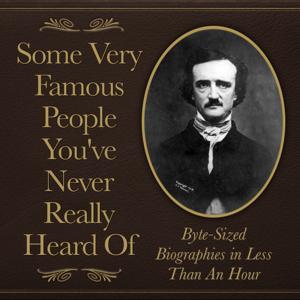
Some Very Famous People You've Never Really Heard Of, Byte Sized Biographies of the famous, the infamous and the quirky in less than hour. Think of that doorstop sized bio or history related book that…

More shows like Byte Sized Biographies…

HistoryExtra podcast by Immediate

HistoryExtra podcast

3,197 Listeners

1001 Heroes, Legends, Histories & Mysteries Podcast by Jon Hagadorn  Podcast Host

1001 Heroes, Legends, Histories & Mysteries Podcast

1,677 Listeners

Ben Franklin's World by Liz Covart

Ben Franklin's World

1,564 Listeners

Most Notorious! A True Crime History Podcast by Blue Ewe Media

Most Notorious! A True Crime History Podcast

2,772 Listeners

The Bowery Boys: New York City History by Tom Meyers, Greg Young

The Bowery Boys: New York City History

3,793 Listeners

Dan Snow's History Hit by History Hit

Dan Snow's History Hit

4,779 Listeners

History Unplugged Podcast by History Unplugged

History Unplugged Podcast

3,986 Listeners

Ridiculous History by iHeartPodcasts

Ridiculous History

4,526 Listeners

American History Tellers by Audible

American History Tellers

19,147 Listeners

The Wild West Extravaganza by The Wild West Extravaganza

The Wild West Extravaganza

777 Listeners

The Ancients by History Hit

The Ancients

3,372 Listeners

For the Ages: A History Podcast by The New York Historical

For the Ages: A History Podcast

384 Listeners

Short History Of... by NOISER

Short History Of...

2,826 Listeners

History Daily by History Daily

History Daily

2,161 Listeners

American History Hit by History Hit

American History Hit

1,592 Listeners