
Sign up to save your podcasts
Or

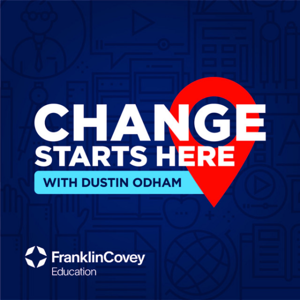


In the latest episode of the FranklinCovey Change Starts Here Podcast, host Dustin Odham welcomes back Dr. Jody Carrington, a world-renowned psychologist. The conversation delves into Dr. Carrington’s new book, “Feeling Seen: Reconnecting in a Disconnected World,” and explores the concept of connection in an increasingly disconnected world. They discuss the power of shame, how to conquer it, and what to do when we lose our way and fall back into old habits. The episode also touches on the loneliness epidemic and the mental health crisis, emphasizing the importance of feeling seen and the need for reconnection.
As the 2023-2024 academic season begins, educators, researchers, and parents are scratching their heads about a troubling trend: a continued slide in academic achievement. While many point to the pandemic as the culprit, a deeper, less-visible issue may be at play. Educational researchers have shown that a student’s executive functioning–their ability to plan, focus, and recall information–plays a critical role in their academic achievement. Yet, this concept remains largely unexplored and unaddressed in our educational system. This prompts a critical question: Are we overlooking a crucial element of student success?
In this episode of Change Starts Here, host Dustin Odham invites Dr. Jennifer Chevalier, Dr. Eve Miller, and Kim Yaris to examine the mystery of executive functioning and its impact on academic success. They delve into practical and research-driven insights, discuss ways to improve the current situation, and bring to light the scale and implications of the problem. Additionally, there is an executive functioning handout that lays out many important points and tips about this topic.
Host Dustin Odham kicks off the latest season of Change Starts Here with some timely thoughts on Chip and Dan Heath’s book, “The Power of Moments.” Odham shares his personal experiences and insights on how big and small moments can shape our lives and destiny. He emphasizes the importance of intentionally being present, creating memorable moments, and harnessing their transformative power. Odham also shares a personal story about a former student, highlighting the lasting impact teachers can have on their students. This episode is an inspiring call to action for viewers to become intentional architects of their lives and make every moment count.
Host Dustin Odham kicks off the latest season of Change Starts Here with some timely thoughts on Chip and Dan Heath’s book, “The Power of Moments.” Odham shares his personal experiences and insights on how big and small moments can shape our lives and destiny. He emphasizes the importance of intentionally being present, creating memorable moments, and harnessing their transformative power. Odham also shares a personal story about a former student, highlighting the lasting impact teachers can have on their students. This episode is an inspiring call to action for viewers to become intentional architects of their lives and make every moment count.
In a world where quick fixes are often sought after, it becomes essential to examine the foundations of our habits and how they affect our lives. Why now? Because amidst the fast-paced modern lifestyle, taking the time to refine and better ourselves can have profound impacts on our overall wellbeing. According to a study published in the European Journal of Social Psychology, it takes on average 66 days to form a habit. But what if we could accelerate this process and make our habits more effective?
What if we could find ways to make our habits stick and truly foster lasting changes? This is the core question we're exploring in this episode of "Change Starts Here."
In this podcast episode, hosted by Dustin Odham, Managing Director at FranklinCovey Education, we delve into the insights from one of the most recommended books by guests of our show, "Atomic Habits." Odham shares his personal journey of using the principles from the book and two key takeaways that made a significant impact on his life.
Here are the key points of conversation from the episode:
The inside-out philosophy: The idea of working on your identity and how it impacts the formation and sustainability of your habits.
The concept of getting 1% better every day: A perspective that suggests focusing on small, consistent improvements can lead to significant changes over time.
The role of systems in achieving goals: A shift from setting lofty goals to focusing on creating effective systems that bring about the desired outcomes.
Our host, Dustin Odham, has a rich background in education and leadership. He's the Managing Director at FranklinCovey Education and the host of the "Change Starts Here" podcast. Known for his engaging and thoughtful conversations, Odham uses his platform to explore the many ways individuals can instigate positive change.
In an era where screens dominate our time, finding your personal identity becomes a challenge. Our generation is shaping itself based on an increasingly virtual world, often losing touch with the inner self. In fact, a recent study suggests that we could end up spending at least ten years of our life in front of a screen. But how does this shape who we become?
This episode of "Change Starts Here" with host Dustin Odham, Managing Director at FranklinCovey Education, tackles this very question. Odham probes into the subject of identity and its significance in our lives. He underscores the idea that your focus shapes who you become, and encourages listeners to introspect on who they want to be, rather than who they currently are.
Throughout the episode, Odham shares:
Dustin Odham, is the Managing Director at FranklinCovey Education. Known for his thought-provoking discussions, he brings in-depth insights to his listeners, guiding them towards personal and professional development.
In an era where students are grappling with uncertainties and challenges presented by the pandemic, the question arises: how do we prepare students for life, not just college? The stakes are high and the need for reimagining education is urgent. Now more than ever, the discussion must shift towards a comprehensive approach that caters not just to academic growth but overall wellbeing.
The core question being answered here is: how can educators equip students with the tools they need to not just survive but thrive in life? What does holistic student development look like?
In this week's episode of Change Starts Here, host Dustin Odham invites Stephanie Malia Krauss, a strategist, author, and speaker who passionately delves into this essential topic. The conversation dives into the three parts of Stephanie's new book, Whole Child, Whole Life: 10 Ways to Help Kids Live, Learn, and Thrive.
Key topics discussed in the episode:
1. A deep dive into understanding the child’s brain, body, age, and stage.
2. An exploration of the ten whole life practices, ranging from meeting basic needs to acting with a hundred-year mindset.
3. A discussion on what it looks like for a child to be safe, supported, learning and growing, living with joy and purpose, rooted and connected, and healthy.
Stephanie Malia Krauss is a seasoned strategist, author, and speaker. She has spent her career working from the schoolhouse to the White House, with an impressive background in education and youth development, higher education, and workforce development.
With the ever-increasing pressure to perform on standardized tests, many educators are looking for ways to help their students learn more effectively. Dr. Janell Blunt, an associate professor of psychology and learning at a Midwestern university, is on a mission to do just that. In this episode, Dr. Blunt discusses her research on the science of learning and memory and shares strategies for improving student performance.
What is retrieval practice and why is it so effective? How can educators shift their approach from focusing solely on getting information into students' heads to helping them retrieve that information when they need it? And how can low-stakes practice help students learn and grow without the fear of failure? Dr. Blunt offers practical tips and insights for educators at all levels.
"As an educator, I believe in paying attention to what works, not just what we think works," says Dr. Blunt. With her focus on the science of learning and memory, she offers valuable insights for educators who want to help their students succeed.
Students and teachers are trying to achieve a “new normal” after the COVID-19 pandemic. And it seems like they’re on track to reaching this goal. According to a July 2022 report from The Collaborative for Student Growth, students in K to 8th grades are showing signs of rebounding in key areas like math and science. However, students in high-poverty areas are behind. This report asks everyone to “sustain a need for urgency” to meet the needs of our students.
How can educators reach the students who need them the most?
Today’s episode of FranklinCovey’s Change Starts Here attempts to answer this question. Host Dustin Odham chats with his long-time colleague, Coaching Director and Coach, Tia McIntosh on the relationship between building a culture of belonging and student achievement. The pair passionately discusses a teacher's impact on young lives and why building relationships is critical for success.
Join the conversation where McIntosh tells us:
1. Why the foundations of teaching matter
2. What brought her to FranklinCovey
3. How to build authentic relationships with kids
“The biggest part of [educating] kids is teaching them how to be people. Our biggest part of being a teacher is showing them how to function in society,” said McIntosh. She is a “lifelong educator” who is intimately aware of our schools' challenges, especially in the inner cities. She knows firsthand the value of teaching children facing tough circumstances and the key to finding success is creating authentic relationships. To do so, she offers educators and stakeholders strategies to build real relationships with their students.
Tia McIntosh earned her B. A. in English at the University of Delaware and later earned her Master of Public Administration from Rutgers University. She fell in love with teaching in 2011 while working at the Camden City School District. During her tenure there, McIntosh worked at the elementary, middle, and high school levels until she became a school administrator. McIntosh is a champion for students and educators who understand the value of showing up as your full self.
From the publisher's feed
Change Starts Here, presented by FranklinCovey Education, is the podcast for K–12 school and district leaders who are shaping—or ready to lead—meaningful change in their schools and communities.…

43,352 Listeners

15,670 Listeners

1,457 Listeners

111,831 Listeners

13,982 Listeners
2,421 Listeners

35,881 Listeners
247 Listeners
5,775 Listeners

29,124 Listeners

10,671 Listeners

17,644 Listeners

18,895 Listeners