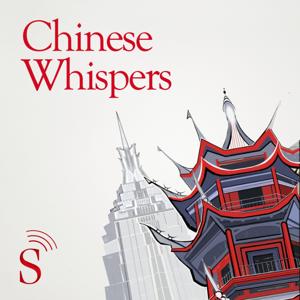
Chinese Whispers

Chinese Whispers

Download on the App Store

Chinese Whispers episodes

  • Life on the margins: how China's rural deprivation curbs its success
    Too often our stories about China are dictated by the urban experience, probably because journalists inside and outside of China are often based in the big cities; Beijing specifically. Those who live in the cities also tend to be more educated, more privileged, and so able to dominate the global attention more. 

    That’s why I’m particularly keen to hear about the lives of those who still live in the countryside, or at least are still considered ‘rural residents’ by the Chinese government. They make up a sizeable proportion of the population, and you’ll hear that in my first question to my guest today, we discuss just how big this group is.

    How do the poorest in China live today, considering the government has announced that there is no more extreme poverty? Just how wide are their gaps in living standards, education, health, compared to their compatriots who live in the cities? 

    Professor Scott Rozelle joins me on this episode. He is the co-director of the Stanford Center on China’s Economy and Institutions, a developmental economist who has been conducting research in China for over three decades. He is also the co-author of Invisible China: How the Urban-Rural Divide Threatens China’s Rise.

    Further listening from the archive:
    Second class citizens: the lives of China’s internal migrants: https://www.spectator.co.uk/podcast/second-class-citizens-the-lives-of-chinas-internal-migrants/
    Is China turning away from the world?: https://www.spectator.co.uk/podcast/is-china-turning-away-from-the-world/

    Produced by Cindy Yu and Joe Bedell-Brill.

    Become a Spectator subscriber today to access this podcast without adverts. Go to spectator.co.uk/adfree to find out more.


    For more Spectator podcasts, go to spectator.co.uk/podcasts.


    Contact us: [email protected]

    Hosted on Acast. See acast.com/privacy for more information.
    42 min
  • What the Messi row reveals about Chinese football
    The Argentinian football star Lionel Messi has been trending on Weibo – and unfortunately, not for a good reason. It all started when Messi sat out a match in Hong Kong earlier this month. His reason – that he was injured – wasn’t good enough for some fans, and keyboard nationalists quickly took offence when Messi played in Japan, a few days later. The furore has dominated Chinese social media over the last few weeks, and even led to the cancellation of some upcoming Chinese matches with the Argentinian national team, as authorities demanded an apology from Messi.

    What a mess. But beyond its seeming triviality, this episode tells us something about the nature of Chinese online nationalism, I think, and it might also shed light on how football works within China. After all, why is it that China, which is so good at so many things, has still failed to turn out a competitive national team? That is the multi-billion yuan question that puzzles football fans within and outside of China.

    Joining me on the episode this week is Cameron Wilson, an expert on Chinese football and founder of the Wild East Football blog, who has lived in China for almost two decades.

    Produced by Cindy Yu and Max Mitchell.

    Become a Spectator subscriber today to access this podcast without adverts. Go to spectator.co.uk/adfree to find out more.


    For more Spectator podcasts, go to spectator.co.uk/podcasts.


    Contact us: [email protected]

    Hosted on Acast. See acast.com/privacy for more information.

    40 min
  • Why do people join the CCP?
    At last count, the Chinese Communist Party has 98 million members, more people than the population of Germany. Its membership also continues to grow, making it one of the most successful and resilient political parties of the last a hundred years, perhaps with the exception of India’s BJP, which boasts 180 million members.

    And yet the CCP's track record is strewn with bloody crackdowns and systematic persecution. So what would drive someone to join the CCP, and what accounts for its success? Do party members today all support the atrocities committed by their government? I think these are important questions to ask, because without understanding the answers to them, one couldn’t understand China’s modern history or its society today. 

    To delve into the psychology of card carrying communists, I’m joined by two great guests in this week's episode.

    Xinran Xue is a Chinese journalist, who had a popular radio show in China in the 90s, before moving to the UK and becoming an author of numerous books on China. Her latest book is called The Book of Secrets, which is a memoir of sorts, where her protagonist was one of the founding members of the CCP’s intelligence service. I recently reviewed it for The Spectator.

    Professor Kerry Brown is Director of the Lau China Institute at Kings College London and a former diplomat in Beijing where he worked alongside Chinese government officials for many years. His latest book is China Incorporated: The Politics of a World Where China is Number One.

    On the episode, we discuss the party membership's divide between the intellectuals and the peasants; how the Cultural Revolution changed the party from an ideological body to a corporate one; and what a new generation of communists might have in store.

    Become a Spectator subscriber today to access this podcast without adverts. Go to spectator.co.uk/adfree to find out more.


    For more Spectator podcasts, go to spectator.co.uk/podcasts.


    Contact us: [email protected]

    Hosted on Acast. See acast.com/privacy for more information.

    47 min
  • Was China's economic boom 'made in America'?
    Today, the US and China are at loggerheads. There’s renewed talk of a Cold War as Washington finds various ways to cut China out of key supply chains and to block China’s economic development in areas like semiconductors and renewables.

    There’s trade, of course, but the imbalance in that (some $370 billion in 2022) tilts in China’s favour and only serves as another source of ammunition for America’s Sinosceptics. China, on the other hand, is also decoupling in its own way, moving fast to cut its reliance on imported technology and energy.

    At this moment, it seems like US-China tensions are inevitable – but look into the not so ancient history, and you’ll find a totally different picture. In fact, when it comes to Communist China’s early entry into the global economy, American policymakers and businesspeople were vital in the 1970s and 80s. You could even say that a big part of China’s economic success was ‘Made in America’.

    I'm joined on the podcast by Elizabeth Ingleson, Assistant Professor of International History at the LSE, whose upcoming book contains some very interesting research on this question. It’s called Made in China: When US-China Interests Converged to Transform Global Trade. We discuss President Nixon's visit to China and how that opened up decades of American economic support to the Chinese miracle – including at the expense of its own workers.

    Become a Spectator subscriber today to access this podcast without adverts. Go to spectator.co.uk/adfree to find out more.


    For more Spectator podcasts, go to spectator.co.uk/podcasts.


    Contact us: [email protected]

    Hosted on Acast. See acast.com/privacy for more information.

    54 min
  • What lies at the root of the India-China rivalry?
    India is the fifth largest economy in the world, and now has a population larger than China’s. It’s no surprise, then, that officials in Washington often see India as a powerful non-western bulwark to growing Chinese power. On this podcast, I look at where China and India’s rivalry comes from. How much have long-lasting skirmishes on the China-Indian border damaged relations? How have demographics, economic competition and recent international conflicts affected the relationship between the two countries? And are the domestic politics of China and India in fact more similar than most westerners like to admit?

    I speak to Avinash Paliwal, an international relations expert at the School of Oriental and African Studies, and the author of India’s Near East: A New History.

    Become a Spectator subscriber today to access this podcast without adverts. Go to spectator.co.uk/adfree to find out more.


    For more Spectator podcasts, go to spectator.co.uk/podcasts.


    Contact us: [email protected]

    Hosted on Acast. See acast.com/privacy for more information.

    46 min
  • Who will be Taiwan's next President?
    Taiwan goes to the polls in just over a month. This is an election that could have wide repercussions, given the island’s status as a potential flashpoint in the coming years.

    The incumbent President, Tsai Ing-wen, is coming to the end of two elected terms, meaning that she cannot run again. Her party’s chosen successor is William Lai – Lai Ching-te – who is the current vice president. For most of this year, he has been facing off opposition from the Kuomintang, the biggest opposition party in Taiwan, and the Taiwan People’s Party, a third party led by the charismatic Ko Wen-je.

    Lai remains in the lead with a month to go, but polls show that the KMT is only a few points behind, meaning that an upset is still possible. Since Taiwan became a democracy, it’s the KMT that has been the party calling for closer relations to China, and Tsai and Lai’s DPP that has been more pro-independence and pro-West. Given Beijing has shut off the hotline with Taipei in protest of the DPP since Tsai was first elected in 2016, if Lai wins in January, relations with Beijing are unlikely to get better. But how can the KMT justify closer relations with China, when it seems like the world is in a different place compared to 2015, the last time the KMT held the presidency?

    Joining the episode is William Yang, a Taipei-based freelance correspondent, who has written for Voice of America, Deutsche Welle, the Guardian and the Times.

    Become a Spectator subscriber today to access this podcast without adverts. Go to spectator.co.uk/adfree to find out more.


    For more Spectator podcasts, go to spectator.co.uk/podcasts.


    Contact us: [email protected]

    Hosted on Acast. See acast.com/privacy for more information.

    43 min
  • Dialect and identity: is Mandarin bad for China?
    Across the span of China, a country as big as Europe, there are countless regional dialects and accents – perhaps even languages. Often, they're mutually unintelligible.

    The Chinese call these ‘fangyan’, and each Chinese person will likely be able to speak at least one fangyan, while also understanding Standard Mandarin, the official language of the People's Republic. It means that the Chinese are more multilingual than you might think.

    But it also means that the question of language is inherently a political one. Standard Mandarin has a relatively short history, created by the country’s founding fathers to unify the spoken word in a huge country. But with the ubiquity of Standard Mandarin now, is fangyan at risk of dying out?

    Joining the episode is Gina Tam, a historian and author of Dialect and Nationalism in China.

    Become a Spectator subscriber today to access this podcast without adverts. Go to spectator.co.uk/adfree to find out more.


    For more Spectator podcasts, go to spectator.co.uk/podcasts.


    Contact us: [email protected]

    Hosted on Acast. See acast.com/privacy for more information.

    44 min
  • Battling the official narrative – China's 'underground historians'
    Controlling history is key to the Chinese Communist Party’s control of the country. Whether it’s playing up the ‘century of humiliation’, or whitewashing past mistakes like the Great Leap Forward or the Tiananmen Protests, the Party expends huge effort and resources on controlling the narrative.

    That’s why it’s so important and interesting to look at those Chinese people who are documenting the bits of history that the Party doesn’t want you to know about. They interview survivors from Communist labour camps, or keep their own memoirs of the Cultural Revolution, and try to keep the memory of past horrors alive through film, magazines and paintings.

    A new book called Sparks documents their work. Its author is Ian Johnson, a Pulitzer-Prize winning writer and long time China journalist. Ian calls these people the ‘underground historians’. He joins this episode of Chinese Whispers.

    Visit https://minjian-danganguan.org/ to see some of their work documented, in an upcoming website founded by Ian and others.

    Produced by Cindy Yu and Patrick Gibbons.

    Become a Spectator subscriber today to access this podcast without adverts. Go to spectator.co.uk/adfree to find out more.


    For more Spectator podcasts, go to spectator.co.uk/podcasts.


    Contact us: [email protected]

    Hosted on Acast. See acast.com/privacy for more information.

    36 min
  • Rethinking Chinese food with Fuchsia Dunlop
    All cultures care about their cuisine, but the Chinese must have one of the most food-obsessed cultures in the world. It may be because we have the best food...

    Those listeners of Chinese Whispers who’ve been to China will know exactly what I’m talking about. For those of you who haven’t, you may have come across the classic Chinese takeaway with dishes like sweet and sour pork, or you may like Cantonese dim sum, and some of you may be big fans of Sichuanese cooking.

    But China has so much more to offer than what has made across into the West’s Chinese restaurants. Thankfully, that’s changing and quite fast.

    Part of the education campaign to bring more of the diversity and richness of Chinese cuisine to the West is the work of people like Fuchsia Dunlop. She trained to cook in Chengdu and is one of the most engaging and thoughtful writers on Chinese cuisine in the English language.

    I’m delighted to be joined by her on the podcast today, to mark the publication of her new book, Invitation to a Banquet, which is all about the history, meaning and diversity of Chinese cuisine.

    Become a Spectator subscriber today to access this podcast without adverts. Go to spectator.co.uk/adfree to find out more.


    For more Spectator podcasts, go to spectator.co.uk/podcasts.


    Contact us: [email protected]

    Hosted on Acast. See acast.com/privacy for more information.

    51 min
  • 'The mask has slipped' – Tuvia Gering on China, Israel and Hamas
    When China brokered a historic detente between Saudi Arabia and Iran earlier this year, it seemed that a new phase in world history – and certainly in Chinese foreign policy – had opened up. Instead of the US being a policeman of the world, it was the rising power, China, that was stepping into that role. Whereas Chinese foreign policy had previously only really cared about promoting trade and silencing dissidents, it seemed that perhaps, now, Beijing was taking a more leadership role in global diplomacy and security issues.

    And yet the events of the last week and China’s response to them have shown that perhaps the country isn’t ready for that responsibility just yet. In response to the horrors unfolding in Israel and later Gaza, Beijing has given only lukewarm statements, calling for 'relevant parties to remain calm, exercise restraint and immediately end the hostilities to protect civilians'. At no point has it condemned Hamas by name.

    So what does this mean for China’s grander ambitions in the Middle East? With me to discuss is Tuvia Gering. During peacetime, his full time role is as a researcher on China and the Middle East, with the Israeli thinktank the Institute for National Security Studies and he is also a nonresident fellow in the Atlantic Council.

    But in the last week, as with all Israelis, his life has been changed forever. He’s now been called up for active duty.

    What you’re about to hear is an incredibly well informed but raw contribution from an expert whose research interests have come crashing into his real life.

    Become a Spectator subscriber today to access this podcast without adverts. Go to spectator.co.uk/adfree to find out more.


    For more Spectator podcasts, go to spectator.co.uk/podcasts.


    Contact us: [email protected]

    Hosted on Acast. See acast.com/privacy for more information.

    44 min

About Chinese Whispers

From the publisher's feed

A fortnightly podcast from the Spectator on the latest in Chinese politics, society, and more. From Huawei to Hong Kong, Cindy Yu talks to experts, journalists, and long time China-watchers on what you need to know about China.

More shows like Chinese Whispers

Political Fix by Financial Times

Political Fix

149 Listeners

The Politics Show by The New Statesman

The Politics Show

131 Listeners

Best of the Spectator by The Spectator

Best of the Spectator

187 Listeners

Sinica Podcast by Kaiser Kuo

Sinica Podcast

601 Listeners

Coffee House Shots by The Spectator

Coffee House Shots

171 Listeners

Americano by The Spectator

Americano

257 Listeners

FT Tech Tonic by Financial Times

FT Tech Tonic

99 Listeners

ChinaTalk by Jordan Schneider

ChinaTalk

288 Listeners

The Edition by The Spectator

The Edition

49 Listeners

FT News Briefing by Financial Times

FT News Briefing

640 Listeners

The Rachman Review by Financial Times

The Rachman Review

140 Listeners

Pekingology by Center for Strategic and International Studies

Pekingology

143 Listeners

The Foreign Affairs Interview by Foreign Affairs Magazine

The Foreign Affairs Interview

475 Listeners

Drum Tower from The Economist by The Economist

Drum Tower from The Economist

372 Listeners

Quite right! by The Spectator

Quite right!

51 Listeners