
Sign up to save your podcasts
Or

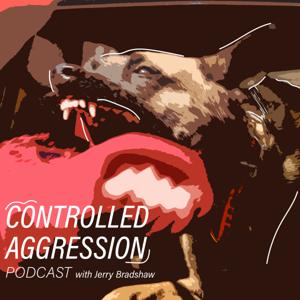


In this episode, Jerry Bradshaw discusses:
Canine independence - identifying the problem and how to solve it.
Why you might need to be doing less obedience training.
Training independence behaviors.
Creating hunting games with progression for puppies of all ages.
Working with your dog near and away from you so they are comfortable in both positions.
Key Takeaways:
Balance the inward and outward focus in your puppy training.
Wind plays a very important role in the hunting games. The windier it is, the narrower the scent cone; the less wind, the wider it is.
Watch your dog's intensity and speed and adjust the game accordingly. You don't want to push too fast, but you don't want them to get bored either.
Progressive complexity should be done in a variable way. Some hunts should be easier and some should be harder.
Do not step in and solve problems for your dog; work on independent work. That stops it from being independent work.
"We're trying to create independence. So it's very important that when we start initiating these predatory sequences, the dog will start to, on his own, realize he and only he is going to be the one that can solve this problem, and you are irrelevant in this situation. And that's exactly what we're trying to teach, that there are going to be times where the dog has to work and you are going to be irrelevant." — Jerry Bradshaw
Get Jerry's book Controlled Aggression on Amazon.com
Contact Jerry:
Website: controlledaggressionpodcast.com
Email: [email protected]
Tarheel Canine Training: www.tarheelcanine.com
YouTube: tarheelcanine
Twitter: @tarheelcanine
Instagram: @tarheelk9
Facebook: TarheelCanineTraining
Protection Sports Website: psak9-as.org
Patreon: patreon.com/controlledaggression
Slideshare: Tarheel Canine
Calendly: https://calendly.com/tarheelcanine
Tarheel Canine Seminars: https://streetreadyk9.com/
Tarheel Canine Student Portal: https://tcstudentportal.com/
Sponsors:
ALM K9 Equipment: almk9equipment.com
PSA & American Schutzhund: psak9-as.org
Tarheel Canine: tarheelcanine.com
The Drive Company: https://thedriveco.com/
The Drive Company Instagram: https://www.instagram.com/thedrive.co
Find out more about Hold The Line Conference 2026 at https://htlk9.com/
Train hard, train smart, be safe.
Show notes by Podcastologist Chelsea Taylor-Sturkie
Audio production by Turnkey Podcast Productions. You're the expert. Your podcast will prove it.
In this episode, Jerry Bradshaw and Cameron Ford discuss:
The creation of PSA and evolution of dog sport.
How the rigidity in traditional dog sports has led to innovation and creativity.
Being open to adaptation not fighting against it.
Increasing complexity in training detection.
The responsibility of having an online platform for your dog training.
Training based on experience and on research.
Key Takeaways:
PSA exploded in popularity the last decade due to the prevalence of younger trainers and social media.
A lot of traditional dog sport is built around breeding programs and registering your dogs. PSA allows for dogs of any breed and age as long as they can handle the training.
If you're interested in your dogs learning detection, teach your puppies to track and hunt. It is key for police work.
Training detection dogs is about more than odor, no matter what changes have occurred over the years.
Adjusting to what the dog is doing during training when they aren't following your progressions is where the fun and intrigue comes in.
Training is not a race. Do it right from the beginning and it will create a stronger, better dog than if you try and do it all in just a few weeks.
"Unfortunately, a lot of dog trainers get married to doing something because it's the way they've always done and they feel comfortable with it. But I think you have to be smart enough to jettison what's not working or is less efficient." — Jerry Bradshaw
Contact Cameron:
Website: https://www.fordk9.com/
Website: https://stratosk9.com/
K9s Talking Scents: https://www.fordk9.com/podcasts/
YouTube: https://www.youtube.com/channel/UCbLa_PL0uHeOK5WsSgjR-Mw
Facebook: https://www.facebook.com/fordk9/
Get Jerry's book Controlled Aggression on Amazon.com
Contact Jerry:
Website: controlledaggressionpodcast.com
Email: [email protected]
Tarheel Canine Training: www.tarheelcanine.com
Youtube: tarheelcanine
Twitter: @tarheelcanine
Instagram: @tarheelk9
Facebook: TarheelCanineTraining
Protection Sports Website: psak9-as.org
Patreon: patreon.com/controlledaggression
Slideshare: Tarheel Canine
Calendly: https://calendly.com/tarheelcanine
Tarheel Canine Seminars: https://streetreadyk9.com/
Tarheel Canine Student Portal: https://tcstudentportal.com/
Sponsors:
ALM K9 Equipment: almk9equipment.com
PSA & American Schutzhund: psak9-as.org
Tarheel Canine: tarheelcanine.com
The Drive Company: https://thedriveco.com/
The Drive Company Instagram: https://www.instagram.com/thedrive.co
Find out more about Hold The Line Conference 2026 at https://htlk9.com/
Train Hard, train smart, be safe.
Show notes by Podcastologist Chelsea Taylor-Sturkie
Audio production by Turnkey Podcast Productions. You're the expert. Your podcast will prove it.
In this episode, Jerry Bradshaw and Brad Gillespie discuss:
Positive and negative punishment in police dog training.
Pros, cons, and balancing the use of punishment markers.
Intentional and unintentional markers.
The importance of consistency in punishment.
Marking for clearer communication.
Biting through the muzzle.
Changing one variable at a time and reducing the number of variables in training.
Key Takeaways:
In some cases, marking punishment may be more important than marking with positive reinforcement. Following the punishment marker with the punishment allows the dogs to understand what is happening.
Be careful about the overuse of those punishment markers. They can oftentimes create a drift where the marker itself becomes the signal for the dog to rectify the behavior, rather than when you give that command.
You need to be consistent in your timing and ready with the punishment. Dogs are great at recognizing when things are consistent or not.
Communication is the problem with most issues we have with dogs. Marking punishment is a way that can help us to have clearer communication.
Train the dog (and the handler) in a way that makes it look and feel real.
"I really think that using a marker can allow us, both on negative reinforcement and on positive punishment, to use much higher levels of stimulation, and the dogs are able to better process what's happening. We have a system, or at least a way of communicating with the dog. And I think that the marker helps them understand that a little bit better on both ends of the spectrum." — Brad Gillespie
Contact Brad:
Website: CanadianPoliceCanine.com
Get Jerry's book Controlled Aggression on Amazon.com
Contact Jerry:
Website: controlledaggressionpodcast.com
Email: [email protected]
Tarheel Canine Training: www.tarheelcanine.com
YouTube: tarheelcanine
Twitter: @tarheelcanine
Instagram: @tarheelk9
Facebook: TarheelCanineTraining
Protection Sports Website: psak9-as.org
Patreon: patreon.com/controlledaggression
Slideshare: Tarheel Canine
Calendly: https://calendly.com/tarheelcanine
Tarheel Canine Seminars: https://streetreadyk9.com/
Tarheel Canine Student Portal: https://tcstudentportal.com/
Sponsors:
ALM K9 Equipment: almk9equipment.com
PSA & American Schutzhund: psak9-as.org
Tarheel Canine: tarheelcanine.com
The Drive Company: https://thedriveco.com/
The Drive Company Instagram: https://www.instagram.com/thedrive.co
Find out more about Hold The Line Conference 2024 at https://htlk9.com/
Train Hard, train smart, be safe.
Show notes by Podcastologist Chelsea Taylor-Sturkie
Audio production by Turnkey Podcast Productions. You're the expert. Your podcast will prove it.
In this episode, Jerry Bradshaw and Dr. Stewart Hilliard discuss:
The influence of European sport dogs in early North American working dog training.
Benefits and challenges of introducing KNPV-trained dogs to the American market.
Evolution of Eastern European working dog trade.
Sourcing and importing working dogs.
Institutional breeding programs, increased costs, and decreased quality.
The future of dog training with kynology.
Key Takeaways:
KNPV (Royal Dutch Police Dog Association) dogs were the gold standard for transitioning sport dogs to dual-purpose police dog prospects.
KNPV dogs were not trained to distinguish between equipment and humans, which gave those early Malinois dogs a bad reputation.
Dogs that come from a deprived background with limited experiences often need to be deprogrammed before they can be taught to forget, then taught to learn what they need to know.
Don't kill your dog by playing with it. The dog's reward is not a toy; it's a reward. Toy implies play, and these are working dogs.
Malinois and German Shepherd dogs are not fully adult dogs until 2.5-3. Younger dogs are more vulnerable to mistakes and stress, leaving you, as the trainer, with the technical burden of not making many mistakes.
"I think the future is going to be agency-based breeding, heavily informed by scientific practice, but also with strong participation of practitioners - practical dog people who know how to produce results. Those are the agencies that are going to do really well." — Dr. Stewart Hilliard
Contact Stewart:
Website: https://www.caninetrainingsystems.com/
Book:
Schutzhund, Theory and Training Methods - A Book by Susan Barwig and Stewart Hilliard, Ph.D. - https://www.caninetrainingsystems.com/product/B-SCH-BAR/Schutzhund-Theory-and-Training-Methods-A-Book-by-Susan-Barwig-and-Stewart-Hilliard-PhD
Get Jerry's book Controlled Aggression on Amazon.com
Contact Jerry:
Website: controlledaggressionpodcast.com
Email: [email protected]
Tarheel Canine Training: www.tarheelcanine.com
YouTube: tarheelcanine
Twitter: @tarheelcanine
Instagram: @tarheelk9
Facebook: TarheelCanineTraining
Protection Sports Website: psak9-as.org
Patreon: patreon.com/controlledaggression
Slideshare: Tarheel Canine
Calendly: https://calendly.com/tarheelcanine
Tarheel Canine Seminars: https://streetreadyk9.com/
Tarheel Canine Student Portal: https://tcstudentportal.com/
Sponsors:
ALM K9 Equipment: almk9equipment.com
PSA & American Schutzhund: psak9-as.org
Tarheel Canine: tarheelcanine.com
The Drive Company: https://thedriveco.com/
The Drive Company Instagram: https://www.instagram.com/thedrive.co
Find out more about Hold The Line Conference 2024 at https://htlk9.com/
Train hard, train smart, be safe.
Show notes by Podcastologist Chelsea Taylor-Sturkie
Audio production by Turnkey Podcast Productions. You're the expert. Your podcast will prove it.
In this episode, Jerry Bradshaw discusses:
Why engagement is important, what it means, and how it differs between puppies and older dogs.
The importance of rituals in engagement, no matter the location.
Developing engagement and engagement rituals.
Creating and maintaining an emotional connection with your dog, no matter your emotional state that day.
Key Takeaways:
If your dog is not in the right state of mind, you're not going to achieve your training goals in a particular session. If it happens too many times, you won't be moving forward in achieving your training goals.
You should be creating an emotional connection with your dog when you're training and working with your dog.
Whether you are training at a club or in your backyard, you want the ritual to be consistent so your dog knows that it is game time.
Engagement does not just happen at the beginning of your training session - it should go through the entire session to keep the dog's attention and keep them engaged no matter how many repetitions.
Stop training when you're at the peak of it. Leave the dog wanting more for next time.
"Developing good rituals for engagement means you're going to be training better, right? You're going to be ready ahead of time. You're going to be creating expectations in your dog. When one repetition is over, we want that dog to have the expectation that they're going to get to do it again." — Jerry Bradshaw
Get Jerry's book Controlled Aggression on Amazon.com
Contact Jerry:
Website: controlledaggressionpodcast.com
Email: [email protected]
Tarheel Canine Training: www.tarheelcanine.com
Youtube: tarheelcanine
Twitter: @tarheelcanine
Instagram: @tarheelk9
Facebook: TarheelCanineTraining
Protection Sports Website: psak9-as.org
Patreon: patreon.com/controlledaggression
Slideshare: Tarheel Canine
Calendly: https://calendly.com/tarheelcanine
Tarheel Canine Seminars: https://streetreadyk9.com/
Tarheel Canine Student Portal: https://tcstudentportal.com/
Sponsors:
ALM K9 Equipment: almk9equipment.com
PSA & American Schutzhund: psak9-as.org
Tarheel Canine: tarheelcanine.com
The Drive Company: https://thedriveco.com/
The Drive Company Instagram: https://www.instagram.com/thedrive.co
Train hard, train smart, be safe.
Show notes by Podcastologist Chelsea Taylor-Sturkie
Audio production by Turnkey Podcast Productions. You're the expert. Your podcast will prove it.
In this episode, Jerry Bradshaw discusses:
The practical differences between direct reward conditioning and indirect reward conditioning.
Primacy of learning and conditioning hunting as a means of locating odor.
Understanding the foundations built into your dog's early training.
Utilize the quality of hunting as the barometer to show your dog's interest.
Giving varied and unique hiding places for the odor to your dog in training.
Creating sticky behavior in your dog when searching.
Building variability to maintain behavior over time.
Key Takeaways:
In the direct reward methodology, we are pairing hunting and odor recognition. It teaches an olfactory queue to get an obedience behavior.
In the indirect methodology, we pair the final response and the odor recognition.
Variation in hunting volume and variable reward in finding the target order are extremely important.
Remove handler dependency as much as possible. You don't want your canine to be obsessed with you, your reward delivery, and presentations. You want them to have enough independence to do their work without influence from you.
Mimic what you see in deployment in your training and in-services. Those pictures should be aligned, your dog doesn't know the difference.
Clearing blanks is something your dog needs to know how to do because that is what they're going to see often in deployment.
"Variable reward is the thing that's going to really keep your dog at a high level of engagement in the hunting process over longer periods of time and more area that we're asking them to cover, and it's very important to master variation in how you do detection." — Jerry Bradshaw
Get Jerry's book Controlled Aggression on Amazon.com
Contact Jerry:
Website: controlledaggressionpodcast.com
Email: [email protected]
Tarheel Canine Training: www.tarheelcanine.com
Youtube: tarheelcanine
Twitter: @tarheelcanine
Instagram: @tarheelk9
Facebook: TarheelCanineTraining
Protection Sports Website: psak9-as.org
Patreon: patreon.com/controlledaggression
Slideshare: Tarheel Canine
Calendly: https://calendly.com/tarheelcanine
Tarheel Canine Seminars: https://streetreadyk9.com/
Tarheel Canine Student Portal: https://tcstudentportal.com/
Sponsors:
ALM K9 Equipment: almk9equipment.com
PSA & American Schutzhund: psak9-as.org
Tarheel Canine: tarheelcanine.com
The Drive Company: https://thedriveco.com/
The Drive Company Instagram: https://www.instagram.com/thedrive.co
Train Hard, Train Smart, Be Safe.
Show notes by Podcastologist Chelsea Taylor-Sturkie
Audio production by Turnkey Podcast Productions. You're the expert. Your podcast will prove it.
In this episode, Jerry Bradshaw discusses:
Hard surface training for the most successful tracking.
Creating an independent problem solver in your dog.
Common issues in tracking.
Drills and approaches to shore up your tracking foundation and the problems you are facing.
Why laying a good track is a critical skill.
Key Takeaways:
Returning to foundational drills is not a bad thing - it is returning to basics to keep your tracking training progressing forward.
One of the first things to train in tracking is pace—this will be different from dog to dog, but our job in training is to create a nice, even pace given the dogs temperament, characteristics, etc.
Get rid of the large rewards at the end of the track - value the track itself. You need a variable reward system on the track.
Don't get lazy when laying your tracks. If you're always doing large articles, the dog will start to look for those instead of the potentially higher-value, small articles.
Your dog is not too slow. Deliberate is a good pace.
"This is going to be the life cycle of your tracking - tighten them up, they're going to get looser. Tighten them up again, they're going to get looser. You have to have these go-to's to always reel that dog back in and make him tighter." — Jerry Bradshaw
Get Jerry's book Controlled Aggression on Amazon.com
Contact Jerry:
Website: controlledaggressionpodcast.com
Email: [email protected]
Tarheel Canine Training: www.tarheelcanine.com
Youtube: tarheelcanine
Twitter: @tarheelcanine
Instagram: @tarheelk9
Facebook: TarheelCanineTraining
Protection Sports Website: psak9-as.org
Patreon: patreon.com/controlledaggression
Slideshare: Tarheel Canine
Calendly: https://calendly.com/tarheelcanine
Tarheel Canine Seminars: https://streetreadyk9.com/
Tarheel Canine Student Portal: https://tcstudentportal.com/
Sponsors:
ALM K9 Equipment: almk9equipment.com
PSA & American Schutzhund: psak9-as.org
Tarheel Canine: tarheelcanine.com
The Drive Company: https://thedriveco.com/
The Drive Company Instagram: https://www.instagram.com/thedrive.co
Find out more about Hold The Line Conference 2025 at https://htlk9.com/
Train Hard, train smart, be safe.
Show notes by Podcastologist Chelsea Taylor-Sturkie
Audio production by Turnkey Podcast Productions. You're the expert. Your podcast will prove it.
In this episode, Jerry Bradshaw discusses:
Using the right equipment for the right stage and type of training for your canine.
What equipment fixation looks like and how you can overcome it.
Equipment orientation drills and the peeling the onion drill.
Training your dog to alert on human odors and with man primacy.
Key Takeaways:
Equipment fixation leads to street failures. Focus on the human form instead of biting equipment.
Proper, methodical transitions from hard sleeves to hidden sleeves help to build confidence and create focus on the human decoy. You never want to go from a satisfying bite to a less satisfying bite.
You want to be using the lowest profile hidden sleeves that you can, such as the ALM hidden sleeves.
Train dogs to focus on human odor, not equipment odors.
Your dog does not need to get the bite every single time. Especially when doing muzzle work, taking it off to get the bite every time might just introduce a different type of equipment to fixate on.
"Dogs are great economists because they're going to want to trade for something of equal or greater value. If it's equal value, it usually means that you're giving them something and adding something in by your behavior so you're creating a reward event." — Jerry Bradshaw
Get Jerry's book Controlled Aggression on Amazon.com
Contact Jerry:
Website: controlledaggressionpodcast.com
Email: [email protected]
Tarheel Canine Training: www.tarheelcanine.com
Youtube: tarheelcanine
Twitter: @tarheelcanine
Instagram: @tarheelk9
Facebook: TarheelCanineTraining
Protection Sports Website: psak9-as.org
Patreon: patreon.com/controlledaggression
Slideshare: Tarheel Canine
Calendly: https://calendly.com/tarheelcanine
Tarheel Canine Seminars: https://streetreadyk9.com/
Tarheel Canine Student Portal: https://tcstudentportal.com/
Sponsors:
ALM K9 Equipment: almk9equipment.com
PSA & American Schutzhund: psak9-as.org
Tarheel Canine: tarheelcanine.com
The Drive Company: https://thedriveco.com/
The Drive Company Instagram: https://www.instagram.com/thedrive.co
Find out more about Hold The Line Conference 2025 at https://htlk9.com/
Train Hard, train smart, be safe.
Show notes by Podcastologist Chelsea Taylor-Sturkie
Audio production by Turnkey Podcast Productions. You're the expert. Your podcast will prove it.
In this episode, Jerry Bradshaw discusses:
The evolution of training targeting, different target areas, and primary vs secondary targets.
Training bites with young puppies even before they start teething and when to start grip development.
When to teach drive, grip, targeting, and outs for the most success in biting behavior.
Making the right equipment choices for the different stages of bite training.
Progressions in targeting, why you should train rear and front targets, and how they affect launch.
Key Takeaways:
Tricep targeting is worth developing and is worth spending time on.
Take the time to learn how to work your dog on a leather strap and on a wedge during early training. Don't expect perfection from the beginning, it is a progression.
If you're doing your training properly, your dog should not have a fixation on the equipment that you can't out them.
Training police dogs in biting legs can help remove hesitation and get a quicker bite on the suspects.
"Developing good targeting without developing multiple targets is a huge mistake." — Jerry Bradshaw
Get Jerry's book Controlled Aggression on Amazon.com
Contact Jerry:
Website: controlledaggressionpodcast.com
Email: [email protected]
Tarheel Canine Training: www.tarheelcanine.com
Podcast Website: https://controlledaggressionpodcast.com/
Youtube: tarheelcanine
Twitter: @tarheelcanine
Instagram: @tarheelk9
Facebook: TarheelCanineTraining
Protection Sports Website: psak9-as.org
Patreon: patreon.com/controlledaggression
Slideshare: Tarheel Canine
Calendly: https://calendly.com/tarheelcanine
Tarheel Canine Seminars: https://streetreadyk9.com/
Tarheel Canine Student Portal: https://tcstudentportal.com/
Sponsors:
ALM K9 Equipment: almk9equipment.com
PSA & American Schutzhund: psak9-as.org
Tarheel Canine: tarheelcanine.com
The Drive Company: https://thedriveco.com/
The Drive Company Instagram: https://www.instagram.com/thedrive.co
Find out more about Hold The Line Conference 2025 at https://htlk9.com/
Train Hard, train smart, be safe.
Show notes by Podcastologist Chelsea Taylor-Sturkie
Audio production by Turnkey Podcast Productions. You're the expert. Your podcast will prove it.
In this episode, Jerry Bradshaw discusses:
Moving through the phases of behavior acquisition for maximum training potential and skill retention and generalization.
Developing Mark, Move, and Reward as your protocol.
Using markers, such as try-again markers, to teach your dog variations of learned behaviors.
Making place a valuable and a safe place to be for your canine.
Using the place command to train perimeter neutrality.
Key Takeaways:
Dogs say "no" all the time - we have to have a way to make them want to go to a place and compel them to go to a place when we're developing this command.
Depending on your dog, the place command can be used in different ways and with different rewarding protocols to improve the utility of the command.
Place allows us to work the dog away from us.
Don't be married to only training one way. As you train more dogs, you will learn that different dogs train better in different ways. You, as a handler, will also evolve in your training.
This is the boring side of great training. Sometimes the greatest training starts with training the place command and neutrality.
Make use of your downtime and dead time. Work on neutrality and train that using place commands instead of just doom scrolling.
"This is a really simple behavior that's really hard to mess up, and it allows the handlers to get tons and tons of practice at using marker systems, at using both direct and indirect rewarding protocols. If there are mistakes, there's much going to be much less fallout than if we were in the context of detection or article indication or anything like that." — Jerry Bradshaw
Get Jerry's book Controlled Aggression on Amazon.com
Contact Jerry:
Website: controlledaggressionpodcast.com
Email: [email protected]
Tarheel Canine Training: www.tarheelcanine.com
Youtube: tarheelcanine
Twitter: @tarheelcanine
Instagram: @tarheelk9
Facebook: TarheelCanineTraining
Protection Sports Website: psak9-as.org
Patreon: patreon.com/controlledaggression
Slideshare: Tarheel Canine
Calendly: https://calendly.com/tarheelcanine
Tarheel Canine Seminars: https://streetreadyk9.com/
Tarheel Canine Student Portal: https://tcstudentportal.com/
Sponsors:
ALM K9 Equipment: almk9equipment.com
PSA & American Schutzhund: psak9-as.org
Tarheel Canine: tarheelcanine.com
Superior Canine Website: https://superiorcanine.ca/
Aaron's Superior Canine Email: [email protected]
Superior Canine Facebook: https://www.facebook.com/superiorcanineinc
Superior Canine Instagram: https://www.instagram.com/superiorcanineinc/
The Drive Company: https://thedriveco.com/
The Drive Company Instagram: https://www.instagram.com/thedrive.co
Find out more about Hold The Line Conference 2024 at https://htlk9.com/
Train Hard, train smart, be safe.
Show notes by Podcastologist Chelsea Taylor-Sturkie
Audio production by Turnkey Podcast Productions. You're the expert. Your podcast will prove it.
From the publisher's feed

30,711 Listeners

11,133 Listeners

419 Listeners
6,458 Listeners
172 Listeners
372 Listeners
113 Listeners

45,920 Listeners
92 Listeners
44 Listeners
32 Listeners
589 Listeners
47 Listeners
25 Listeners
11 Listeners