
Sign up to save your podcasts
Or

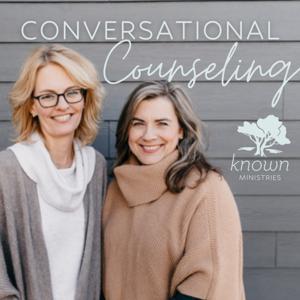


>> Click HERE to get free visuals, handouts and discussion questions for Conversational Counseling sent straight to your email!
What is your posture when you join someone on their journey to comfort and change?
If our first priority is to influence or teach, we risk pushing our framework of beliefs on others rather than prioritizing love.
In 1 Corinthians 13, Paul opens the chapter by reminding the church about the importance of sharing truth with love. As Christians and counselors, we should never compromise on the essentials of the gospel when we’re pursuing love. But at the same time, we must recognize that our framework about the nonessentials is colored by our own experiences, training and mentors.
Scholars and biblical leaders have studied the Bible for centuries and still disagree on many nonessentials. When we push our framework of these nonessentials on others, they can feel unheard and pressured to conform to a belief that isn’t foundational to their Christian walk.
As Paul exhorts in 1 Corinthians, we must emphasize love. Jesus, our better Counselor, welcomes people to Himself, not a certain denomination or school of thought. Just as He’s sanctified us, He can sanctify others and deepen their understanding of Him and His Word.
Resources:
Connect with other Christians and counselors: Gospel-Centered Biblical Counseling and Equipping Facebook Group with Bob Kellemen
Season 10 of Conversational Counseling on “Do as I Say Not as I Do.”
To sign up for free visuals and discussion questions for this season click here.
Our theme music is by As Isaac.
This podcast is made possible by engineer and producer Shane Selby, executive producer Meleah Smith, and generous donors.
Known Ministries is Alex Kocher and Brenda Payne.
>> Click HERE to get free visuals, handouts and discussion questions for Conversational Counseling sent straight to your email! <<
We live in a very disembodied culture.
Many biblical counselors have a tendency to underemphasize the body as they counsel, while medical professions can focus on the body and ignore the mind and the soul.
But the Bible has a lot to say about the body! In fact, the first thing God gave Adam to steward in the garden was his body.
As biblical counselors, we need to consider the body as we counsel. Physical ailments or factors do not excuse sin, but we often need to deal with physical issues first before moving on to mental and spiritual healing.
Jesus healed the body and forgave sins. He fed the 5,000, and He preached the way to salvation. By caring for the whole person, we can better walk alongside them towards comfort and change like our good and better Counselor did on earth.
Resources:
560 Biblical Passages on Embodied-Souls by Bob Kellemen
Season 10 of Conversational Counseling on “Do as I Say Not as I Do.”
To sign up for free visuals and discussion questions for this season click here.
Our theme music is by As Isaac.
This podcast is made possible by engineer and producer Shane Selby, executive producer Meleah Smith, and generous donors.
Known Ministries is Alex Kocher and Brenda Payne.
>> Click HERE to get free visuals, handouts and discussion questions for Conversational Counseling sent straight to your email! <<
In this episode, we’re diving into a hard — and very nuanced — topic. We encourage you to listen to the end and then share your thoughts, questions or concerns with your trusted community so we all can better understand a biblical view of caring and advocating for the oppressed in our church bodies.
We love the Church, we love when God calls godly leaders into positions of authority to shepherd the Church, and we strive for the spiritual unity of the body. But at the same time, we recognize that some Christians and churches choose their churches’ reputations at the cost of victims and of God’s character.
When faced with hard situations in our churches, how should we respond?
We recognize our churches are filled with finite leaders serving an infinite God and continually working to understand how to biblically address abuse and trauma in the body of Christ. As counselors, we can be an integral part of that process.
God has given so many of us the ability to perceive a wrong, and He equips us with the strength to address this injustice, advocate for the oppressed and abused, and bear one another’s burdens. In these difficult situations, the Holy Spirit helps us discern when to submit, to speak, and to step away.
When we speak up, we might make mistakes. Our reputation might crumble. But God calls us to live with integrity. As we prayerfully discern next steps when advocating for victims, He will remain faithful to guide and to comfort.
Resources:
“Becoming a Church that Cares Well for the Abused” Training Curriculum
Counselors Specializing in Preventing and Confronting Abuse in the Church:
Diane Langberg
Chris Moles
Darby Strickland
Leslie Vernick
Season 10 of Conversational Counseling on “Do as I Say Not as I Do.”
To sign up for free visuals and discussion questions for this season click here.
Our theme music is by As Isaac.
This podcast is made possible by engineer and producer Shane Selby, executive producer Meleah Smith, and generous donors.
Known Ministries is Alex Kocher and Brenda Payne.
>> Click HERE to get free visuals, handouts and discussion questions for Conversational Counseling sent straight to your email! <<
Sometimes we think we can clearly see the right choice another person needs to make. And maybe our instinct is right!
But it’s not our job to fix someone else’s problem or fix them.
We’re prone to impatience when another person struggles to grow and change at the rate we want. Too often we’re quick to give our opinion or solve one problem without realizing we’ve taken a person’s agency or ignored a root problem that’s actually causing the harmful behavior.
When we minister to others, our job is to encourage growth in biblical knowledge, self-awareness, and confidence so they can effectively navigate their own challenges through consulting with God, with others, and, when appropriate, with us.
Counseling isn’t about fixing people. It’s about encouraging people to grow in their relationship with Christ and to learn how to hear His voice.
Resources:
S9 Ep. 7 / Trauma: Helping Someone Tell Their Trauma Story
S7 Ep. 5 / You Have a Story
Season 10 of Conversational Counseling on “Do as I Say Not as I Do.”
To sign up for free visuals and discussion questions for this season click here.
Our theme music is by As Isaac.
This podcast is made possible by engineer and producer Shane Selby, executive producer Meleah Smith, and generous donors.
Known Ministries is Alex Kocher and Brenda Payne.
>> Click HERE to get free visuals, handouts and discussion questions for Conversational Counseling sent straight to your email! <<
Are we called to be perfect before we counsel? Of course not!
If all of us waited to reach perfection on this side of heaven, none of us would be able to counsel others. But God’s Word still calls us to serve one another and bear one another’s burdens.
In our imperfection, we will fail as we counsel or lead or serve. We may need to step away from a role or part of ministry for a season as we grow and learn. But we shouldn’t be a people who stop growing or following God’s call to comfort and change. Our own stories of failure and growth can instead be an encouragement to others of God’s faithfulness.
The perfect life has already been lived, and we should seek to model Christ’s life every day, recognizing that even in our failure, God’s plans and purposes will ultimately prevail.
Season 10 of Conversational Counseling on “Do as I Say Not as I Do.”
To sign up for free visuals and discussion questions for this season click here.
Our theme music is by As Isaac.
This podcast is made possible by engineer and producer Shane Selby, executive producer Meleah Smith, and generous donors.
Known Ministries is Alex Kocher and Brenda Payne.
>> Click HERE to get free visuals, handouts and discussion questions for Conversational Counseling sent straight to your email! <<
Do you feel burdened to always say “yes” even when you’re exhausted?
In our care for others and desire to see them made whole, we can neglect ourselves. We strive to be available and to offer comfort and counsel at all hours, even if other responsibilities suffer.
As finite creatures, God created us with a “tank” that can run out. If we try to serve others without slowing down to re-fill our tank, our ability to comfort well can suffer. When we recognize our limits, we can surrender ourselves to God and recognize He is the great comforter who never sleeps. He is the ultimate counselor and faithful Savior always interceding for us.
He also gives us the body of Christ filled with members with diverse gifts. All we can do is remain faithful to our gifting as one part of that body and allow God and others to work in the lives of sufferers and sinners. When we create healthy boundaries and recognize our limits, we can maximize our ministry to the sufferers God brings into our lives.
Season 10 of Conversational Counseling on “Do as I Say Not as I Do.”
To sign up for free visuals and discussion questions for this season click here.
Our theme music is by As Isaac.
This podcast is made possible by engineer and producer Shane Selby, executive producer Meleah Smith, and generous donors.
Known Ministries is Alex Kocher and Brenda Payne.
>> Click HERE to get free visuals, handouts and discussion questions for Conversational Counseling sent straight to your email! <<
Have you discovered yet that you aren’t perfect as you minister to others?
Over our years of ministry, we’ve definitely recognized our imperfections as we’ve made mistakes — big and small. When we look back and remember some of the things we’ve told people or we’ve done over the years, we cringe!
This season, we’re walking through common mistakes so many of us make while ministering or counseling others. We hope as we address these mistakes you won’t feel discouraged but inspired! We all will fall short in ministry, but each misstep reminds us of our dependence to God.
In this episode, we’re reminded that at one point or another, all of us need to hear, “It’s not all up to you!”
Often, our desire to take charge of another person’s life comes from a place of love and concern for their future, but this desire can be twisted into a belief that change is up to us.
Though God created us to exist in community with one another, we’re not all-powerful. We are not created to carry the weight of someone else’s choices or future, we can’t rescue someone from their sin or suffering, and we can’t fix their problems. What we can do is walk alongside them and encourage them to take small steps towards change through God’s help.
Our own lives are proof that change isn’t up to us. If we want to help other people trust God, we have to trust that God will work through us and through others in His way and His timing.
Resources:
Sean of the South by Sean Dietrich
Beginnings: Seeking God's Kingdom in the Midst of Trials and Temptations: A Self-Counsel Journal for Women by Alex Kocher and Brenda Payne
Season 10 of Conversational Counseling on “Do as I Say Not as I Do.”
To sign up for free visuals and discussion questions for this season click here.
Our theme music is by As Isaac.
This podcast is made possible by engineer and producer Shane Selby, executive producer Meleah Smith, and generous donors.
Known Ministries is Alex Kocher and Brenda Payne.
Disclaimer: This season is about trauma, and it might be difficult at times for some listeners. It’s not graphic, but each episode does cover sensitive topics.
>> Click HERE to get free visuals, handouts and discussion questions for Conversational Counseling sent straight to your email! <<
As we comfort other sufferers, their pain and trauma can take a physical and emotional toll on us. In this season, we’ve shared tools you can use to support others, but in this episode, we want to focus on the comforters!
When someone is sharing their trauma story with us, we are encountering a great evil in their life. The tension of sitting in the midst of unresolved suffering and questions about God’s goodness and sovereignty can be difficult and exhausting. Not only do sufferers need care and comfort on their journey to healing, but we also must steward our minds and bodies well to avoid feeling physically and emotionally depleted.
Sufferers and comforters may find it easy to shrink our worlds to the size of suffering rather than recognizing the truths of God’s Word and His character. In this episode, we offer tools to remind ourselves of His goodness and of the beauty around us when evil tempts us to despair.
We hope this season is only the beginning of your trauma awareness and further training, and we’ve included resources below to continue your education. We can all become effective comforters through commitment to learning, grace for ourselves when we fail, and the Holy Spirit’s continued guidance.
Resources:
Try Softer: A Fresh Approach to Move Us out of Anxiety, Stress, and Survival Mode--and into a Life of Connection and Joy by Aundi Kolber
Strong Like Water: Finding the Freedom, Safety, and Compassion to Move through Hard Things--and Experience True Flourishing by Aundi Kolber
The Healer Within: The New Medicine of Mind and Body by Steven Locke, Douglas Colligan
Being Known Podcast with Dr. Curt Thompson
50 Biblical Counseling Resources on Trauma and Trauma Care by Bob Kelleman
In Our Lives First: Meditations for Counselors by Diane Langberg
Season 1 Ep. 2 / Superpowers
Season 9 of Conversational Counseling on “Trauma.”
To sign up for free visuals and discussion questions for this season click here.
Our theme music is by As Isaac.
This podcast is made possible by engineer and producer Shane Selby, executive producer Meleah Smith, and generous donors.
Known Ministries is Alex Kocher and Brenda Payne.
Disclaimer: This season is about trauma, and it might be difficult at times for some listeners. It’s not graphic, but each episode does cover sensitive topics.
>> Click HERE to get free visuals, handouts and discussion questions for Conversational Counseling sent straight to your email! <<
Jesus saw us in our pain and suffering, and He sees us as we share our trauma stories. He’s moved with compassion, and He responds in action to comfort us. In spite of the painful words spoken over us or actions done to us, Jesus names us as His children. To Him, we are not outcasts.
As we process our stories, we’re able to find God in the midst of them and spiritually, emotionally, and physically begin a return to peace and safety in the present. The healing we find can help us as we minister to other sufferers.
Ministering to another sufferer is no small task. It requires growth, recognition of our own limits, and sensitivity to the Holy Spirit for strength and discernment. The injustice of someone else’s trauma can be overwhelming, and we may feel we don’t have the words to say or the advice to give. Another sufferer’s trauma can also trigger memories of our own pain and suffering.
We must approach these conversations slowly and carefully, and we don’t approach them alone! God is working in these moments, and the Holy Spirit is guiding and prompting us. Together we can encourage one another on the path to comfort and change.
Resources:
Love Walked among Us: Learning to Love Like by Paul E. Miller
S3 Bonus Episode / A Conversation with Dr. Curt Thompson
Dr. Curt Thompson’s Books
Season 9 of Conversational Counseling on “Trauma.”
To sign up for free visuals and discussion questions for this season click here.
Our theme music is by As Isaac.
This podcast is made possible by engineer and producer Shane Selby, executive producer Meleah Smith, and generous donors.
Known Ministries is Alex Kocher and Brenda Payne.
Disclaimer: This season is about trauma, and it might be difficult at times for some listeners. It’s not graphic, but each episode does cover sensitive topics.
>> Click HERE to get free visuals, handouts and discussion questions for Conversational Counseling sent straight to your email! <<
How do you speak to yourself and about yourself? Do you believe you’re too much or not enough? Do you continually analyze how others view you to establish your worth and identity?
Our heart is like a tree rooted in soil. If our soil is filled with lies about our worth, we can establish deeply rooted insecurities and feel shame because of words spoken over us and actions done to us. Trauma makes us feel despised, disliked, and disgraced. Yet God calls us to move away from contempt to kindness. He encourages us to view ourselves through His lens, a lens of kindness. God wants to uproot us from harmful soil and replace our belief system with the truths that we are chosen, desired, and loved.
As a community of believers, we can be His hands and feet to uplift other sufferers. At the same time, we are people who have also suffered deeply and experienced hurt at the hands of others. We bring our own misconceptions and opinions to every conversation. When we seek to comfort, we may fail and hurt other people. But we serve a God who uses the broken to serve the broken. As we carefully and intentionally love others, we can support them on their path to comfort and change with kindness, curiosity, boundaries, safety and repair.
Season 9 of Conversational Counseling is on “Trauma.”
To sign up for free visuals and discussion questions for this season click here.
Our theme music is by As Isaac.
This podcast is made possible by engineer and producer Shane Selby, executive producer Meleah Smith, and generous donors.Known Ministries is Alex Kocher and Brenda Payne.
From the publisher's feed
1,118 Listeners

3,937 Listeners
4,795 Listeners

19,446 Listeners

614 Listeners

305 Listeners

2,892 Listeners
2,378 Listeners

633 Listeners
7,105 Listeners
767 Listeners

327 Listeners
2,118 Listeners

1,550 Listeners

317 Listeners