
Sign up to save your podcasts
Or

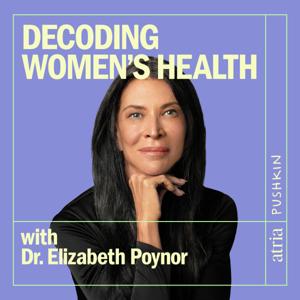
By Pushkin Industries
Why is it still so hard for women to find reliable, modern health information about their own bodies? On Decoding Women's Health, Dr. Elizabeth Poynor, chair of women’s health & gynecology at t
... more

4.8
7272 ratings


The podcast currently has 27 episodes available.
The most played episodes among Podcast App listeners.
What can you do to make the most of your annual medical visit? Dr. Poynor is joined by Dr. Jennifer McGugins Hill, an internal medicine specialist at the Atria Health and Research Institute, to discuss how preventive care can help identify health concerns early. Plus, we unpack which labs and screenings are worth discussing with your primary care physician, why it's important to know your calcium score, and how to advocate for the care you need. Links to resources mentioned in this episode: Boston Heart Diagnostics offers specialty labs that your doctor can order for you, usually at a cost. They are not available as direct to consumer products, so if you're interested in them, talk with your care team. https://bostonheartdiagnostics.com/ For expert advice on how to properly log your blood pressure at home, please see this helpful article: https://content.atria.org/article/blood-pressure-cuffs-for-home-monitoring/ You can see the product she mentions here (no affiliate link): https://omronhealthcare.com/blood-pressure-monitors An ECG or EKG stands for an electrocardiogram, which is a quick, safe, and painless medical test that records the electrical activity of your heart. DEXA stands for dual-energy X-ray absorptiometry. It is an imaging test that uses low-dose X-rays to measure bone mineral density and body composition. They can be ordered by a physician in an academic medicine system and are also offered at standalone centers. Cologuard is a stool test that looks for existing cancer. Colonoscopies look for cancer as well as polyps, which can be pre-cancerous and are removed during the colonoscopy procedure. Note: In this show, we use “women” as shorthand for people with XX chromosomes. We understand sex and gender are more complex, and acknowledge the experiences we describe reach beyond that word. See omnystudio.com/listener for privacy information.

How can the research behind intermittent fasting help us rethink the way we approach our nutrition and our daily habits? Dr. Chris Rhodes has spent much of his career studying the science of fasting. He joins the show to unpack how fasting works in the body and what the research tells us about its potential benefits. Dr. Rhodes earned his PhD in Nutritional Biochemistry at UC Davis and is also the co-founder of Mimio. We discuss why someone might try intermittent fasting - from longevity to weight loss - as well as the importance of strength training and personalized nutrition. Links to resources mentioned in this episode: For more studies on autophagy, check out: https://physoc.onlinelibrary.wiley.com/doi/full/10.1113/JP287938 and https://pubmed.ncbi.nlm.nih.gov/41372565/ Here's a meta-analysis looking at the effects of time restricted eating: https://pubmed.ncbi.nlm.nih.gov/41586347/ Note: the glycine data we mention is only in mice: https://pmc.ncbi.nlm.nih.gov/articles/PMC6516426/ Important caveat for this episode: the evidence is strongest in animal studies and human markers of aging. No intermittent fasting regimen has been shown to extend human lifespan or reduce mortality in humans. Note: In this show, we use “women” as shorthand for people with XX chromosomes. We understand sex and gender are more complex, and acknowledge the experiences we describe reach beyond that word. See omnystudio.com/listener for privacy information.
Figuring out how to take care of your skin shouldn’t be so hard. Leading dermatologist Dr. Elizabeth Hale joins the show to give us all the crucial information we need to take care of our skin all year around. Dr. Hale also walks us through the various regenerative treatments that are in high demand, from exosomes and red light therapy to microneedling, to other mainstays like Botox™ and fillers. Plus, some actionable tips for early skin cancer detection. Links to resources mentioned in this episode: Skin Cancer Foundation See omnystudio.com/listener for privacy information.
We’re tackling your questions about midlife hormone support. We’ll debunk common myths, unpack the research, and break down the basics of hormone support. We’ll also discuss some of the systemic benefits that may come with taking hormones, as well as important considerations for people with a history of health conditions, like cancer or stroke. Joining Dr. Elizabeth Poynor for this discussion is Atria Health Institute’s Chief Content Officer Siobhan O’Connor. Links to resources mentioned in this episode: (00:25:29) - Decoding Happiness in Midlife with Dr. Laurie Santos (00:27:27) - Decoding Brain Fog with Dr. Caroline Gurvich (00:48:00) - Decoding Partnership in Midlife with Dr. Richard Shapiro Vaginal estrogen use in breast cancer survivors: a systematic review and meta-analysis of recurrence and mortality risks Oral micronized progesterone for perimenopausal night sweats and hot flushes a Phase III Canada-wide randomized placebo-controlled 4 month trial Systematic review and meta-analysis of the effects of menopause hormone therapy on risk of Alzheimer’s disease and dementia Menopausal Hormone Therapy and Risk of Endometrial Cancer Allopregnanolone and Reproductive Psychiatry: An Overview Adverse Changes in Body Composition During the Menopausal Transition and Relation to Cardiovascular Risk: A Contemporary Review The role of lifestyle medicine in menopausal health: a review of non-pharmacologic interventions Skeletal muscle as an endocrine organ: PGC-1α, myokines and exercise ADHD and Sex Hormones in Females: A Systematic Review The range and variation in serum estradiol concentration in perimenopausal and postmenopausal women treated with transdermal estradiol in a real-world setting: a cross-sectional study The use of HRT containing transdermal estradiol in women with a personal history of venous or arterial thromboembolism: A consecutive series of 115 cases Recurrent Uncomplicated Urinary Tract Infections in Women: AUA/CUA/SUFU Guideline (2025) Note: In this show, we use “women” as shorthand for people with XX chromosomes. We understand sex and gender are more complex, and acknowledge the experiences we describe reach beyond that word. See omnystudio.com/listener for privacy information.
Midlife can be a period of immense change and, sometimes, challenging emotions. But it’s also an opportunity to cultivate deeper, more lasting happiness. In today’s episode, Dr. Laurie Santos — renowned psychologist, happiness expert, and host of The Happiness Lab — shares insights on how midlife women can thrive. She breaks down the components of happiness, explains why we’re often mistaken about what makes us happy, and provides practical tools and habits to boost wellbeing, manage negative emotions, and navigate burnout. Links to resources mentioned in this episode: World Happiness Report University of Michigan’s Healthy Minds Study Is happiness U-shaped everywhere? Age and subjective well-being in 145 countries A Global Flourishing Study Finds That Young Adults, Well, Aren’t Signature Strengths Test RAIN: Recognize, Allow, Investigate, Nurture The Happiness Lab with Dr. Laurie Santos Note: In this show, we use “women” as shorthand for people with XX chromosomes. We understand sex and gender are more complex, and acknowledge the experiences we describe reach beyond that word. See omnystudio.com/listener for privacy information.
The podcast currently has 27 episodes available.

43,424 Listeners

2,582 Listeners
10,516 Listeners
818 Listeners

3,319 Listeners
1,851 Listeners

12,720 Listeners
2,521 Listeners

14,899 Listeners
1,901 Listeners
14,305 Listeners

8,114 Listeners

2,043 Listeners

41,411 Listeners

1,094 Listeners